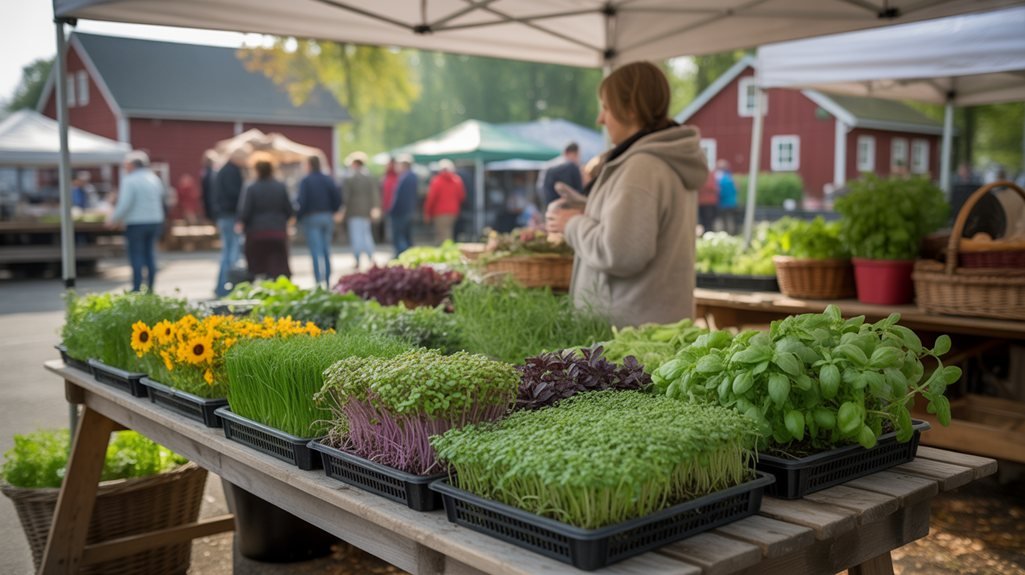
Minnesota’s 168 USDA-listed farmers markets provide microgreens vendors with a structured, high-frequency distribution network spanning roughly May through October. You’ll find the densest opportunities in the Twin Cities metro, where Minneapolis and St. Paul markets generate consistent weekly foot traffic, while Duluth serves a smaller but loyal local-sourcing demographic. Sunflower shoots and pea shoots perform reliably across most venues due to strong customer recognition. Strategic market selection, precise application preparation, and product differentiation determine your entry success—and each factor rewards closer examination.
Key Takeaways
- Minnesota has approximately 168 USDA-listed farmers markets, with the primary selling season running May through October.
- The Twin Cities metro hosts the highest concentration of markets, making it the logical starting point for microgreens vendors.
- Sunflower and pea shoots perform best across Minnesota markets due to strong visual recognition and versatile culinary use.
- Booth fees range from $15–$45 per daily spot to $400–$900 for a full urban seasonal slot.
- Submitting complete documentation, including liability insurance and cottage food registration, is critical for a successful vendor application.
Farmers Markets in Minnesota for Microgreens Vendors
Minnesota hosts approximately 168 farmers markets listed in the USDA database, making it one of the more market-dense states in the Upper Midwest and a viable territory for vendors seeking consistent retail volume.
The season runs primarily from spring through fall, with most markets operating between May and October, which aligns well with the short production cycles that make microgreens a practical crop for high-frequency restocking.
If you’re already producing and looking for your first or next vendor slot, understanding how Minnesota‘s market calendar and regional concentrations work gives you a real structural advantage when timing your applications.
Why Minnesota Markets Are Worth Your Attention
If you’ve been looking for a regional market scene worth committing to, Minnesota’s roughly 168 USDA-listed farmers markets represent a meaningful distribution network for a microgreens operation at almost any scale. As a microgreens vendor in Minnesota, you’re entering a state where urban density and agricultural culture intersect productively. Minneapolis and St. Paul anchor the highest-volume opportunities, while Duluth offers a distinct buyer demographic worth understanding separately.
The spring-through-fall calendar gives you a structured selling window, which makes planning production cycles significantly more precise than year-round markets demand. For growers serious about building consistent wholesale and retail exposure, the farmers markets Minnesota offers aren’t just convenient outlets. They’re infrastructure. Knowing which markets align with your current output capacity is where the real strategic work begins.
What the Minnesota Market Season Looks Like
Seasonality shapes everything about how you’ll plan a microgreens operation in Minnesota, and the state’s primary market calendar runs from roughly May through October, with some markets opening as early as April and closing as late as November depending on location.
Minneapolis and St. Paul markets tend to anchor the season with consistent weekly schedules, while smaller regional markets operate on compressed timelines, sometimes running only eight to ten weeks total.
As a microgreens farmers market vendor, understanding this compression matters because your production schedule, tray turnover, and varietal selection all need to align with specific open dates.
Farmers market Minnesota vendors who plan their grow cycles backward from market start dates consistently manage inventory better than those who don’t.
How to Find the Right Market in Minnesota

Before you apply to any market in Minnesota, you need to evaluate each opportunity against a clear set of criteria, including vendor density, foot traffic patterns, and the market’s existing microgreens presence. Minneapolis concentrations offer high-volume exposure but frequently come with competitive waitlists, whereas smaller surrounding markets may grant faster entry with comparable customer engagement. St. Paul and Duluth markets operate on distinct seasonal calendars and demographic profiles, so your approach to each region should reflect those differences rather than treating them as interchangeable options.
What to Look for Before You Apply
Not every farmers market in Minnesota is the right fit for a microgreens vendor, and applying without vetting a market first is one of the more reliable ways to waste a season. Before you submit an application for any microgreens booth farmers market opportunity, visit the market as a customer. Observe foot traffic patterns, note whether existing vendors sell fresh produce, and assess whether shoppers are already buying specialty greens.
As a farmers market vendor Minnesota, you need to understand a market’s customer base before committing booth fees and inventory. Check vendor density in the produce category, confirm the market’s operating dates align with your production schedule, and request the market’s application requirements directly from the manager before assuming you qualify.
Markets Near Minneapolis
The Twin Cities metro concentrates more farmers market activity than any other region in Minnesota, which makes it a logical starting point if you’re trying to find your first or next vendor slot.
As a microgreens grower in Minnesota, you’re looking at a dense cluster of markets operating across Minneapolis, surrounding suburbs, and St. Paul, each carrying distinct customer demographics and vendor requirements. The Minneapolis Farmers Market, one of the region’s highest-traffic venues, draws consistent foot traffic throughout the spring-to-fall season.
Smaller neighborhood markets often have shorter application queues and more flexible table arrangements, giving newer vendors a realistic entry point. Knowing which markets align with your production volume and schedule determines where you should direct your application energy first.
Markets Near St. Paul and Duluth
St. Paul and Duluth represent two distinct market environments worth analyzing carefully before you commit vendor fees.
The St. Paul Farmers Market operates across multiple locations, including its flagship downtown site, giving you access to consistent weekend foot traffic from an established urban customer base.
If you’re positioning microgreens as a premium product, that market’s reputation supports the ask.
Duluth operates differently, serving a smaller but loyal regional population with strong seasonal participation concentrated in warmer months.
The Duluth Farmers Market draws buyers who prioritize local sourcing, which aligns well with microgreens as a category.
Evaluate both markets based on vendor density, booth costs, and application timelines before deciding.
Utilize the free Market Finder at markets.microgreensworld.com to pull current listings for both cities.
What to Expect When You Get There

Once you’ve secured a spot, the operational realities of vending at a Minnesota farmers market will shape your approach from the first morning you unload. Booth fees across the state’s approximately 168 USDA-listed markets vary considerably, with weekly fees at smaller rural markets often running lower than those at high-traffic urban venues in Minneapolis or St. Paul, where seasonal contracts and competitive waitlists are more common.
Understanding what actually sells in this market environment matters just as much as understanding the costs, because Minnesota customers tend to gravitate toward familiar, versatile greens like sunflower and pea shoots, particularly during the peak spring-through-fall season when local produce demand is at its highest.
Booth Fees and Setup Basics
Booth fees across Minnesota’s farmers markets vary considerably, and understanding that range before you apply will keep your budgeting grounded in reality rather than assumption. Seasonal rates at established urban markets tend to run higher, while smaller community markets offer lower entry points for vendors just learning to sell microgreens at farmers market settings.
| Market Type | Typical Fee Range |
|---|---|
| Large urban seasonal | $400 – $900/season |
| Mid-size community | $150 – $350/season |
| Daily/single vendor spot | $15 – $45/day |
Your microgreens market stand will need a 10×10 canopy, weighted anchors, and a table configured for product visibility. Many Minnesota markets require proof of liability insurance before your first setup date, so confirm that requirement during the application process.
What Moves at Minnesota Markets
Selling microgreens at Minnesota farmers markets means understanding, before your first setup day, that not all varieties move at the same pace or command the same customer attention. Sunflower and pea shoots perform consistently across urban and suburban markets, because buyers recognize them visually and understand how to employ them. Radish moves well where you’ve built repeat traffic, since its assertive flavor profile requires some customer education.
If you’re figuring out how to get a farmers market booth, also research what neighboring vendors already carry. Farmers markets Minnesota microgreens vendors steer successfully tend to differentiate through variety depth rather than price competition. Broccoli and amaranth attract health-conscious regulars, particularly in Minneapolis and St. Paul markets, where repeat buyers account for a substantial portion of weekly revenue.
Getting Your Application Ready
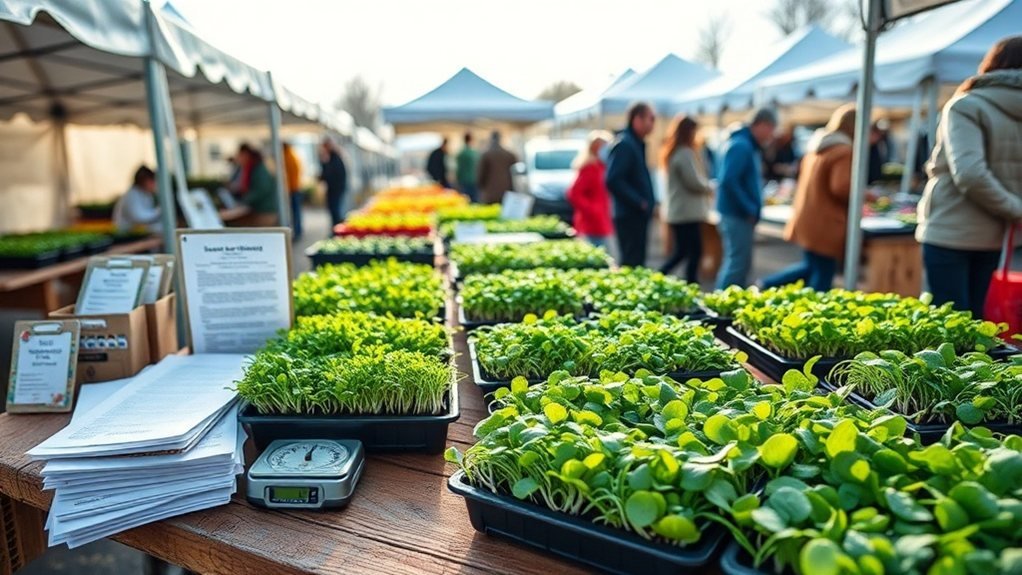
When you’re ready to apply, most Minnesota market managers are evaluating whether your operation fits their existing vendor mix, your product’s shelf stability, and your ability to maintain consistent weekly supply.
Your application needs to demonstrate these qualities through documentation, not just assertions, so include recent photos of your growing setup, a clear product list with approximate harvest quantities, and any relevant food handler certifications your state requires.
Vendors who skip the booth photo or leave the “weekly volume” field vague tend to get deprioritized, because managers are allocating limited table space and they need confidence that you’ll show up prepared every week.
What Market Managers Want to See
Market managers in Minnesota are gatekeepers with real discretion, and understanding what they’re evaluating before you submit a farmers market vendor application saves you from common, avoidable rejections. They’re assessing product fit, presentation consistency, and your operational credibility.
Knowing how to sell microgreens starts with recognizing that managers prioritize vendors whose offerings complement existing product diversity rather than duplicate it. Submit clean, professional photos of your actual setup, not staged stock imagery.
Include your food handler certification, cottage food registration if applicable, and a clear product list with pricing. Managers notice when applications are incomplete or vague, and those go to the bottom.
Treat the application as your first sales interaction with that market, because functionally, it is.
Common Mistakes to Avoid
Knowing what managers evaluate is only half the equation; the other half is understanding where applicants consistently undermine their own chances before a decision is even made.
Submitting incomplete paperwork is the most documented failure point, particularly missing cottage food registration or liability insurance certificates.
When you’re positioning microgreens for sale minnesota markets review carefully, an incomplete file signals operational immaturity.
Selling microgreens locally requires understanding that managers process dozens of applications simultaneously, so an unclear product description or absent pricing structure gets deprioritized without explanation.
Don’t assume follow-up emails compensate for a weak initial submission.
Your first application is your actual first impression, and Minnesota’s more competitive markets, especially in Minneapolis and St. Paul, rarely extend second opportunities to underprepared vendors.
Use the Market Finder to Shortcut Your Search

Searching for farmers markets one by one across Minnesota’s 168 USDA-listed venues is a slow, fragmented process that most growers can’t afford to spend time on.
The MGW Market Finder at markets.microgreensworld.com consolidates that data into a searchable interface, allowing you to filter by location and identify viable entry points for your microgreens business without manual cross-referencing.
If you’re targeting local microgreens Minnesota customers in the Twin Cities corridor or expanding toward Duluth, the tool narrows your options systematically rather than leaving you sorting through directories that were last updated months ago.
Employ it to build your target list, then apply the application strategy and booth positioning principles you’ve already honed.
Your next market slot starts with knowing exactly where to look.
Frequently Asked Questions
Can I Sell Microgreens at a Minnesota Farmers Market Without a License?
You can sell microgreens at most Minnesota farmers markets without a license if your gross sales stay under $18,500 annually under the state’s cottage food exemption, but verify each market’s individual vendor requirements first.
How Much Does It Typically Cost to Rent a Booth Space?
Booth fees in Minnesota typically run $20 to $50 per day at smaller markets, while larger metro markets can charge $400 to $800 seasonally. Confirm fees directly with each market manager before applying.
Do Minnesota Markets Require Vendors to Grow Everything They Sell?
Most don’t require it, but many prefer it. You’ll want to confirm each market’s producer-only rules directly with the manager before you apply, since policies vary widely across Minnesota.
What Happens if My Application Gets Rejected the First Time?
Don’t take it personally. Ask the market manager for feedback, fix what you can, and reapply next season. Some markets reject first-timers simply because they’re already at vendor capacity.
Can I Sell at Multiple Minnesota Markets During the Same Season?
Yes, you can sell at multiple Minnesota markets in the same season. Most vendors stack two or three markets weekly to maximize exposure and revenue across different neighborhoods or cities.
Wrap-up
You’ve got the framework now. Minnesota’s market landscape is dense enough to support a focused vendor strategy, and you don’t need to guess which markets perform. Employ the MGW Farmers Market Finder at markets.microgreensworld.com to filter by location, assess vendor mix, and identify where specialty produce actually moves. Your application, your positioning, and your timing all improve when you’re working from real data rather than assumptions.
Leave a Reply