
Iowa has roughly 134 USDA-listed farmers markets statewide, with the highest vendor opportunities concentrated in Des Moines, Iowa City, and Dubuque. You’ll find that market applications open between January and March, so early submission is critical. Each city presents distinct buyer demographics — Iowa City’s university population favors specialty produce, while Dubuque rewards documented growing practices. Varieties like sunflower, pea shoots, and radish consistently perform well. Continue ahead to sharpen your market selection and application strategy.
Key Takeaways
- Iowa has approximately 134 USDA-listed farmers markets statewide, with the highest microgreens opportunity in Des Moines, Iowa City, and Dubuque.
- The primary selling season runs May through October, spanning roughly 22 to 26 weeks of peak market activity.
- Most market applications open between January and March; late submissions risk forfeiting an entire selling season.
- Reliable varieties include sunflower, pea shoots, and radish, with mild options outperforming spicy ones during early spring.
- Booth fees range from $15 to $40 daily or $200 to $600 seasonally, with additional costs for premium spots.
Farmers Markets in Iowa for Microgreens Vendors
Iowa’s approximately 134 USDA-listed farmers markets represent a substantial distribution network for microgreens vendors, with notable market density concentrated in Des Moines, Iowa City, and Dubuque.
You’re working within a defined seasonal window that runs primarily spring through fall, which means your production schedule, variety selection, and customer acquisition all need to align with that calendar rather than operate independently of it.
Understanding both the scale of available market opportunities and the temporal constraints of Iowa’s season gives you the structural foundation to choose wisely about where and when to apply for a vendor spot.
Why Iowa Markets Are Worth Your Attention
When you’re evaluating where to sell your microgreens, Iowa deserves serious consideration, and the numbers support that argument. The USDA database lists approximately 134 farmers markets iowa vendors can access statewide, which represents a substantial distribution network for a producer working to establish consistent sales volume.
Des Moines, Iowa City, and Dubuque function as anchor markets, drawing reliable foot traffic from health-conscious urban consumers who regularly purchase specialty produce.
The microgreens farmers market category remains relatively underpenetrated in many Iowa communities, meaning you’re not walking into saturated competition at most venues.
Iowa’s spring-through-fall calendar aligns well with outdoor microgreens production cycles, reducing the operational complexity of managing year-round climate control. That combination of market density, accessible competition levels, and seasonal alignment makes Iowa a strategically sound territory to pursue.
What the Iowa Market Season Looks Like
Most Iowa farmers markets operate on a spring-through-fall schedule, with the bulk of activity concentrated between May and October, though a handful of year-round indoor markets in Des Moines and Iowa City extend that window considerably.
As a microgreens vendor iowa growers compete in, understanding this seasonal compression matters for planning your production cycles strategically. Outdoor markets typically open when soil temperatures climb and close once hard frost arrives, meaning your peak selling window spans roughly 22 to 26 weeks.
The Des Moines Downtown Farmers Market, one of the largest in the Midwest, runs Saturdays from May through October, drawing substantial foot traffic.
Farmers markets iowa microgreens vendors target often accept applications between January and March, so your timing on submissions directly determines your access to prime spots.
How to Find the Right Market in Iowa
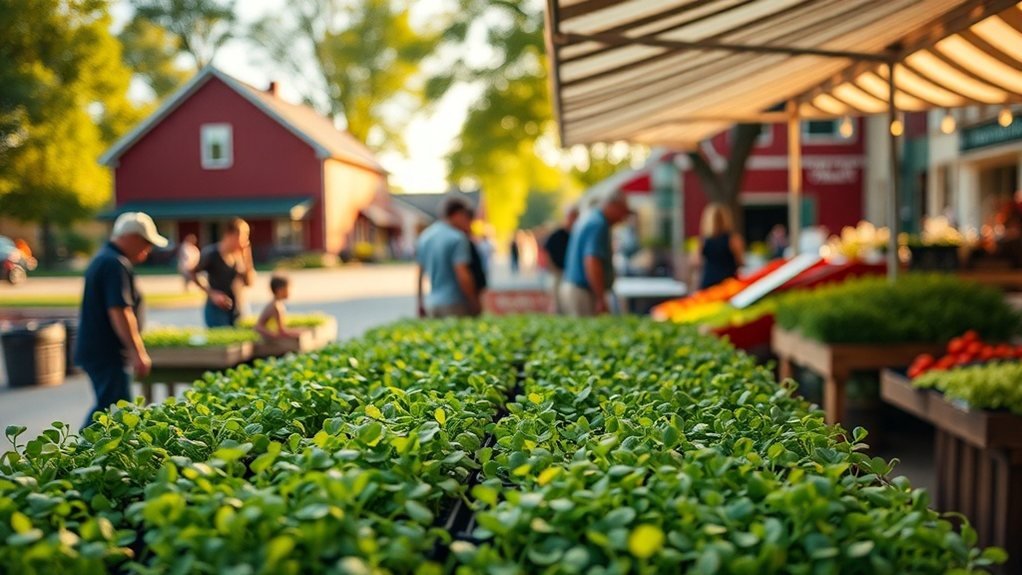
Selecting the right market requires evaluating vendor density, customer traffic patterns, and application requirements before you commit time or fees to any single location. Iowa’s approximately 134 USDA-listed markets aren’t distributed evenly, so growers near Des Moines, Iowa City, and Dubuque have more options and, consequently, more room to compare terms, foot traffic data, and existing microgreens representation.
You’ll want to assess each market’s competitive landscape and seasonal calendar, since Iowa’s primary market season runs spring through fall, and a late application can cost you an entire selling season.
What to Look for Before You Apply
Not every farmers market in Iowa is going to be the right fit for a microgreens vendor, and recognizing that difference before you apply saves you time, application fees, and the frustration of setting up at a market where your product doesn’t move.
Before you commit as a farmers market vendor in Iowa, examine foot traffic patterns, existing vendor mix, and whether the market’s customer base skews toward value shoppers or quality-focused buyers. A Saturday market in Des Moines draws a fundamentally different crowd than a weekday market in a smaller county seat.
When you’re trying to sell microgreens at a farmers market consistently, the market’s demographic alignment with your product matters as much as the booth fee itself.
Markets Near Des Moines
Within the Des Moines metro area, you’re working with one of the densest concentrations of farmers markets in Iowa, which means more opportunities but also more direct competition from other specialty produce vendors.
The Des Moines Farmers Market downtown draws substantial foot traffic, making it a compelling target, but vendor slots fill quickly and application requirements are rigorous.
Securing a microgreens booth at a farmers market in a saturated metro demands that you differentiate on product variety, presentation, and consistency.
Suburban markets in Ankeny or West Des Moines often present lower barriers to entry while still delivering serious buyer volume.
Evaluate each market’s vendor mix before applying, because overlapping competition directly affects your sellthrough rate.
Markets Near Iowa City and Dubuque
Des Moines gives you density, but Iowa City and Dubuque offer something different: markets embedded in tighter communities where vendor relationships and product novelty carry more weight than raw foot traffic numbers.
In Iowa City, the university population creates consistent demand for specialty produce, making microgreens for sale iowa a genuinely viable product category rather than a curiosity. Buyers there tend to research what they’re purchasing, which rewards vendors who communicate cultivation methods clearly.
Dubuque’s market operates within a historically rooted commercial district, where knowing how to get a farmers market booth means understanding that committee-based approval processes favor vendors with documented growing practices. Both cities reward preparation over volume, positioning you to build a durable vendor presence rather than chasing single-season sales.
What to Expect When You Get There
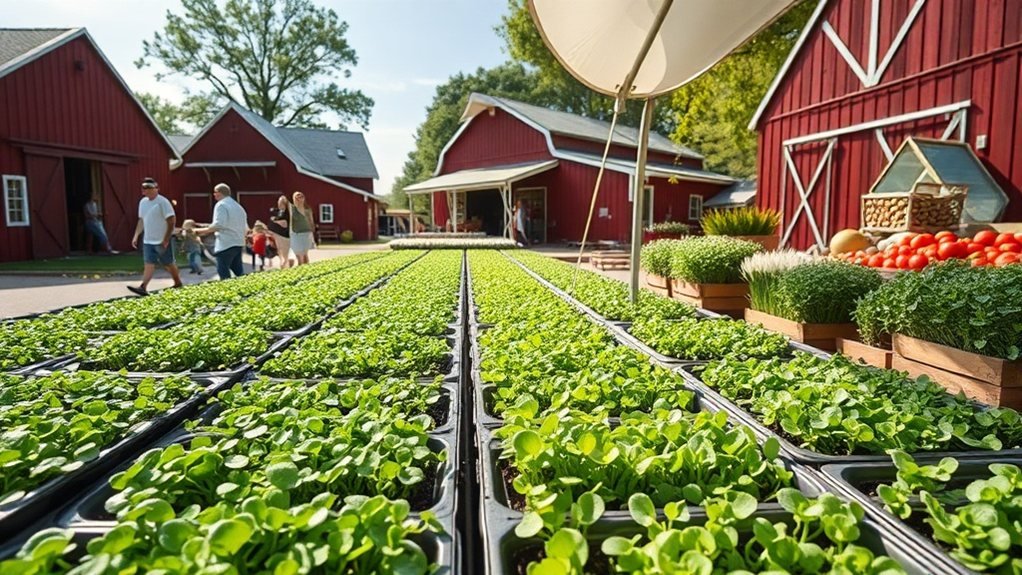
Once you secure a vendor spot, you’ll encounter booth fees that typically range from a flat daily rate to seasonal contracts, with Iowa markets generally charging between $15 and $50 per market day depending on location and foot traffic volume.
Setup basics follow a consistent pattern across most Iowa markets: a standard 10×10 canopy, a folding table, and sufficient display height to position your trays and clamshells at eye level for standing customers.
Understanding what moves at Iowa markets requires observing which microgreens varieties generate repeat purchases, particularly sunflower, pea shoots, and radish, which tend to perform reliably in markets with established customer bases in Des Moines and Iowa City.
Booth Fees and Setup Basics
Booth fees across Iowa’s farmers markets follow a general pattern worth understanding before you commit to any application. Daily rates typically range from $15 to $40, depending on market size and location, while seasonal contracts can reduce your per-market cost considerably.
| Fee Type | Typical Iowa Range |
|---|---|
| Daily Booth Fee | $15 – $40 |
| Seasonal Contract | $200 – $600 |
| Application Fee | $10 – $25 |
| Corner/Premium Spot | +$10 – $20 |
| Late Registration | +$5 – $15 |
When you’re learning how to sell microgreens, setup requirements matter as much as cost. Most markets require a canopy, weights, and a farmers market vendor application submitted weeks in advance. Contact market managers directly to confirm current fee structures before planning your budget.
What Moves at Iowa Markets
Selling microgreens in Iowa’s farmers market environment requires a working understanding of what customers actually purchase, because variety performance varies more by region and season than most new vendors anticipate.
Sunflower and pea shoots consistently draw repeat buyers at the iowa city farmers market, where shoppers demonstrate familiarity with larger, texture-forward greens.
Radish and broccoli move steadily at the dubuque farmers market, particularly when positioned near produce vendors whose customers already cook with cruciferous vegetables.
Mild varieties outperform spicy ones during early spring, when your customer base skews toward families and older demographics.
You’ll adjust your mix after your first two or three market days, once you see which trays return to your car and which ones don’t.
Getting Your Application Ready
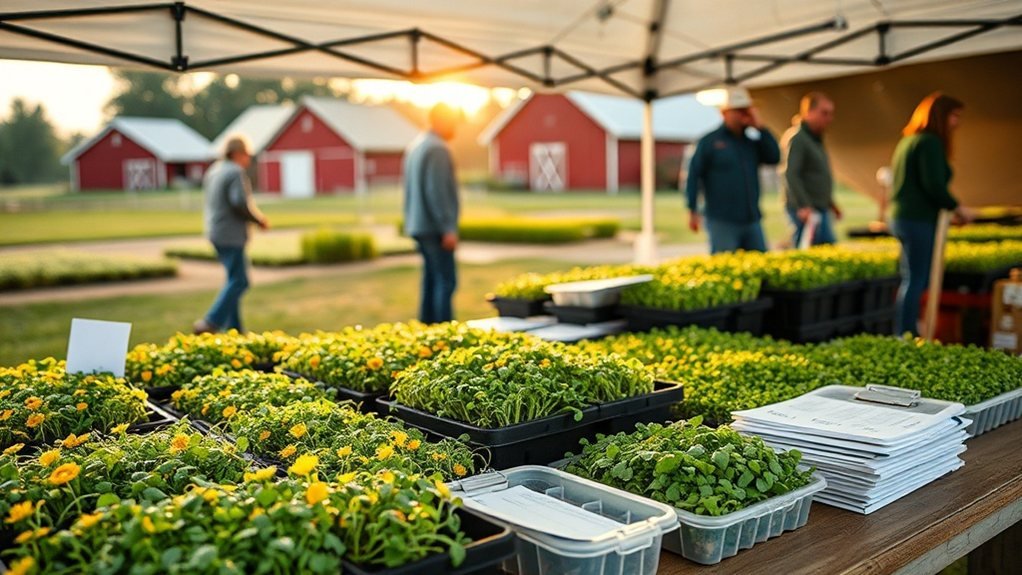
Your application is the first artifact a market manager examines, and it signals whether you understand the operational standards of their market before you’ve spoken a single word.
Most Iowa market managers are evaluating product fit, vendor reliability, and booth professionalism simultaneously, so a sparse or vague application typically advances no further than the initial review.
You’ll want to document your growing practices, present clear product descriptions with intended price points, and address any liability insurance requirements upfront, since markets like the Downtown Farmers Market in Des Moines maintain competitive vendor pools where incomplete submissions are routinely passed over.
What Market Managers Want to See
When you’re preparing to apply for a vendor spot at an Iowa farmers market, the application itself is often the first substantive filter that market managers employ to assess whether you’re a serious, reliable producer. They’re evaluating your microgreens market stand concept before they’ve ever seen your trays. Farmers market Iowa vendors who submit incomplete applications, vague production descriptions, or missing certifications get passed over, regardless of product quality.
Document your growing space, your varieties, your food safety practices, and your harvest-to-market timeline. Managers want confirmation that you can supply consistently across the full season, not just opening weekend. A well-constructed application signals operational maturity, and that distinction separates vendors who get callbacks from those who don’t hear back at all.
Common Mistakes to Avoid
Most application rejections don’t stem from bad product, they stem from avoidable procedural errors that signal unpreparedness before a market manager has evaluated a single tray. Running a microgreens business requires operational discipline that extends into how you present yourself administratively. For local microgreens iowa vendors, these errors are consistent across markets.
| Mistake | Why It Matters | Correction |
|---|---|---|
| Missing documentation | Triggers automatic disqualification | Prepare licenses beforehand |
| Vague product descriptions | Signals inexperience | List specific varieties |
| Late submissions | Fills your slot with competitors | File two weeks early |
| No pricing structure | Raises vendor viability concerns | Include wholesale and retail rates |
| Generic booth photos | Fails visual credibility check | Use clean, current setup images |
Audit your application package before submitting.
Use the Market Finder to Shortcut Your Search

Tracking down viable farmers markets in Iowa without a structured tool means hours of cross-referencing county websites, Facebook groups, and word-of-mouth leads that may already be outdated. The MGW Farmers Market Finder at markets.microgreensworld.com consolidates USDA data into a searchable format, giving you direct access to Iowa’s approximately 134 listed markets.
As a microgreens grower in Iowa, you can filter by location, identify markets concentrated in Des Moines, Iowa City, and Dubuque, and prioritize outreach before the spring season opens. Selling microgreens locally requires strategic market selection, not exhaustive manual research. The tool removes that friction, letting you redirect your time toward production and vendor applications.
Start your search at markets.microgreensworld.com and locate your next market opportunity today.
Frequently Asked Questions
Can I Sell Microgreens at Iowa Markets Without a Commercial Kitchen?
Yes, you can. Iowa’s cottage food law covers microgreens, so you’re selling straight from your home grow setup without needing a licensed commercial kitchen. Confirm specifics with your county extension office.
How Much Does a Typical Iowa Farmers Market Booth Fee Cost?
Daily booth fees at Iowa farmers markets typically run $15 to $40, though seasonal stall rentals can drop your per-market cost significantly. Larger Des Moines markets often charge more than smaller rural ones.
Do Iowa Markets Require Liability Insurance From Microgreens Vendors?
Most Iowa markets require liability insurance, typically $1 million per occurrence. You’ll submit proof of coverage with your vendor application, so get your policy in place before you apply.
Can I Vend at Multiple Iowa Markets on the Same Weekend?
Yes, you can. Many Iowa vendors run Saturday and Sunday markets back-to-back, or hit an early Saturday market before driving to an afternoon one. Check each market’s exclusivity clause first.
Are There Year-Round Indoor Iowa Markets That Accept Microgreens Vendors?
Yes, a few Iowa markets run year-round indoors, particularly in Des Moines and Iowa City. Check each market’s vendor application for microgreens-specific rules. Find current options at markets.microgreensworld.com.
Wrap-up
You’ve got the framework now—Iowa’s market landscape, the application process, and how to evaluate a market before you commit. What’s left is acting on it. Don’t apply to every market on the list; target the ones that match your production volume, selling schedule, and customer base. Employ the Market Finder to narrow your options faster, then follow through with a clean application that shows you’re ready to sell.
Leave a Reply