
The first time I showed up to a farmers market with a flat of microgreens and no application, the market manager handed me a clipboard with a two-page waitlist and a sympathetic smile. I’d grown a clean, consistent product, including sunflower, pea shoots, and radish, and had nowhere to sell it.
Getting into a farmers’ market requires submitting a vendor application with a registered business name, product list, proof of production, liability insurance, and vendor fees. Application windows typically open between September and January. Prospective vendors who miss open enrollment can pursue waitlist registration, substitute vendor arrangements, or establish credibility through smaller regional markets first.
That experience taught me everything about how to get into a farmers’ market the right way.
Start before you think you need to. Application windows open between September and January for most markets, meaning you’re planning a full season ahead. Miss that window once, and you’re watching other vendors sell while your grow operation scales in silence.
Before you apply, have these ready:
- Registered business name
- Complete product list with harvest documentation
- Proof of production (grow logs, facility photos, spray records)
- General liability insurance, typically with $1–2 million coverage
- Vendor application fee
If the market is already full, you still have options. Request waitlist placement immediately. Cancellations happen more than markets advertise. Offer yourself as a fill-in vendor for no-shows. Meanwhile, build your sales record and reputation at smaller community markets, which strengthens your application considerably when a spot opens.
The vendors who get in aren’t always first. They’re prepared.
Key Takeaways
Key Takeaway
Most farmers’ markets accept vendor applications in late winter or early spring. A standard application requires a business name, product list, proof of production, and liability insurance. Vendors find available markets using the Microgreens World Farmers Market Finder at markets.microgreensworld.com. When a target market is full, a vendor contacts the manager directly to offer fill-in availability and applies to smaller markets to build a credible track record.
What does the farmers’ market application process actually look like?
Most markets run their applications on a cycle you won’t see coming if you’re new.
Most markets run on a cycle. If you’re new, you won’t see it coming until it’s already passed you by.
The farmers’ market application process typically opens between September and January for the following season. Miss that window, and you’re waiting another year.
Here’s what a standard farmers’ market vendor application asks for: your business name, a product list, proof that you actually grew or made what you’re selling, any required licenses, liability insurance, and a vendor fee.
Producer-only markets are strict about that proof-of-production requirement.
If you didn’t grow it, you can’t sell it there.
Knowing how to get into a farmers’ market starts with knowing the timeline.
Most people apply too late.
Get on the market’s mailing list now so you catch the next opening.
How do you find farmers’ markets that are accepting new vendors right now?
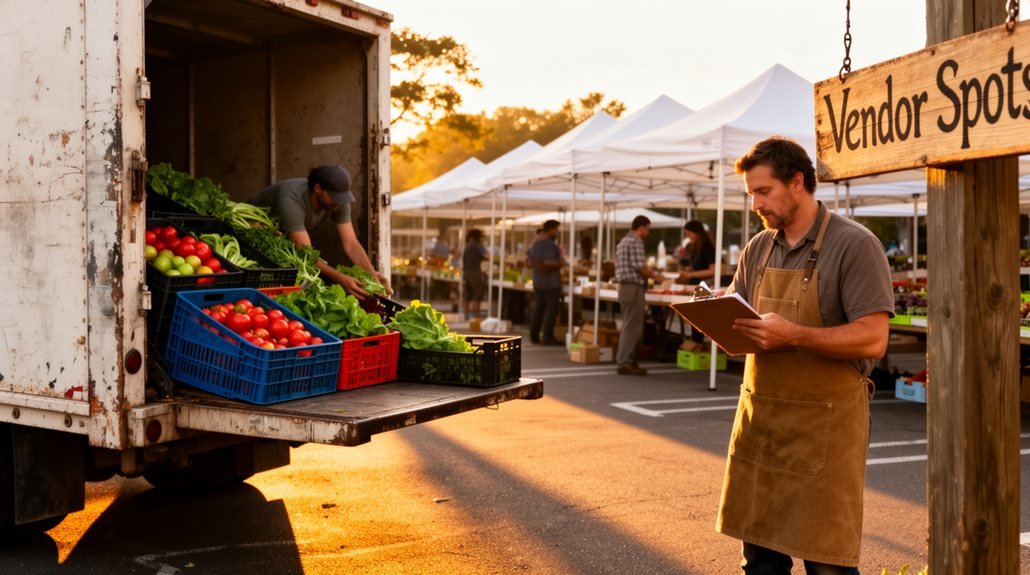
Knowing the application timeline helps, but it doesn’t tell you which markets near you are actually open right now. That’s the gap most people hit when they start figuring out how to apply to a farmers’ market.
The Microgreens World Farmers Market Finder covers 7,842 markets across all 50 states. Search by zip code, city, or state to see what’s near you. From there, go directly to each market’s website to check its vendor page. Some are still accepting applications. Some have a farmers’ market waitlist you can join. A few won’t have either.
If you want to get a booth at a farmers market in your area, start here: MGW Farmers Market Finder.
What should you do before you fill out a single application?

Before you touch an application, visit the market. Walk it on a regular market day. Watch what people actually buy. Notice which categories are already packed — baked goods, honey, and crafts are almost always overrepresented. Then notice what’s missing.
Before you apply, visit the market. Watch what sells. Notice what’s missing. That gap is your strategy.
That gap is your farmers market application tips 2026 strategy in one sentence: find the hole and fill it.
Specialty produce farmers market application success comes down to this. Most markets have very few fresh produce vendors. Microgreens fall into that under-represented category almost every time. That’s how you stand out on a farmers market application — not by describing yourself well, but by being what they don’t already have.
Dr. Booker T. Whatley called this knowing your customer before you chase the market. He was right.
How do you write a farmers’ market vendor application that gets noticed?
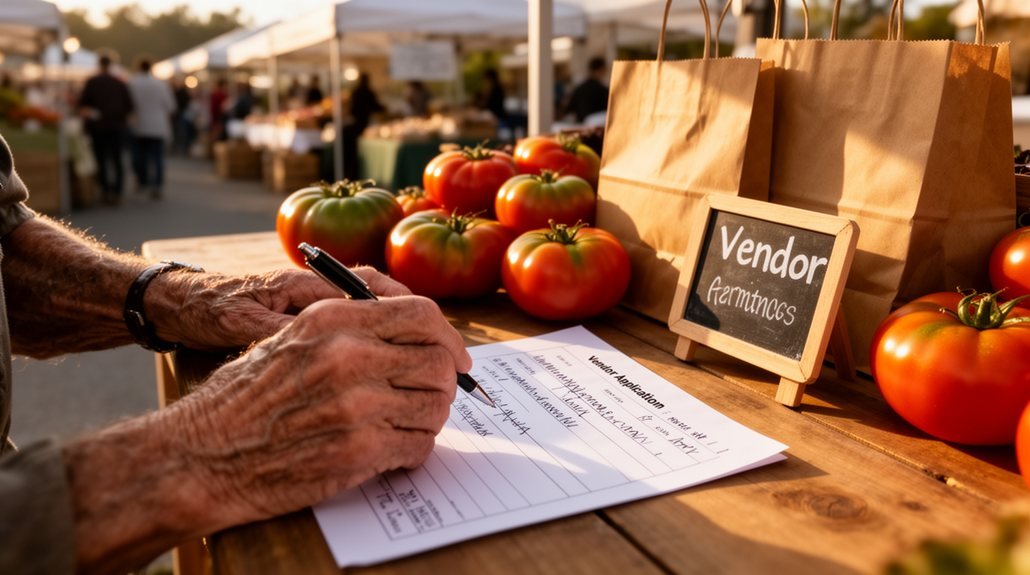
Once you know what the market is missing, you can write directly to that gap. The farmers’ market vendor application isn’t the place to tell your story. It’s the place to tell them what you grow and why it fits what they don’t already have.
Most applicants write something like “specialty produce.” That’s not enough. Market managers running a farmers market vendor selection process are building a mix. They want specifics.
Write this instead: “Fresh microgreens including sunflower, radish, and broccoli — harvested same-day and delivered to market within hours.”
That kind of detail improves your farmers market vendor acceptance odds because it answers the real question: what do you bring that nobody else is bringing?
Lead with product. Lead with proof. Skip the backstory.
How do you write a farmers’ market vendor application that gets noticed?

Getting rejected — or landing on a waitlist — doesn’t mean the market doesn’t want you. It often means your application looked like everyone else’s.
Landing on a waitlist isn’t rejection. It’s proof your application blended in.
Most farmers’ market vendor requirements ask for the same basics: product list, proof you grew it, insurance, and a fee. That’s the floor, not the ceiling.
What gets you accepted at a farmers’ market is specificity. Don’t write “I grow microgreens.” Write “I grow twelve varieties of microgreens year-round using vertical trays in a climate-controlled space.”
Your farmers market application checklist should also include a short note to the market manager — not through the form. A direct email showing you know their market, their customers, and what gap you fill carries more weight than a clean PDF ever will.
How do you move up a farmers’ market waitlist?

Landing on a waitlist isn’t the end of it.
Markets lose vendors every season. People move, quit, or just stop showing up. That creates openings nobody advertises.
Email the market manager directly. Tell them you’re a microgreens farmer’s market vendor, what you grow, and that you’re available to fill in when a regular vendor cancels. Fill-in slots are how a lot of people figure out how to get into a full farmers’ market without waiting years.
Show up as a customer. Introduce yourself. Managers remember faces.
If you’re serious about learning how to become a farmers market vendor, apply to a smaller market in the same area. That track record moves you up faster than any email ever will.
What do market managers actually look for when they pick vendors?

Most vendors assume market managers pick favorites or go with whoever applied first. That’s not how it works. Market managers are filling gaps. If they already have three honey vendors, a fourth one doesn’t help them. But if nobody’s selling microgreens? You’re suddenly interesting.
When reviewing a producer’s only farmers market application, managers want proof that you actually grew it. They’re not browsing. They’re checking boxes: liability insurance, production documentation, a complete product list.
Beyond paperwork, the real farmers’ market vendor tips come down to fit. Does your product serve their customer base? Does it round out what’s already there?
What do farmers’ market managers look for? Someone who makes their market better for shoppers. That’s it. Be that person, and your application stands out.
Farmers Market Vendor: Frequently Asked Questions
When do farmers’ markets open applications for new vendors?
Most farmers’ markets open vendor applications in late winter, typically between January and March. Some markets accept applications on a rolling basis throughout the year if spots open up. Contact the market manager directly to ask about their specific timeline.
What do you need to apply to be a farmers’ market vendor?
Most markets require a completed application, proof of what you plan to sell, and any required permits or licenses for your products. Some markets also ask for photos of your products or booth setup. You may need to pay an application fee or provide proof of liability insurance.
How long does it take to get accepted at a farmers’ market?
The process typically takes anywhere from two weeks to two months, depending on the market. Larger or more competitive markets take longer because they review many applications at once. Apply early to improve your chances of hearing back before the season starts.
What should I do if the farmers’ market I want is full?
Put your name on the waitlist and follow up with the market manager every few weeks. Look for other nearby markets where you can build your customer base in the meantime. Vendors drop out regularly, so staying in contact keeps you top of mind when a spot opens.
Do I need a license to sell produce at a farmers’ market?
Most states require at least a seller’s permit or cottage food permit to sell at a farmers’ market. The exact requirements depend on what you sell and where you sell it. Check your state’s agricultural department website to find out what applies to you.
How do I find farmers markets accepting new vendors near me?
Start by searching the Microgreens World Farmers Market Finder online. You can also search for local market associations in your state or county. Visiting markets in person and speaking directly with the market manager is one of the fastest ways to find out who is accepting applications.
Wrap-up
Getting into a farmers’ market takes more patience than most people expect. But it’s doable. Research your markets early. Apply before deadlines close. Get on waitlists even when it feels pointless. Show up at markets in person. Build relationships before you need them. The vendors who get spots aren’t always the most experienced. They’re usually just the most prepared. Start now, and you’ll be ahead of most people who apply.
The single most important step is to get on waitlists now, even for markets that appear full. Spots open up more often than markets publicly advertise, and vendors already on the list are the first to hear about them.
The Microgreens World Farmers Market Finder has 7,842 USDA-verified markets searchable by zip code, city, or state. Use it to find markets accepting vendors near you before the season fills up — https://markets.microgreensworld.com.