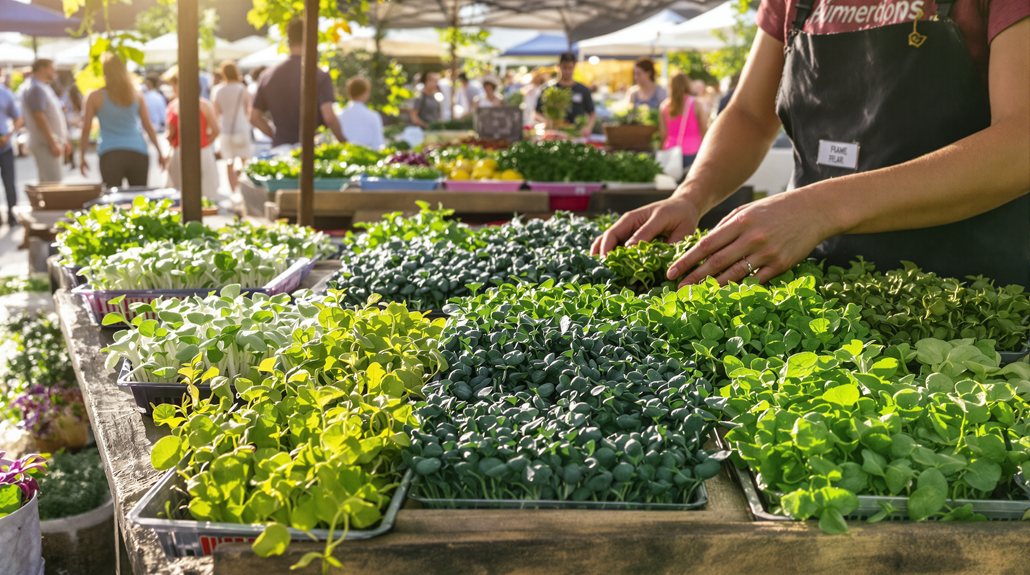
Urban Harvest Farmers Market in the Heights and Rice University Farmers Market in Rice Village are your best starting points. Both run year-round and regularly carry specialty vendors selling same-day or prior-day harvests. Kingwood Farmers Market is another reliable Saturday option. Skip seasonal or pop-up markets — they’re hit or miss. Arrive before noon because popular vendors sell out fast. Keep going and you’ll know exactly what to look for once you get there.
Key Takeaways
- Urban Harvest Farmers Market in the Heights runs year-round with 80+ vendors and regularly features microgreens from local specialty growers.
- Rice University Farmers Market operates Tuesday and Saturday in Rice Village, drawing specialty vendors who often rotate from Urban Harvest locations.
- Kingwood Farmers Market runs Saturdays year-round, attracting committed growers who consistently offer specialty crops including microgreens.
- Arrive early since popular microgreens vendors frequently sell out before noon, especially sunflower, pea shoots, and radish varieties.
- Use the MGW Farmers Market Finder at markets.microgreensworld.com to locate Houston markets by zip code, day, and hours before visiting.
Why does buying microgreens at a Houston farmers market matter?
Microgreens at a grocery store travel through a distribution chain that takes 3 to 7 days from harvest to shelf.
By the time you buy them, you’re already losing flavor and texture.
At a Houston farmers market, the grower typically harvests the same day or the day before, so what you take home is a different product entirely.
What same-day harvest means for flavor and shelf life
Most Houston farmers market vendors harvest their microgreens the same morning or the day before market day. That’s a gap of 12 to 24 hours from cut to your hands.
Grocery store microgreens don’t work that way. Distribution chains add 3 to 7 days between harvest and shelf. By the time you buy them, they’re already losing texture and flavor.
The difference shows up immediately. Fresh microgreens houston shoppers pick up at market are firm, bright-tasting, and last longer in your fridge.
Same-day harvest also means higher nutrient density. Microgreens start degrading after cutting. Less time between farm and table means more of what you’re buying for.
That timing gap is the main reason serious buyers skip the grocery aisle entirely.
Why farmers market microgreens differ from what you find at the grocery store
The gap between a farmers market stand and a grocery shelf isn’t just distance. It’s time. Grocery store microgreens travel 3 to 7 days through distribution before you touch them.
Farmers market growers harvest the same day or the day before. You’re getting a completely different product.
That difference shows up in texture, flavor, and how long they last at home. Wilted edges and muted taste are signs of age, not variety.
When you search for fresh microgreens near me Houston, you’re looking for this. You want what the Heights crowd already knows. Urban Harvest Farmers Market vendors bring product that left the farm that morning.
That’s the standard worth chasing.
Which Houston farmers markets are most likely to have microgreens vendors?
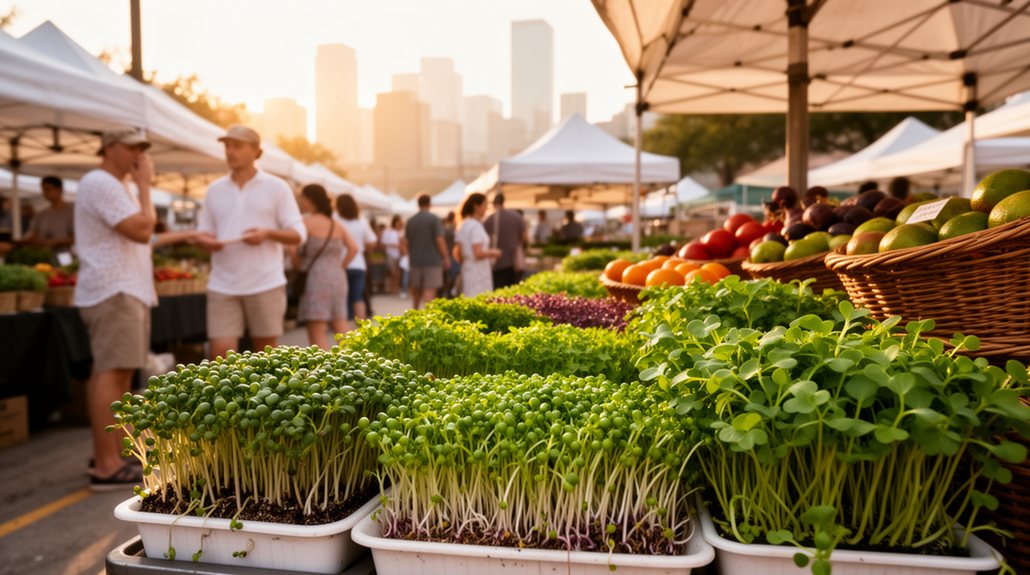
Two Houston markets give you the best shot at finding fresh microgreens. Urban Harvest Farmers Market in the Heights runs year-round with over 80 vendors, making specialty produce a regular presence.
Rice University Farmers Market, also managed by Urban Harvest, operates Tuesday and Saturday in the Rice Village area and draws similar specialty vendors.
Urban Harvest Farmers Market and what to expect there
Urban Harvest Farmers Market pulls in over 80 vendors on its 18-acre site in the Heights neighborhood. It runs year-round, so you’re not waiting for a season window.
Look for microgreens vendors in the specialty produce section. Urban Harvest Farmers Market microgreens Houston shoppers find here are typically cut the same morning.
| Detail | Info | Why it matters |
|---|---|---|
| Location | Heights neighborhood | Easy access from central Houston |
| Schedule | Year-round | No seasonal gap |
| Vendor count | 80+ | More specialty options |
| Harvest timing | Same day or prior day | Peak flavor and texture |
| Management | Urban Harvest co-op | Consistent vendor standards |
Arrive early. Popular microgreens vendors sell out before noon.
Rice University Farmers Market and its specialty produce vendor presence
Rice University Farmers Market runs twice a week. Tuesday and Saturday, it operates in the Rice Village area. Urban Harvest manages this location, just like the Heights market.
That shared management matters. Vendors who sell at Urban Harvest often rotate to Rice Village too. If you miss a microgreens vendor on Saturday at the Heights, check Rice University Farmers Market on Tuesday.
The Rice Village customer base expects specialty produce. That demand keeps vendors coming back with rice university farmers market microgreens and other short-shelf items.
Arrive early. Microgreens sell fast at smaller markets because supply is limited. Vendors harvest the day before or the morning of market day. That freshness is something grocery store microgreens, sitting in distribution for up to seven days, can’t match.
What should you look for when you find a microgreens booth at a Houston market?
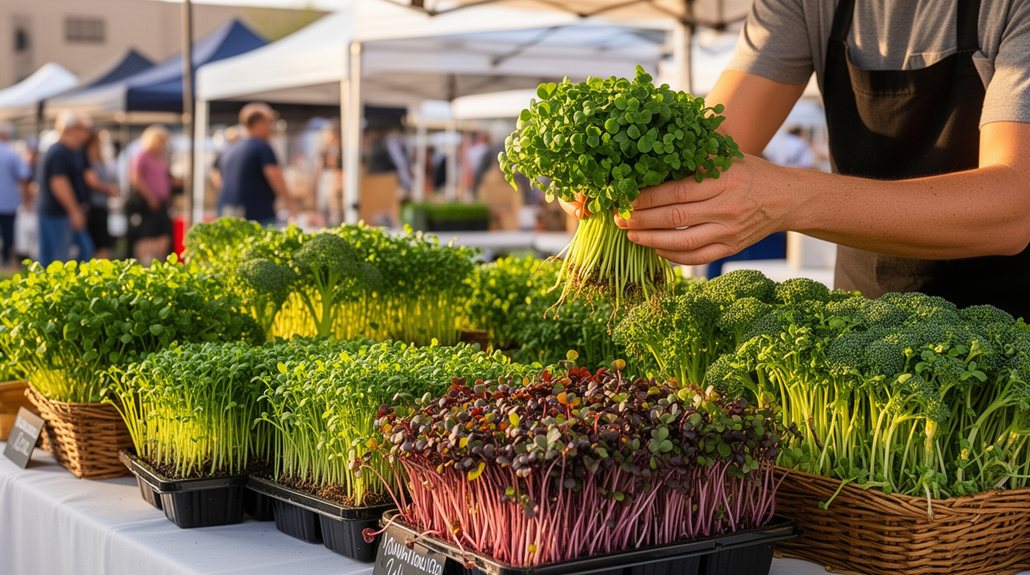
Finding a good microgreens vendor takes more than spotting a pretty display.
You need to check two things fast: how fresh the greens actually are and whether the vendor can answer basic questions about their harvest.
Those two checks will tell you everything about whether it’s worth buying.
How to tell if the microgreens were harvested recently
When you spot a microgreens booth, check the trays before you ask a single question.
Fresh microgreens houston shoppers know to look for upright stems. If they’re leaning or matted down, they’ve been sitting too long.
Look at the color next. Bright, even color across the tray means recent harvest. Yellow edges or browning tips mean age.
Touch the leaves gently. They should feel firm and slightly crisp. Limp or soggy texture means moisture has broken down the cell structure.
Smell the tray. Fresh cuts have a clean, green scent. A sour or fermented smell is a hard pass.
Ask the vendor when they harvested. A good grower knows the exact day.
What to ask the vendor before you buy
Once you’ve checked the tray, talk to the vendor. Ask one question: when did you harvest this?
Most vendors selling fresh microgreens in Houston cut within 24 hours of market day. If they pause or give a vague answer, that tells you something.
Ask if they grow locally. Soil-grown or hydroponic matters less than distance. Local means faster from cut to your hands.
Ask what varieties they’ve beyond sunflower and pea shoots. Vendors with depth know their product.
If you’re at Urban Harvest or Rice University Farmers Market, vendors there field these questions often. They expect it.
People who buy fresh microgreens in Houston regularly ask these questions every time. You should too.
What microgreens varieties can you find at Houston farmers markets?
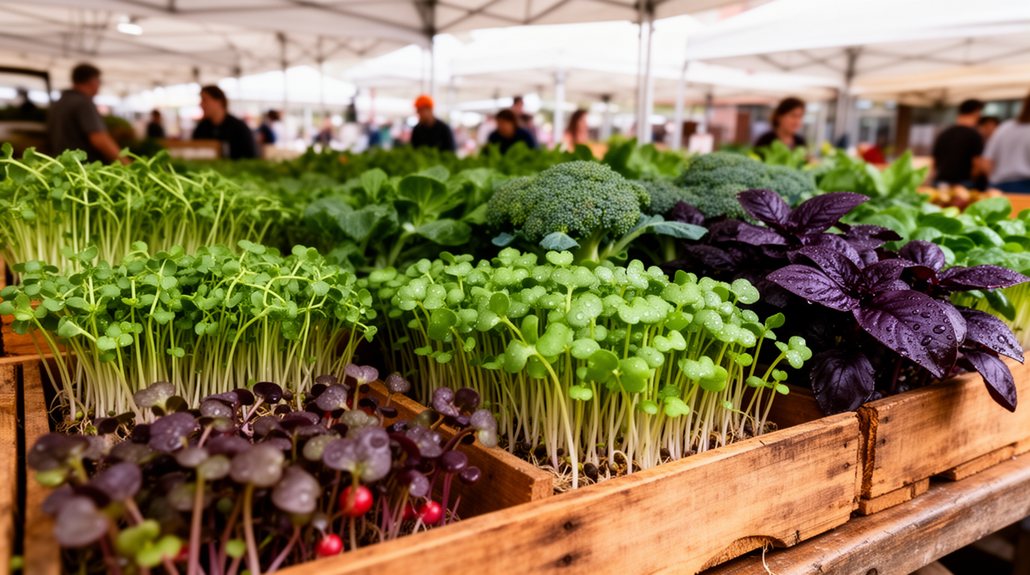
Houston market vendors carry more variety than most grocery stores ever stock. Sunflower, pea shoots, radish, broccoli, amaranth, and wheatgrass show up regularly at Urban Harvest and Rice University markets.
Knowing which variety fits your meal before you shop saves time at the booth.
The most common varieties at Texas markets and their flavors
Most Houston farmers market vendors carry sunflower, pea shoots, and radish microgreens as their base lineup. These three move fast, so arrive early.
Sunflower microgreens taste nutty and mild. Pea shoots are sweet with a fresh snap. Radish runs spicy and sharp.
Beyond the base three, look for broccoli, amaranth, and cilantro microgreens. Broccoli tastes grassy and clean. Amaranth adds color and a mild, earthy bite. Cilantro microgreens taste exactly like the herb.
If you’re searching where to buy microgreens houston, Urban Harvest Farmers Market gives you the widest selection. More than 80 vendors means more growers competing on variety and freshness.
Ask vendors which varieties they cut that morning. Same-day harvest is the standard you want.
Which varieties work best for salads, sandwiches, and cooking
Now that you know what’s available, match each variety to how you actually cook.
Fresh microgreens Houston buyers pick up work best when paired correctly. The wrong match dulls flavor.
| Variety | Best use | Why it works |
|---|---|---|
| Sunflower | Salads | Mild, nutty, holds dressing |
| Radish | Sandwiches | Peppery bite cuts rich fillings |
| Pea shoots | Light cooking | Stays tender under low heat |
Use sunflower and pea shoots raw to keep their texture intact.
Radish microgreens lose heat fast. Add them after cooking, not during.
You’re buying what people in the know already choose. Match the variety to the dish first.
How do you find a Houston farmers market with microgreens near you?
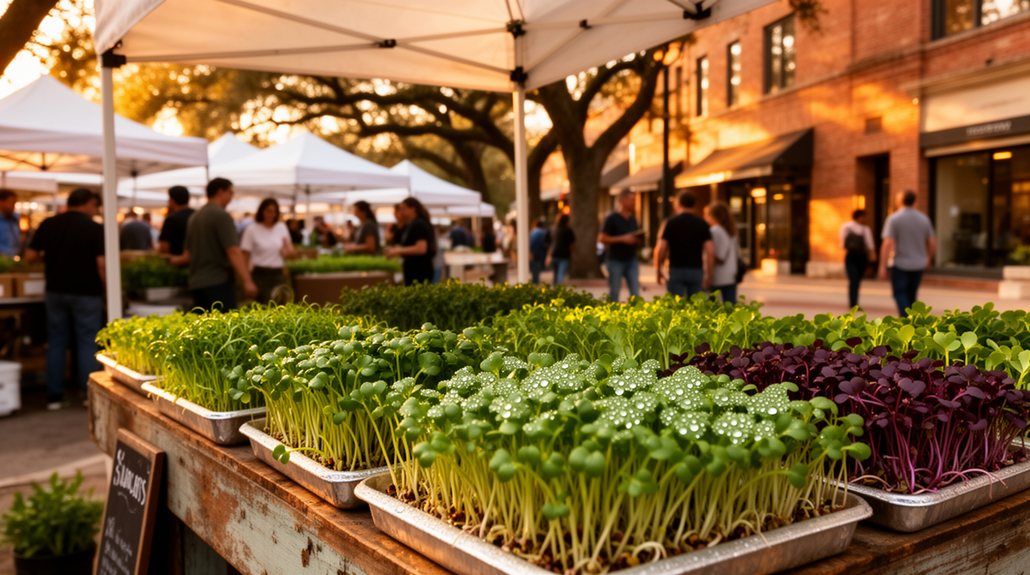
Not every farmers market in Houston carries microgreens.
Year-round markets like Urban Harvest Farmers Market and Kingwood Farmers Market are your best starting points for specialty greens.
Check the MGW Farmers Market Finder at markets.microgreensworld.com before you drive anywhere.
What market types are most likely to carry specialty greens in Texas
Year-round markets carry microgreens more often than seasonal ones. Vendors invest in growing specialty crops when they know the market runs consistently.
Use this table to match market type with likelihood when searching where to find microgreens houston.
| Market type | Season | Microgreens likelihood |
|---|---|---|
| Year-round indoor/outdoor | 52 weeks | High |
| Seasonal (May–October) | 26 weeks | Medium |
| Occasional/pop-up | Varies | Low |
Urban Harvest locations run year-round and attract vendors who grow specialty crops.
Kingwood Farmers Market also runs Saturdays year-round. That consistency brings committed growers.
Seasonal markets like Midtown and Discovery Green are worth checking, but your odds drop. Start with year-round markets first.
How to use the MGW Market Finder before you make the trip
Before you drive anywhere, pull up markets.microgreensworld.com. Type in your Houston zip code or neighborhood name.
The MGW Farmers Market Finder covers 7,842 USDA-verified markets. It shows hours, season dates, and SNAP/EBT acceptance for each location.
Filter results by day of week. If you want a Saturday microgreens farmers market in Houston, set that filter first. You’ll see what’s open before you leave.
Check the season dates carefully. Some Houston markets run year-round. Others close between October and May.
The MGW Farmers Market Finder covers 7,842 USDA-verified markets across all 50 states. Search by zip code or city to find markets near you with hours, season dates, and SNAP/EBT acceptance before you leave home – markets.microgreensworld.com.
Frequently Asked Questions
Can You Buy Microgreens at Houston Farmers Markets With SNAP or EBT?
Yes, you can use SNAP/EBT at several Houston farmers markets. Urban Harvest Farmers Market and Rice University Farmers Market both accept EBT. Check individual vendors, as not every booth participates.
How Much Do Microgreens Typically Cost at Houston Farmers Markets?
You’ll usually pay $4 to $8 for a small clamshell and $10 to $15 for a larger tray. Urban Harvest vendors tend to price toward the higher end.
Do Houston Farmers Market Microgreens Vendors Sell Grow Kits Too?
Some do. Ask your vendor directly. Many microgreens sellers bring grow kits alongside their fresh trays. It’s common at Urban Harvest and Rice University markets, where customers like you want to grow at home.
Are Houston Farmers Markets Open Year-Round or Only in Certain Seasons?
Some run year-round, and some don’t. Urban Harvest Farmers Market and Kingwood Farmers Market stay open all year. Midtown, Discovery Green, and Texas Medical Center markets run seasonally. Check before you go so you don’t miss out.
How Do You Store Microgreens After Buying Them at a Market?
Keep them in the clamshell or a breathable container. Store them dry in your fridge. Don’t rinse until you’re ready to eat. They’ll stay fresh three to seven days this way.
Leave a Reply