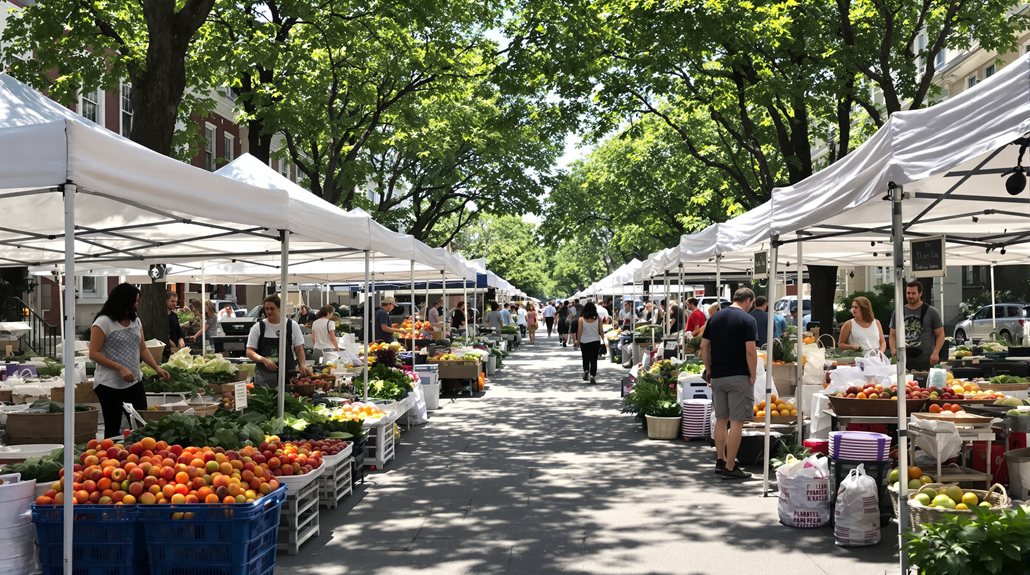
Clark Park Farmers Market runs Saturday mornings at 4300 Chester Avenue in West Philadelphia. To get a vendor spot, contact the market manager directly through the Clark Park market contact page or the Mariposa Food Co-op network. Have your business name, product list, and certifications ready before you reach out. Apply in late winter for a spring start. Spots open intermittently, and the committee reviews vendor mix carefully — so knowing the gap you fill matters more than you’d expect.
Key Takeaways
- Clark Park Farmers Market runs Saturday mornings at 4300 Chester Avenue, Spruce Hill, West Philadelphia, drawing health-conscious, food-literate neighborhood shoppers.
- Confirm the market is accepting new vendors, then contact the market manager through the Clark Park market contact page or Mariposa Food Co-op network.
- Prepare your business name, full product list, and required certifications before reaching out to avoid delays in the application process.
- Specialty produce, including microgreens, faces low competition in the vendor mix, making it a strong category angle for a new application.
- Timing your application in late winter improves your chances of securing a spot for the spring season market schedule.
What should you know about Clark Park Farmers Market before you apply?
Clark Park Farmers Market runs Saturday mornings in Spruce Hill, West Philadelphia. It draws a younger, health-conscious crowd that already knows what microgreens are.
The vendor mix and customer base here are different from most Pennsylvania markets, and that difference matters before you apply.
What Makes Clark Park Farmers Market Different From Other Pennsylvania Markets
Situated in Spruce Hill, one of West Philadelphia’s most food-engaged neighborhoods, Clark Park Farmers Market runs on Saturday mornings in Clark Park itself. This isn’t a generic suburban market.
The customer base is younger, food-literate, and actively looking for specialty produce. West Philly has some of Philadelphia’s highest rates of food co-op membership and farmers market engagement.
That means a clark park farmers market vendor enters a crowd that already knows what microgreens are.
| Factor | Clark Park vs. Typical PA Market |
|---|---|
| Customer profile | Food-literate, health-conscious |
| Produce competition | Lower than prepared food vendors |
| Neighborhood engagement | Among highest in Philadelphia |
Specialty produce is under-represented here. That gap exists right now. Your application strategy starts with understanding that gap.
Who Shops There and What They Actually Buy
Before you apply, you need to know exactly who’s walking through that market on a Saturday morning.
Clark Park draws younger, health-conscious shoppers from Spruce Hill and surrounding West Philadelphia neighborhoods. These buyers read labels. They ask questions. They already know what microgreens are.
This community has some of Philadelphia’s highest rates of food co-op membership and farmers market engagement. These shoppers aren’t uncovering specialty produce. They’re looking for it.
That matters when you’re reviewing clark park farmers market vendor requirements. The market rewards vendors who match what the customer base already wants.
Specialty produce is under-represented here compared to prepared food and baked goods. That gap is real. It’s your entry point.
What does the vendor mix look like at Clark Park Farmers Market?
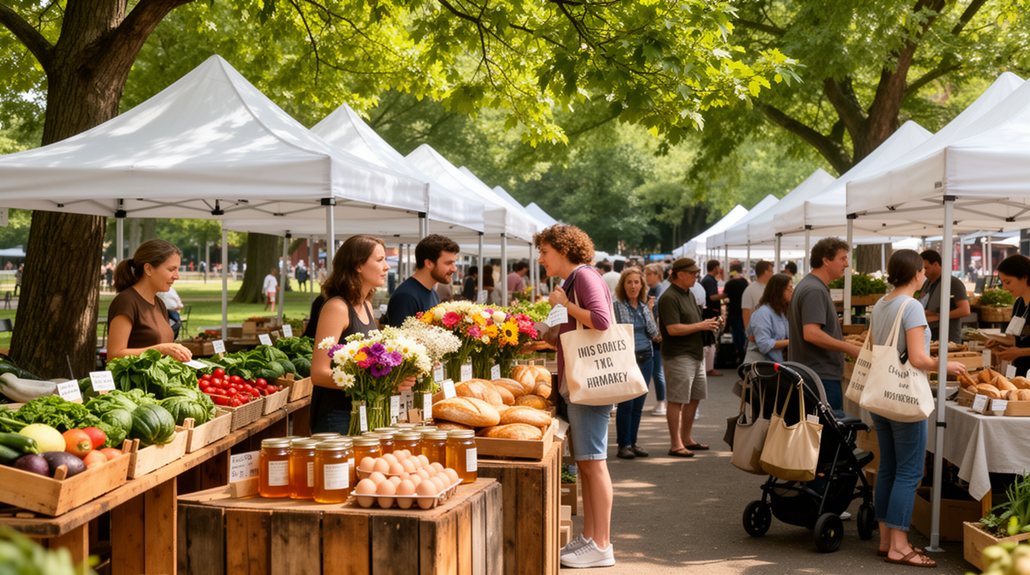
Clark Park skews heavy toward prepared food, baked goods, and general produce.
Specialty produce vendors, including microgreens, are under-represented. That gap is exactly where your application has room to land.
Which categories are overrepresented at Clark Park Farmers Market
When you walk Clark Park on a Saturday morning, you’ll see a heavy concentration of produce vendors. The clark park market produce vendor presence is strong, especially for seasonal vegetables and fruit.
Baked goods and prepared food stalls fill in the gaps. These two categories consistently take up vendor space across Philadelphia neighborhood markets.
| Category | Competition Level |
|---|---|
| Seasonal produce | High |
| Baked goods | High |
| Prepared food | High |
| Specialty produce | Low |
Microgreens fall into that last row. Most vendors aren’t covering it.
That gap is real. If you show up in a saturated category, you’re fighting for the same customers. If you show up in an open one, you’re the only option.
Where the gap is for specialty produce vendors
That low-competition row isn’t just a table entry. It’s your entry point.
Microgreens at Clark Park Farmers Market sit in the specialty produce category. That category has fewer vendors than baked goods or prepared food. The customer base already buys specialty produce. They just don’t have many options for it.
Dr. Booker T. Whatley’s framework is direct: know your customer before you pick your market. Clark Park’s customer already shops this way. You’re not convincing anyone. You’re showing up where demand already exists.
West Philadelphia has some of Philadelphia’s highest farmers market engagement rates. That community wants what you’re growing. The gap is real and it’s open right now.
What does the Clark Park Farmers Market vendor application process involve?
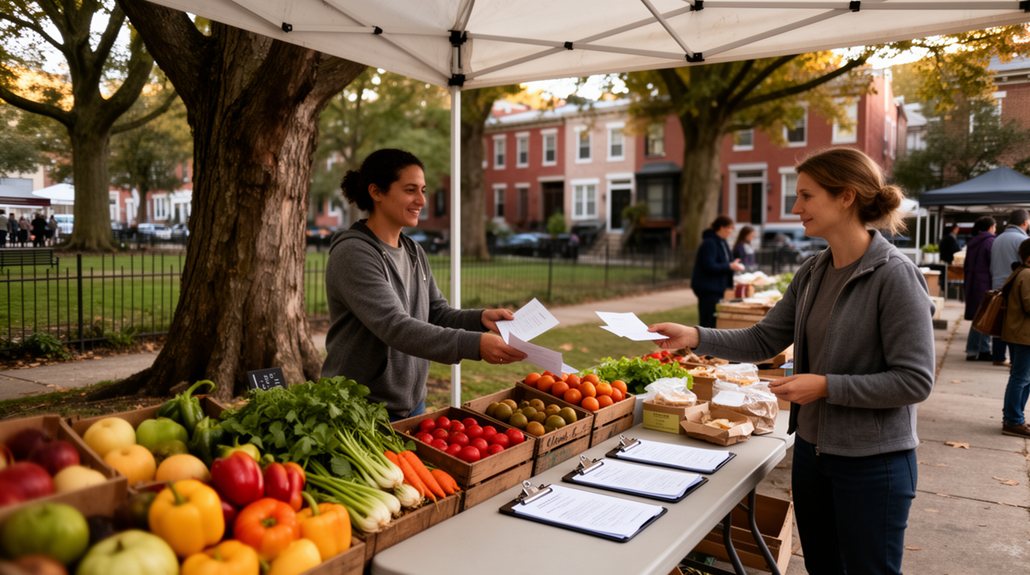
Clark Park’s application process has two parts: what you prepare before you submit, and how the market selects vendors.
You need to have the right documents and product information ready before you apply.
The selection process is competitive, so knowing what reviewers look for gives you a real edge.
What the market requires before you submit an application
Before you fill out anything, check whether the market is even accepting new vendors. Clark Park runs a managed vendor list. Spots don’t open constantly.
Contact the market manager directly through the Mariposa Food Co-op network or the Clark Park market’s official contact page. Ask about open categories before you invest time in paperwork.
If you’re figuring out how to get into Clark Park Farmers Market, category fit matters. They need to know what you’re selling and whether that category has room.
For microgreens, you’d likely fall under specialty produce. That category sees less competition than baked goods or prepared food.
Have your business name, product list, and proof of any required certifications ready before you reach out. Don’t show up empty-handed to that first conversation.
What the selection process looks like
Once you confirm your category has an opening, the application itself moves in stages. You submit the form, then the market reviews your fit against current clark park market vendor requirements.
The review looks at product type, vendor mix, and whether your offering fills a gap. Microgreens often qualify as specialty produce, which faces less competition than baked goods or prepared food.
After review, you may get a follow-up request for samples or more documentation. Some vendors are asked to attend a trial Saturday before they’re approved.
Approval isn’t automatic. The market committee decides based on what the market needs that season. If your category is full, you go on a waitlist. Timing your application for late winter improves your chances for a spring start.
What do microgreens vendors specifically need to know about Clark Park Farmers Market?
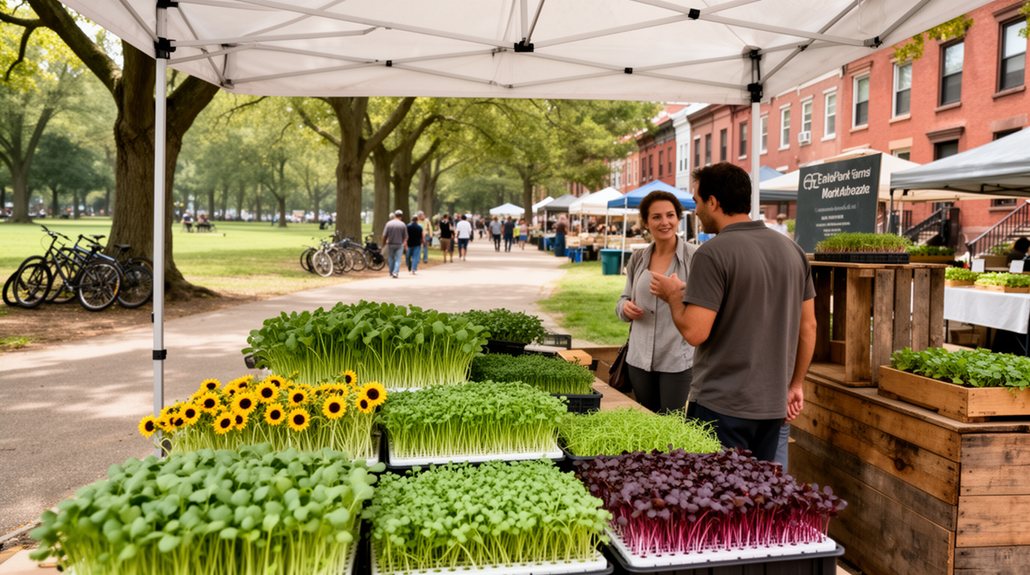
Clark Park’s customer base skews younger, health-conscious, and food-literate.
That’s a direct match for microgreens. Knowing what that customer buys and what’s missing from the vendor mix is how you build a strong application.
Why Clark Park Farmers Market’s customer base is a strong match for specialty greens
Most farmers markets attract casual shoppers. Clark Park draws a different crowd.
The Spruce Hill neighborhood has some of Philadelphia’s highest rates of food co-op membership and farmers market engagement. These shoppers already know what microgreens are. You don’t have to explain them.
The customer base skews younger, health-conscious, and food-literate. They read labels. They ask questions. They come back when the product is consistent.
Specialty produce at Clark Park Market faces far less competition than baked goods or prepared food. That gap is real. It’s where you fit.
Dr. Booker T. Whatley said it plainly: know your customer before you choose your market. Clark Park’s customer already wants what you’re selling.
What sets successful vendors apart at Clark Park Farmers Market
Show up to Clark Park before you apply. Walk the market on a Saturday morning. Watch what moves, what sits, and where the gaps are.
Specialty produce is under-represented. That gap is your opening for the clark park farmers market application 2026.
Vendors who get in know the room. They match their product to what this customer base already wants. At Clark Park, that’s local, fresh, and different.
Talk to vendors. Count the tables. Note which categories are crowded and which aren’t.
You’ll see that microgreens have almost no competition here. That observation is your application strategy. Show the market that you fill a real gap, not just add another table.
How do you find Clark Park Farmers Market and locate other markets like it near you?
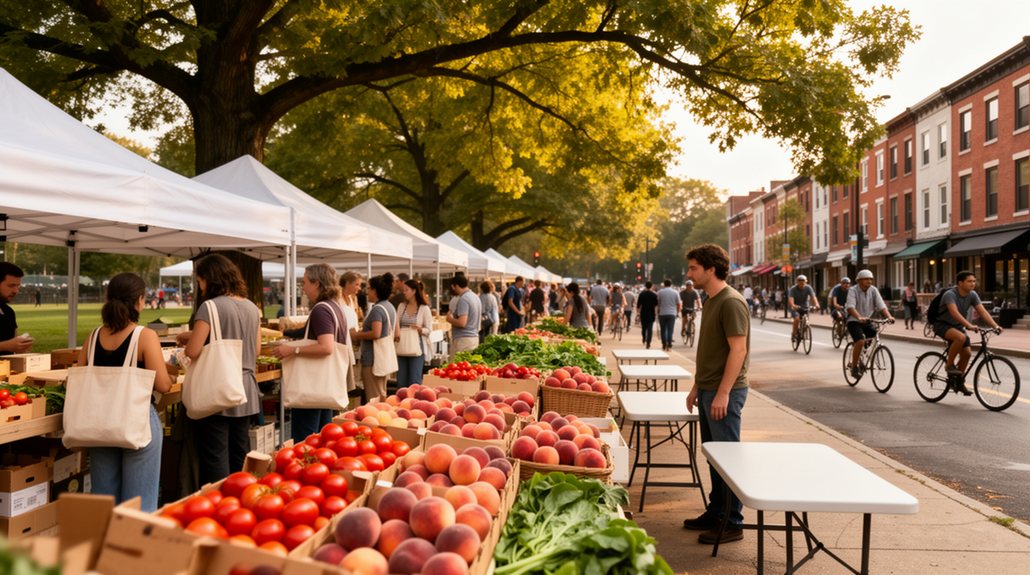
Clark Park is at 4300 Chester Avenue in West Philadelphia. If you’re looking for markets like it across Pennsylvania, the MGW Farmers Market Finder at markets.microgreensworld.com covers 7,842 USDA-verified markets searchable by zip code, city, or state. Before you apply anywhere, you need to know what to look for so you don’t waste your time or your application fee.
Using the MGW Market Finder to scout markets in Pennsylvania
Scouting markets in Pennsylvania starts at markets.microgreensworld.com. The MGW Farmers Market Finder covers 7,842 USDA-verified markets across all 50 states.
Search by zip code, city, or state. Type in 19143 or “West Philadelphia” and Clark Park pulls up alongside nearby options.
This matters before you submit a philadelphia farmers market vendor application. You want to compare multiple markets at once, not just apply to the first one you find.
Look at vendor mix, location, and operating days for each result. Some markets have gaps in specialty produce. Others are already saturated.
Find the right fit first. Then apply.
What to look for before you apply to any Pennsylvania market
Before you apply anywhere, you need to know what you’re comparing Clark Park against. Most west Philadelphia farmers market vendor applicants skip this step. That’s a mistake.
Check these three factors at every market before you apply.
| Factor | What to look for | Why it matters |
|---|---|---|
| Vendor mix | Count produce stalls vs. prepared food | Gaps show your opening |
| Customer type | Age, cart size, product questions | Tells you what moves |
| Specialty produce presence | Any microgreens visible? | Low count means less competition |
| Fee structure | Application and weekly fees | Affects your margin |
| Foot traffic | Count shoppers per hour | Predicts your volume |
Low specialty produce numbers at a market mean your application has a real angle.
Frequently Asked Questions
Does Clark Park Farmers Market Run Year-Round or Only Seasonally?
Clark Park Farmers Market runs seasonally, not year-round. It operates on Saturday mornings during the warmer months. Check the market’s current schedule directly before you plan your vendor application or first visit.
How Many Vendor Spots Are Typically Available at Clark Park?
You’re looking at a small, tight vendor lineup. Clark Park typically runs around 20 to 30 vendors on any given Saturday. Spots don’t open often, so timing your application matters.
Can You Sell at Clark Park and Other Philadelphia Markets Simultaneously?
Yes, you can sell at Clark Park and other Philadelphia markets simultaneously. Most markets don’t require exclusivity. Check each market’s vendor agreement carefully, as some restrict selling the same products at competing nearby markets.
What Are the Average Weekly Sales Volumes for Produce Vendors There?
Clark Park doesn’t publish vendor sales data. You’ll get real numbers by visiting the market, talking to vendors directly, and watching transaction volume across a full Saturday morning.
Does Clark Park Farmers Market Require Vendors to Carry Liability Insurance?
You’ll need liability insurance to vend at Clark Park. Most Philadelphia farmers markets require at least $1 million in general liability coverage. Confirm the exact requirement directly with Clark Park’s market manager before you apply.
Leave a Reply