Tag: microgreens vendors

  • Who Shops at Farmers Markets? What the Customer Demographics Tell Microgreens Vendors

    Who Shops at Farmers Markets? What the Customer Demographics Tell Microgreens Vendors

    Your most likely buyer is a college-educated woman earning above the median income who already knows what microgreens are. Urban and western markets attract this shopper at the highest rates. Rural and southern markets draw customers who need education before they buy. Matching your booth strategy to the right customer type starts with knowing exactly which market you’re targeting — and the data makes that decision straightforward.

    Key Takeaways

    • Farmers market shoppers with college degrees or higher household incomes buy specialty crops, including microgreens, at significantly greater rates than other demographics.
    • Women purchase specialty produce at higher rates than men, making them a primary target customer segment for microgreens vendors.
    • Urban shoppers already recognize microgreens, while rural and southern shoppers need education and sampling before converting to buyers.
    • Younger shoppers in their 20s and 30s actively research ingredients, making them more receptive to microgreens without extensive vendor explanation.
    • Market location predicts buyer readiness: urban and western markets show higher specialty crop purchase rates than rural or southern markets.

    Who actually shops at farmers markets in the United States?

    You can’t build a booth strategy around guesses about who shows up.

    Lee and Miller (2026, HortTechnology 36(3)) surveyed 229 US farmers market managers and found that specialty crop sales vary sharply by market type.

    Urban, year-round, and producers-only markets outperform rural and southern markets by a wide margin.

    What the research says about who buys at different market types

    Not every farmers market draws the same type of shopper. Farmers market customer demographics shift significantly based on market type and location.

    Lee and Miller (2026, HortTechnology 36(3)) surveyed 229 US farmers market managers. The data shows clear patterns.

    Market type Specialty crop sales reported Shopper profile
    Year-round markets 65.2% High-frequency, educated buyers
    Urban markets 60.8% Food-literate, variety-seeking
    Producers-only markets 57.6% Trust-driven, source-conscious
    Western markets 52.1% Familiar with specialty crops
    Rural markets 25.9% Needs education and sampling

    You’re not selling to a general public. You’re selling to a specific group at a specific market. Know the difference before you apply.

    How urban and rural market buyers differ in what they already know

    Urban and rural shoppers don’t arrive at the booth with the same knowledge.

    Urban farmers market customers already know what microgreens are. Lee and Miller (2026) confirmed this. Urban markets hit 60.8% specialty crop sales. Western markets reached 52.1%. These shoppers want variety names, sourcing details, and growing methods.

    Rural shoppers need more from you. Southern markets sat at 25%. Rural markets hit 25.9%. That gap tells you the education work falls on your booth.

    A Portland shopper asks which variety pairs with eggs. A shopper in rural Mississippi needs a sample and a plain suggestion.

    Same product. Different starting point. Your signage, sampling setup, and talking points have to match who’s actually standing in front of you.

    What type of farmers market customer is most likely to buy specialty crops?
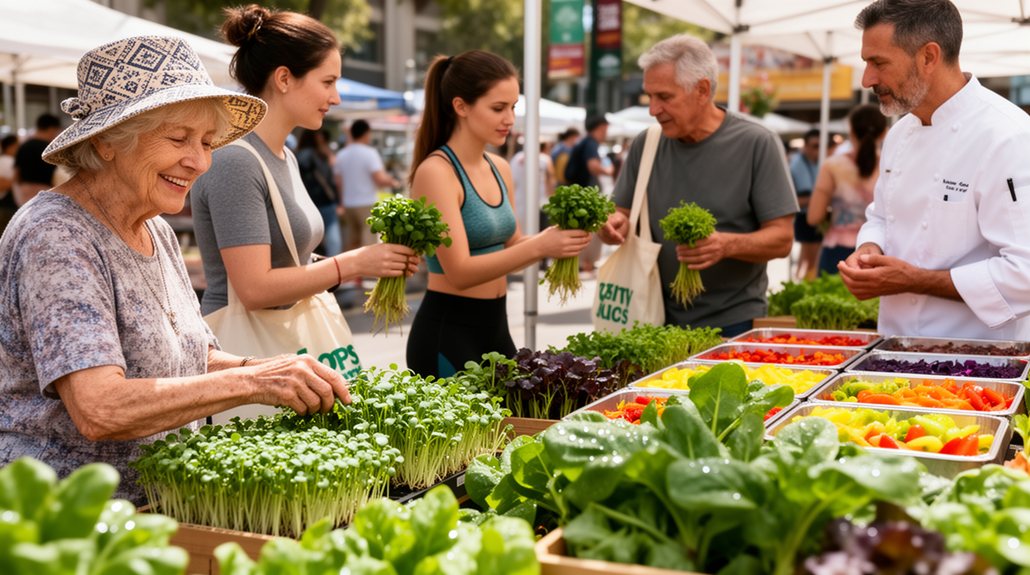
    higher income educated local shoppers

    Not every farmers market shopper is ready to buy microgreens. Lee and Miller (2026) found that education level, household income, and market location all predict specialty crop purchases. You need to know which customer type shops your target market before you set up a single tray.

    What education level, income, and location data show about specialty crop buyers

    Three data points from Kelley et al. (2002) tell you exactly who’s most likely to buy specialty crops: education level, household income, and gender.

    Higher-educated shoppers buy specialty produce more often. Higher farmers market shopper income also increases purchase likelihood. Women buy at higher rates than men.

    Factor Higher likelihood Lower likelihood
    Education College degree or higher No college background
    Household income Above median income Below median income
    Gender Women Men
    Market location Urban, western markets Rural, southern markets
    Product familiarity Already knows microgreens Needs booth education

    You’re not selling to everyone. You’re selling to a specific person. Match your booth to that profile and your conversions improve.

    Why the urban and western market advantage is about customer readiness

    Knowing the buyer profile matters. Urban and western markets don’t just have more foot traffic. They’ve shoppers who already recognize specialty crops.

    Lee and Miller (2026) found 60.8% of urban markets and 52.1% of western markets reported specialty crop sales. That’s your farmers market buyer profile in action.

    These shoppers don’t need a basic explanation. They’re looking for variety, sourcing details, and something new.

    You fit that picture. Microgreens are specialty by definition.

    At a Portland Saturday market, your signage can go deeper. Skip the “what is this” sign. Lead with the variety name and how it was grown.

    Customer readiness means less education time. More selling time.

    How does knowing your customer change your farmers market booth strategy?
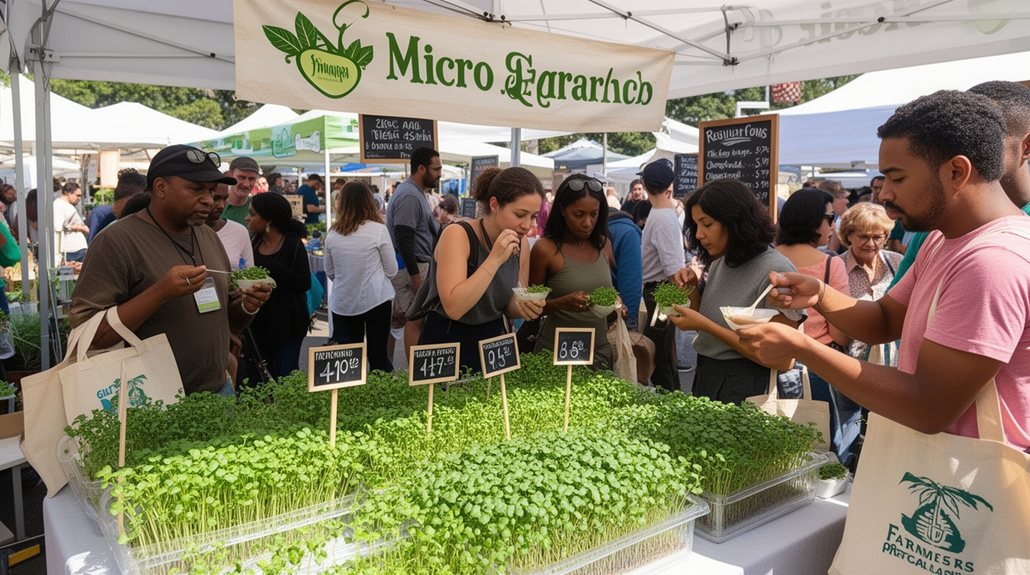
    match booth to buyer

    Your booth setup, signage, and sampling strategy should match the buyer standing in front of you.

    A Portland shopper and a rural Mississippi shopper both might buy your microgreens, but they need completely different approaches to get there.

    Knowing who shops at your target market before you apply is what separates a profitable setup from a wasted weekend.

    Why a Portland shopper and a rural Mississippi shopper need different approaches

    When the shopper changes, the booth has to change too. Your microgreens customer profile determines everything from signage to sampling.

    Element Portland (urban/western) Rural Mississippi
    Signage Variety names, sourcing story Simple usage suggestions
    Sampling Secondary, not required Primary conversion tool
    Pricing $6–$8 accepted readily Needs value justification
    Education level Already knows microgreens Needs basic explanation

    Urban western markets show 52.1% specialty crop sales. Rural markets sit at 25.9%.

    That gap tells you where the work is. In Mississippi, your sampling station is your sales pitch. In Portland, your label does the talking.

    What the sampling station is really solving for different buyer types

    The sampling station isn’t decoration. It’s a conversion tool, and who shops at farmers markets determines how you run it.

    For a rural shopper in Mississippi, the sample answers a real question: what’s this, and how do I cook it. Place sunflower microgreens on a cracker. Say “try this.” That’s your whole pitch.

    For an urban shopper in Portland, the sample confirms a decision they’ve already started making. They want to know the variety. They want to know if you grew it yourself.

    Same tray. Different conversation.

    Your booth belongs to the shopper in front of it. Know their baseline before you set up. That single adjustment changes how many people walk away buying instead of just tasting.

    How do you identify the right customer profile before you apply to a market?

    visit observe listen analyze

    You don’t pick a market based on location alone. You visit first, watch the crowd, and read what the data won’t show you.

    A Saturday morning walkthrough tells you who’s buying, how fast they move, and whether your product fits the room.

    The pre-application visit method for reading a market’s customer base

    Show up at the market before you ever fill out an application. Walk through it like a shopper, not a vendor.

    Count the booths. Note what’s missing. If you see no specialty greens, that’s data.

    Watch who stops and buys. Are they asking questions or just grabbing and paying? That tells you how much booth education you’ll need.

    This is farmers market buyer research done in person. No survey replaces it.

    Time your visit to match peak hours. Most markets run heaviest from 9 a.m. to 11 a.m. on Saturdays.

    Talk to two or three vendors who aren’t your competition. Ask what sells. Ask who buys it.

    You’re building enough repeat buyers to sustain your revenue. Start by knowing exactly who’s already there.

    What to watch for on a Saturday morning that the data cannot tell you

    Saturday mornings at a market reveal things no spreadsheet can capture. Observe how long shoppers pause at vendor tables. Brief pauses indicate low engagement.

    Tally how many people carry reusable bags. That signals a regular, education-aware shopper base.

    Note whether vendors explain their products or simply wait. If explanation is common, farmers market education demographics lean toward curious but unfamiliar buyers.

    Monitor age ranges. Younger shoppers in their 20s and 30s often research ingredients. Older shoppers may require more direct use suggestions.

    Check how many booths offer samples. Heavy sampling suggests the crowd needs convincing.

    You’re not just visiting. You’re assessing whether your future customers already belong to this market’s culture or whether you’d have to build that from scratch.

    How do you use customer data to find the right market near you?
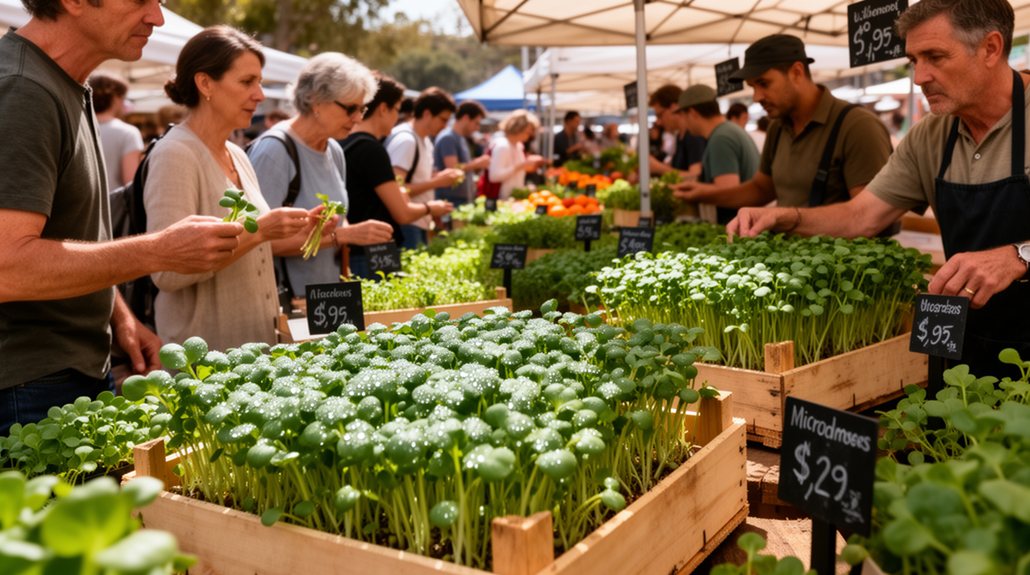
    find verified nearby market details

    Customer data only helps if you can match it to a real market near you. The MGW Market Finder shows market type, location, and seasonal data for 7,842 USDA-verified markets across all 50 states.

    Before you apply anywhere, you need answers to three specific questions about that market.

    What the MGW Market Finder shows about market type and location

    Before you apply to any market, pull up the MGW Market Finder at markets.microgreensworld.com. It covers 7,842 USDA-verified markets across all 50 states.

    Search by zip code, city, or state. The tool shows market type, location, and seasonal data.

    That farmers market demographic data tells you what kind of buyer shops there. Urban markets report 60.8% specialty crop sales. Rural markets sit at 25.9%. That gap changes your whole approach.

    Employ the market type filter to separate year-round markets from seasonal ones. Year-round markets hit 65.2% specialty crop sales.

    The MGW Farmers Market Finder has 7,842 USDA-verified markets searchable by zip code, city, or state. Employ it to find and compare markets near you before you apply – markets.microgreensworld.com.

    The Microgreens Growth Path Tool maps your first move using local market data – growthpath.microgreensworld.com.

    The three questions to answer about any market before you apply

    Picking the wrong market wastes your time and your product. Before you apply anywhere, answer three questions.

    First: Is this market urban, rural, or western? That single factor predicts whether your microgreens target customer already knows the product.

    Second: Is it year-round or seasonal? Lee and Miller found year-round markets hit 65.2% specialty crop sales. Seasonal markets are riskier for new vendors.

    Third: Is it producers-only? Those markets run at 57.6% specialty crop adoption. Your booth fits the culture there.

    Pull the market’s location and type from the MGW Market Finder. Match what you see to the three questions. Then apply to the market that fits your buyer profile, not just the closest one.

    Frequently Asked Questions

    Does Booth Signage Language Need to Change Based on Market Region?

    Yes, your signage language needs to change by region. Urban shoppers read variety names and sourcing details. Rural shoppers respond to simple usage suggestions. Match your words to what your buyers already know.

    How Many Markets Should a New Microgreens Vendor Apply to at Once?

    Start with one market. You can’t read a crowd you’re not standing in front of yet. Get your booth dialed in before you split your attention across multiple applications.

    What Time of Year Do Specialty Crop Sales Peak at Farmers Markets?

    Specialty crop sales peak at year-round markets, where 65.2% of managers report strong sales. You’ll see your best numbers in spring and early summer when shoppers are actively seeking fresh, local produce.

    Can a Single Vendor Sell at Both Urban and Rural Markets Successfully?

    Yes, you can. Adjust your booth strategy per market. Urban stops need variety details and sourcing info. Rural stops need sampling and simple utilization suggestions. Same trays, different presentation.

    Does Market Size Affect How Quickly Microgreens Vendors Build Repeat Customers?

    Yes, it does. Smaller markets build repeat customers faster because you’ll see the same faces weekly. Larger markets bring more foot traffic but slower loyalty. Your consistency at either size drives the repeat cycle.
  • Farmers Markets in Vermont for Microgreens Vendors

    Farmers Markets in Vermont for Microgreens Vendors

    Vermont’s approximately 108 registered farmers markets concentrate vendor and buyer activity in Burlington, Montpelier, and Brattleboro, giving microgreens producers clearly defined, high-value entry points within a May–October selling window. You’ll need liability insurance, documented growing practices, and a focused product list before applying, as market managers compare applicants rigorously against returning growers. Sunflower and pea shoots consistently outperform specialty varieties, while pre-packaged clamshells accelerate Saturday sales. Continue ahead to sharpen your market selection strategy considerably.

    Key Takeaways

    • Vermont has approximately 108 USDA-listed farmers markets, with highest vendor and buyer activity concentrated in Burlington, Montpelier, and Brattleboro.
    • The market season runs May through October, with early applications critical since returning growers often fill slots quickly.
    • Sunflower, pea shoots, and mixed salad microgreens consistently outperform specialty varieties at high-volume Vermont markets.
    • Applications require liability insurance, a clear product list with pricing, and documented growing practices to avoid rejection.
    • Booth fees range from $20–$35 at smaller rural markets to $40–$60 or more at established venues like Burlington.

    Farmers Markets in Vermont for Microgreens Vendors

    Vermont’s approximately 108 USDA-listed farmers markets represent a meaningful opportunity for microgreens vendors who are already producing and need reliable, recurring outlets to move volume.

    The state’s market calendar runs primarily spring through fall, concentrating vendor activity in Burlington, Montpelier, and Brattleboro, where foot traffic and buyer familiarity with specialty produce tend to support consistent sales.

    Understanding both the seasonal structure and the geographic distribution of these markets lets you make strategic decisions about where to apply, rather than simply defaulting to whatever market is closest.

    Why Vermont Markets Are Worth Your Attention

    If you’re serious about building a reliable sales channel for your microgreens, Vermont’s farmers market ecosystem deserves a close look. The state supports approximately 108 active markets listed in the USDA database, giving you genuine optionality when selecting your first or next vendor spot.

    Factor Why It Matters
    Market density Multiple markets within driving range reduces dependence on a single location
    Buyer profile Vermont shoppers prioritize local, nutrient-dense produce consistently

    As a microgreens vendor vermont, you’re entering a landscape where farmers markets vermont customers already understand specialty produce. Burlington, Montpelier, and Brattleboro anchor the strongest traffic corridors. That concentration means you can test adjacent markets without rebuilding your customer education from scratch each time.

    What the Vermont Market Season Looks Like

    The Vermont market season generally runs from late spring through early fall, with the bulk of outdoor markets opening in May and wrapping up by October, though some indoor winter markets carry select locations into December.

    As a microgreens farmers market vendor, you’re working within a compressed window, which means your application timing matters considerably. Farmers market Vermont vendors who submit late often find spots already committed to returning growers. Burlington’s City Market and Montpelier’s Capital City Farmers Market both prioritize early applications, frequently closing vendor rosters before the season opens.

    Understanding this calendar compression helps you plan your production schedule around peak availability, not just peak demand. You need your grow operation synced to market access, not the other way around.

    How to Find the Right Market in Vermont

    target burlington montpelier brattleboro

    Finding the right market in Vermont starts with evaluating vendor density, foot traffic patterns, and the demographic alignment between a given market’s customer base and specialty produce like microgreens.

    Burlington’s Church Street Marketplace and its surrounding Saturday market draw high-volume, year-round shoppers who engage regularly with local growers, making the city a logical first target for vendors entering the state.

    Montpelier and Brattleboro operate on tighter seasonal windows but attract deeply committed local-food buyers, which can translate into consistent weekly sales if you position your booth strategically within those markets.

    What to Look for Before You Apply

    Before you submit a single application, you need to assess whether a given market is actually a viable fit for what you’re growing. Not every Vermont market that accepts produce vendors will welcome microgreens, and understanding how to get a farmers market booth starts with qualifying the opportunity before investing time in paperwork.

    Check vendor composition first, because a market already saturated with specialty greens producers limits your positioning considerably. Foot traffic patterns, seasonal duration, and fee structures all factor into whether microgreens sell at a farmers market in Vermont the way you need them to.

    A Burlington market running May through October offers fundamentally different conditions than a monthly Brattleboro market. Evaluate customer demographics, competing vendors, and market management responsiveness before committing your application materials to any specific opportunity.

    Markets Near Burlington

    Burlington’s concentration of farmers markets makes it one of the more strategically significant areas in Vermont for microgreens vendors looking to establish or expand their presence. The Burlington Farmers Market, operating on Saturdays at City Hall Park, draws consistent foot traffic from a demographic that actively seeks specialty produce. As a microgreens vendor Vermont, you’re entering a competitive but receptive environment where educated consumers already understand the product.

    Satellite markets in South Burlington and Williston extend your weekly reach without requiring significant travel. Evaluating each market’s vendor composition before applying helps you identify gaps, particularly in the specialty greens category. Overlapping applications across Burlington-area markets simultaneously is a practical approach, given that acceptance timelines often vary considerably between individual market managers.

    Markets Near Montpelier and Brattleboro

    Moving beyond Burlington’s cluster of markets, the central and southern regions of Vermont open up a different kind of vendor opportunity, one shaped by smaller communities with high civic engagement around local food systems.

    The Montpelier farmers market draws a politically aware, food-literate customer base that responds well to specialty crops like microgreens Vermont growers produce at small scale. Brattleboro likewise attracts buyers who prioritize provenance and farm identity over price. Both markets operate within tightly managed vendor rosters, so you’ll want to apply early and present a clear product focus.

    Knowing where these markets sit geographically, how their seasons align with your production schedule, and what vendor categories remain open gives you a meaningful competitive edge before you even submit your application.

    What to Expect When You Get There

    vermont farmers market setup

    Once you secure a vendor spot, booth fees at Vermont farmers markets typically range from a flat daily rate to seasonal membership structures, with smaller community markets often charging less than established urban venues like the Burlington Farmers Market.

    You’ll want to arrive with a functional, uncluttered setup: a standard 10×10 canopy, a weighted base for Vermont’s unpredictable wind conditions, and display trays that keep your microgreens visible and accessible at counter height.

    Sunflower, pea shoots, and mixed salad varieties tend to move consistently at Vermont markets, where shoppers skew toward health-conscious buyers who are already familiar with locally grown specialty produce.

    Booth Fees and Setup Basics

    Booth fees across Vermont’s farmers markets vary more than most new vendors expect, typically ranging from a flat daily rate of $20 to $35 at smaller rural markets, while established venues like the Burlington Farmers Market can run $40 to $60 or higher per session depending on booth size and placement. As a farmers market vendor Vermont applicants should account for these costs before committing to a schedule.

    Your microgreens booth farmers market setup needs minimal infrastructure, a six-foot table, a canopy rated for wind, and proper signage covering your farm name and growing method. Some markets require proof of liability insurance before your first day, so confirm that requirement during the application process, not the morning you arrive.

    What Moves at Vermont Markets

    Knowing your booth costs is only half the preparation; understanding what Vermont shoppers actually buy when they’re standing in front of your table is the other half.

    When you sell microgreens at farmers markets in Vermont, sunflower and pea shoots consistently outperform specialty varieties, particularly at high-volume Burlington and Montpelier markets where buyers prioritize recognizable, versatile greens.

    Radish and broccoli microgreens attract health-conscious customers who already research nutrition, making them reliable secondary movers.

    Farmers markets Vermont microgreens vendors report that pre-packaged clamshells sell faster than bulk options, since buyers value convenience during busy Saturday mornings.

    Pricing your staple varieties competitively while positioning specialty cuts as premium options gives you a defensible product architecture that serves both impulse buyers and returning weekly customers.

    Getting Your Application Ready

    complete microgreens market application

    When you submit a market application in Vermont, the manager reviewing it’s evaluating whether your product fits their vendor mix, your operation meets basic food safety standards, and your booth can function reliably across a full season.

    Most rejections don’t come from bad products but from incomplete paperwork, specifically missing cottage food documentation, absent liability insurance certificates, or vague product descriptions that leave managers guessing.

    You’ll strengthen your application considerably by submitting a clear product list with approximate price points, a certificate of insurance naming the market as additionally insured, and any relevant state licensing that confirms you’ve handled the regulatory side of selling microgreens in Vermont.

    What Market Managers Want to See

    Market managers are gatekeepers with limited vendor slots, and they’re evaluating your application against growers who’ve already done this before.

    Your farmers market vendor application needs to demonstrate that you’re a reliable, production-consistent grower, not someone still figuring out their trays. Vermont’s established markets prioritize vendors who present documented growing practices, clear product descriptions, and realistic supply commitments.

    If you’re offering microgreens for sale Vermont markets haven’t seen before, that differentiation matters, but only if you can sustain it weekly. Managers want proof of scale, meaning they’re looking at whether your current setup actually supports a full booth across a multi-month season. Show them your production capacity, your liability insurance, and your pricing structure before they’ve to ask.

    Common Mistakes to Avoid

    Even experienced growers submit incomplete applications, and that single oversight can push you to the bottom of a waiting list that Vermont’s more competitive markets maintain year-round.

    At the Brattleboro Farmers Market, for instance, missing a single insurance document has delayed vendors by an entire season. When you’re selling microgreens locally, precision in paperwork separates serious vendors from casual inquiries, and managers treat that distinction as meaningful.

    Don’t submit without confirming your product list matches your state agricultural registration. Many growers underestimate how thoroughly managers cross-reference submitted materials against their current vendor roster, identifying gaps or redundancies immediately.

    Attach your food handler certification proactively, even when not explicitly required. Demonstrating organizational competence before you arrive signals that you’ll operate with that same discipline at the booth.

    vermont microgreens market locator

    Searching for open vendor slots across Vermont’s 108 registered farmers markets doesn’t have to mean cold-calling market managers one by one or driving around to scout locations on a Saturday morning. The MGW Market Finder consolidates USDA data so you, as a microgreens grower Vermont, can filter by region, season, and market size before committing a single hour to outreach.

    What You Input What You Get
    Your Vermont zip code Nearest markets ranked by distance
    Preferred market day Filtered schedule results
    Season availability Spring through fall options
    Market size preference Vendor density estimates
    Product category Microgreens market stand compatibility

    Use the free Market Finder at markets.microgreensworld.com to build your target list today.

    Frequently Asked Questions

    Can I Sell Microgreens at Vermont Farmers Markets Without a License?

    You can sell microgreens at Vermont farmers markets without a license in most cases, but you’ll need to verify each market’s specific vendor requirements and check current state cottage food regulations before you set up.

    How Early Should I Arrive to Set up My Microgreens Booth?

    Arrive 90 minutes before opening. You’ll need time to unload, position your table, set up signage, arrange trays, and still have a few minutes to settle before customers walk in.

    Do Vermont Markets Require Liability Insurance for Microgreens Vendors?

    Most Vermont markets require it, but the coverage amount varies. Contact each market manager directly to confirm their specific requirements before you apply so you’re not caught off guard during the vendor approval process.

    What Happens if My Microgreens Sell Out Before the Market Ends?

    Selling out early is a win, but don’t just pack up. Stay at your table, hand out cards, take pre-orders for next week, and tell your market manager you need a larger allocation next time.

    Are There Vermont Markets That Run Indoors During Winter Months?

    Yes, some Vermont markets do run indoors through winter, particularly in Burlington and Montpelier. Check each market’s schedule directly, since dates and venues shift. Employ the Market Finder at markets.microgreensworld.com to identify which ones stay active year-round.

    Wrap-up

    Vermont’s farmers market landscape is accessible, but you’ll need to move with intention. You’ve got the product, the process, and now a clear picture of where the opportunities are. Don’t wait until your grow operation feels ready—markets fill fast, and early outreach is what separates vendors who land spots from those who don’t. Start identifying your target markets, prepare your documentation, and submit your applications before the season’s planning window closes.

  • Farmers Markets in New Hampshire for Microgreens Vendors

    Farmers Markets in New Hampshire for Microgreens Vendors

    New Hampshire’s approximately 117 USDA-listed farmers markets span urban corridors like Portsmouth and Manchester to smaller rural communities, giving microgreens vendors genuine geographic flexibility. You’ll find that market selection depends on matching your harvest calendar to each venue’s season length, fee structure, and buyer demographics—Portsmouth’s premium-paying shoppers differ sharply from Manchester’s high-volume foot traffic. Narrowing realistic targets before applying saves considerable effort, and the details ahead will sharpen your market strategy considerably.

    Key Takeaways

    • New Hampshire has approximately 117 USDA-listed farmers markets, offering microgreens vendors multiple geographic options across urban and rural communities.
    • The primary market season runs May through October, requiring vendors to scale propagation in March to meet opening dates.
    • Portsmouth attracts premium-paying shoppers favoring adventurous varieties; Concord and Manchester suit vendors offering accessible, recognizable microgreens options.
    • Most markets require a product list, proof of production origin, and compliance documentation before accepting vendor applications.
    • Use the MGW Farmers Market Finder at markets.microgreensworld.com to filter New Hampshire markets and avoid saturated or seasonal-only locations.

    Farmers Markets in New Hampshire for Microgreens Vendors

    New Hampshire’s approximately 117 USDA-listed farmers markets represent a meaningful distribution network for microgreens vendors, particularly given the state’s concentrated urban demand in Portsmouth, Concord, and Manchester.

    You’re working within a market calendar that runs primarily spring through fall, which means your production planning needs to align tightly with that window rather than assume year-round availability.

    Understanding both the geographic spread of these markets and their seasonal parameters positions you to make smarter decisions about where and when to apply for vendor spots.

    Why New Hampshire Markets Are Worth Your Attention

    If you’re growing microgreens and looking for your next market, New Hampshire deserves a serious look. The state supports approximately 117 farmers markets listed in the USDA database, giving microgreens vendors genuine geographic options across urban centers and smaller communities.

    New Hampshire farmers markets cluster especially around Portsmouth, Concord, and Manchester, where customer density and disposable income align with premium specialty produce purchasing. When you’re vending a perishable, high-value crop like microgreens, market density matters because it lets you test locations without exhausting your production capacity on a single venue.

    The microgreens farmers market landscape here runs primarily spring through fall, which gives you a defined window to build a consistent customer base, hone your variety mix, and establish vendor relationships before the season closes.

    What the New Hampshire Market Season Looks Like

    Most New Hampshire farmers markets operate on a spring-through-fall calendar, with the bulk of vendor activity concentrated between May and October, though some markets in Portsmouth and Manchester extend into late fall or run limited winter sessions.

    As a microgreens vendor in New Hampshire, this seasonality shapes your production planning directly. You’ll want to scale up propagation capacity in March so you’re harvest-ready when May applications open.

    Shoulder months like April and November represent lower competition windows, particularly at markets piloting year-round formats. Portsmouth’s multi-season structure gives you a longer selling runway than rural markets, which often run only eight to twelve weeks.

    Understanding this calendar isn’t theoretical preparation, it’s operational intelligence that determines when you apply, what you grow, and how you stage your market entry.

    How to Find the Right Market in New Hampshire

    match venue to production capacity

    Selecting the right market before you apply saves you time and protects your early revenue from slow starts at poorly matched venues. New Hampshire’s approximately 117 USDA-listed markets vary significantly in foot traffic, vendor density, and customer demographics, so you’ll want to evaluate each option against your current production volume and price tolerance before committing.

    Portsmouth’s coastal markets, for instance, attract higher-income shoppers with demonstrated willingness to pay premium prices, while Concord and Manchester offer larger, more consistent foot traffic tied to their roles as the state’s primary population centers.

    What to Look for Before You Apply

    Before you submit a single application, you need to assess whether a given New Hampshire market is actually a viable fit for microgreens, because not every market operates the same way or draws the same customer base. As a farmers market vendor in New Hampshire, evaluate each market systematically before investing application fees or booth deposits.

    Factor What to Check Why It Matters
    Vendor mix Existing produce sellers Identifies direct competition
    Foot traffic Attendance estimates Validates sales volume potential
    Booth requirements Size and setup rules Affects your microgreens booth farmers market layout
    Season length Start and end dates Determines revenue window
    Market fees Weekly or seasonal costs Impacts your margin directly

    Scrutinize these variables before committing your time and product inventory to any single market.

    Markets Near Portsmouth

    Along the Seacoast corridor, Portsmouth functions as one of New Hampshire’s most active commercial hubs, drawing consistent foot traffic from both local residents and seasonal tourists who tend to spend more readily on specialty produce.

    If you’re positioning microgreens for sale New Hampshire buyers will actually purchase repeatedly, proximity to Portsmouth gives you meaningful demographic advantages. The Portsmouth farmers market attracts shoppers already conditioned to premium pricing, which matters when you’re moving perishable, value-added product on tight production cycles.

    Surrounding towns like Exeter and Hampton also run active markets within a short drive, giving you realistic options if Portsmouth fills its vendor roster before you apply. Scout each location before committing to any application.

    Markets Near Concord and Manchester

    Concord and Manchester together anchor the central and southern interior of New Hampshire, and the markets operating in and around both cities draw a noticeably different customer base than you’ll find along the Seacoast.

    The Concord farmers market attracts state government workers, healthcare professionals, and year-round residents who shop with intention and repeat consistently.

    The Manchester farmers market serves a denser, more urban demographic, where foot traffic volume tends to compensate for slightly lower per-unit engagement.

    Both environments reward vendors who show up reliably and communicate product value clearly.

    If you’re deciding between these two corridors, consider your production volume first, because Manchester’s scale demands consistent supply, while Concord’s environment suits vendors still calibrating their harvest-to-market workflow.

    Employ the free Market Finder at markets.microgreensworld.com to identify current vendor opportunities in both cities.

    What to Expect When You Get There

    booth fees specialty crop demand

    Once you’ve identified a market that fits your production schedule and customer demographic, the operational realities of booth participation will shape your initial profitability calculations. Booth fees at New Hampshire markets vary considerably, ranging from nominal daily rates at smaller community markets to structured seasonal contracts at high-traffic venues in Portsmouth or Manchester, and understanding that cost structure before you commit protects your margins. What you bring to the table matters as much as the fee you pay, because New Hampshire shoppers at established markets tend to respond strongly to specialty crops like sunflower, pea shoots, and radish, particularly when positioned alongside prepared food vendors drawing consistent foot traffic.

    Booth Fees and Setup Basics

    The booth fee structure at a New Hampshire farmers market varies considerably depending on the market’s size, location, and organizational model, and understanding this variance before you apply will help you budget accurately. Seasonal fees differ from daily rates, and knowing which model a market employs affects how you plan your commitment as a farmers market new hampshire vendors entry point.

    Market Type Typical Fee Range Fee Model
    Small rural $15–$30/day Daily
    Mid-size town $200–$400/season Seasonal
    Urban (Portsmouth, Manchester) $400–$700/season Seasonal
    Juried specialty $50–$100/day Daily
    Nonprofit-run $10–$25/day Daily

    When you sell microgreens at farmers market venues here, your setup typically requires a 10×10 canopy, weights, and a compliant display surface.

    What Moves at New Hampshire Markets

    Knowing your fees and setup costs gets you through the door, but what actually sells once you’re set up is a separate question worth examining before your first Saturday. New Hampshire shoppers lean toward familiar, culinary-forward varieties, and microgreens growers in New Hampshire consistently report that sunflower, pea shoots, and radish move fastest at high-traffic venues.

    Your microgreens market stand benefits from clear signage connecting varieties to specific culinary applications, because shoppers who understand purposes convert faster than those who don’t. Portsmouth markets skew toward adventurous buyers willing to try spicy arugula or mild amaranth, while Concord and Manchester markets tend to favor accessible, recognizable options.

    Observing neighboring produce vendors before committing to a variety lineup gives you data that no amount of pre-market research fully replicates.

    Getting Your Application Ready

    clear specific vendor application details

    Your application is the first substantive signal you send to a market manager, and the quality of that document shapes their initial assessment of you as a vendor before any conversation occurs.

    Most New Hampshire markets request proof of production origin, a product list with basic descriptions, and evidence of compliance with state cottage food or farm vendor regulations, so gathering those materials before you start applying prevents delays across multiple submissions.

    The vendors who get rejected most often aren’t growing inferior products, they’re submitting vague applications that leave managers uncertain about what the booth will actually look like, what’s being sold, and whether the operation meets the market’s sourcing standards.

    What Market Managers Want to See

    When you sit down to fill out a New Hampshire farmers market application, you’re not just providing contact information — you’re making a case for why your booth belongs in that market’s vendor mix. Market managers reviewing applications for farmers markets in New Hampshire prioritize vendors who demonstrate product consistency, food safety compliance, and operational readiness.

    Your growing documentation, liability insurance certificate, and any required state licensing should be compiled before you start. Managers want to see that you understand how to get a farmers market booth professionally, not just enthusiastically.

    A Portsmouth market coordinator, for instance, will assess whether your microgreens fill a genuine gap in their current vendor lineup, so research each market’s existing vendor roster before submitting.

    Common Mistakes to Avoid

    Getting your documentation in order is only half the equation — the other half is avoiding the application errors that quietly disqualify growers before a manager ever reads their full submission.

    Submitting generic materials that don’t reflect your specific microgreens business is one of the fastest ways to land in the rejection pile. Managers reviewing applications for selling microgreens locally want to see operational specificity, not boilerplate language recycled from a template.

    Applying to markets before confirming their vendor category has an opening wastes your effort entirely.

    Sending incomplete certificates, missing product lists, or omitting your production address signals disorganization to a manager who already has too many applications to consider.

    Review every requirement listed in the application before you submit anything.

    find accurate local markets

    Narrowing down which markets to approach takes real time, especially when New Hampshire’s 117 USDA-listed markets are spread across counties, seasons, and operating formats that don’t always surface through a basic internet search.

    New Hampshire has 117 USDA-listed markets. Narrowing down realistic targets takes more time than most growers expect.

    The MGW Farmers Market Finder at markets.microgreensworld.com consolidates that USDA data into a searchable format, letting you filter by location before you invest hours cold-calling market managers.

    If you’re working out how to sell microgreens consistently, starting with accurate market data matters more than most growers expect.

    A farmers market vendor application submitted to the wrong market, one that’s seasonal-only or already saturated with produce vendors, costs you time you won’t recover.

    Employ the tool to identify realistic targets first, then pursue those applications with the precision that separates prepared vendors from everyone else.

    Frequently Asked Questions

    Do New Hampshire Farmers Markets Require Liability Insurance From Microgreens Vendors?

    Most New Hampshire farmers markets require it, and you’ll typically need $1M in general liability coverage. Get your certificate before you apply — markets won’t wait for you to sort it out later.

    Can You Sell Microgreens at Multiple New Hampshire Markets Simultaneously?

    Yes, you can work multiple New Hampshire markets simultaneously, but you’ll need enough product, staff, or trusted help to cover each booth. Most vendors start with two markets before scaling further.

    How Early Should You Arrive to Set up Your Microgreens Booth?

    Arrive 90 minutes before opening. You’ll need time to unload, arrange your trays, set up signage, and troubleshoot anything unexpected before customers walk in and you’re locked into selling mode.

    Do New Hampshire Markets Allow First-Time Vendors to Do Trial Days?

    Many New Hampshire markets do allow trial or guest vendor days, but you’ll need to ask each market manager directly since policies vary widely and spots aren’t guaranteed just because you’re new.

    What Licenses Do You Need to Sell Microgreens in New Hampshire?

    You’ll need a New Hampshire food handler’s license and must register as a homestead food manufacturer if you’re growing at home. Some markets also require proof of liability insurance before approving your vendor application.

    Wrap-up

    You’ve got the product, the schedule, and now a clear picture of where New Hampshire’s market landscape sits. Don’t apply everywhere at once. Identify two or three markets that match your volume, your customer profile, and your competitive tolerance, then build from there. The research you do before submitting a single application determines whether you’re profitable in year one or still guessing in year two.

  • Farmers Markets in Maine for Microgreens Vendors

    Farmers Markets in Maine for Microgreens Vendors

    Maine’s approximately 134 USDA-listed farmers markets operate within a compressed May–October season, concentrating your highest-traffic opportunities in Portland, Bar Harbor, and Brunswick. Each market attracts a distinct buyer profile—Portland draws food-literate repeat customers, Bar Harbor captures impulse-driven tourists, and Brunswick’s college community supports brand-building. Vendor slots at premium locations fill before the season opens, making early application essential. Sunflower, pea shoots, and radish consistently drive repeat purchases, and what follows will sharpen your market selection and entry strategy considerably.

    Key Takeaways

    • Maine has approximately 134 USDA-listed farmers markets, with peak activity running June through September and strongest concentrations in Portland, Bar Harbor, and Brunswick.
    • Portland corridor offers the highest vendor density and should be the first target when applying, but slots fill before the season opens.
    • Bar Harbor suits impulse-driven microgreens presentation due to tourist turnover; Brunswick supports repeat-customer brand building through its college community base.
    • Displaying four to six distinct microgreens varieties, with sunflower, pea shoots, and radish as top performers, increases conversion from browser to buyer.
    • Use the MGW Farmers Market Finder at markets.microgreensworld.com alongside USDA listings to efficiently filter Maine markets by location, season, and vendor acceptance.

    Farmers Markets in Maine for Microgreens Vendors

    Maine’s approximately 134 USDA-listed farmers markets represent a measurable, accessible channel for microgreens vendors who are already producing and need a consistent place to move product.

    The market calendar runs primarily spring through fall, which aligns well with the peak productivity window most indoor microgreens operations maintain, giving you a relatively clean overlap between what you’re growing and when buyers are actively shopping.

    Portland, Bar Harbor, and Brunswick carry the strongest market concentrations in the state, so if you’re weighing where to apply first, those corridors give you the highest density of options within a manageable geographic range.

    Why Maine Markets Are Worth Your Attention

    Selling microgreens in Maine puts you in front of a customer base that’s been conditioned, over decades of locavore culture, to prioritize regional sourcing and pay accordingly.

    Maine’s approximately 134 USDA-listed markets reflect genuine infrastructure, not novelty, and that density signals sustained vendor opportunity.

    The Portland farmers market, operating across multiple seasonal locations, draws consistent foot traffic from buyers who already understand specialty produce.

    When you’re positioning your microgreens farmers market operation in this state, you’re entering a system where regional identity carries commercial weight.

    Buyers here aren’t being educated about local food, they arrived already convinced. That behavioral baseline compresses your sales cycle considerably, meaning less time explaining your product and more time moving it.

    What the Maine Market Season Looks Like

    Knowing your customers are already convinced is only half the equation; the other half is understanding when you can actually reach them. As a microgreens vendor maine operations depend on seasonal timing, you need to map your production schedule against market availability before you commit to anything.

    Season Market Activity
    Spring Markets reopen, high demand
    Summer Peak vendor competition
    Fall Strong sales, thinning crowds
    Winter Very limited indoor options

    Most farmers markets maine operates on a May through October window. You’ll encounter the densest scheduling between June and September, particularly around Portland and Brunswick, where weekly markets run consistently enough to justify scaling your grow operation around them.

    How to Find the Right Market in Maine

    match market to capacity

    Before you submit a single application, you need to evaluate each market against your current production capacity, your target price point, and the competitive density of vendors already selling fresh greens. Portland’s year-round indoor markets, particularly the Portland Winter Farmers Market, attract consistent foot traffic and sophisticated buyers, but they also draw established vendors who’ve held their spots for multiple seasons. Bar Harbor and Brunswick offer smaller, seasonally concentrated markets where a new microgreens vendor can secure a spot with less competition and still reach customers who actively seek specialty produce.

    What to Look for Before You Apply

    Not every farmers market in Maine is going to be the right fit for your microgreens operation, and applying without first doing your homework wastes time you don’t have. Before you figure out how to get a farmers market booth, you need to evaluate whether that booth is worth having.

    Factor What to Assess
    Vendor composition Are competing microgreens vendors already established?
    Customer volume Does foot traffic justify your production commitment?
    Fee structure Do booth costs align with realistic sales potential?

    When you want to make microgreens sell at a farmers market in Maine, market selection determines your ceiling before you ever set up your table. Choose deliberately.

    Markets Near Portland

    Portland anchors the most active farmers market corridor in Maine, and if you’re targeting high foot traffic with a product like microgreens, this region deserves serious consideration before you look elsewhere. The Portland Farmers Market operates across multiple weekly locations, giving you realistic options for scheduling around your harvest cycles.

    As a microgreens grower in Maine, you’re working with short shelf life, so proximity to a dense, consistent customer base matters operationally, not just commercially. Brunswick and Falmouth markets extend that corridor northward, each drawing distinct demographics worth evaluating against your production volume.

    The USDA database captures most of these markets, but vendor availability shifts seasonally. Before committing to an application, cross-reference current listings through the MGW Farmers Market Finder at markets.microgreensworld.com to confirm which farmers market Maine locations are actively accepting vendors.

    Markets Near Bar Harbor and Brunswick

    Bar Harbor and Brunswick represent two structurally different market environments, and understanding that distinction shapes how you approach vendor applications in each area.

    The Bar Harbor farmers market operates within a tourism-heavy coastal economy, meaning your customer base shifts weekly as seasonal visitors cycle through. You’re selling to people who may never return, so product presentation and impulse appeal carry more weight.

    Brunswick operates differently. The Brunswick farmers market draws a consistent local population anchored by a college community, which creates repeat customers and stronger brand-building potential over time.

    Your pitch to each market manager should reflect these realities directly. Demonstrating awareness of the local customer dynamic signals operational maturity, and most experienced market managers respond to that. Know your context before you apply.

    What to Expect When You Get There

    booth fees and product selection

    Once you’ve secured a spot, the operational realities of Maine’s farmers markets become your immediate focus, particularly booth fees and product selection strategy. Fees vary considerably across the state’s roughly 134 USDA-listed markets, with smaller inland markets often charging seasonal flat rates while higher-traffic venues like Portland’s established markets may structure fees as daily or percentage-based arrangements.

    Understanding which microgreens varieties actually move in a given market, whether that’s sunflower shoots favored by health-conscious coastal shoppers or pea tendrils commanding attention at year-round Brunswick venues, shapes how you allocate your grow space before you ever load the van.

    Booth Fees and Setup Basics

    Booth fees across Maine’s farmers markets vary more than most new vendors anticipate, ranging from flat daily rates around $20–$40 at smaller inland markets to seasonal contracts that can run several hundred dollars at high-traffic venues like the Portland Farmers Market, where consistent foot traffic justifies the higher commitment.

    Market Type Typical Fee Structure
    Small inland market $20–$40 daily
    Mid-size coastal market $50–$80 daily
    Seasonal contract (small) $150–$300 total
    High-traffic venue $400–$600+ seasonal

    As a microgreens booth farmers market operator, you’ll need a six-foot table, a shade canopy, and signage that communicates variety clearly. Most farmers market vendor maine applications also require proof of cottage food registration or equivalent licensing before your first setup date.

    What Moves at Maine Markets

    Knowing what actually sells before you set up your first table saves you from the guesswork that costs most new vendors their first season.

    When selling microgreens locally across Maine’s farmers markets, sunflower, pea shoots, and radish consistently draw the strongest repeat customers, particularly among buyers who cook regularly and recognize texture and yield. Maine shoppers at established markets skew toward food-literate consumers, meaning your explanation of purpose matters less than your presentation of freshness and density.

    At farmers markets maine microgreens vendors with variety depth, meaning four to six distinct trays on display, tend to outperform single-variety tables because browsers convert to buyers when they perceive a curated selection rather than a sample. Know your varieties before your first market day.

    Getting Your Application Ready

    complete detailed vendor application

    Your application is the first substantive data point a market manager employs to assess whether you belong in their vendor lineup, so the quality of your submission signals your operational seriousness before you ever set up a table.

    Most rejections don’t stem from a weak product but from incomplete paperwork, vague product descriptions, or missing documentation like your food handler’s certification and liability insurance.

    Understanding what managers prioritize in a competitive applicant pool, and where growers typically undermine their own submissions, gives you a measurable advantage in Maine’s markets, where vendor slots in high-traffic locations like Portland’s waterfront market fill well before the season opens.

    What Market Managers Want to See

    Market managers in Maine are evaluating your application against a specific set of operational criteria, and understanding those criteria before you submit puts you ahead of most first-time applicants. They want confirmation that your microgreens for sale maine operation is licensed, insured, and producing consistently, not just occasionally.

    Your farmers market vendor application should include your food handler certification, proof of liability coverage, and clear documentation of your growing setup. Managers at Portland’s larger markets, for instance, prioritize vendors who demonstrate production capacity sufficient to sustain a full season booth. They’re also assessing whether your product fills a genuine gap in their current vendor mix.

    Bring your pricing structure, a product list, and photos of your growing space to strengthen your submission before the review stage.

    Common Mistakes to Avoid

    Most applicants trip themselves up before a market manager even reads their submission, not because their microgreens operation is inadequate, but because the application itself signals disorganization or incomplete preparation.

    If you want to sell microgreens at farmers market venues across Maine, your documentation needs to arrive complete, not assembled after follow-up requests. Maine farmers market vendors frequently omit proof of liability insurance or submit photos showing cluttered, unprofessional display setups. Managers notice both. Submit your cottage food registration, your insurance certificate, and sharp product photography simultaneously.

    Treat the application as your first transaction with that market, because functionally, it is. A single missing document tells the manager exactly how you’ll handle vendor responsibilities once you’re inside.

    Find your next opportunity at [markets.microgreensworld.com](https://markets.microgreensworld.com).

    target maine markets fast

    Searching through 134 farmers markets one by one is the kind of inefficiency that costs you weeks you don’t have, particularly when you’re trying to time your first vendor application to align with Maine‘s compressed spring-to-fall season. The MGW Market Finder at markets.microgreensworld.com pulls directly from USDA data, letting you filter Maine markets by location and season rather than sifting through irrelevant listings manually.

    If you’re building your microgreens market stand in the Portland corridor or scoping out Bar Harbor’s summer traffic, the tool surfaces relevant opportunities fast. Knowing how to sell microgreens effectively starts before you ever set up your canopy, and targeting the right markets is where that process actually begins. Employ the finder now and compress your research timeline significantly.

    Frequently Asked Questions

    Can I Sell Microgreens at Maine Farmers Markets Without a License?

    You can sell microgreens at Maine farmers markets, but you’ll likely need a certificate of free sale or grower exemption. Check with Maine DACF before you apply to any market.

    How Many Vendors Typically Sell Microgreens at Maine Markets?

    Most Maine markets have zero to one microgreens vendor, which works in your favor. You’re not fighting for shelf space — you’re filling a gap most market managers are actively trying to close.

    Do Maine Markets Require Liability Insurance From Microgreens Vendors?

    Most Maine markets require liability insurance, typically $1 million per occurrence. You’ll submit a certificate of insurance naming the market as an additional insured before your first day. Budget around $300–$500 annually for a vendor policy.

    What Months Do Most Maine Farmers Markets Stop Accepting New Vendors?

    Most Maine markets stop accepting new vendors by May or June. If you’re applying now and it’s already spring, you’re likely looking at a waitlist or a fall opener at best.

    Are There Indoor Winter Farmers Markets Operating Anywhere in Maine?

    Yes, indoor winter markets do operate in Maine. Portland, Bangor, and Brunswick host year-round or cold-season indoor markets. You’ll want to confirm current schedules directly with each market manager before applying.

    Wrap-up

    Maine’s market landscape rewards vendors who research before they apply. You’ve got 134 options across the state, spanning coastal tourist corridors, urban weekend markets, and stable community settings, each with distinct vendor dynamics, foot traffic patterns, and application windows. Don’t wait until April to start looking. Employ the MGW Market Finder to identify markets that match your production volume and timing, then submit early, because the spots that move product consistently fill first.

  • Farmers Markets in Alaska for Microgreens Vendors

    Farmers Markets in Alaska for Microgreens Vendors

    Alaska’s roughly 43 USDA-listed farmers markets run late May through early October, giving you a compressed but lucrative window where microgreens face far less field-crop competition than in the lower 48. Anchorage offers the highest market concentration and foot traffic, while Juneau’s geographic isolation limits competing supply, and Fairbanks buyers tend toward practical, nutrient-dense purchases. Sunflower and pea shoots consistently perform well across all three regions. What follows breaks down exactly how to position, apply, and operate successfully.

    Key Takeaways

    • Alaska has approximately 43 USDA-listed farmers markets, with Anchorage offering the highest concentration and longest seasonal window for microgreens vendors.
    • The primary selling season runs late May through early October, giving vendors roughly 18–22 weekends to generate revenue.
    • Cold-hardy varieties like sunflower shoots, pea shoots, and radish microgreens sell most consistently with Alaska’s health-conscious market shoppers.
    • Applications should include production documentation, food handler certification, liability insurance, and a clear weekly inventory plan to avoid rejection.
    • Use the MGW Farmers Market Finder at markets.microgreensworld.com to locate and compare USDA-listed Alaska markets efficiently.

    Farmers Markets in Alaska for Microgreens Vendors

    Alaska’s approximately 43 USDA-listed farmers markets represent a concentrated but high-demand landscape for microgreens vendors willing to work within the state’s compressed seasonal window.

    You’re not competing against the same saturated field you’d find in the lower 48, where established growers have locked down booth space across year-round calendars.

    The Alaska market season runs primarily through summer, which means your planning, your production schedule, and your vendor applications all converge around a tight window that rewards early action.

    Why Alaska Markets Are Worth Your Attention

    If you’re growing microgreens and looking for your next market opportunity, Alaska deserves serious consideration, particularly given the structural dynamics that make its markets unusually receptive to specialty produce.

    The state’s compressed growing season creates genuine scarcity, which positions a microgreens vendor in Alaska favorably against conventional field crops that struggle with the climate.

    Anchorage farmers market activity, concentrated during peak summer months, draws a health-conscious, high-engagement customer base that actively seeks locally sourced, nutrient-dense foods year-round. That demand rarely gets fully satisfied by regional growers.

    When supply is constrained and customer intent is high, vendors who show up consistently with quality product hold considerable market influence.

    Alaska’s approximately 43 USDA-listed markets represent real, underserved opportunities worth analyzing carefully before dismissing geography as an obstacle.

    What the Alaska Market Season Looks Like

    The Alaska market season operates within a narrow window, typically running from late May through early October, which compresses your entire selling cycle into roughly 18 to 22 weekends depending on the region.

    Anchorage markets tend to open earlier and close later than interior locations, while Fairbanks vendors often contend with a tighter window due to harsher early spring conditions.

    For microgreens farmers market vendors, this compression demands precise production scheduling, because missing even two weekends represents a meaningful percentage of your available selling time.

    Farmers markets Alaska-wide don’t operate uniformly, so you’ll need to confirm individual market calendars rather than assuming regional patterns apply universally.

    Starting your grow cycles in early May positions you to arrive at your first market with consistent, sellable product already in rotation.

    How to Find the Right Market in Alaska

    match market to season

    Before you apply to any Alaska market, you need to evaluate vendor mix, foot traffic patterns, and application timelines specific to each location, because a poorly matched market wastes product and time.

    Anchorage hosts the highest concentration of established markets in the state, giving you more options to compare booth fees, customer demographics, and competing fresh produce vendors side by side.

    Fairbanks and Juneau each operate on compressed seasonal windows, which means application deadlines arrive earlier than most lower-48 growers expect, and securing a spot requires you to move quickly once USDA-listed market contacts become reachable in late winter.

    What to Look for Before You Apply

    Choosing the right farmers market in Alaska demands more systematic evaluation than simply finding the nearest open-air stall with available vendor slots. As a farmers market vendor Alaska, you need to assess foot traffic patterns, customer demographics, and competing produce vendors before committing your time and product. A microgreens booth farmers market setup represents real infrastructure investment, so you want confirmed buyer intent, not just casual browsers.

    Study whether the market attracts health-conscious regulars or primarily tourists passing through. Review vendor fee structures relative to expected volume, and determine whether the market enforces exclusivity zones that could protect your niche. Anchorage’s Saturday Market draws consistent local traffic, while smaller community markets offer tighter vendor relationships. Evaluate each opportunity against your production capacity before you submit any application.

    Markets Near Anchorage

    Anchorage concentrates more market opportunity than anywhere else in Alaska, making it the logical starting point if you’re trying to place microgreens with consistent, returning buyers.

    The anchorage farmers market ecosystem includes multiple venues operating through the summer season, each drawing distinct customer segments with different purchasing behaviors. Downtown locations tend to attract higher foot traffic, while neighborhood markets often yield tighter vendor-buyer relationships, which matters considerably when you’re positioning local microgreens alaska shoppers haven’t encountered before.

    Before you apply anywhere, cross-reference the USDA-listed markets against current vendor rosters, since produce saturation varies significantly by location. Understanding which markets lack an established microgreens presence gives you a structural advantage that generic market research simply won’t surface.

    Use the free Market Finder at [markets.microgreensworld.com](https://markets.microgreensworld.com) to map every option.

    Markets Near Fairbanks and Juneau

    Moving beyond Anchorage, Fairbanks and Juneau represent meaningfully different market environments, each shaped by geography, population density, and seasonal constraints that directly affect how you position and sell microgreens.

    The Fairbanks farmers market operates under an abbreviated growing window, where extreme cold compresses vendor seasons considerably, demanding that you maximize turnover during peak summer weeks. Fairbanks buyers tend toward practical purchases, so emphasizing nutritional density over novelty often converts better there.

    The Juneau farmers market presents a distinct challenge: geographic isolation limits supply chain reliability for competing vendors, which actually works in your favor if you’re producing consistently. Juneau’s coastal demographics skew toward health-conscious buyers, making premium positioning viable.

    Knowing these distinctions before you apply saves you from misreading your first season entirely.

    What to Expect When You Get There

    alaska farmers market realities

    Once you’ve secured a spot, the operational realities of Alaska’s farmers markets become immediately apparent, particularly regarding booth fees, which typically range from modest daily rates at smaller community markets to higher seasonal commitments at established Anchorage venues.

    Setup logistics demand attention to Alaska’s variable summer conditions, where morning temperatures and wind exposure can affect how you display and store live trays or cut microgreens.

    What actually sells at these markets reflects the regional palate and demographic, with cold-hardy culinary varieties like sunflower, pea shoots, and radish consistently drawing interest from customers who associate fresh greens with nutritional density during a short growing season.

    Booth Fees and Setup Basics

    Booth fees at Alaska farmers markets tend to run lower than what you’d see in the contiguous states, but they still vary enough to affect how you plan your first season. Understanding how to get a farmers market booth means accounting for these costs before you commit.

    Market Type Typical Booth Fee Range
    Seasonal/Weekly $15 to $35 per day
    Juried Annual Membership $150 to $400 per season

    For farmers markets Alaska microgreens vendors navigate through, setup requirements typically include a weighted canopy, a six-foot table, and a state food handler certification. Anchorage markets enforce stricter labeling compliance than smaller Fairbanks venues, so confirm local requirements directly with each market manager before your first setup day.

    What Moves at Alaska Markets

    Most Alaska farmers market shoppers arrive with a compressed purchasing window, shaped by a short summer season that concentrates foot traffic into a narrow span of weeks rather than spreading demand across a full calendar year.

    As a farmers market alaska vendor, you’ll notice buyers move decisively, prioritizing nutrient-dense, locally grown produce they can’t source reliably elsewhere.

    Microgreens for sale alaska performs particularly well when positioned as a premium, fresh-cut product distinct from shelf-stable goods.
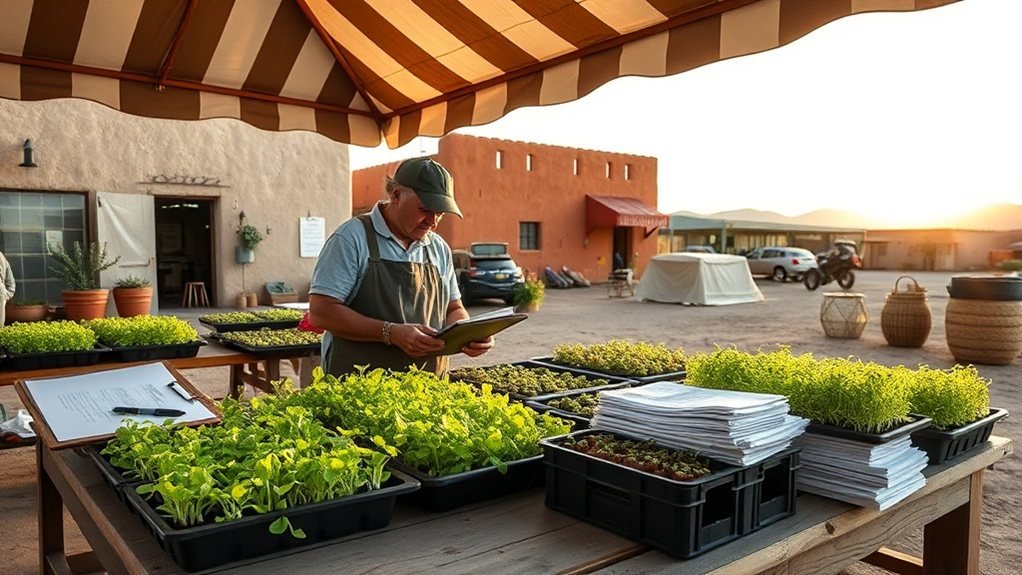
    Sunflower and pea shoots tend to generate consistent repeat interest, given their visual density and familiar flavor profiles.

    You’re not educating shoppers here; they already understand value. Your job is maintaining adequate weekly volume to meet the demand that concentrated seasonal attendance reliably generates.

    Getting Your Application Ready

    clear complete vendor application

    When you submit a market application in Alaska, the manager reviewing it’s evaluating whether your product fits the market’s existing vendor mix, whether your operation meets state cottage food or food handler requirements, and whether you can commit to the schedule reliably.

    Most rejections aren’t about the microgreens themselves but about incomplete documentation, vague answers on production volume, or missing proof of liability insurance.

    Treat the application as your first sales conversation with the market, because a clear, specific, well-supported submission tells the manager you’re a serious vendor before you’ve set up a single table.

    What Market Managers Want to See

    Market managers across Alaska’s roughly 43 USDA-listed farmers markets are evaluating your application against a specific set of operational and presentability criteria, not simply filling vendor slots.

    When you sell microgreens at farmers market venues in Anchorage or Fairbanks, managers scrutinize your production documentation, food handler certifications, and liability insurance before reviewing anything aesthetic.

    Your farmers market vendor application should demonstrate that you understand Alaska’s abbreviated growing season, signaling that your supply chain can sustain consistent weekly inventory despite compressed timelines.

    Photograph your display setup, include your cottage food registration if applicable, and attach references from any prior market participation.

    Managers want evidence that you’ll show up reliably, present professionally, and not abandon your booth mid-season when the short Alaskan summer compresses your operational window considerably.

    Common Mistakes to Avoid

    Applying to an Alaskan farmers market without reviewing your documentation against the manager’s checklist is where most vendor applications stall before they’re seriously considered. When you’re learning how to sell microgreens, incomplete submissions signal inexperience, and managers operating short seasonal windows have little patience for follow-up requests.

    Mistake Why It Hurts Fix It
    Missing grow documentation Raises food safety concerns Attach before submitting
    Vague product descriptions Weakens your booth concept Name specific varieties
    No handler certification Disqualifies application immediately Complete it first

    Selling microgreens locally demands preparation that precedes outreach. Your application represents your operation’s professionalism before the manager ever meets you.

    alaska focused usda market finder

    Tracking down viable market opportunities in Alaska doesn’t have to mean sifting through outdated websites and unanswered emails. The MGW Farmers Market Finder at markets.microgreensworld.com pulls directly from USDA data, giving you a consolidated view of approximately 43 Alaska markets without the manual research burden.

    As a microgreens grower Alaska, you can filter by region, identifying whether Anchorage, Fairbanks, or Juneau clusters align with your distribution range before committing to applications. This matters because your microgreens market stand requires consistent weekly attendance, so proximity and seasonality determine viability more than enthusiasm does.

    The tool compresses what would otherwise take days of scattered research into a focused, actionable list. Start there, cross-reference against the application timing guidance covered earlier, and move into outreach with actual market names in hand. Employ the free Market Finder at markets.microgreensworld.com now.

    Frequently Asked Questions

    Can You Sell Microgreens at Alaska Farmers Markets Without a Business License?

    You can often sell without a business license at smaller Alaska markets, but each market sets its own vendor rules, so you’ll need to confirm directly with the market manager before applying.

    Do Alaska Farmers Markets Require Vendors to Grow Products Locally?

    Most Alaska farmers markets do require you to grow what you sell locally, but each market sets its own rules, so you’ll need to confirm directly with the market manager before applying.

    How Early Should You Arrive to Set up at an Alaska Market?

    Arrive at least 90 minutes before opening. Alaska’s summer light can fool you into thinking you’ve got more time than you do, and a rushed setup shows in your display.

    Are There Indoor Alaska Farmers Markets That Run Through Winter?

    Yes, a few Alaska markets do run indoors through winter, particularly in Anchorage. They’re smaller, less frequent, and highly competitive for vendor spots, so you’ll want to apply early and follow up directly with market managers.

    Can You Share a Booth With Another Vendor at Alaska Markets?

    Some Alaska markets allow booth sharing, but you’ll need to check each market’s vendor rules directly. Policies vary, and some require all products to be approved separately even when vendors split a single space.

    Wrap-up

    You’ve got the framework now—Alaska’s market landscape, the seasonal constraints, and what it takes to show up ready. Don’t waste time on markets that don’t fit your production window or location. Employ the tools available, get your application materials in order early, and prioritize markets where consistent vendor relationships matter. The short season rewards vendors who’ve done the groundwork before the first market opens.

  • Farmers Markets in North Dakota for Microgreens Vendors

    Farmers Markets in North Dakota for Microgreens Vendors

    North Dakota’s roughly 52 USDA-listed farmers markets operate primarily between late May and September, concentrating activity across urban anchors like Fargo, Bismarck, and Grand Forks. You’ll find the strongest microgreens demand in Fargo, where shoppers favor sunflower, pea shoots, and radish varieties over slower-moving specialty items like wheatgrass. Vendor rosters typically close by April, so you’ll need to begin outreach in late winter to secure a spot — and there’s considerably more to understand before you apply.

    Key Takeaways

    • North Dakota has approximately 52 USDA-listed farmers markets, with peak activity concentrated in Fargo, Bismarck, and Grand Forks during summer months.
    • The market season runs late May through September, requiring vendors to begin outreach and applications in late winter before April roster deadlines.
    • Microgreens fill a consistent specialty produce gap, as regional farms rarely supply sunflower, pea shoots, or radish varieties to urban market shoppers.
    • Applications require cottage food registration, clear product descriptions distinguishing microgreens from sprouts, professional photos, and complete sales history documentation.
    • The MGW Farmers Market Finder at markets.microgreensworld.com provides searchable, filterable location and contact details specifically for North Dakota market vendors.

    Farmers Markets in North Dakota for Microgreens Vendors

    North Dakota’s roughly 52 USDA-listed farmers markets represent a viable, if compact, regional network that microgreens vendors can systematically work through to build consistent sales volume.

    The market season runs primarily from late spring through early fall, which means you’re working with a compressed window, concentrated most heavily in June, July, and August.

    Fargo, Bismarck, and Grand Forks anchor the state’s market activity, giving you identifiable population centers where vendor foot traffic and buyer familiarity with specialty produce are highest.

    Why North Dakota Markets Are Worth Your Attention

    For a microgreens grower evaluating new markets, the state of North Dakota presents a concentrated opportunity that’s easy to underestimate at first glance. The USDA database lists approximately 52 farmers markets north dakota vendors can access, with meaningful density in Fargo, Bismarck, and Grand Forks.

    That concentration matters because you’re not spreading thin across unfamiliar geography. As a microgreens vendor north dakota operations tend to run on a compressed summer calendar, which means shorter windows but more predictable buyer traffic during peak season.

    Shoppers in these markets are accustomed to regional growing conditions and actively seek specialty produce that local farms don’t typically supply. That’s precisely where your microgreens fit, filling a consistent gap that larger vegetable vendors can’t efficiently address.

    What the North Dakota Market Season Looks Like

    Most farmers markets in North Dakota operate within a compressed seasonal window, typically running from late May or early June through September, with some markets in Fargo and Bismarck extending marginally into October depending on demand and vendor participation.

    If you’re planning to sell microgreens at a farmers market here, that condensed timeline demands deliberate preparation. You’re not working with a forgiving twelve-month runway.

    Growers who succeed at farmers markets in North Dakota with microgreens tend to lock in their vendor applications well before the season opens, because spots fill faster than the calendar suggests.

    Bismarck and Grand Forks markets often finalize their vendor rosters by April. Start your outreach in late winter, not after the ground thaws.

    How to Find the Right Market in North Dakota

    evaluate markets by capacity

    Before you submit a single application, you need to evaluate each North Dakota market against your current production capacity, your booth setup, and the customer demographics that typically attend. Fargo’s markets, particularly those in the Fargo-Moorhead metro area, draw consistent foot traffic from health-conscious urban consumers, making them a logical starting point for a vendor who can maintain weekly supply. Bismarck and Grand Forks each support their own distinct market ecosystems, with vendor competition levels and seasonal schedules that differ enough to warrant separate research before you commit.

    What to Look for Before You Apply

    Applying to the wrong market costs you more than just time, it costs you table fees, product, and momentum you can’t easily recover in a short growing season.

    Before you pursue how to get a farmers market booth, evaluate each market’s vendor composition, foot traffic patterns, and demographic alignment with specialty produce.

    A microgreens farmers market presence succeeds when your product fills a visible gap rather than competes against an entrenched vendor already holding customer loyalty.

    Check whether the market permits weekly or seasonal commitments, since North Dakota’s condensed calendar makes a poor-fit market particularly costly.

    Review application requirements, product category restrictions, and existing vendor rosters before submitting anything.

    Markets that already saturate perishable greens will underperform for you regardless of your production quality.

    Markets Near Fargo

    Fargo anchors the eastern corridor of North Dakota’s market activity, and if you’re scoping your first vendor position in the state, this metro area gives you the densest concentration of market options to evaluate.

    The Red River Market operates downtown and draws consistent foot traffic through its summer season, making it a legitimate benchmark for gauging whether your microgreens booth farmers market setup can move volume in this region.

    Smaller surrounding markets in West Fargo and Moorhead extend your reach without requiring you to overcommit.

    As a farmers market vendor North Dakota operations demand seasonal discipline, so evaluate each Fargo-area market against your production schedule before applying.

    Proximity alone doesn’t qualify a market. Attendance data, vendor saturation, and product category overlap matter considerably more when you’re making a strategic placement decision.

    Markets Near Bismarck and Grand Forks

    Moving west from Fargo’s dense cluster of options, Bismarck and Grand Forks represent two distinct market environments that test different aspects of your vendor strategy.

    The Bismarck farmers market draws a capital-city consumer base, where foot traffic tends toward regulars who return weekly, rewarding vendors who build consistent presence over time.

    Grand Forks farmers market operates closer to a university corridor, meaning your buyer profile skews younger and more experimentally inclined, which matters when you’re positioning specialty greens against commodity produce.

    Both cities run primarily summer calendars, so your application window is narrow and competitive.

    Research each market’s vendor mix before you apply, because understanding what’s already on the tables tells you exactly where microgreens fit.

    Find both markets using the free tool at [markets.microgreensworld.com](https://markets.microgreensworld.com).

    What to Expect When You Get There

    booth fees seasonal demand

    Once you secure a spot at a North Dakota market, the operational realities of booth fees, spatial constraints, and product positioning will determine how efficiently you convert your grow operation into consistent sales.

    Booth fees across the state’s 52 USDA-listed markets typically range from modest daily rates to seasonal flat fees, with urban markets in Fargo and Bismarck generally commanding higher entry costs than smaller rural venues.

    Understanding which microgreens varieties actually move in this region, where the short summer season concentrates demand into a narrow window, lets you allocate grow space and harvest timing with precision rather than guesswork.

    Booth Fees and Setup Basics

    Booth fees at North Dakota farmers markets tend to catch new vendors off guard, particularly when costs vary more than expected across the state’s roughly 52 listed markets. Seasonal rates in Fargo or Bismarck can run significantly higher than smaller rural markets, where daily fees sometimes drop below $20.

    Before you bring microgreens for sale in North Dakota, confirm whether the market charges daily, weekly, or seasonal rates, since that distinction affects your pricing math immediately. Your farmers market vendor application will typically ask for product categories, so list your microgreens specifically rather than using vague terms like “produce.”

    For setup, most North Dakota markets require a standard 10×10 canopy, weighted or staked, given the region’s unpredictable wind conditions during the summer season.

    What Moves at North Dakota Markets

    Knowing your booth fees and setup requirements matters, but those details only take you so far until you understand what customers at North Dakota markets actually buy. As a microgreens grower, North Dakota’s short growing season works in your favor, because shoppers here respond strongly to fresh, locally grown produce when field crops aren’t yet available.

    At the Fargo farmers market, customers with established cooking habits gravitate toward sunflower, pea shoots, and radish varieties, which carry recognizable flavor profiles that reduce your need to educate at the booth. Spicy mixes and wheatgrass move more slowly without consistent sampling. Pricing your trays competitively against regional produce vendors, rather than against grocery stores, positions you accurately within the market’s existing consumer expectations.

    Getting Your Application Ready

    proof of production legitimacy

    Your application is the market manager’s first and often only basis for evaluating whether you belong in their vendor lineup, so precision and completeness carry real weight here.

    Most North Dakota market managers are looking for proof of production legitimacy, meaning your cottage food registration or applicable state permits, a clear product description, and evidence that you understand safe handling practices for fresh cut greens.

    Vendors who submit vague applications, omit required documentation, or fail to specify that microgreens are a distinct product category from sprouts routinely get passed over, even when the market has open slots.

    What Market Managers Want to See

    Market managers in North Dakota aren’t simply filling booth slots; they’re curating a vendor mix that serves their specific customer base, which means your application has to demonstrate fit before it can demonstrate quality. When you’re selling microgreens locally, your application should show operational credibility alongside product clarity.

    Application Element What It Signals Common Mistake
    Product photos Professional microgreens market stand presentation Poor lighting, cluttered background
    Certifications Compliance with ND cottage food rules Submitting outdated documentation
    Sales history Proven demand at prior venues Leaving this section blank

    Managers reviewing dozens of applications move quickly. Your documentation needs to answer their unspoken question: will this vendor show up prepared, represent the market well, and return consistently.

    Common Mistakes to Avoid

    Even experienced producers make application errors that stall their entry into North Dakota markets, and most of those errors stem from treating the application as a formality rather than a qualifying document.

    When you’re building your microgreens business, an incomplete product list signals operational disorganization to reviewers who are evaluating dozens of vendors. Submitting generic photos, rather than images showing your actual setup and labeled trays, undermines your credibility before any conversation begins.

    If you’re serious about learning how to sell microgreens at a competitive level, you’ll document your growing method, certifications, and sourcing before the application window opens. North Dakota managers, particularly in Fargo and Bismarck, move quickly through applicant pools, so incomplete submissions rarely receive follow-up requests for missing information.

    find north dakota markets

    Tracking down viable market opportunities across North Dakota’s 52 USDA-listed venues doesn’t have to consume hours of manual research. The MGW Farmers Market Finder at markets.microgreensworld.com consolidates that data into a searchable, filterable interface built specifically for farmers market north dakota vendors who need efficient access to location, seasonality, and contact details.

    Rather than cross-referencing county extension offices or outdated municipal websites, you can identify which markets align with your production capacity and delivery range within minutes. For local microgreens north dakota growers operating on tight schedules, that efficiency translates directly into more time spent growing and less time prospecting. Pull up the tool, filter by your region, and start building your target market list before the summer season window closes.

    Frequently Asked Questions

    Can I Sell Microgreens at North Dakota Farmers Markets Without a License?

    You’ll likely need a license. North Dakota requires most food vendors to register with the state health department. Check with each market manager too, since individual markets sometimes add their own permitting requirements.

    How Early Should I Arrive to Set up My Microgreens Booth?

    Arrive 90 minutes before market opens. You’ll need time to unload, arrange your trays, set up signage, and still have a few minutes to settle in before customers start walking the aisles.

    Do North Dakota Markets Allow Vendors to Share a Single Booth Space?

    Some do, but you’ll need to ask each market manager directly. Policies vary by market, and booth-sharing rules often depend on whether both vendors sell complementary or competing products. Always confirm before you commit.

    What Happens if My Application Gets Rejected by a Market Manager?

    A rejection isn’t final. Ask the manager why you were turned down, fix whatever the issue was, and reapply next season. Some markets also maintain waitlists you can join immediately.

    Can I Vend at Multiple North Dakota Markets on the Same Weekend?

    Yes, you can, but North Dakota’s summer market calendar makes it tricky. Most markets run Saturday mornings, so you’d need to pick one unless you have a trusted person staffing your second table.

    Wrap-up

    You’ve got the product, and North Dakota’s market season gives you a clear runway if you employ it strategically. Apply early, target the right markets for your volume, and don’t overlook smaller communities where vendor competition is softer. The season window is tight, but it’s predictable, which means you can plan around it. Show up prepared, and you’ll be well-positioned to move consistent volume through the summer circuit.

  • Farmers Markets in Montana for Microgreens Vendors

    Farmers Markets in Montana for Microgreens Vendors

    Montana hosts approximately 91 USDA-listed farmers markets, with primary activity concentrated in Missoula, Billings, and Bozeman between June and September. You’ll need to align your seeding schedule, application submissions, and booth logistics before the season opens, as compressed growing windows leave little margin for late planning. Each market attracts distinct buyer profiles—Missoula skews health-conscious, Bozeman trends premium, and Billings rewards volume consistency—making market selection a strategic decision that shapes your sales velocity, and what follows covers exactly that.

    Key Takeaways

    • Montana has approximately 91 USDA-listed farmers markets, with major microgreens opportunities concentrated in Missoula, Bozeman, and Billings.
    • Most Montana markets operate June through September, requiring precise production timing to align harvests with selling weeks.
    • Missoula attracts health-conscious buyers, Bozeman skews premium, and Billings customers prioritize value and consistent product volume.
    • Research vendor saturation before applying; markets with established microgreens vendors significantly reduce your acceptance chances and sales potential.
    • The MGW Market Finder at markets.microgreensworld.com filters Montana markets by region and cross-references operating seasons efficiently.

    Farmers Markets in Montana for Microgreens Vendors

    Montana’s approximately 91 USDA-listed farmers markets represent a measurable, structured opportunity for microgreens vendors willing to work within a compressed seasonal window.

    The state’s market activity concentrates heavily in Missoula, Billings, and Bozeman, where consistent foot traffic and relatively health-conscious buyer demographics create conditions that favor specialty produce.

    You’ll need to plan your production calendar around a primarily summer season, which means your seeding schedule, table inventory, and vendor applications all converge within a narrow operational timeline.

    Why Montana Markets Are Worth Your Attention

    If you’re already growing microgreens and looking for your next viable sales channel, Montana’s farmers market network deserves serious consideration.

    The USDA database lists approximately 91 markets operating across the state, giving you meaningful geographic coverage across urban centers and smaller communities alike.

    A microgreens farmers market presence in a city like Missoula positions you directly within a health-conscious consumer base that actively seeks specialty produce.

    The Missoula farmers market, among others, draws consistent foot traffic during peak summer season, which aligns well with high-volume production cycles.

    Montana’s market calendar concentrates primarily in summer, so your planning window is defined and manageable.

    For a grower ready to scale distribution, this network offers real structural opportunity worth evaluating carefully.

    What the Montana Market Season Looks Like

    Because Montana’s growing season is compressed by its northern latitude and mountain climate, the farmers market calendar follows a proportionally condensed arc, running primarily through summer with most markets operating between June and September. As a microgreens vendor in Montana, you’re working within a defined window, which demands precise timing in your production schedule.

    Markets in Missoula, Billings, and Bozeman anchor the state’s vendor activity, drawing consistent foot traffic through peak summer weeks. Some markets open as early as May, while smaller rural venues may run only six to eight weeks total.

    Understanding this compressed structure helps you plan booth applications, production cycles, and inventory volume. Farmers markets in Montana reward vendors who treat the short season as a strategic constraint rather than a limitation.

    How to Find the Right Market in Montana

    assess vendor gaps timing

    Before you apply to any market in Montana, you need to assess vendor density, customer foot traffic patterns, and whether the market’s existing produce vendors leave a viable opening for microgreens. Missoula’s Clark Fork Market and the Saturday Missoula Farmers Market both draw consistent crowds through the summer season, but their application processes are competitive and typically require early submission. Billings and Bozeman each support multiple market options, giving you a strategic advantage if one market reaches capacity or already carries a microgreens vendor.

    What to Look for Before You Apply

    Not every farmers market in Montana is going to be a good fit for what you’re growing, and walking into an application without doing some basic reconnaissance first is how vendors end up stuck at low-traffic markets that don’t move product. Before you submit anything as a farmers market vendor Montana, assess each market against concrete criteria.

    Factor Why It Matters
    Weekly foot traffic Determines realistic sales volume
    Vendor category saturation Reveals microgreens booth farmers market competition
    Market management responsiveness Signals operational professionalism
    Seasonal calendar length Affects revenue continuity
    Customer demographics Indicates health-conscious buyer concentration

    Missoula and Bozeman markets, for instance, draw significantly different buyer profiles than smaller rural markets, which directly shapes how quickly your trays move.

    Markets Near Missoula

    Once you’ve identified the baseline criteria worth evaluating in any market, the next logical step is applying that framework to actual geography, starting with western Montana‘s most active urban cluster.

    Missoula supports a notable concentration of market activity relative to the state’s overall population, making it a practical entry point for any microgreens grower Montana-based or relocating into the region.

    The Missoula Farmers Market operates on a defined seasonal schedule, drawing consistent foot traffic from a demographic that skews toward health-conscious, locally-sourced purchasing behavior.

    That’s a favorable alignment for what you’re growing.

    You’ll want to confirm current vendor availability directly, since spots in higher-traffic Missoula locations fill quickly, particularly for specialty produce categories where microgreens sit prominently.

    Markets Near Billings and Bozeman

    Factor Billings Bozeman
    Customer Profile Value-conscious, consistent Premium, trend-aware
    Competition Level Moderate Higher
    Market Season Summer-focused Extended shoulder season

    Bozeman’s proximity to Montana State University shapes its vendor dynamics considerably, creating demand for differentiated products. Billings rewards reliability and volume consistency over novelty. Knowing which environment aligns with your current production capacity determines where your application carries the most weight.

    What to Expect When You Get There

    booth logistics and microgreens

    Once you’ve secured a spot, the operational realities of Montana markets become immediately concrete, beginning with booth fees that typically range from daily rates to seasonal contracts, depending on the market’s structure and location.

    Setup logistics vary considerably across the state’s approximately 91 listed markets, so confirming load-in windows, table dimensions, and canopy requirements with each market manager before your first day prevents costly missteps.

    What moves consistently in Montana’s summer-season markets tends toward functional, differentiated products, and microgreens occupy a compelling position precisely because most vendors aren’t growing them.

    Booth Fees and Setup Basics

    Booth fees at Montana farmers markets vary considerably, and understanding the fee structures before you apply will save you from budget surprises that can undermine your first season. Daily rates typically range from $15 to $50, while seasonal contracts can run $200 to $800 depending on market size and location. When you’re ready to sell microgreens at a farmers market, reviewing the farmers market vendor application carefully reveals what’s included in that fee.

    Fee Type Typical Range
    Daily booth $15 to $50
    Seasonal contract $200 to $800
    Corner placement $10 to $25 premium
    Electricity access $5 to $15 added
    Late registration $20 to $40 penalty

    Most markets require a six-foot table, canopy, and weights.

    What Moves at Montana Markets

    Selling microgreens at a Montana farmers market means walking into a customer base that’s already conditioned to value fresh, locally grown produce, but that familiarity doesn’t automatically translate into immediate sales without some field observation on your part.

    Before committing to a booth, walk the market as a visitor. Note which vendors draw consistent foot traffic, how shoppers find their way through the layout, and which price points generate visible hesitation versus immediate purchase.

    Sunflower and pea shoots tend to perform reliably across Montana markets because shoppers recognize them. Radish and broccoli microgreens typically appeal to buyers already familiar with nutritional density.

    Understanding how to sell microgreens at farmers markets montana vendors frequent requires matching your variety selection to demonstrated local demand, not personal preference.

    Getting Your Application Ready

    thorough complete vendor application materials

    Your application is the first tangible signal a market manager receives about your operation, and it functions less as a formality than as a screening mechanism designed to filter out vendors who aren’t prepared to commit.

    Most Montana market managers, particularly those running established programs in Missoula or Bozeman, are evaluating your documentation for consistency, proof of compliance, and evidence that you understand their specific vendor requirements.

    Submitting incomplete paperwork, missing your food handler certification, or failing to list your product categories accurately are the kinds of errors that move your application to the bottom of the stack before you’ve had any real consideration.

    What Market Managers Want to See

    Once you decide to pursue a vendor spot at one of Montana’s roughly 91 listed markets, the application itself becomes the first real test of whether a market manager takes you seriously. They’re evaluating whether you’re prepared to operate professionally, not just whether you have microgreens for sale in Montana.

    What They Ask What They’re Actually Assessing
    Business license or cottage food cert Legal compliance readiness
    Product photos or descriptions Presentation and booth professionalism
    Prior market experience Reliability and vendor maturity

    Knowing how to get a farmers market booth means understanding that managers select vendors who reduce their administrative burden. Submit complete documentation, reference your production capacity accurately, and demonstrate that you’ve researched their specific market’s customer base before applying.

    Common Mistakes to Avoid

    Even experienced growers who produce a consistent, high-quality product can undermine their own applications by making avoidable procedural errors before they ever interact with a market manager.

    Submitting incomplete documentation is the most common failure, particularly missing cottage food permits or proof of liability insurance, both of which signal operational unpreparedness to managers reviewing your microgreens business for the first time.

    Applying without researching vendor saturation is similarly damaging, since selling microgreens locally becomes significantly harder when a market already carries two established microgreens vendors.

    You should also avoid generic product descriptions that fail to distinguish your varieties, your growing methods, or your harvest-to-market timeline.

    Managers reviewing dozens of applications will skip past vague submissions without a second consideration.

    search montana farmers markets quickly

    Tracking down viable farmers markets in Montana doesn’t have to mean hours of phone calls, dead-end web searches, or driving through Missoula on a Saturday morning just to see who’s operating. The MGW Market Finder at markets.microgreensworld.com pulls from USDA data to surface Montana’s approximately 91 listed markets in a single searchable interface.

    If you’re building a local microgreens montana presence or scouting the right location for your microgreens market stand, that tool compresses what would otherwise be weeks of fragmented research into a focused, actionable process. You filter by region, cross-reference operating seasons, and identify markets that align with your production schedule. Start there before you contact a single market manager or load your first tray into a vehicle.

    Frequently Asked Questions

    Can I Sell Microgreens at Montana Farmers Markets Without a Business License?

    You can often sell without a business license at Montana farmers markets, but you’ll still need a food handler’s permit and to comply with cottage food rules. Check each market’s vendor requirements individually.

    Do Montana Markets Require Vendors to Grow Everything They Sell?

    Most Montana markets don’t require you to grow everything you sell, but many prioritize producer-only vendors. You’ll want to confirm each market’s vendor policy before applying, since rules vary significantly by market.

    How Early Should I Arrive to Set up My Market Booth?

    Arrive at least 90 minutes before gates open. Montana markets move fast at setup, and you’ll want time to arrange your display, troubleshoot any issues, and be fully ready before the first customer walks in.

    Can I Vend at Multiple Montana Markets on the Same Weekend?

    Yes, you can, but Montana’s distances make it tough. Many vendors pick a Saturday anchor market and add a Sunday market nearby. Test the drive time before committing to both.

    What Happens if My Microgreens Don’t Sell Out at Market?

    If your microgreens don’t sell out, you’ve got options. Refrigerate what’s left and bring it next market day, donate it locally, or fold it into a compost system so nothing’s truly wasted.

    Wrap-up

    Montana’s farmers market landscape presents a viable, if seasonally constrained, distribution channel for microgreens vendors willing to approach it strategically. You’ve got concentrated demand in Missoula, Billings, and Bozeman, and that’s where your early efforts should focus. Align your production schedule with the compressed summer season, submit applications early, and present your product professionally. If you’re systematic about market selection and preparation, you can build consistent revenue within a single selling season.

  • Farmers Markets in Utah for Microgreens Vendors

    Farmers Markets in Utah for Microgreens Vendors

    Utah’s roughly 112 USDA-listed farmers markets offer microgreens vendors a structured entry into specialty produce sales, with the Salt Lake City, Provo, and Park City corridor representing the strongest concentration of viable opportunities. Salt Lake City buyers treat microgreens as a staple, Park City’s premium demographic supports higher price points, and Provo skews value-driven. You’ll need documentation, competitive scouting, and production schedules aligned to market calendars before applying. There’s considerably more to unpack across each stage of the process.

    Key Takeaways

    • Utah has approximately 112 USDA-listed farmers markets, with the highest density in Salt Lake City, Provo, and Park City.
    • The primary selling season runs late April through October, with peak foot traffic from June through September.
    • Salt Lake City treats microgreens as a staple, Park City favors premium varieties, and Provo skews toward value-oriented offerings.
    • Top-selling microgreen varieties at Utah markets include sunflower, pea shoots, and radish, with placement driving purchases significantly.
    • The MGW Market Finder lets vendors filter Utah markets by region, season, size, and current application availability.

    Farmers Markets in Utah for Microgreens Vendors

    Utah’s approximately 112 USDA-listed farmers markets represent a substantial commercial landscape for microgreens vendors, with market density concentrated in Salt Lake City, Provo, and Park City, where health-conscious consumer bases and established vendor ecosystems create predictable, recurring demand.

    You’re working with a predominantly spring-through-fall seasonal calendar, which means your production schedule, variety selection, and booth logistics all need alignment with that window rather than a year-round model.

    Understanding both the market count and the seasonal structure before you start making calls or submitting applications will save you considerable time and position you to enter the right market at the right point in the calendar.

    Why Utah Markets Are Worth Your Attention

    Across the western United States, Utah stands out as one of the more active states for farmers market activity, with roughly 112 markets listed in the USDA database. For a microgreens farmer market vendor, that volume represents genuine optionality, not just a broad landscape to get lost in.

    Utah farmers markets concentrate heavily around Salt Lake City, Provo, and Park City, which means you can build a multi-market route without excessive travel. The season runs primarily spring through fall, giving you a defined window to plan production cycles around actual sell dates.

    Understanding this structure before you approach a market manager puts you ahead of vendors who show up without knowing the competitive and logistical conditions already in place.

    What the Utah Market Season Looks Like

    The Utah farmers market season generally opens in late April or early May, depending on the region, and runs through October, with some markets extending into early November in warmer valleys. Salt Lake City venues tend to activate earlier than rural markets, giving you a longer selling window if you position yourself there first.

    As a microgreens vendor in Utah, you’ll find that the peak window runs June through September, when foot traffic justifies consistent production scheduling. Park City markets operate on a compressed summer timeline due to elevation, while Provo-area farmers markets in Utah maintain steadier mid-season attendance. Plan your germination cycles around market start dates, not around when you feel ready, because the calendar won’t wait for your first harvest to align perfectly.

    How to Find the Right Market in Utah

    evaluate utah markets strategically

    Before you apply anywhere, you need to evaluate each market on foot traffic, vendor competition, and whether the customer base actually buys specialty produce.

    Salt Lake City’s urban corridor, anchored by markets in Sugar House and the Downtown area, draws health-conscious shoppers who already understand microgreens, which shortens your education curve considerably.

    Provo and Park City serve different demographics entirely, with Park City skewing toward high-income seasonal residents who expect premium pricing, while Provo’s markets tend toward value-driven buyers near a large university population.

    What to Look for Before You Apply

    Finding the right market before you submit a single application will save you time, money, and the frustration of landing a vendor spot that doesn’t move product.

    Scout each microgreens farmers market Utah location in person before committing, noting foot traffic patterns, customer demographics, and whether existing vendors already sell specialty produce. A market saturated with salad greens will compress your margins before you unpack your first tray.

    Understanding how to get a farmers market booth starts with reading each market’s vendor rules carefully, because some Utah markets restrict certain crop categories or require proof of production acreage. Attendance frequency, booth fees, and seasonal duration all determine whether a given market justifies your investment of time and growing capacity.

    Markets Near Salt Lake City

    Salt Lake City and its surrounding communities represent one of the densest concentrations of farmers market activity in Utah, giving microgreens vendors a realistic range of options across varying customer demographics, booth fee structures, and seasonal schedules.

    When you sell microgreens at a farmers market in this region, you’re working within a competitive but high-traffic environment where educated buyers actively seek specialty produce. The Downtown SLC Farmers Market draws substantial foot traffic, while suburban markets in Sandy, Murray, and Millcreek offer lower entry barriers with comparably engaged customer bases.

    Understanding which salt lake city farmers market aligns with your current production volume helps you avoid overcommitting inventory before you’ve established consistent weekly yields across your growing operation.

    Markets Near Provo and Park City

    Provo and Park City occupy distinct market ecosystems within Utah’s broader vendor landscape, and understanding those distinctions shapes how you position your microgreens operation before you ever submit an application.

    The Provo farmers market draws a price-conscious, community-oriented buyer base, meaning your booth presentation and pricing structure need to reflect that demographic’s expectations. Park City operates differently. The Park City farmers market attracts higher disposable income, tourism-adjacent foot traffic, and buyers accustomed to premium specialty produce. Your packaging choices and variety selection should shift accordingly between these two contexts.

    Utah’s USDA database lists approximately 112 markets statewide, giving you genuine options across both corridors. Employ the free Market Finder at markets.microgreensworld.com to identify which specific markets in the Provo and Park City areas currently have vendor opportunities.

    What to Expect When You Get There

    operational costs and crops

    Once you’ve secured a spot, your immediate priorities shift to understanding the operational and commercial mechanics of the market itself. Booth fees at Utah farmers markets typically range from modest daily rates to seasonal contracts, and knowing which structure a market employs affects how you calculate your break-even volume before you load the van.

    What sells well in Utah markets, particularly in Salt Lake City and Park City, tends to skew toward culinary varieties like sunflower, pea shoots, and radish, reflecting a customer base that cooks with intention and responds to clear, confident product communication from the vendor.

    Booth Fees and Setup Basics

    Booth fees across Utah’s farmers markets vary more than most new vendors expect, and understanding that variance before you apply saves you from budget surprises mid-season. Daily fees typically range from $15 to $75, depending on market size, foot traffic, and location prestige. Seasonal contracts often reduce your per-day cost significantly.

    Market Type Typical Daily Fee Seasonal Option
    Neighborhood/small $15–$25 Rarely available
    Mid-size city market $30–$50 Sometimes offered
    Salt Lake City anchor $50–$75 Common
    Park City premium $60–$90 Competitive waitlist
    Provo university-adjacent $25–$45 Available mid-season

    For your farmers markets utah microgreens setup, budget a six-foot table, canopy, and weights. Your microgreens booth farmers market footprint should project professionalism from day one.

    What Moves at Utah Markets

    Selling microgreens at Utah markets will test your assumptions about what customers actually reach for, and the variety that moves fastest often surprises first-time vendors. Sunflower shoots consistently perform well across multiple Utah locations, particularly in Salt Lake City, where health-conscious buyers treat them as a staple rather than a novelty. Radish microgreens, with their sharp, recognizable flavor, attract customers who already cook with intention.

    Pea shoots move steadily when positioned near prepared food vendors, because proximity influences impulse purchasing. As farmers market Utah vendors hone their tables, they learn that presentation and placement drive decisions more than variety count alone. When you microgreens sell at farmers market events repeatedly, seasonal patterns become readable, and you stock accordingly rather than guessing.

    Getting Your Application Ready

    complete tailored compliant application materials

    Your application is the first data point a market manager employs to assess whether you’re a productive fit for their vendor lineup, so precision and completeness matter more than enthusiasm.

    Most Utah market managers evaluate product category, production scale, and compliance documentation simultaneously, meaning an incomplete submission signals operational immaturity before you’ve said a word.

    Understand what each market prioritizes, whether that’s locally-sourced growing inputs, organic certification, or product diversity, and tailor your submitted materials to reflect those criteria explicitly.

    What Market Managers Want to See

    Getting accepted into a Utah farmers market starts well before you fill out an application, because market managers are evaluating your operation as a whole, not just your product. As a microgreens grower Utah markets will scrutinize your food handler certifications, production documentation, and liability insurance before anything else.

    Most Utah market managers want confirmation that your growing environment meets basic health code standards, particularly regarding water source and sanitation. Your display setup matters too, since managers visualize how your booth will function within their overall vendor mix.

    As a farmers market vendor Utah coordinators will ask whether you can commit to consistent weekly attendance throughout the season. Demonstrating operational reliability through your application materials signals professionalism that distinguishes serious growers from those simply testing the waters.

    Common Mistakes to Avoid

    Most application rejections from Utah farmers markets aren’t about product quality at all, but rather about avoidable procedural oversights that signal operational immaturity to market managers.

    Submitting incomplete paperwork, particularly missing food handler certifications or proof of liability insurance, immediately disqualifies vendors hoping to sell microgreens at farmers market venues across Salt Lake City or Provo.

    Many applicants offering microgreens for sale utah overlook booth dimension requirements, which creates logistical conflicts managers can’t accommodate mid-season.

    You should also verify that your application addresses product labeling compliance, since Utah’s cottage food regulations contain specific requirements that market managers actively scrutinize.

    Submitting generic product descriptions rather than specific varietal offerings further signals that you haven’t researched the market’s existing vendor composition.

    market finder narrows prospects

    Searching through 112 farmers markets one by one is a slow, inefficient process, and the MGW Market Finder at markets.microgreensworld.com consolidates that USDA data into a single, searchable interface built specifically for vendors like you.

    Rather than manually cross-referencing schedules and locations, you can filter by region, season, and market size to identify where local microgreens Utah demand actually concentrates. Salt Lake City, Provo, and Park City each carry distinct vendor dynamics, and knowing which markets accept new applications saves you from pursuing dead ends.

    The farmers market vendor application process moves faster when you’ve already vetted each opportunity before making contact. Employ the free Market Finder at markets.microgreensworld.com to narrow your list and approach the right markets with precision.

    Frequently Asked Questions

    Can I Sell Microgreens at Utah Farmers Markets Without a Business License?

    You can often sell without a business license at smaller Utah markets, but many require a cottage food registration or basic vendor permit. Check each market’s application requirements before assuming you’re covered.

    How Do Utah Cottage Food Laws Affect Microgreens Sales at Markets?

    Utah’s cottage food laws don’t cover microgreens since they’re a fresh produce item, not a processed food. You’ll sell under agricultural exemptions instead, which actually gives you a simpler path to market.

    Do Utah Markets Require Vendors to Grow Everything They Sell?

    Utah doesn’t have a statewide grow-your-own rule, but individual markets set their own sourcing policies. Check each market’s vendor agreement carefully before you apply, since requirements vary widely.

    What Insurance Do Utah Farmers Market Vendors Typically Need to Carry?

    Most Utah markets require you to carry general liability insurance, typically $1 million per occurrence. You’ll often need to list the market as an additional insured on your policy before your first selling day.

    Can I Vend at Multiple Utah Markets on the Same Weekend?

    Yes, you can vend at multiple Utah markets on the same weekend, but you’ll need separate applications, fees, and enough product to stock each booth fully without running short.

    Wrap-up

    You’ve got the framework now, so it’s time to put it to work. Utah’s 112 markets give you real options across Salt Lake City, Provo, and Park City, but none of those opportunities convert without deliberate research, a polished application, and production timing that matches your target market days. Utilize the market finder to compress your research phase, identify vendor openings that align with your capacity, and position your microgreens operation for a productive market season.

  • Farmers Markets in New Mexico for Microgreens Vendors

    Farmers Markets in New Mexico for Microgreens Vendors

    New Mexico’s roughly 94 USDA-registered farmers markets offer microgreens vendors concentrated opportunity in Albuquerque, Santa Fe, and Las Cruces, where foot traffic, specialty-produce familiarity, and health-conscious demographics align with your product. Albuquerque’s dense market cluster supports consistent weekly sales, Santa Fe’s tourism-driven clientele justifies premium pricing, and Las Cruces rewards accessible pricing with agricultural-community loyalty. Selecting the right market, preparing compliant documentation, and timing your application correctly are what separate vendors who enter successfully from those who wait an entire season — and there’s considerably more to unpack on each front.

    Key Takeaways

    • New Mexico has approximately 94 USDA-listed farmers markets, with peak vendor activity concentrated between April and October statewide.
    • Albuquerque, Santa Fe, and Las Cruces are the strongest market clusters for microgreens vendors due to consistent foot traffic.
    • Use the MGW Farmers Market Finder at markets.microgreensworld.com to identify New Mexico markets with openings and appropriate customer profiles.
    • Saturday market slots draw the heaviest attendance but are the most contested, making early applications critical for securing a booth.
    • Sunflower, pea shoots, and radish microgreens move reliably across New Mexico markets due to strong buyer recognition and familiarity.

    Farmers Markets in New Mexico for Microgreens Vendors

    New Mexico’s approximately 94 USDA-listed farmers markets represent a meaningful distribution network for microgreens vendors, with established market clusters in Albuquerque, Santa Fe, and Las Cruces providing consistent foot traffic and repeat customer potential.

    The state’s market calendar operates primarily across a spring-through-fall window, which means you’ll need to plan your production cycles accordingly, aligning seeding schedules with the months when booth opportunities are actually available.

    Understanding both the geographic concentration of markets and the seasonal timing gives you the framework to identify realistic entry points before you commit time and resources to the application process.

    Why New Mexico Markets Are Worth Your Attention

    Selling microgreens in New Mexico means tapping into a market landscape that’s more developed than most growers initially expect, with roughly 94 USDA-listed farmers markets distributed across a state where culinary culture, health-conscious consumers, and farm-to-table infrastructure converge in cities like Albuquerque, Santa Fe, and Las Cruces.

    An Albuquerque farmers market, for instance, draws consistent foot traffic from buyers already familiar with specialty produce, which compresses your customer education curve considerably.

    The microgreens farmers market opportunity here isn’t theoretical. New Mexico’s concentrated urban corridors support vendor ecosystems where specialty crops move reliably, and the spring-through-fall calendar gives you a structured window to build repeat customers, hone your pricing, and establish standing before the next season opens.

    What the New Mexico Market Season Looks Like

    That 94-market footprint across New Mexico doesn’t function as a single, uniform selling season, and understanding its actual shape determines how you’ll structure your grow schedule before you ever set up a table.

    Most farmers markets in New Mexico operate spring through fall, with peak activity concentrated between April and October.

    Albuquerque markets, including the Railyard and Downtown Growers’ Market, tend to run the longest windows.

    Santa Fe and Las Cruces follow comparable patterns, though specific open and close dates shift year to year.

    As a microgreens vendor in New Mexico, you’re essentially working a compressed calendar, which means your production timing needs to anticipate application deadlines, not just harvest schedules.

    Knowing when each market opens its vendor roster gives you a genuine operational advantage.

    How to Find the Right Market in New Mexico

    assess markets traffic demand

    Before you apply anywhere, you need to assess each market’s customer base, vendor density, and product demand to determine whether microgreens can realistically move there.

    Albuquerque’s multiple weekly markets, including those in the Northeast Heights and Downtown corridors, offer high foot traffic but often carry established produce vendors who may already stock specialty greens.

    Santa Fe and Las Cruces present distinct opportunities, where Santa Fe‘s tourism-driven demographic tends toward premium local products, while Las Cruces anchors a more agricultural-community market culture that rewards consistency and price accessibility.

    What to Look for Before You Apply

    Not every farmers market in New Mexico is going to be a productive outlet for microgreens, and recognizing that distinction early saves you from wasted application fees, slow Saturdays, and vendor spots that simply don’t convert.

    Before you apply anywhere, assess foot traffic patterns, customer demographics, and whether the market already has a saturated produce section. A downtown Albuquerque market pulling consistent weekend crowds is a fundamentally different environment than a small rural market with irregular attendance.

    When you’re trying to make microgreens sell at a farmers market, placement context matters considerably. As a farmers market vendor in New Mexico, you want locations where shoppers already demonstrate purchasing behavior around specialty, health-forward products, because that’s where your trays move consistently rather than sitting untouched.

    Markets Near Albuquerque

    Albuquerque functions as the most densely populated node in New Mexico’s farmers market network, and that concentration creates both opportunity and competition for microgreens vendors entering the market for the first time. The Albuquerque Growers’ Market and the Downtown Growers’ Market represent two established venues where foot traffic and produce-forward customer bases align well with what albuquerque microgreens vendors typically offer.

    Saturdays draw the heaviest attendance, making weekend slots the most contested among farmers market new mexico vendors seeking consistent sell-through volume. You’ll want to identify which markets carry existing microgreens representation before applying, since buyer overlap directly affects your positioning. Employ the MGW Market Finder at [markets.microgreensworld.com](https://markets.microgreensworld.com) to map Albuquerque-area options and assess vendor density before committing to an application.

    Markets Near Santa Fe and Las Cruces

    Santa Fe and Las Cruces anchor the two remaining regional clusters in New Mexico’s farmers market network, and each city presents a distinct operating environment for microgreens vendors assessing where to commit their time.

    The microgreens Santa Fe farmers market scene reflects a buyer demographic with higher discretionary spending and strong orientation toward specialty produce, which positions your product favorably if you price accordingly.

    Las Cruces farmers market activity concentrates near the historic downtown plaza, drawing consistent foot traffic from a broad cross-section of the regional population.

    Both cities reward vendors who research application timelines, booth fee structures, and existing microgreens competition before submitting.

    Employ the free Market Finder at markets.microgreensworld.com to identify current listings across both cities and evaluate your best entry point.

    What to Expect When You Get There

    market fees products preparation

    Once you’ve identified a viable market, the operational realities of vending demand your attention before you ever load the vehicle.

    Booth fees across New Mexico markets typically range from modest daily rates at smaller community markets to structured seasonal contracts at higher-traffic venues like the Santa Fe Farmers Market, where competition for space reflects the market’s established customer base.

    What you bring to the table, both literally and in terms of product selection, will determine whether your first season generates repeat customers or leaves you hauling unsold trays home.

    Booth Fees and Setup Basics

    Booth fees across New Mexico’s farmers markets vary considerably, and you’ll want to factor those costs into your planning before you commit to a spot.

    Smaller community markets often charge between $15 and $30 per day, while established urban markets in Albuquerque or Santa Fe can run $40 to $75 or higher for a microgreens booth farmers market placement.

    Some markets charge seasonal flat rates rather than daily fees, which changes your cost structure significantly.

    When you’re figuring out how to get a farmers market booth, ask specifically about table dimensions, whether electricity is available, and what the setup window looks like.

    Most New Mexico markets expect vendors to be fully set up 30 minutes before opening, so plan your load-in accordingly.

    What Moves at New Mexico Markets

    Knowing your costs gets you in the door, but understanding what actually sells keeps you there. At the Santa Fe Farmers Market, shoppers trend toward premium, health-forward products, which positions microgreens favorably when you merchandise them with clear varietal labeling and suggested use cases. Sunflower, pea shoots, and radish consistently move across New Mexico markets because buyers recognize them on sight.

    When you vend microgreens at farmers market venues in high-altitude, health-conscious communities like Santa Fe, pricing your trays at the upper range is defensible, provided your presentation supports it. Mild growing seasons extend your sales window, but late summer heat compresses shelf life, so harvest timing tightens considerably. Study what adjacent vendors sell, because basket-builders who pair greens with eggs or bread drive your volume.

    Getting Your Application Ready

    proof of regulatory and insurance

    Your application is the market manager‘s first substantive assessment of you as a vendor, so the materials you submit need to reflect operational competence, not merely enthusiasm.

    Most New Mexico market managers expect to see proof of your cottage food registration or commercial kitchen certification, a product list with accurate botanical names, and documentation that your growing operation meets basic food safety standards.

    Incomplete submissions, particularly those missing liability insurance certificates or submitted after the application window closes, consistently result in disqualification regardless of how strong your product actually is.

    What Market Managers Want to See

    Market managers in New Mexico are evaluating more than just your product when they review an application, and understanding that distinction changes how you prepare your materials.

    They’re assessing operational reliability, regulatory compliance, and whether you’ll represent the market professionally. As a microgreens grower in New Mexico, your farmers market vendor application should demonstrate that you’ve already solved the problems that eliminate most applicants before review: valid food handler certification, documented growing practices, and liability insurance.

    Santa Fe and Albuquerque markets, in particular, receive competitive applications and prioritize vendors who present complete documentation on first submission.

    Your product photos matter, but your compliance paperwork signals whether you’re a grower who can sustain a weekly commitment, which is ultimately what market managers are selecting for.

    Common Mistakes to Avoid

    Even experienced growers submit incomplete applications, and that single misstep can delay your entry into a New Mexico market by an entire season. When you’re learning how to sell microgreens at markets like Albuquerque’s Downtown Growers’ Market, missing your liability certificate or omitting your production address often triggers automatic disqualification rather than a follow-up request.

    Vendors putting microgreens for sale in New Mexico frequently underestimate the specificity managers expect around growing inputs, particularly when organic claims appear anywhere on your application. Vague language around your substrate sourcing or harvest protocols signals inexperience to a manager who reviews dozens of submissions. Submit documentation that answers questions before they’re asked, because managers rarely circle back to incomplete files.

    find new mexico market opportunities

    Tracking down viable vendor slots across New Mexico‘s 94 registered markets doesn’t have to mean cold-calling market managers or driving around on Saturday mornings hoping someone has an open table. The MGW Farmers Market Finder at markets.microgreensworld.com aggregates USDA data so you can identify farmers markets in New Mexico where microgreens vendor opportunities realistically exist, filtering by location before you commit time or product.

    If you’re building your microgreens market stand presence in Albuquerque, Santa Fe, or Las Cruces, the tool lets you target density clusters where foot traffic justifies your production volume. Stop researching in circles. Employ the free Market Finder at markets.microgreensworld.com to map your next move with accurate, current data already organized for vendors who are ready to sell.

    Frequently Asked Questions

    Do New Mexico Markets Require a State-Issued Food Handler Certification?

    New Mexico doesn’t require a state-issued food handler certification for microgreens vendors, but individual markets set their own rules, so you’ll need to confirm directly with each market manager before applying.

    Can You Sell at Multiple New Mexico Markets in One Weekend?

    Yes, you can. Many New Mexico growers hit multiple markets on the same weekend, but you’ll need separate vendor applications, fees, and enough product to stock each booth fully.

    How Early Should You Arrive Before a New Mexico Market Opens?

    Arrive at least 90 minutes before opening. You’ll need time to unload, set up your display, arrange product, and settle in before shoppers arrive. Rushing your setup shows, and it costs you sales.

    Do Santa Fe Markets Attract More Tourist Buyers Than Local Regulars?

    Yes, Santa Fe markets draw a strong tourist mix, especially summer weekends. That works in your favor since tourists often buy on impulse. But you’ll also build a loyal local base if you show up consistently.

    Are There Indoor Winter Markets in Albuquerque Worth Applying To?

    Yes, a few Albuquerque indoor winter markets run through the slower months, and they’re worth applying to early since spots fill fast. Microgreens sell well when fresh local produce options shrink.

    Wrap-up

    You’ve got the information you need to start targeting New Mexico’s market landscape strategically. Don’t waste time and fuel approaching markets blindly—use the state’s directory resources, verify operating schedules, and assess geographic feasibility before committing to any application. New Mexico’s 94 listed markets represent genuine opportunity for microgreens vendors, but only if you’re selective. Identify your strongest regional candidates, prepare a complete application packet, and move forward with the markets that actually make logistical and financial sense for your operation.

  • Farmers Markets in Mississippi for Microgreens Vendors

    Farmers Markets in Mississippi for Microgreens Vendors

    Mississippi hosts approximately 76 USDA-listed farmers markets, with vendor activity concentrated in Jackson, Oxford, and Hattiesburg across a primary spring-through-fall season. You’ll find that market clusters near university districts and urban neighborhoods attract buyers with stronger appetite for specialty produce like sunflower shoots, pea shoots, and radish microgreens. Application windows close early — often before February ends — making timing, documentation, and production scheduling critical variables worth understanding before you commit.

    Key Takeaways

    • Mississippi has approximately 76 USDA-listed farmers markets, with the strongest clusters in Jackson, Oxford, and Hattiesburg for microgreens vendors.
    • The primary selling season runs April through October, requiring production schedules established several weeks before opening market day.
    • Top-selling microgreens include sunflower, pea shoots, and radish, as shoppers respond to familiar flavors over novelty varieties.
    • Most markets require cottage food registration, liability insurance, a product list, and photos before accepting vendor applications.
    • Many markets fill vendor rosters before February ends, making early application submission critical to securing a booth.

    Farmers Markets in Mississippi for Microgreens Vendors

    Mississippi’s roughly 76 USDA-listed farmers markets represent a meaningful distribution network for microgreens vendors operating at any scale, with market clusters concentrated in Jackson, Oxford, and Hattiesburg offering consistent foot traffic and repeat customer potential.

    You’ll find that the state’s market calendar operates primarily within a spring-through-fall window, which aligns well with microgreens’ short production cycles and allows you to plan successive grow schedules around predictable vending dates.

    Understanding both the geographic concentration of markets and the seasonal rhythm of when they operate gives you a structural framework for deciding where to apply first and how to sequence your vendor commitments across the year.

    Why Mississippi Markets Are Worth Your Attention

    Most farmers markets in Mississippi operate within a competitive but accessible landscape, where microgreens vendors willing to show up consistently can build a reliable customer base across the state’s 76 USDA-listed markets.

    Mississippi farmers markets concentrate heavily in Jackson, Oxford, and Hattiesburg, giving you defined entry points rather than a scattered, unpredictable search.

    As a microgreens vendor in Mississippi, you’re working within a spring-through-fall calendar that aligns naturally with your production cycles, reducing the pressure of year-round inventory management.

    The state’s culinary culture, rooted in fresh, locally grown ingredients, creates genuine demand for specialty produce.

    Buyers at these markets recognize quality when they see it, and microgreens, positioned correctly, satisfy that expectation without requiring extensive consumer education on your part.

    What the Mississippi Market Season Looks Like

    Knowing when Mississippi markets run gives you a concrete production framework to build around, rather than guessing at demand cycles after you’ve already committed your growing space. Most farmers markets in Mississippi operate on a spring-through-fall calendar, with peak activity concentrated between April and October. Jackson’s larger markets tend to run the longest, while smaller regional venues may compress their schedules into an eight or ten week window.

    For microgreens farmers market vendors, this seasonality has direct implications for your germination scheduling and tray rotation timing. You’ll want your production rhythm established several weeks before opening day, not calibrated reactively once the season starts. Mississippi’s humidity also affects shelf life at point-of-sale, so timing your harvests closer to market days becomes a logistical priority worth planning around from the start.

    How to Find the Right Market in Mississippi

    match markets to capacity

    Before you apply to any market in Mississippi, you need to evaluate each opportunity against your production capacity, your target customer base, and the competitive landscape already present at that venue.

    Jackson’s concentration of urban markets, for instance, tends to attract health-conscious buyers familiar with specialty produce, while Oxford’s market scene draws a university-adjacent demographic that responds well to premium, locally-sourced products.

    Hattiesburg’s markets occupy a distinct middle ground, serving a mix of residential and collegiate traffic that can sustain consistent microgreens sales across the spring-through-fall calendar.

    What to Look for Before You Apply

    Finding the right market in Mississippi isn’t simply a matter of proximity, because a market that’s geographically convenient may be structurally misaligned with what you’re selling. Before you pursue how to obtain a farmers market booth, you need to evaluate vendor composition, foot traffic patterns, and whether the customer base skews toward value shoppers or quality-driven buyers.

    Farmers markets Mississippi microgreens vendors target should already have some produce presence, which signals a buyer who understands fresh product. Check application windows carefully, because Mississippi’s spring-to-fall calendar means many markets fill their vendor roster before February ends. Visit the market as an observer first. Watch how vendors in adjacent categories move product, and employ that data to assess whether your microgreens have a realistic position there.

    Markets Near Jackson

    Around Jackson, you’ll find the densest cluster of farmers markets in Mississippi, and that concentration matters because it gives you real options when evaluating fit rather than simply defaulting to whatever market is geographically closest.

    A farmers market Jackson vendors frequent will vary considerably in foot traffic, vendor mix, and customer demographic, so your microgreens booth farmers market placement deserves deliberate selection. Some markets draw suburban buyers comfortable with specialty produce, while others skew toward commodity staples, making your product harder to position.

    Visit multiple markets before committing, observe existing vendor categories, and assess whether gaps exist that your product fills. Proximity to culinary communities, restaurant districts, and urban neighborhoods generally correlates with stronger demand for specialty crops like microgreens.

    Markets Near Oxford and Hattiesburg

    Oxford and Hattiesburg represent two distinct market environments in Mississippi, and understanding that distinction shapes how you position your microgreens before you ever set up a booth.

    Oxford draws a university-influenced buyer base, where the Oxford Farmers Market attracts shoppers with culinary curiosity and above-average willingness to engage with specialty produce. As a microgreens grower Mississippi, you’ll find that demographic responds well to variety and provenance.

    Hattiesburg operates differently, pulling from a broader regional population where value and familiarity carry more weight in purchasing decisions. Your variety selection, signage, and pricing structure should reflect which environment you’re entering.

    Research both markets through USDA-sourced data before committing your production schedule to either location.

    Use the free Market Finder at markets.microgreensworld.com to locate verified Mississippi markets near Oxford and Hattiesburg.

    What to Expect When You Get There

    market specific seasonal vendor realities

    Once you’ve identified a market that fits your schedule and production capacity, the operational realities of vending in Mississippi become your immediate focus.

    Booth fees across the state’s approximately 76 USDA-listed markets vary considerably, with smaller community markets in towns like Oxford charging modest weekly rates, while established Jackson-area markets may structure fees differently based on product category or stall size.

    Knowing what moves in a given market before you commit a season’s worth of product is likewise critical, since Mississippi’s spring-through-fall calendar means your sunflower shoots and pea tendrils compete for attention alongside a dense field of regional produce vendors.

    Booth Fees and Setup Basics

    Booth fees at Mississippi farmers markets vary considerably depending on the market’s size, location, and organizational structure, so knowing the range before you apply saves you from sticker shock later.

    Smaller community markets often charge between $15 and $30 per day, while established urban markets in Jackson or Oxford can run $40 to $75 or higher for seasonal contracts.

    As a farmers market vendor Mississippi, you’ll typically need a folding table, weather-resistant canopy, and signage that clearly identifies your product.

    When you sell microgreens at farmers market venues operating under nonprofit structures, annual membership fees sometimes replace per-day rates entirely. Confirm the fee model during your application, because misreading a seasonal contract versus a daily rate meaningfully affects how you plan your production schedule and overall commitment.

    What Moves at Mississippi Markets

    Selling microgreens at a Mississippi market will test your variety lineup quickly, because shoppers in this region respond to familiar culinary utility rather than novelty. Sunflower, pea shoots, and radish tend to move consistently, given their recognizable flavors and accessible price points.

    At a Jackson farmers market, vendors report that customers actively seek microgreens for sale Mississippi growers produce locally, particularly when positioned near complementary produce. Broccoli and mild blended mixes also perform reliably, because buyers here connect unfamiliar greens to known cooking applications before committing to a purchase.

    You should observe which neighboring vendors attract sustained traffic, since foot patterns at Mississippi markets reveal clear preferences worth mapping before you finalize your weekly harvest quantities and commit to consistent stall inventory.

    Getting Your Application Ready

    prepare complete vendor documentation

    When you submit a market application in Mississippi, the manager reviewing it’s evaluating whether you’ll be a reliable, compliant vendor, not just whether your product looks appealing.

    Most applications request proof of your cottage food registration or commercial kitchen certification, a product list with pricing, and documentation of any required liability insurance, so gathering those materials before you start filling out forms saves you from stalled submissions.

    A common mistake vendors make is submitting incomplete applications or underselling their setup by omitting photos of their display, which signals to managers that you haven’t operated at a market before.

    What Market Managers Want to See

    Market managers in Mississippi aren’t just filling vendor slots; they’re curating a product mix that keeps shoppers returning week after week, and understanding that dynamic changes how you approach your farmers market vendor application.

    At the Hattiesburg farmers market, managers prioritize vendors who demonstrate product consistency, clean presentation standards, and a clear understanding of their growing process.

    When you apply, lead with specifics: varieties you grow, your production cycle, and how you maintain quality through Mississippi’s humid summers. Vague applications signal inexperience.

    Managers want evidence that you’ll show up reliably with a full table. Include photos of your actual setup, not staged stock images.

    If you can show prior market experience, even briefly, that reduces perceived risk and moves your application higher in the review queue.

    Common Mistakes to Avoid

    Getting your application rejected once in Mississippi’s competitive market circuit costs you an entire season, because most managers review vendor rosters in the early spring and don’t revisit them until the following year. Knowing how to sell microgreens starts before your first harvest, particularly at established venues like the Hattiesburg farmers market, where incomplete submissions disqualify vendors immediately.

    Mistake Consequence
    Missing liability insurance Automatic disqualification
    Vague product descriptions Passed over for specialized vendors
    No photos submitted Application deprioritized
    Late submission Waitlisted until next cycle

    Review each requirement twice before submitting. Managers notice preparation, and thorough applications signal that you’ll operate a professional booth consistently throughout the season.

    market finder mississippi markets

    Tracking down viable farmers markets across Mississippi doesn’t have to mean hours of cold calls, dead-end searches, or driving past shuttered weekend setups to see what’s still running. The MGW Market Finder at markets.microgreensworld.com pulls from USDA data to surface Mississippi’s approximately 76 markets, giving your local microgreens mississippi search a structured starting point rather than a guessing exercise.

    You can identify which markets align with your production schedule, your geography, and the kind of microgreens market stand operation you’re building. Mississippi’s season runs primarily spring through fall, so timing your vendor application to that window matters.

    Employ the tool to filter your options, prioritize realistic targets, and move toward submitting applications with actual market data behind your decisions. Start your search at markets.microgreensworld.com.

    Frequently Asked Questions

    Can I Sell Microgreens at Mississippi Farmers Markets Without a Business License?

    You can often sell without a formal business license, but Mississippi markets set their own vendor requirements. Contact each market manager directly to confirm what documentation they’ll actually require from you before applying.

    Do Mississippi Markets Require a Cottage Food Permit for Microgreens?

    Mississippi’s cottage food law doesn’t cover microgreens since they’re a fresh produce item, not a processed food. You’ll need to comply with Mississippi’s produce regulations instead, which are typically less restrictive.

    How Early Should I Arrive to Set up My Microgreens Booth?

    Arrive at least 90 minutes before the market opens. You’ll need time to unload, position your table, arrange trays, set up signage, and still have a few minutes to settle before customers arrive.

    Can I Sell at Multiple Mississippi Farmers Markets on the Same Day?

    You can, but Mississippi’s market schedule rarely lines up that way. Most markets run the same Saturday morning window, so doubling up means finding a Sunday market or splitting weekdays into your rotation.

    What Happens if My Microgreens Sell Out Before the Market Ends?

    Selling out early is a win, but don’t pack up immediately. Stay at your table, talk to customers, take contact info, and let your market manager know you need a larger production run next week.

    Wrap-up

    You’ve got the framework now—Mississippi’s market landscape, the application process, and what to expect once you’re set up. What’s left is acting on it. Employ the market finder to cut your research time, identify two or three realistic targets, and reach out to managers directly. You won’t land every spot you apply for, but you’ll move faster working from accurate information than starting from scratch.