
Maine’s approximately 134 USDA-listed farmers markets operate within a compressed May–October season, concentrating your highest-traffic opportunities in Portland, Bar Harbor, and Brunswick. Each market attracts a distinct buyer profile—Portland draws food-literate repeat customers, Bar Harbor captures impulse-driven tourists, and Brunswick’s college community supports brand-building. Vendor slots at premium locations fill before the season opens, making early application essential. Sunflower, pea shoots, and radish consistently drive repeat purchases, and what follows will sharpen your market selection and entry strategy considerably.
Key Takeaways
- Maine has approximately 134 USDA-listed farmers markets, with peak activity running June through September and strongest concentrations in Portland, Bar Harbor, and Brunswick.
- Portland corridor offers the highest vendor density and should be the first target when applying, but slots fill before the season opens.
- Bar Harbor suits impulse-driven microgreens presentation due to tourist turnover; Brunswick supports repeat-customer brand building through its college community base.
- Displaying four to six distinct microgreens varieties, with sunflower, pea shoots, and radish as top performers, increases conversion from browser to buyer.
- Use the MGW Farmers Market Finder at markets.microgreensworld.com alongside USDA listings to efficiently filter Maine markets by location, season, and vendor acceptance.
Farmers Markets in Maine for Microgreens Vendors
Maine’s approximately 134 USDA-listed farmers markets represent a measurable, accessible channel for microgreens vendors who are already producing and need a consistent place to move product.
The market calendar runs primarily spring through fall, which aligns well with the peak productivity window most indoor microgreens operations maintain, giving you a relatively clean overlap between what you’re growing and when buyers are actively shopping.
Portland, Bar Harbor, and Brunswick carry the strongest market concentrations in the state, so if you’re weighing where to apply first, those corridors give you the highest density of options within a manageable geographic range.
Why Maine Markets Are Worth Your Attention
Selling microgreens in Maine puts you in front of a customer base that’s been conditioned, over decades of locavore culture, to prioritize regional sourcing and pay accordingly.
Maine’s approximately 134 USDA-listed markets reflect genuine infrastructure, not novelty, and that density signals sustained vendor opportunity.
The Portland farmers market, operating across multiple seasonal locations, draws consistent foot traffic from buyers who already understand specialty produce.
When you’re positioning your microgreens farmers market operation in this state, you’re entering a system where regional identity carries commercial weight.
Buyers here aren’t being educated about local food, they arrived already convinced. That behavioral baseline compresses your sales cycle considerably, meaning less time explaining your product and more time moving it.
What the Maine Market Season Looks Like
Knowing your customers are already convinced is only half the equation; the other half is understanding when you can actually reach them. As a microgreens vendor maine operations depend on seasonal timing, you need to map your production schedule against market availability before you commit to anything.
| Season | Market Activity |
|---|---|
| Spring | Markets reopen, high demand |
| Summer | Peak vendor competition |
| Fall | Strong sales, thinning crowds |
| Winter | Very limited indoor options |
Most farmers markets maine operates on a May through October window. You’ll encounter the densest scheduling between June and September, particularly around Portland and Brunswick, where weekly markets run consistently enough to justify scaling your grow operation around them.
How to Find the Right Market in Maine
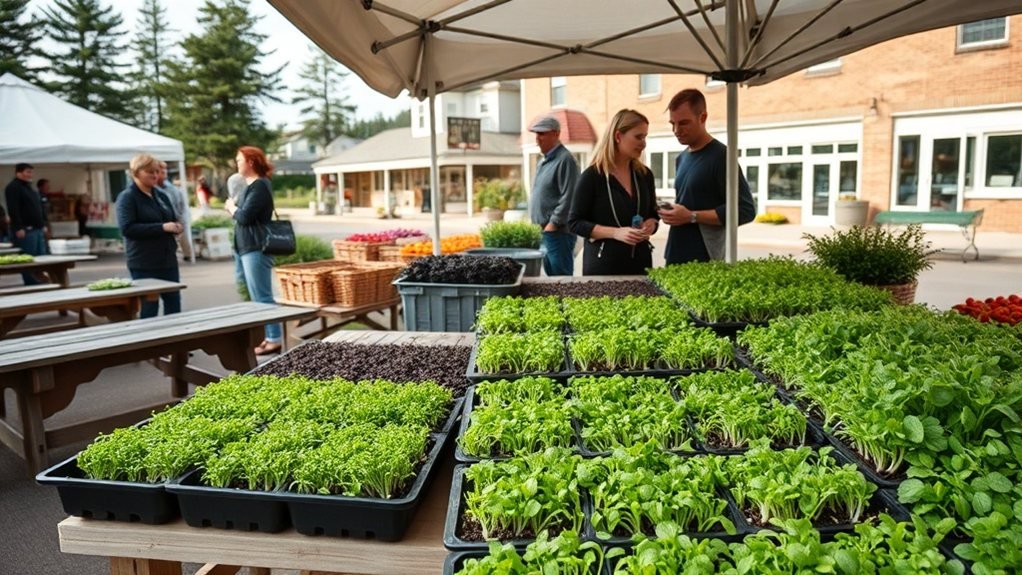
Before you submit a single application, you need to evaluate each market against your current production capacity, your target price point, and the competitive density of vendors already selling fresh greens. Portland’s year-round indoor markets, particularly the Portland Winter Farmers Market, attract consistent foot traffic and sophisticated buyers, but they also draw established vendors who’ve held their spots for multiple seasons. Bar Harbor and Brunswick offer smaller, seasonally concentrated markets where a new microgreens vendor can secure a spot with less competition and still reach customers who actively seek specialty produce.
What to Look for Before You Apply
Not every farmers market in Maine is going to be the right fit for your microgreens operation, and applying without first doing your homework wastes time you don’t have. Before you figure out how to get a farmers market booth, you need to evaluate whether that booth is worth having.
| Factor | What to Assess |
|---|---|
| Vendor composition | Are competing microgreens vendors already established? |
| Customer volume | Does foot traffic justify your production commitment? |
| Fee structure | Do booth costs align with realistic sales potential? |
When you want to make microgreens sell at a farmers market in Maine, market selection determines your ceiling before you ever set up your table. Choose deliberately.
Markets Near Portland
Portland anchors the most active farmers market corridor in Maine, and if you’re targeting high foot traffic with a product like microgreens, this region deserves serious consideration before you look elsewhere. The Portland Farmers Market operates across multiple weekly locations, giving you realistic options for scheduling around your harvest cycles.
As a microgreens grower in Maine, you’re working with short shelf life, so proximity to a dense, consistent customer base matters operationally, not just commercially. Brunswick and Falmouth markets extend that corridor northward, each drawing distinct demographics worth evaluating against your production volume.
The USDA database captures most of these markets, but vendor availability shifts seasonally. Before committing to an application, cross-reference current listings through the MGW Farmers Market Finder at markets.microgreensworld.com to confirm which farmers market Maine locations are actively accepting vendors.
Markets Near Bar Harbor and Brunswick
Bar Harbor and Brunswick represent two structurally different market environments, and understanding that distinction shapes how you approach vendor applications in each area.
The Bar Harbor farmers market operates within a tourism-heavy coastal economy, meaning your customer base shifts weekly as seasonal visitors cycle through. You’re selling to people who may never return, so product presentation and impulse appeal carry more weight.
Brunswick operates differently. The Brunswick farmers market draws a consistent local population anchored by a college community, which creates repeat customers and stronger brand-building potential over time.
Your pitch to each market manager should reflect these realities directly. Demonstrating awareness of the local customer dynamic signals operational maturity, and most experienced market managers respond to that. Know your context before you apply.
What to Expect When You Get There
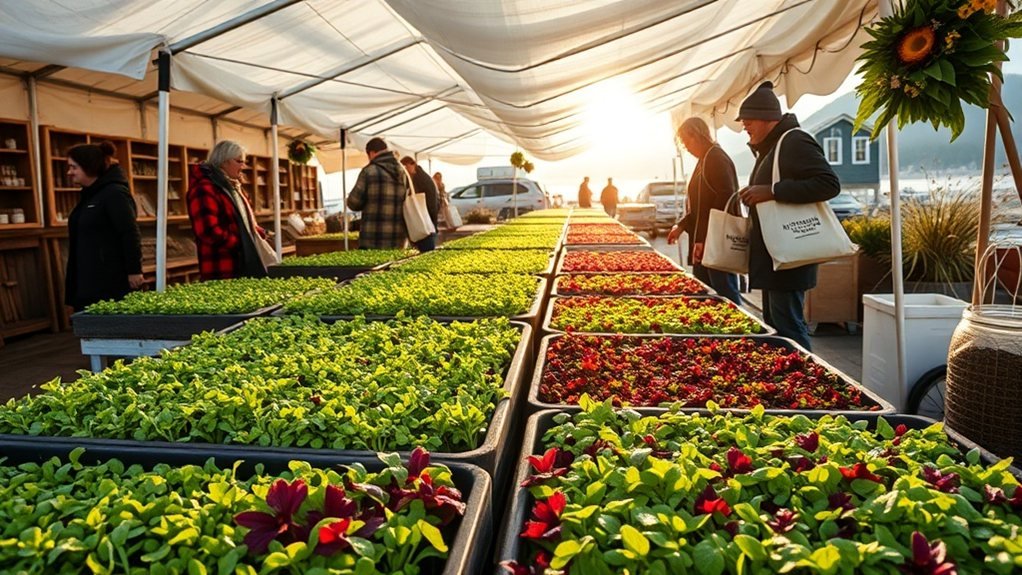
Once you’ve secured a spot, the operational realities of Maine’s farmers markets become your immediate focus, particularly booth fees and product selection strategy. Fees vary considerably across the state’s roughly 134 USDA-listed markets, with smaller inland markets often charging seasonal flat rates while higher-traffic venues like Portland’s established markets may structure fees as daily or percentage-based arrangements.
Understanding which microgreens varieties actually move in a given market, whether that’s sunflower shoots favored by health-conscious coastal shoppers or pea tendrils commanding attention at year-round Brunswick venues, shapes how you allocate your grow space before you ever load the van.
Booth Fees and Setup Basics
Booth fees across Maine’s farmers markets vary more than most new vendors anticipate, ranging from flat daily rates around $20–$40 at smaller inland markets to seasonal contracts that can run several hundred dollars at high-traffic venues like the Portland Farmers Market, where consistent foot traffic justifies the higher commitment.
| Market Type | Typical Fee Structure |
|---|---|
| Small inland market | $20–$40 daily |
| Mid-size coastal market | $50–$80 daily |
| Seasonal contract (small) | $150–$300 total |
| High-traffic venue | $400–$600+ seasonal |
As a microgreens booth farmers market operator, you’ll need a six-foot table, a shade canopy, and signage that communicates variety clearly. Most farmers market vendor maine applications also require proof of cottage food registration or equivalent licensing before your first setup date.
What Moves at Maine Markets
Knowing what actually sells before you set up your first table saves you from the guesswork that costs most new vendors their first season.
When selling microgreens locally across Maine’s farmers markets, sunflower, pea shoots, and radish consistently draw the strongest repeat customers, particularly among buyers who cook regularly and recognize texture and yield. Maine shoppers at established markets skew toward food-literate consumers, meaning your explanation of purpose matters less than your presentation of freshness and density.
At farmers markets maine microgreens vendors with variety depth, meaning four to six distinct trays on display, tend to outperform single-variety tables because browsers convert to buyers when they perceive a curated selection rather than a sample. Know your varieties before your first market day.
Getting Your Application Ready

Your application is the first substantive data point a market manager employs to assess whether you belong in their vendor lineup, so the quality of your submission signals your operational seriousness before you ever set up a table.
Most rejections don’t stem from a weak product but from incomplete paperwork, vague product descriptions, or missing documentation like your food handler’s certification and liability insurance.
Understanding what managers prioritize in a competitive applicant pool, and where growers typically undermine their own submissions, gives you a measurable advantage in Maine’s markets, where vendor slots in high-traffic locations like Portland’s waterfront market fill well before the season opens.
What Market Managers Want to See
Market managers in Maine are evaluating your application against a specific set of operational criteria, and understanding those criteria before you submit puts you ahead of most first-time applicants. They want confirmation that your microgreens for sale maine operation is licensed, insured, and producing consistently, not just occasionally.
Your farmers market vendor application should include your food handler certification, proof of liability coverage, and clear documentation of your growing setup. Managers at Portland’s larger markets, for instance, prioritize vendors who demonstrate production capacity sufficient to sustain a full season booth. They’re also assessing whether your product fills a genuine gap in their current vendor mix.
Bring your pricing structure, a product list, and photos of your growing space to strengthen your submission before the review stage.
Common Mistakes to Avoid
Most applicants trip themselves up before a market manager even reads their submission, not because their microgreens operation is inadequate, but because the application itself signals disorganization or incomplete preparation.
If you want to sell microgreens at farmers market venues across Maine, your documentation needs to arrive complete, not assembled after follow-up requests. Maine farmers market vendors frequently omit proof of liability insurance or submit photos showing cluttered, unprofessional display setups. Managers notice both. Submit your cottage food registration, your insurance certificate, and sharp product photography simultaneously.
Treat the application as your first transaction with that market, because functionally, it is. A single missing document tells the manager exactly how you’ll handle vendor responsibilities once you’re inside.
Find your next opportunity at [markets.microgreensworld.com](https://markets.microgreensworld.com).
Use the Market Finder to Shortcut Your Search
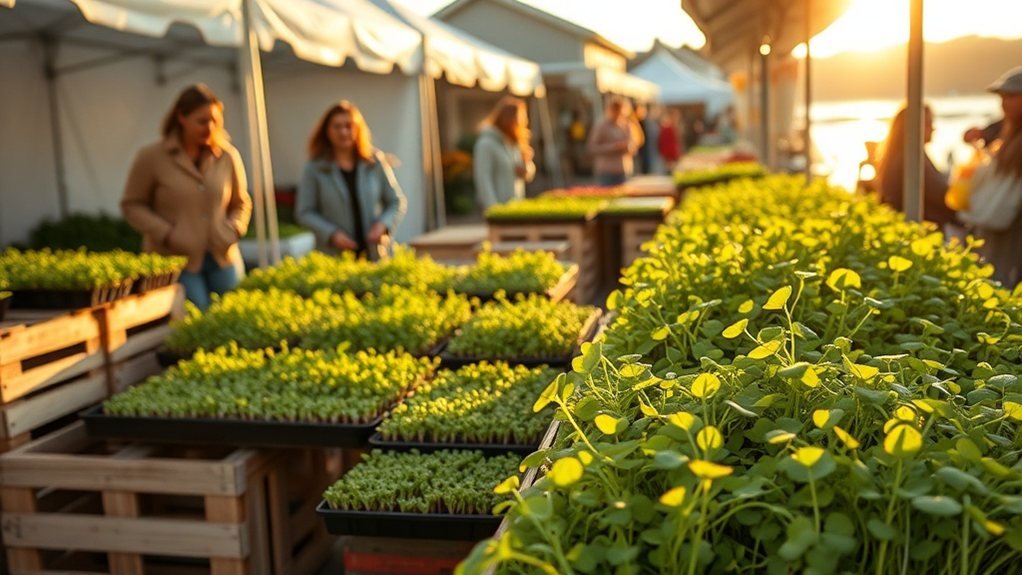
Searching through 134 farmers markets one by one is the kind of inefficiency that costs you weeks you don’t have, particularly when you’re trying to time your first vendor application to align with Maine‘s compressed spring-to-fall season. The MGW Market Finder at markets.microgreensworld.com pulls directly from USDA data, letting you filter Maine markets by location and season rather than sifting through irrelevant listings manually.
If you’re building your microgreens market stand in the Portland corridor or scoping out Bar Harbor’s summer traffic, the tool surfaces relevant opportunities fast. Knowing how to sell microgreens effectively starts before you ever set up your canopy, and targeting the right markets is where that process actually begins. Employ the finder now and compress your research timeline significantly.
Frequently Asked Questions
Can I Sell Microgreens at Maine Farmers Markets Without a License?
You can sell microgreens at Maine farmers markets, but you’ll likely need a certificate of free sale or grower exemption. Check with Maine DACF before you apply to any market.
How Many Vendors Typically Sell Microgreens at Maine Markets?
Most Maine markets have zero to one microgreens vendor, which works in your favor. You’re not fighting for shelf space — you’re filling a gap most market managers are actively trying to close.
Do Maine Markets Require Liability Insurance From Microgreens Vendors?
Most Maine markets require liability insurance, typically $1 million per occurrence. You’ll submit a certificate of insurance naming the market as an additional insured before your first day. Budget around $300–$500 annually for a vendor policy.
What Months Do Most Maine Farmers Markets Stop Accepting New Vendors?
Most Maine markets stop accepting new vendors by May or June. If you’re applying now and it’s already spring, you’re likely looking at a waitlist or a fall opener at best.
Are There Indoor Winter Farmers Markets Operating Anywhere in Maine?
Yes, indoor winter markets do operate in Maine. Portland, Bangor, and Brunswick host year-round or cold-season indoor markets. You’ll want to confirm current schedules directly with each market manager before applying.
Wrap-up
Maine’s market landscape rewards vendors who research before they apply. You’ve got 134 options across the state, spanning coastal tourist corridors, urban weekend markets, and stable community settings, each with distinct vendor dynamics, foot traffic patterns, and application windows. Don’t wait until April to start looking. Employ the MGW Market Finder to identify markets that match your production volume and timing, then submit early, because the spots that move product consistently fill first.
Leave a Reply