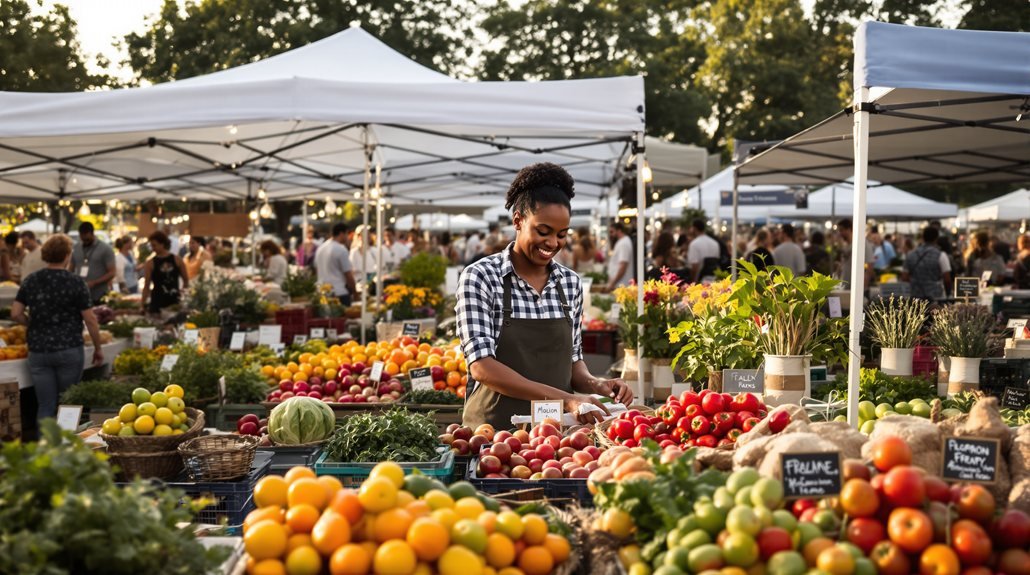
To become a vendor at Texas Farmers Market, your farm must sit within 150 miles of Austin and qualify as a sustainable fruit or vegetable operation. They run two locations — Mueller and Cedar Park — and select vendors based on product fit and category gaps. Microgreens currently show low saturation, which means a real opening exists. Scout Mueller first, then apply where your product fills the clearest gap. There’s more ground to cover before your application is ready.
Key Takeaways
- Texas Farmers Market operates year-round at Mueller and Cedar Park, running rain-or-shine with nearly 20,000 square feet of covered market space.
- Vendor eligibility requires operating a sustainable fruit or vegetable farm located within 150 miles of Austin.
- Specialty produce, including microgreens, shows low vendor saturation, creating a clear category opening at both locations.
- Applications are reviewed for farm location, product type, and how well the vendor fills gaps in the current vendor mix.
- Scout Mueller on Saturdays before applying, counting specialty produce vendors and observing buyer behavior to strengthen your application.
What should you know about Texas Farmers Market before you apply?
Before you apply to Texas Farmers Market, you need to know what makes it different from other Austin-area markets. It runs year-round at two locations. Mueller and Cedar Park both draw specific customer types who spend money on specific products.
What Makes Texas Farmers Market Different From Other Texas Markets
If you’ve seen farmers market listings in Austin, Texas Farmers Market stands apart for one reason: it screens for sustainability.
Most markets take any vendor. This one doesn’t.
| Feature | Texas Farmers Market |
|---|---|
| Locations | Mueller and Cedar Park |
| Schedule | Year-round, rain-or-shine |
| Coverage | Nearly 20,000 sq ft covered |
| Applicant requirement | Within 150 miles of Austin |
The Texas Farmers Market Mueller vendor application is only open to sustainable fruit and vegetable farmers. That filter shapes everything, including who shops there.
Customers at Mueller are food-literate. They read labels. They ask questions. They return to vendors they trust.
That’s the community you’re entering when you apply.
Who Shops There and What They Actually Buy
Mueller draws from Austin’s tech and food-professional communities every Saturday and Sunday. These shoppers read labels, ask questions, and pay for quality.
They’re not looking for the cheapest option. They’re looking for the right one.
This customer base already understands specialty produce. As an austin farmers market vendor, that works in your favor. You don’t have to explain what microgreens are or why they cost more than grocery store greens.
Cedar Park draws similar buyers. Families and food-conscious residents who shop intentionally and return weekly.
Both locations have regulars. Regulars build your revenue base faster than one-time buyers.
These shoppers buy what they recognize and trust. Your job is to show up consistently and give them a reason to find your table first.
What does the vendor mix look like at Texas Farmers Market?
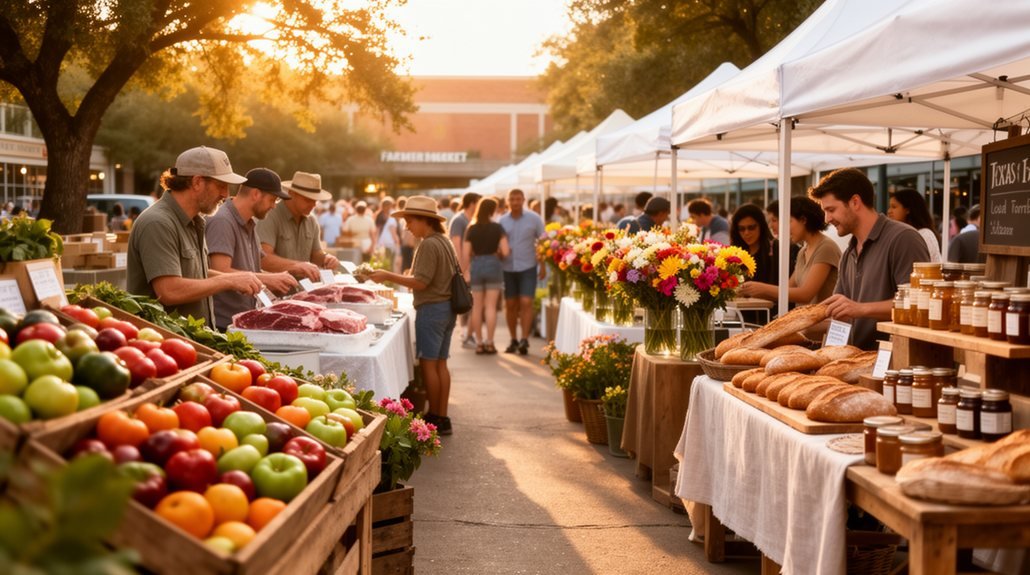
Before you apply, you need to know what’s already at this market. Texas Farmers Market skews heavily toward established produce farms, baked goods, and prepared food vendors.
Specialty produce, including microgreens, is underrepresented, and that gap is your opening.
Which categories are overrepresented at Texas Farmers Market
Most vendor slots at Texas Farmers Market go to produce farmers, baked goods sellers, and prepared food vendors. These three categories fill up fast at both Mueller and Cedar Park locations.
| Category | Saturation Level |
|---|---|
| Baked goods | High |
| Prepared food | High |
| Specialty produce | Low |
As a texas farmers market vendor, knowing this matters before you apply. Oversaturated categories mean longer wait times and tougher competition for space.
Specialty produce, including microgreens, sits in the low-saturation column. That gap is real. The market’s food-literate customer base actively looks for products they can’t find at a grocery store. If your grow fits that gap, your application stands out from the start.
Where the gap is for specialty produce vendors
That low-saturation gap doesn’t just mean less competition. It means the market actually needs you.
Specialty produce, including microgreens, is under-represented at Texas Farmers Market. Mueller’s food-literate customer base already buys premium ingredients. They know what microgreens are. They’re looking for them.
Dr. Booker T. Whatley’s framework is direct: know your customer before you choose your market. Visit Mueller as a customer first. Watch what sells on a Saturday morning. Count how many vendors carry specialty greens. That number is usually zero or one.
That’s your application strategy. You’re not competing for a slot. You’re filling a documented gap.
When you apply as a microgreens Texas farmers market vendor, you’re giving the market something it’s missing.
What does the Texas Farmers Market vendor application process involve?
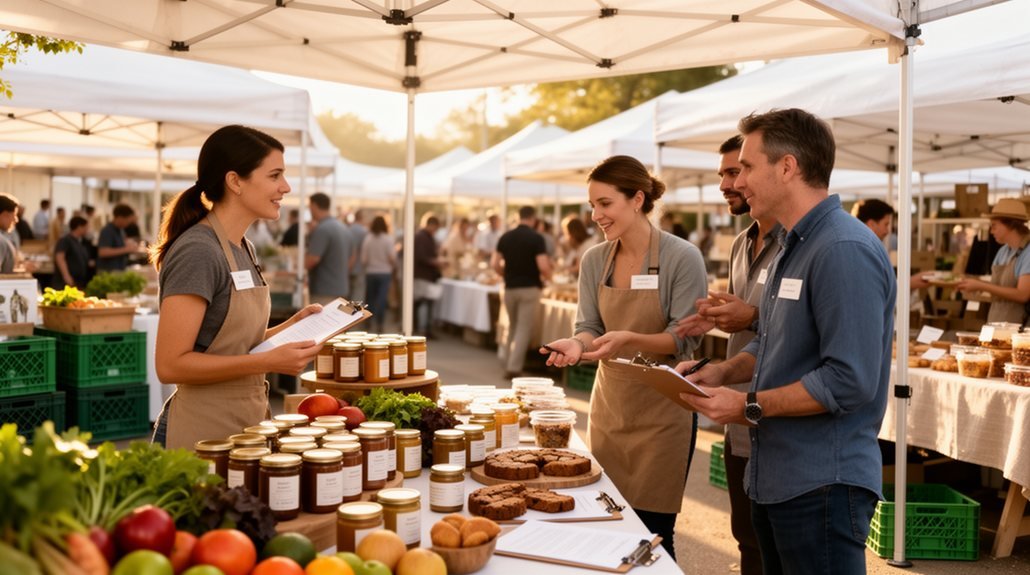
Texas Farmers Market doesn’t accept walk-in vendors. You’ll need to meet specific requirements before you can even submit.
The selection process is competitive, so knowing what they’re looking for gives you a real advantage.
What Texas Farmers Market requires before you submit an application
Before you fill out anything, check the eligibility rules. Texas farmers market vendor requirements are specific, and missing one disqualifies your application.
You must be a sustainable fruit or vegetable farmer. Your farm must be within 150 miles of Austin.
Texas Farmers Market operates at two locations. Mueller is at Branch Park Pavilion in Austin. Cedar Park is the second site. Both are year-round, rain-or-shine markets.
Microgreens qualify as specialty produce. They align with the market’s sustainable agriculture mission.
If you’re a beginning farmer who identifies as BIPOC, check the scholarship program before applying. It’s designed to lower barriers for farmers at the start.
Gather your farm documentation first. Know your growing practices and your distance from Austin before you open the application.
What the selection process looks like
Once you meet the eligibility requirements, the application moves through a review process. Texas Farmers Market staff evaluate each submission before granting a spot.
They look at your farm location, what you’re growing, and how it fits the market’s mix. Specialty produce like microgreens gets reviewed against current vendor gaps.
If your product fills a need, you move forward. If the category is already covered, you may wait or be declined.
The Texas Farmers Market application process is competitive. Mueller and Cedar Park each have their own vendor makeup, so what’s missing at one location may already exist at the other.
Apply to the location where your product has the clearest opening. That’s your best path to getting accepted.
What do microgreens vendors specifically need to know about Texas Farmers Market?
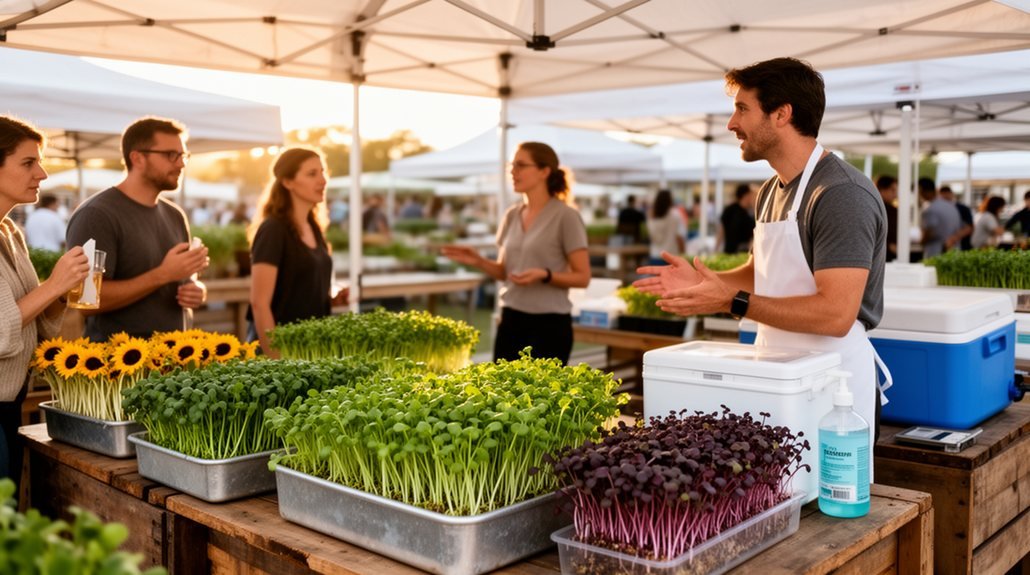
Microgreens fit this market’s mission, but knowing that isn’t enough.
You need to understand who’s buying, what’s already on the floor, and where the gap is.
That gap is your application strategy.
Why Texas Farmers Market’s customer base is a strong match for specialty greens
Texas Farmers Market pulls its heaviest foot traffic from Mueller, an urban Austin neighborhood packed with tech workers and food professionals. These buyers know food. They ask questions, read labels, and spend more per visit than average market shoppers.
That’s the customer you want standing in front of your tray of sunflower or pea shoots.
Specialty produce Austin market shoppers actively look for things they can’t find at a grocery store. Microgreens fit that gap exactly. This crowd supports sustainable agriculture, and they’re comfortable paying premium prices for specialty items.
You’re not selling to bargain hunters here. You’re selling to people who already understand the value of what you’re growing. That alignment is rare. This market has it.
What sets successful vendors apart at Texas Farmers Market
Walk the Mueller market before you apply. Watch which stalls draw lines and which don’t.
Dr. Booker T. Whatley’s core rule: know your customer before you choose your market. Specialty produce has a gap here. That gap is your entry point as a Mueller farmers market vendor.
| Factor | Weak approach | Strong approach |
|---|---|---|
| Product fit | Generic greens | Named varieties with signage |
| Customer knowledge | No pre-visit | Two or more scouting visits |
| Application timing | Apply immediately | Apply after identifying gaps |
| Display setup | Basic table | Branded, story-driven booth |
Visit on both Saturday and Sunday. Traffic patterns differ by day.
Show the market you already understand their customer.
How do you find Texas Farmers Market and locate other markets like it near you?
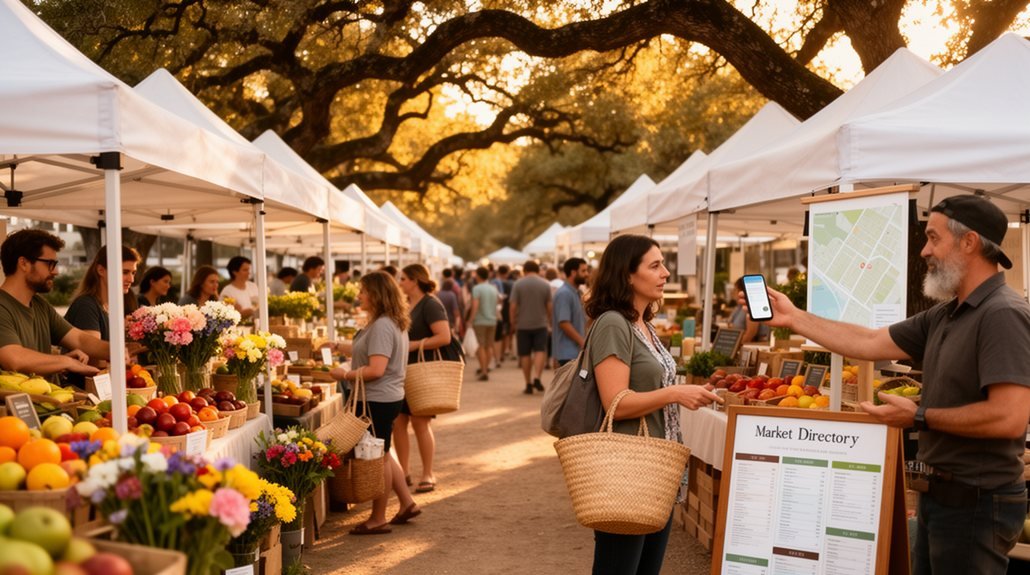
Texas Farmers Market is in Austin, but it’s not the only strong market for microgreens in Texas.
The MGW Farmers Market Finder at markets.microgreensworld.com covers 7,842 USDA-verified markets across all 50 states, searchable by zip code, city, or state.
Before you apply anywhere, you need to know what to look for so you don’t waste time on the wrong market.
Using the MGW Market Finder to scout markets in Texas
Pull up markets.microgreensworld.com and search your zip code. The tool covers 7,842 USDA-verified markets across all 50 states.
Filter results to compare markets before you apply. Here’s what the finder shows you for each market:
| Data point | Why it matters |
|---|---|
| Location and address | Confirms distance from your operation |
| Market schedule | Shows year-round vs. seasonal availability |
| Vendor category mix | Reveals gaps like specialty produce |
| Contact information | Gets you directly to the application |
Texas Farmers Market in Austin runs two locations. Mueller and Cedar Park are both searchable by zip code inside the tool.
Knowing how to sell at Texas Farmers Market Austin starts with knowing where you fit.
What to look for before you apply to any Texas market
Before you apply anywhere, visit the market as a customer first. Walk the Mueller location at Branch Park Pavilion on a Saturday or Sunday. Watch what sells.
Count the specialty produce vendors. At most Austin markets, that category is thin. That gap is your entry point for your austin farmers market application 2026.
Notice who buys microgreens. At Mueller, you’re selling to Austin’s tech and food-professional communities. These buyers know what they want.
Dr. Booker T. Whatley’s framework is simple: know your customer before you choose your market. Visit first. Apply second.
Look at vendor density in your category. If no one is selling microgreens, that’s not a warning. That’s an opening. Identify it before you submit anything.
Frequently Asked Questions
Does Texas Farmers Market Charge Vendors a Percentage of Sales?
Texas Farmers Market doesn’t charge a percentage of your sales. You pay a flat booth fee. That keeps your pricing simple and your earnings predictable.
Can You Sell at Both Mueller and Cedar Park Locations Simultaneously?
You can sell at both Mueller and Cedar Park locations simultaneously. Apply to each site separately. Being active at both puts you in front of two distinct Austin communities every week.
What Booth Sizes Does Texas Farmers Market Offer to New Vendors?
Texas Farmers Market doesn’t publish standard booth size tiers on their vendor application page. Contact their market manager directly to confirm what’s available for new vendors before you apply.
Does Texas Farmers Market Allow Shared Vendor Booths Between Two Growers?
Texas Farmers Market doesn’t publicly list a shared booth policy. Contact their vendor coordinator directly to ask. Some markets allow it with prior approval, so get a clear answer before you plan your setup.
How Long Does It Take to Get Approved After Submitting Your Application?
They don’t publish a fixed timeline. Expect a few weeks after submission. Check your email and respond fast if they follow up. Slow replies can delay or cost you the spot.
Leave a Reply