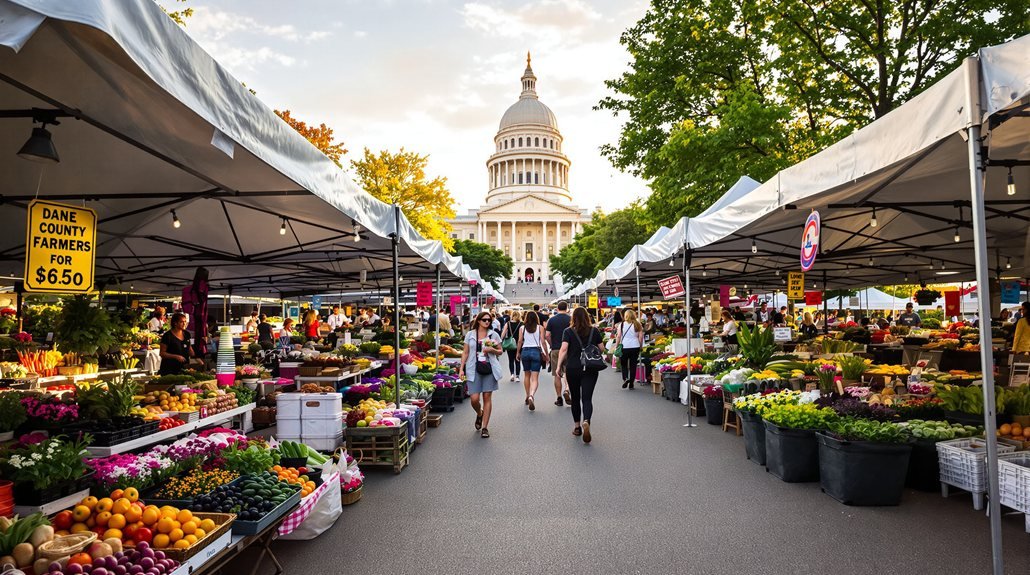
To get into Dane County Farmers Market, you’ll need documented proof that you grow or produce everything you sell — no resellers allowed. Prepare a grow room photo, tray counts, and a harvest log before the late-winter application window opens. The selection committee prioritizes vendors filling gaps in the mix, and specialty produce like microgreens is currently under-represented. Get your liability insurance certificate ready early. Keep going to learn exactly what the committee wants to see.
Key Takeaways
- Dane County Farmers Market enforces a strict producer-only rule, meaning every vendor must personally grow, raise, or produce all items sold.
- Applications require documented proof of production, including grow room photos, tray counts, harvest logs, and a valid liability insurance certificate.
- The selection committee reviews applications in late winter, prioritizing vendors who fill identified gaps in the current vendor mix.
- Specialty produce, including microgreens, represents an under-represented category, giving new growers a competitive advantage when applying.
- Visiting the market as a customer on a peak Saturday helps identify missing products and strengthens your application strategy.
What should you know about Dane County Farmers Market before you apply?
Dane County Farmers Market isn’t just big. It’s the largest producer-only market in the country, with 275+ vendors and 20,000 shoppers every Saturday.
Before you apply, you need to know who runs Capitol Square and what those shoppers are actually spending money on.
What Makes Dane County Farmers Market Different From Other Wisconsin Markets
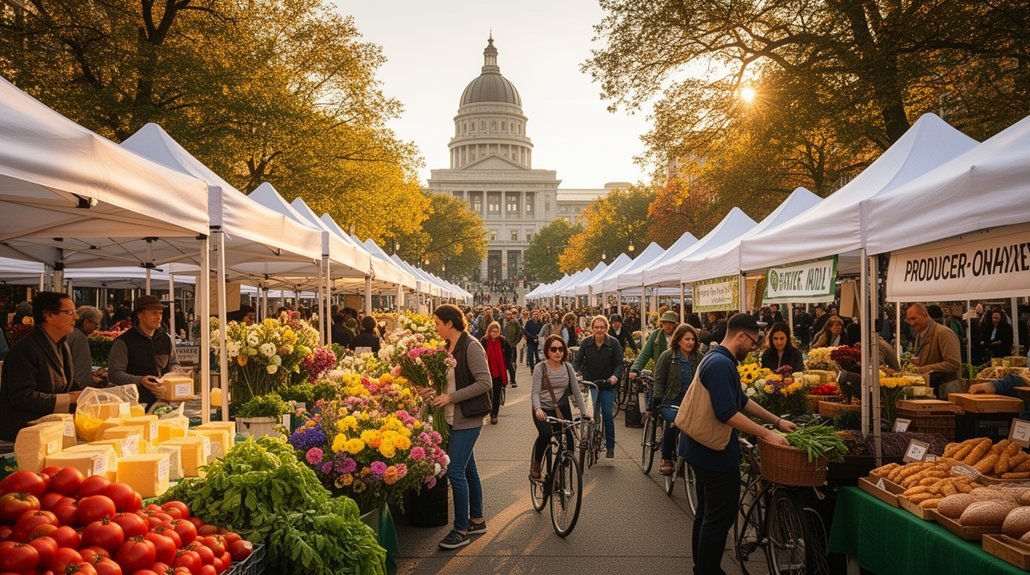
Founded in 1972, Dane County Farmers Market is America’s largest producer-only farmers market. It circles Wisconsin’s State Capitol Square every Saturday from late April through early November.
Over 275 vendors show up on peak summer Saturdays. More than 20,000 shoppers walk the square each week.
Every Dane County Farmers Market vendor must grow, raise, or produce what they sell. No resellers. No exceptions. That rule separates this market from nearly every other Wisconsin market.
That standard also raises the bar for your application. You’ll need documented proof of production before you can get a spot.
Specialty produce, including microgreens, is under-represented in the vendor mix. Dairy and baked goods dominate. That gap is real, and it matters for your strategy.
Who Shops There and What They Actually Buy
More than 20,000 shoppers walk Capitol Square every Saturday at peak season. That’s not foot traffic. That’s a buying crowd.
These shoppers are Madison locals, UW students, and food-conscious households. They read labels. They ask where things come from. They come back for vendors they trust.
Fresh produce moves well here. So do specialty items that aren’t available at grocery stores. Microgreens fit that gap. Most shoppers haven’t seen a microgreens vendor at this market before.
That’s your opening.
Before you look at Dane County farmers market vendor requirements, visit first as a customer. Watch what sells on a peak Saturday. Identify what’s missing. That observation is your application strategy, not your product list.
What does the vendor mix look like at Dane County Farmers Market?
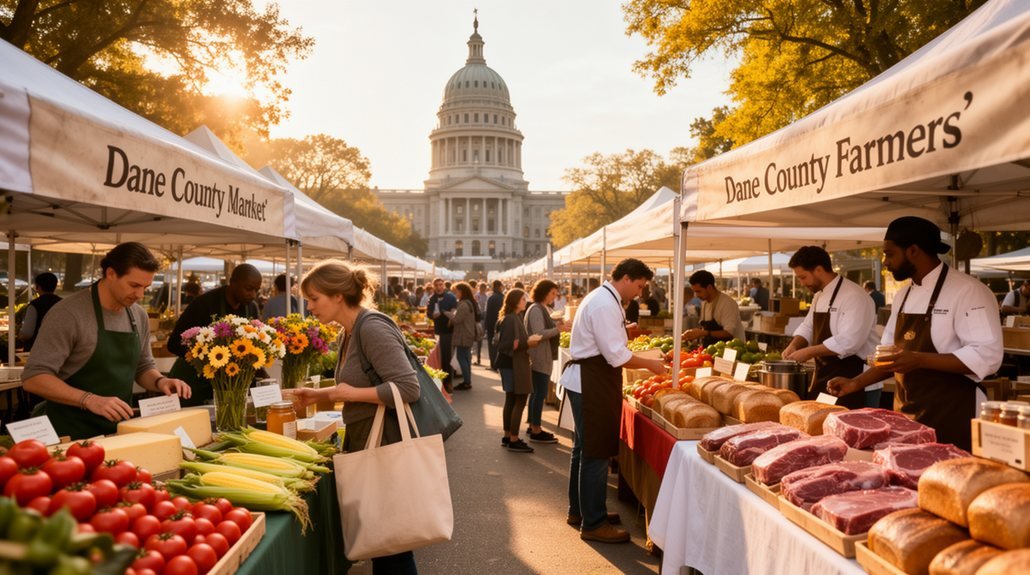
Dane County Farmers Market has over 275 vendors on peak Saturdays, and most of them fall into a few heavy categories.
Dairy, baked goods, and meat dominate the mix because Wisconsin’s agricultural heritage skews production in that direction.
Specialty produce, including microgreens, is under-represented, and that gap is exactly where your application has influence.
Which categories are overrepresented at Dane County Farmers Market
Most of the 275-plus vendors at Dane County Farmers Market fall into a few heavy categories.
Dairy and cheese dominate.
Wisconsin’s agricultural identity runs deep, and it shows in the vendor mix.
Baked goods are the second crowded lane.
Breads, pastries, and prepared foods take up significant space on the square.
Meat and egg vendors hold a strong third position.
These sellers meet Dane County farmers market vendor requirements through documented farm production records.
Flowers round out the saturated categories.
On peak Saturdays, you’ll count dozens of cut flower tables before you find a specialty produce vendor.
That imbalance matters.
If you’re growing microgreens, you’re not entering a crowded lane.
You’re stepping into a gap most applicants never think to look for.
Where the gap is for specialty produce vendors
Specialty produce vendors are rare on Capitol Square. Dairy, baked goods, and meat dominate the vendor mix. Microgreens barely register as a category.
That’s the gap. You’re not competing against 40 other microgreens growers. You’re stepping into an under-represented category with 20,000 weekly shoppers already at the market.
Dr. Booker T. Whatley’s customer-first framework says know your customer before you choose your market. Walk Dane County as a shopper first. Watch what sells. Find what’s missing.
Specialty produce is missing. Meeting the dane county farmers market vendor requirements means documenting your production. That’s the baseline. But the application strategy starts before you ever fill out a form. It starts with identifying the gap.
What does the Dane County Farmers Market vendor application process involve?
Dane County Farmers Market’s application process is competitive and documentation-heavy. You’ll need proof of production before you even submit.
The selection committee reviews what you grow, how you grow it, and whether your product fills a gap in the current vendor mix.
What Dane County Farmers Market requires before you submit an application
Before you touch the application, you need to know what you’re getting into. Dane County market vendor requirements are specific and non-negotiable.
Every vendor must grow, raise, or produce what they sell. No resellers. No exceptions.
You’ll need documented proof of production. That means farm records, grow logs, or photos of your operation. Microgreens growers should document their trays, seeds, and harvest process before applying.
Liability insurance is required. Have your certificate ready before the application window opens in late winter.
You’re applying to join over 275 vendors serving more than 20,000 weekly shoppers. The market wants producers who belong there. Your documentation proves you do.
What the selection process looks like
Getting your documentation together is step one.
The market reviews applications from Dane County Farmers Market 2026 vendor candidates in late winter, before the April season opens.
The committee evaluates your production proof first.
They want to confirm you grow or make everything you’re selling.
No resellers get through.
After document review, some applicants get a site inspection.
A market representative visits your operation to verify your setup matches what you submitted.
Selection is competitive.
Over 275 vendors already hold spots, and the committee prioritizes filling gaps in the vendor mix.
Specialty produce is one of those gaps.
That’s your opening.
Submit complete documentation and make your production capacity clear from the first page.
What do microgreens vendors specifically need to know about Dane County Farmers Market?
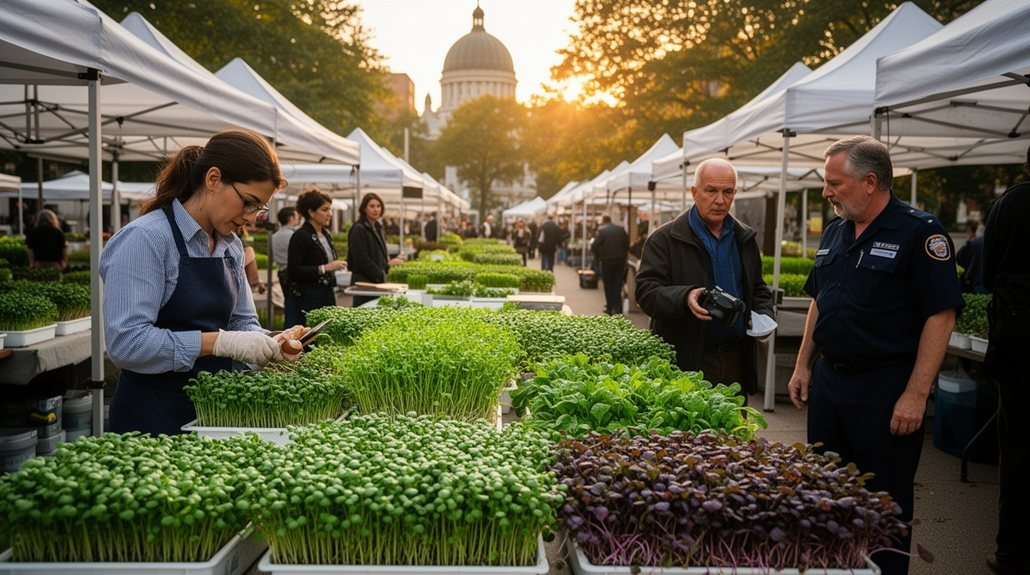
Dane County draws over 20,000 shoppers every Saturday, and many of them are looking for specialty produce they can’t find at a grocery store.
Microgreens fit that gap directly. Knowing the customer base and the vendor mix before you apply puts you ahead of most applicants.
Why Dane County Farmers Market’s customer base is a strong match for specialty greens
Madison’s got one of the most educated and food-aware customer bases of any market city in the Midwest. The University of Wisconsin draws researchers, faculty, and students who ask questions about growing methods and nutrition.
These shoppers already know what microgreens are. They’re not a crowd you need to educate from zero.
The Capitol Square location pulls over 20,000 shoppers on peak summer Saturdays. That foot traffic includes food-forward buyers who actively look for specialty produce.
Microgreens at Dane County Farmers Market fill a real gap. Dairy and baked goods dominate the vendor mix. Specialty greens are under-represented.
That mismatch is your opening. Customers who want something different from the usual vendor lineup are already there. You just need to show up with the right product.
What sets successful vendors apart at Dane County Farmers Market
Because this is a producer-only market, your application has to prove you grow what you sell. That means grow logs, photos of your setup, and documented production records.
Every Capitol Square farmers market vendor went through the same review. The market checks your proof before you get a spot.
Microgreens growers who get accepted show clear evidence of a real operation. A grow room photo, a tray count, a harvest log. That’s what separates accepted applications from rejected ones.
Visit the market as a customer first. Watch what sells on peak Saturdays. Specialty produce is under-represented. That gap is your argument for why the market needs you.
Your application should name that gap directly.
How do you find Dane County Farmers Market and locate other markets like it near you?
Dane County is one of 7,842 USDA-verified markets in the MGW Farmers Market Finder at markets.microgreensworld.com.
Search by zip code, city, or state to pull up Wisconsin markets and compare them side by side.
Before you apply to any of them, check vendor category counts, season length, and whether the market runs a producer-only rule.
Using the MGW Market Finder to scout markets in Wisconsin
Pull up markets.microgreensworld.com and search “Madison, WI” or zip code 53703. Dane County Farmers Market shows up with location, schedule, and vendor category data attached.
From there, filter by specialty produce. You’ll see how few madison wi market vendor slots exist in that category across Wisconsin.
That gap is real. It shows up in the data across multiple markets, not just Dane County.
Run the same search for nearby cities like Milwaukee, Waukesha, or Green Bay. Compare vendor counts, market size, and open categories side by side.
The Finder pulls from 7,842 USDA-verified markets. Wisconsin’s full list is in there. You’re not guessing at which markets have room. The numbers tell you before you apply.
What to look for before you apply to any Wisconsin market
Not every Wisconsin market worth applying to has “Dane County” in the name.
Before you learn how to get into Dane County Farmers Market, check what’s already running near you. Some growers find a better starting point 20 miles from Madison than at Capitol Square itself.
Look for three things: producer-only rules, specialty produce gaps, and confirmed Saturday traffic numbers.
Producer-only markets protect your pricing. Specialty produce gaps mean less competition. Traffic numbers tell you if the customer base can support your volume.
Visit as a customer first. Watch what sells and what’s missing. That gap is your angle.
The MGW Farmers Market Finder covers 7,842 USDA-verified markets. Search by zip code to see what Wisconsin has beyond Dane County.
Frequently Asked Questions
Is Dane County Farmers Market Open Year-Round or Only Seasonally?
Dane County Farmers Market runs seasonally. It’s open Saturdays from late April through early November on Capitol Square. You’ll need to plan your vendor application and harvest schedule around that window.
How Many Vendors Are Accepted at Dane County Farmers Market Each Year?
You won’t find a fixed cap published, but the market runs over 275 vendors on peak summer Saturdays. Competition for spots is real. Your category and production proof shape whether you’re in.
Can Two Vendors From the Same Farm Share One Booth Space?
You can’t split one booth between two vendors. Each approved vendor gets their own assigned space. If you’re farming together, apply as one operation with one application.
Does Dane County Farmers Market Charge Vendors a Fee to Participate?
Yes, you pay fees at Dane County Farmers Market. There’s an annual membership fee plus a daily booth fee each Saturday you sell. Exact amounts are confirmed after your application is accepted.
What Happens if a Vendor Misses Their Assigned Saturday at the Market?
If you miss your assigned Saturday, you’re expected to notify the market in advance. Repeated absences can put your spot at risk. Consistent attendance protects your standing and your relationship with the market.
Leave a Reply