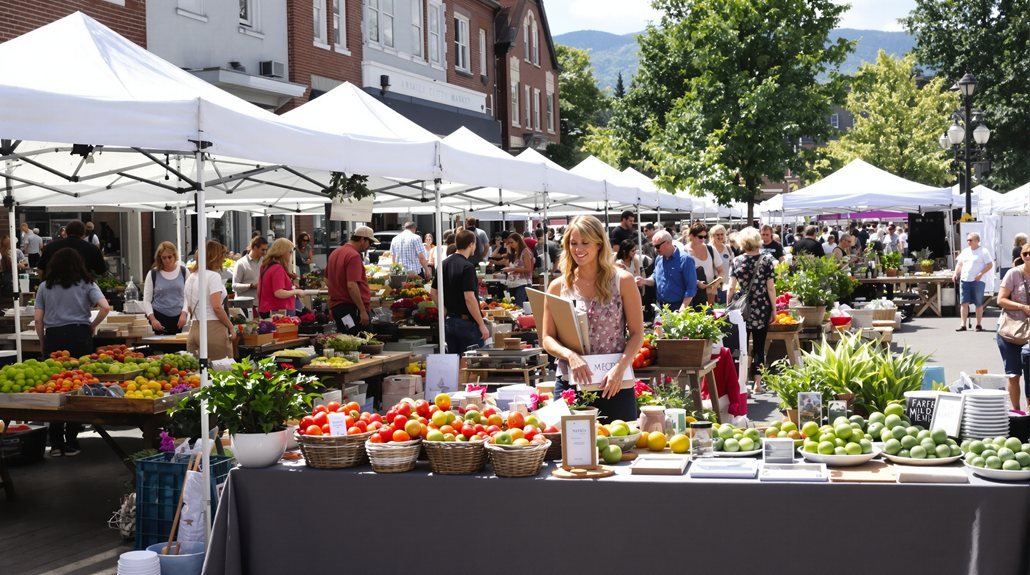
To get a vendor table at Asheville City Market, apply through the City of Asheville Parks and Recreation Department. You’ll need a physical farm or grow address in Western NC, proof of business registration, liability insurance, and possibly an NCDA compliance certificate. Applications are scored on product category, market fit, and completeness. Visit the market on several Saturdays before applying — what you observe there will shape everything about your application strategy.
Key Takeaways
- Asheville City Market applications run through the City of Asheville Parks and Recreation Department, requiring a farm address, business registration, and liability insurance.
- Applications are reviewed in batches and scored on product category, market fit, and completeness, with decisions taking several weeks.
- Visit the market multiple Saturdays before applying to observe what sells, what gaps exist, and which vendor categories are underrepresented.
- Specialty produce, including microgreens and edible flowers, is underrepresented at the market, making it a strong application angle for growers.
- Emphasize specific offerings that fill identified gaps rather than submitting a generic pitch to strengthen your application’s competitive position.
What should you know about Asheville City Market before you apply?
Asheville City Market runs Saturday mornings, April through November, in downtown Asheville. It’s Western North Carolina’s flagship seasonal market, and it draws a different kind of shopper than most regional markets do.
Before you apply, you need to know who those shoppers are and what’s already being sold.
What Makes Asheville City Market Different From Other North Carolina Markets
If you’ve sold at a market like Carrboro or the State Farmers Market in Raleigh, Asheville City Market operates differently. The customer base isn’t just locals. It includes food tourists and regional visitors who spend money on specialty items they can’t find at a grocery store.
That changes what sells. Microgreens move here because buyers are already looking for something unusual.
Being an Asheville City Market vendor also means you’re in a curated environment. The market runs Saturday mornings, April through November, in downtown Asheville. Management controls the vendor mix. You’re not just renting a table. You’re being accepted into a specific seller community with a defined identity.
Who Shops There and What They Actually Buy
Three distinct groups show up at Asheville City Market every Saturday. Local residents, regional day-trippers, and food tourists from outside North Carolina.
Local residents shop weekly and build loyalty with specific vendors. They return when you’re consistent.
Regional visitors come for the experience. They want something they can’t find at a grocery store.
Food tourists are there once. They buy what looks unusual or locally specific.
All three groups spend money on specialty produce. Microgreens fit that gap directly.
Before you review the Asheville City Market vendor requirements, know who you’re selling to. Dr. Booker T. Whatley built his entire framework around this: know your customer before you choose your market.
Watch what sells on two or three Saturdays. Then apply with that data behind you.
What does the vendor mix look like at Asheville City Market?
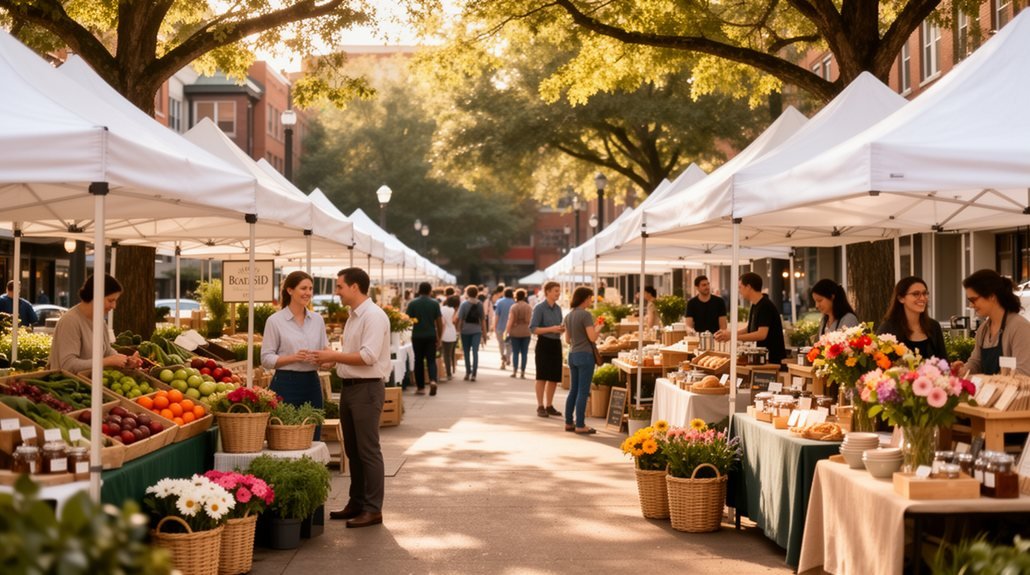
Asheville City Market fills up fast with baked goods, prepared foods, and jam vendors.
Specialty produce, especially microgreens, is thin on the ground. That gap is where your application gets traction.
Which categories are overrepresented at Asheville City Market
Baked goods dominate the vendor mix at Asheville City Market. Bread, pastry, and dessert vendors fill a large share of the available tables each Saturday.
Prepared food and hot food vendors take up another significant portion. Jam, pickles, and value-added products are also well represented.
These categories face the steepest internal competition. If you’re applying in one of those spaces, you’re competing against vendors who’ve held their spots for years.
Specialty produce is different. Microgreens, edible flowers, and unusual greens show up far less often. That gap matters when you’re building your case under Asheville market vendor requirements.
The application process rewards vendors who fill a real hole in the mix. Knowing the overrepresented categories tells you exactly where that hole is.
Where the gap is for specialty produce vendors
Across most Saturday mornings at Asheville City Market, specialty produce tables are sparse.
You’ll count more baked goods and prepared food vendors than fresh specialty crops in almost any row.
That’s the gap.
Microgreens fit directly into it.
The specialty produce Asheville market shoppers want is there.
The vendors selling it aren’t.
Dr. Booker T. Whatley said it plainly: know your customer before you choose your market.
Visit Asheville City Market as a customer first.
Watch what sells.
Watch what’s missing.
Specialty produce is under-represented at most markets, and this one is no exception.
That gap isn’t a warning.
It’s your application strategy.
You’re not competing for space.
You’re filling one.
What does the Asheville City Market vendor application process involve?
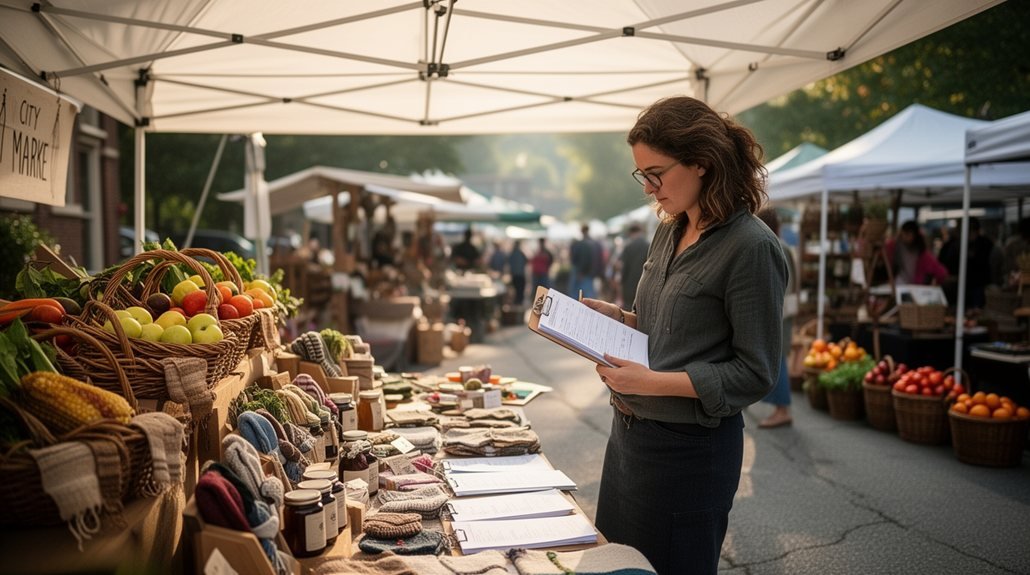
Asheville City Market runs its vendor application through the City of Asheville Parks and Recreation Department. You’ll need to gather specific documents and meet eligibility requirements before the application window opens each year.
The selection process is competitive, and knowing what they’re looking for before you apply matters.
What the market requires before you submit an application
Before you open the application, the market needs to know what you’re selling and where it comes from.
For the Asheville City Market application 2026, you must document your production location. That means a physical farm or grow address in Western NC.
Microgreens growers need to confirm their crops are grown on-site. Third-party sourcing disqualifies you from the producer-only category.
You’ll also need proof of business registration and liability insurance before the application is complete. Some vendors need a North Carolina Department of Agriculture compliance certificate.
Gather these documents before you start. Incomplete applications get passed over. Having everything ready before the portal opens puts you ahead of vendors who wait.
What the selection process looks like
Once the portal opens, the market reviews applications in batches. They don’t process them one at a time as they arrive.
The Asheville City Market vendor application is scored on product category, market fit, and how complete your submission is. Missing documents push you to the back.
You won’t hear back immediately. Expect a wait of several weeks before any decision comes through.
If you’re accepted, you’ll get a vendor agreement and a fee schedule. Sign and return both by the deadline or you lose the spot.
If you’re waitlisted, stay responsive. Vendors drop out before the season starts. Being reachable moves you up faster than anything else.
What do microgreens vendors specifically need to know about Asheville City Market?
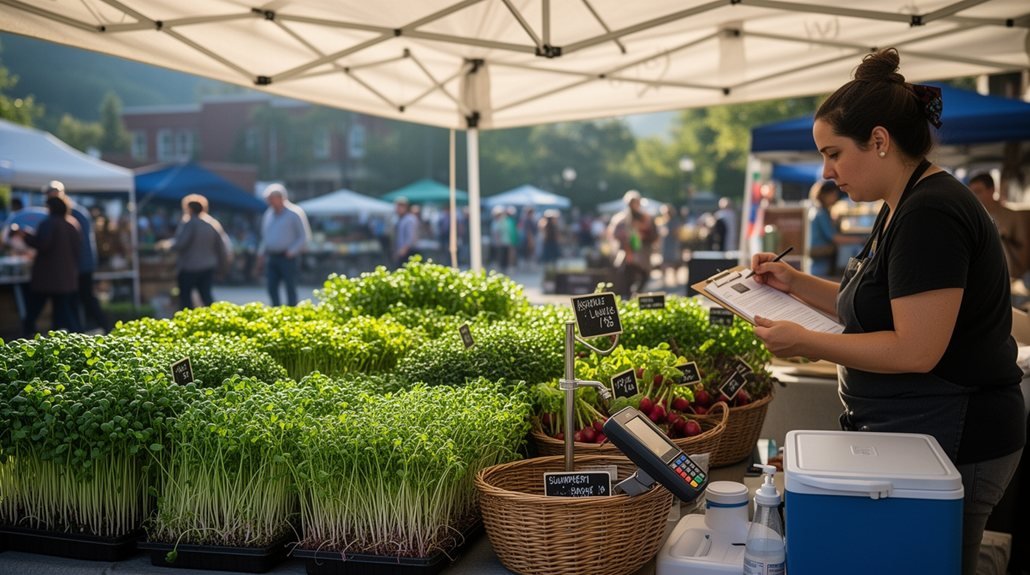
Asheville City Market draws locals, regional visitors, and food tourists who actively seek specialty and unusual products. That customer profile is a strong match for microgreens.
What separates vendors who succeed here isn’t just product quality. it’s knowing the market before you apply.
Why Asheville City Market’s customer base is a strong match for specialty greens
Selling microgreens at Asheville City Market means selling to a crowd that already spends money on specialty food. This isn’t a general grocery crowd. These are food tourists, local regulars, and regional visitors who seek out unusual products.
Asheville draws people who eat intentionally. They read labels. They ask questions. They come back when they find something worth buying.
That profile fits microgreens asheville city market vendors well. Your customers aren’t new to specialty produce. They’re looking for it.
The Saturday morning market pulls both residents and out-of-town visitors in the same pass. You’re not chasing one buyer type. You’re reaching two at once, in the same spot, every week from April through November.
What sets successful vendors apart at Asheville City Market
Before you apply, visit the market as a customer. Walk every row. Count how many vendors sell specialty produce. You’ll likely find fewer than three.
Dr. Booker T. Whatley’s framework is direct: know your customer before you choose your market. Watch what shoppers stop for. Watch what sells out before 10 a.m.
Successful Asheville City Market vendors know the gap before they apply. Specialty greens are under-represented. That’s your entry point, not just your product description.
When you apply as a vendor, name that gap. Tell the market manager what’s missing and how you fill it. Specific beats generic every time. That’s what separates approved applications from ignored ones.
How do you find Asheville City Market and locate other markets like it near you?
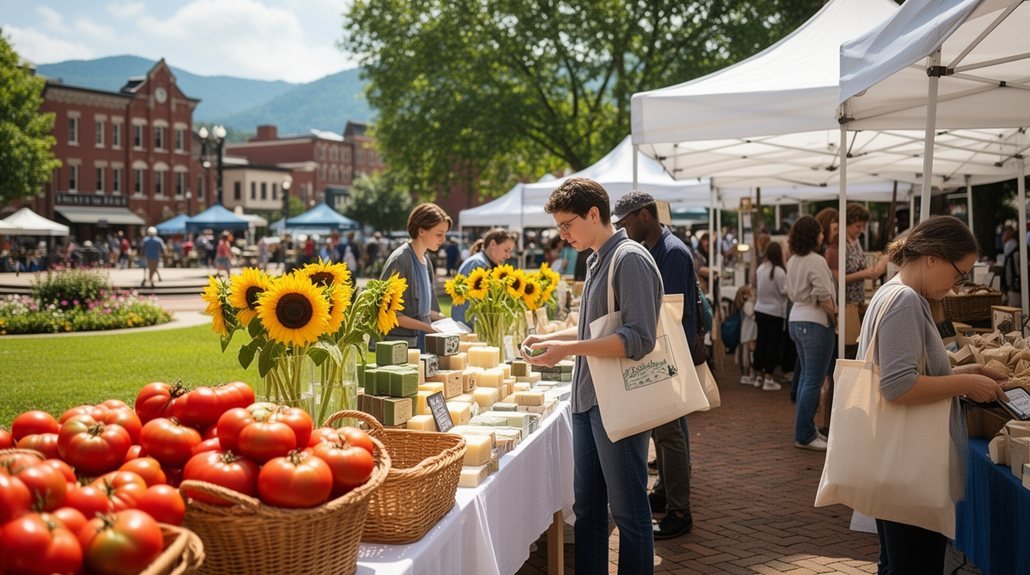
Asheville City Market is easy to find, but it’s not the only market worth your attention in North Carolina.
The MGW Farmers Market Finder covers 7,842 USDA-verified markets across all 50 states, and you can search by zip code, city, or state to pull up every option near you.
Before you apply anywhere, you need to know what to look for so you don’t waste time on the wrong market.
Using the MGW Market Finder to scout markets in North Carolina
Pull up the MGW Farmers Market Finder at markets.microgreensworld.com and search “Asheville, NC.” You’ll see Asheville City Market plus nearby options across Western NC.
The tool pulls from 7,842 USDA-verified markets. You can search by zip code, city, or state.
| Search input | What you find |
|---|---|
| Asheville, NC | Asheville City Market and surrounding markets |
| 28801 (zip code) | Markets within your target radius |
| North Carolina | Statewide market list for comparison |
Use this to compare market size, season, and vendor mix before you apply as an Asheville City Market vendor.
Knowing your options puts you in the same conversation as growers who’ve already done the research. That’s where you want to be.
What to look for before you apply to any North Carolina market
Once you’ve compared your options, the next problem is knowing what to look for inside each market.
Check the vendor mix first. Count how many specialty produce vendors are already there. If you see fewer than two, that’s a gap worth targeting.
Look at customer flow. Asheville City Market draws local residents, regional shoppers, and food tourists every Saturday. That mix supports specialty crops.
Before you submit an Asheville farmers market vendor application, visit the market as a customer. Watch what sells and what’s missing. The gap you find is your application strategy.
Markets with thin specialty produce sections are where a microgreens vendor fits without fighting for position.
Frequently Asked Questions
Does Asheville City Market Charge Vendors a Flat Fee or Percentage?
Asheville City Market charges vendors a flat weekly fee. You won’t pay a percentage of your sales. Your fee stays fixed regardless of how much you sell that day.
Can You Sell Microgreens as a Reseller or Must You Grow Them Yourself?
You must grow them yourself. Asheville City Market requires producer-only vendors. You can’t resell microgreens you didn’t grow. Your application will ask you to verify your growing operation before you’re approved.
Is There a Waitlist for New Vendors at Asheville City Market?
There’s no formal waitlist, but spots are limited. You’ll want to apply early, before the April season opens, and follow up directly with market management if you don’t hear back quickly.
What Happens if Weather Forces an Asheville City Market Saturday to Cancel?
You’ll get a direct notice from market management. Don’t assume it’s canceled until you hear from them. Check your email and the market’s official channels before packing up or staying home.
Can One Person Run a Microgreens Table Alone at Asheville City Market?
You can operate a microgreens table alone. Keep your setup tight. Pre-bag your product, employ a simple display, and handle transactions fast. One person is enough if you prep right.
Leave a Reply