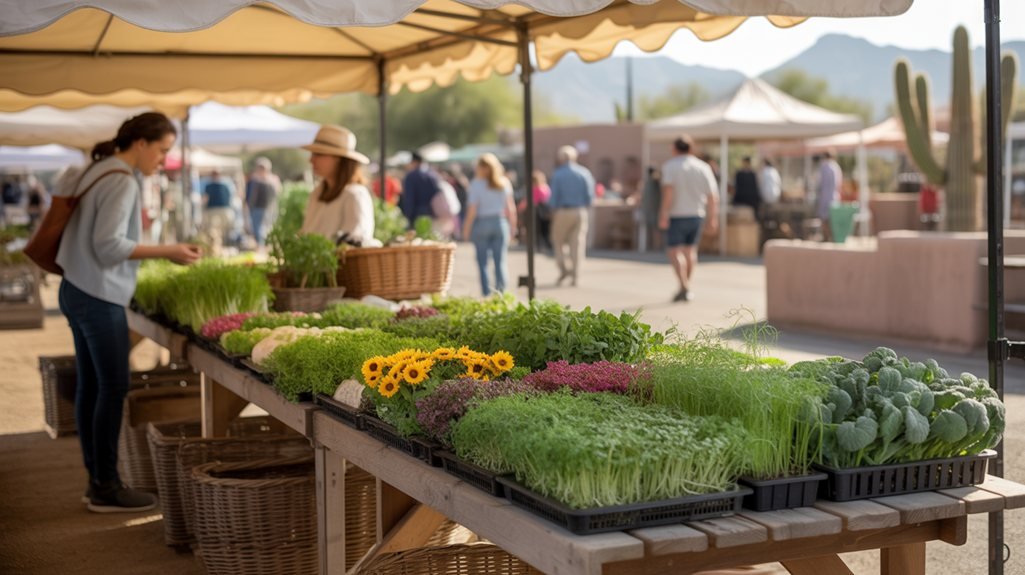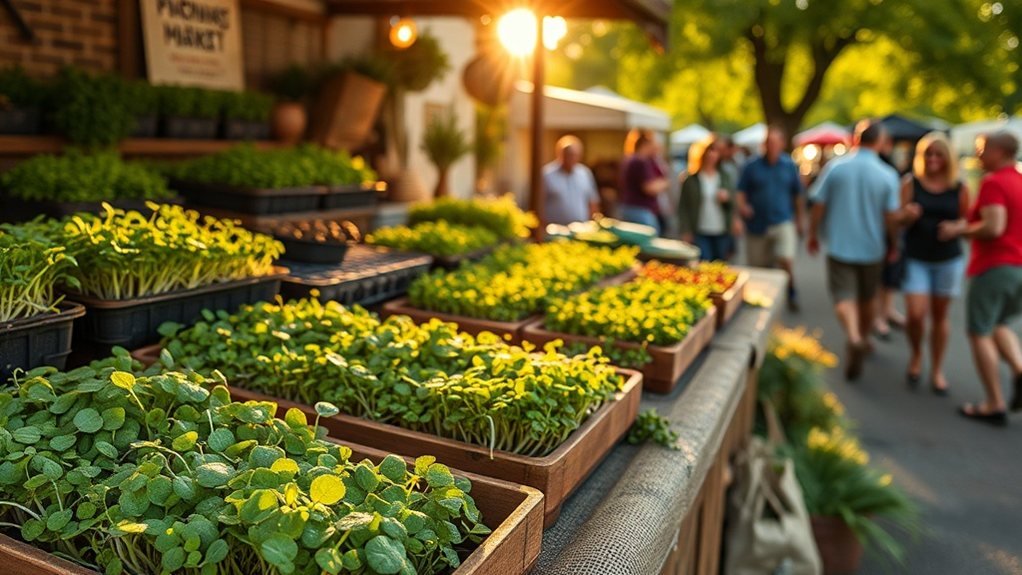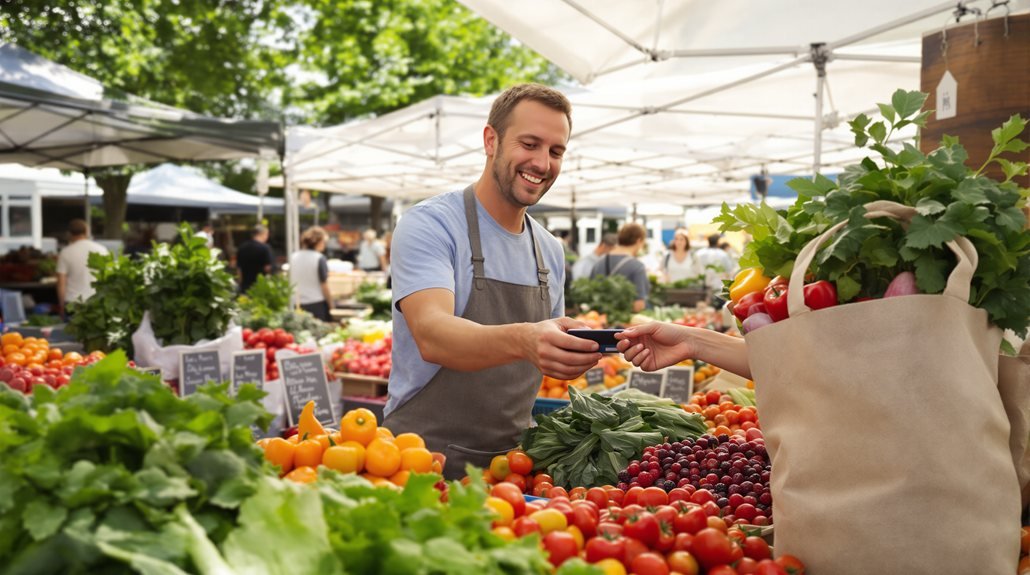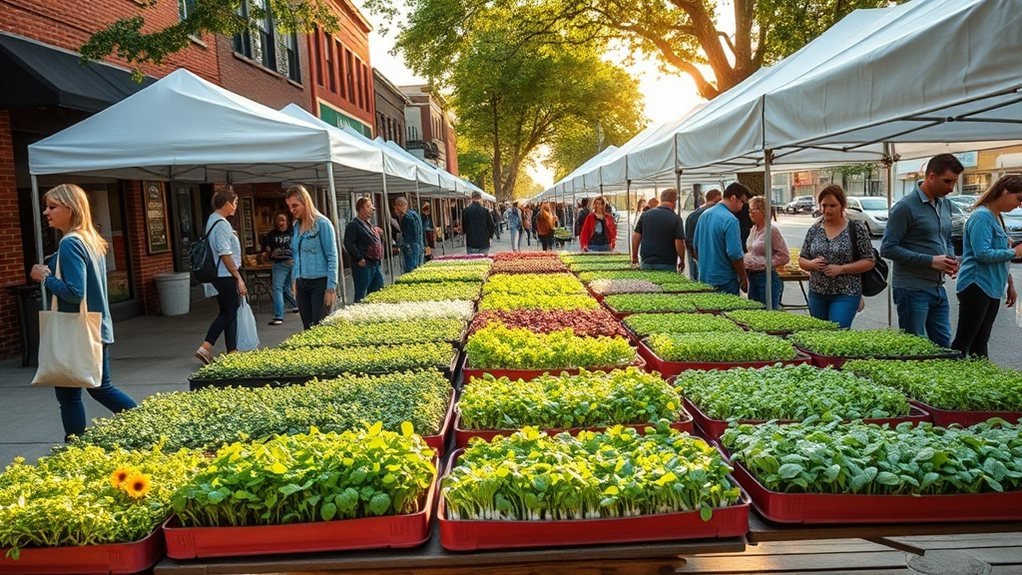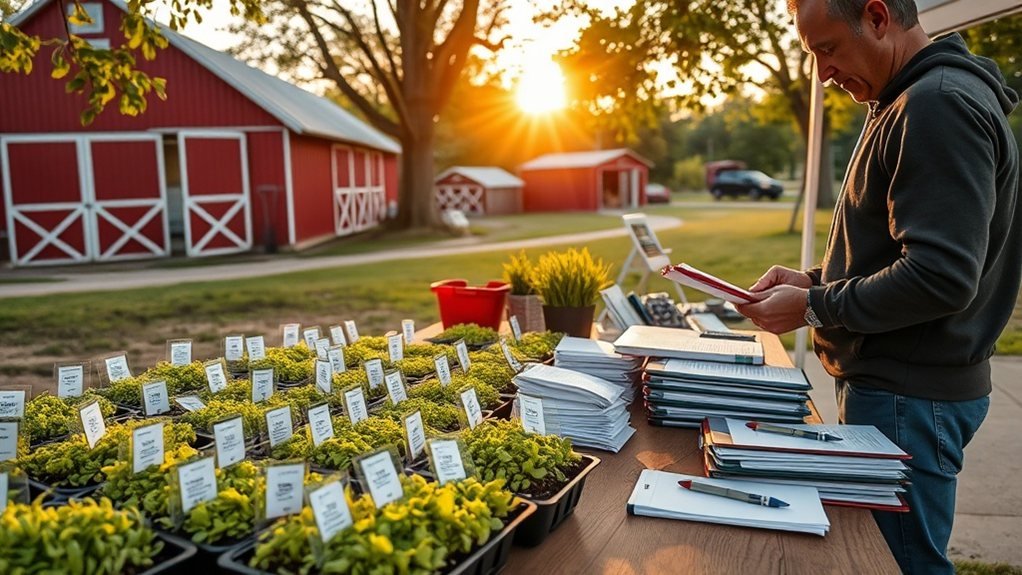
Farmers market sampling rules aren’t set by the federal government — they’re controlled at the state level and sometimes the county level. That means your neighbor’s booth rules might not apply to yours. Almost everywhere, though, you’ll need to wash produce with safe drinking water, wear clean gloves, keep perishable samples at 41°F or below, and toss anything out after two hours. Some states require permits; others don’t. Keep scrolling to find out exactly where your state lands.
Key Takeaways
- Sampling rules vary by state and county with no single federal standard, so always verify requirements with your local health department before sampling.
- Four baseline food-safety practices apply everywhere: wash produce, use clean gloves, keep samples at 41°F or below, and discard after two hours.
- Some states require permits for sampling while others don’t; Texas, for example, exempts produce sampling from temporary food permit requirements.
- Fresh-cut produce typically faces lighter regulations than value-added or cottage food products, which often require separate permits or licensed kitchens.
- Confirm both county health department rules and market manager requirements in writing before setting out your first sample tray.
Farmers Market Sampling Rules by State: What You Can and Can’t Do at Your Booth
Sampling rules at farmers markets aren’t set by one national authority — they’re controlled at the state level, and sometimes at the county level, which means your neighbor’s booth at the next market over might operate under completely different rules than yours.
The mistake that shuts vendors down isn’t usually a bad batch of product; it’s showing up with samples and no idea what their local health department actually requires.
Before you slice a single tray, you need to know your county’s rules, not just your state’s.
Why Sampling Rules Are Not the Same Everywhere
If you’ve ever asked another market vendor what rules they follow for sampling, you probably got a different answer than you expected. That’s not because one of you is wrong. It’s because farmers market sampling rules genuinely differ from state to state and sometimes county to county.
There’s no single federal standard for produce sampling at a farmers market. Some states have written farmers market sampling permit requirements into law. Others leave it entirely to local health departments. A few say nothing specific at all.
This is why copying what the vendor next to you does can get you into trouble. What’s legal in their county mightn’t be legal in yours. You need to know your own rules.
The Mistake That Gets Vendors Shut Down at Market
Most vendors who get shut down at market aren’t breaking the rules on purpose. They just assumed sampling worked the same way everywhere. That assumption is the mistake.
The most common violation in farmers market vendor sampling is skipping the permit step. Some states or counties require advance approval before you put out a sample tray. You find out when an inspector shows up.
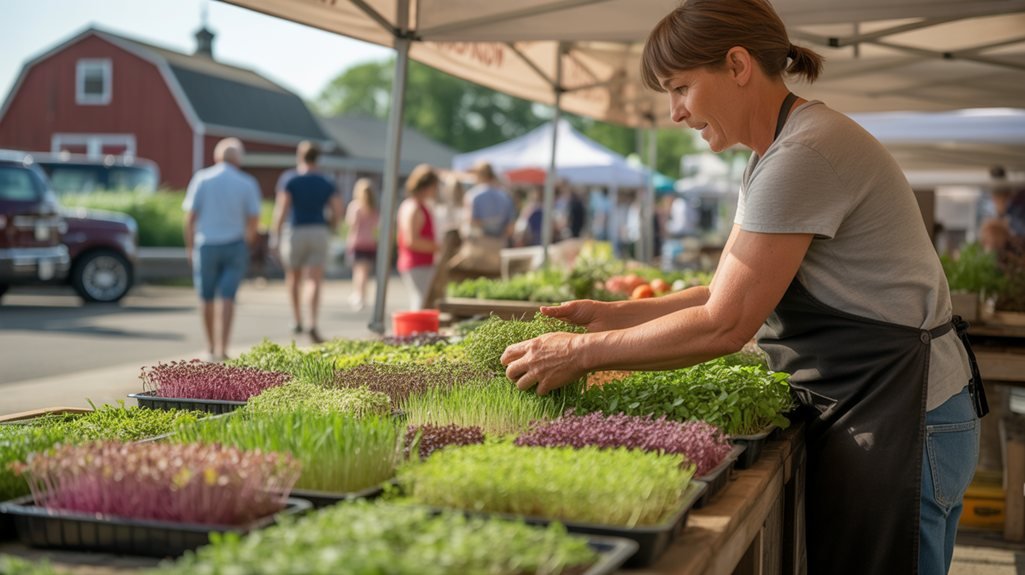
For microgreens sampling at a farmers market, a second issue comes up often: temperature. Fresh-cut microgreens left out past two hours or above 41°F violate food sampling farmers market regulations in nearly every jurisdiction.
You’re part of a community of vendors who want to do this right. Knowing the rule before market day keeps you in it.
What Are the Universal Sampling Rules That Apply Almost Everywhere?
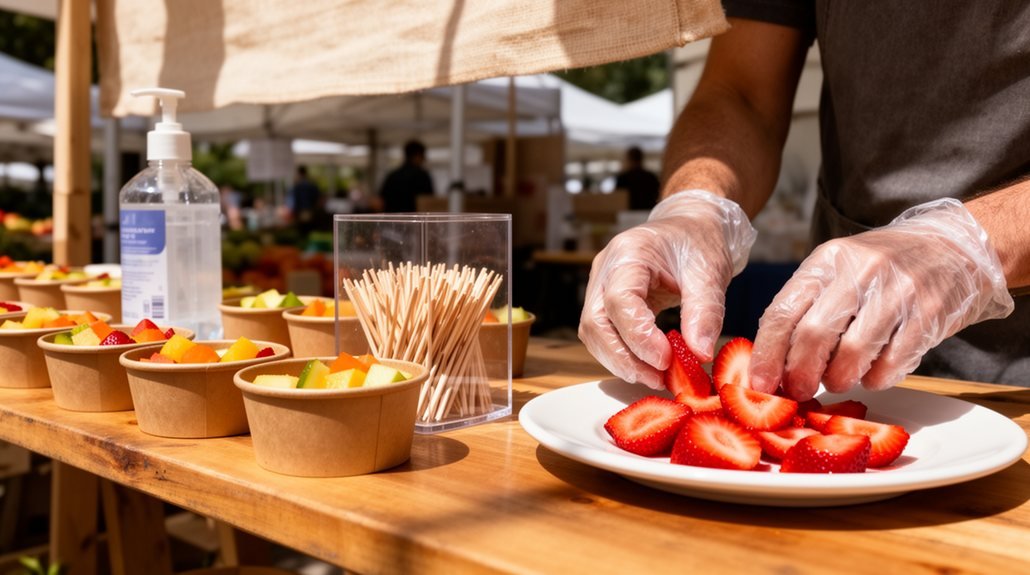
Before you worry about permits and county rules, four baseline rules show up almost everywhere. Wash your microgreens with potable water (safe drinking water from a regulated source) before you cut them for samples, employ clean disposable gloves or wash your hands properly right before prep, keep perishable samples at 41°F or below, and toss anything that’s been sitting out for more than two hours.
These aren’t the complete picture — they’re just the floor every vendor starts from.
Washing, Gloves, Temperature, and the Two-Hour Discard Rule
Whether you’re sampling sunflower shoots or spicy radish microgreens, four rules follow you to almost every farmers market in the country. Think of them as the baseline — the floor that farmers market food sampling builds on everywhere.
First, wash your produce with potable (safe drinking) water before you cut anything for samples. Second, wear clean disposable gloves or wash your hands properly right before you prep. Third, keep perishable samples at 41°F or below — that means a cooler with ice isn’t optional. Fourth, follow fresh produce sampling rules on timing: discard anything after two hours.
These aren’t suggestions. Farmers market health permit sampling reviews often start here. Get these four wrong and nothing else matters.
Why These Four Rules Are the Floor, Not the Full Picture
Those four rules are the starting line. Farmers market food sampling regulations don’t stop there. Every state layers its own rules on top. Some counties add even more. So yes, you can sample food at a farmers market in most places — but “allowed” looks different depending on where you set up your table.
| What the four rules cover | What they don’t cover |
|---|---|
| Food handling basics | Permit requirements |
| Temperature and timing | State-specific restrictions |
Farmers market sample rules by state can include permit applications, manager approvals, and packaging mandates. You’re not alone in finding this confusing. Most vendors do. The four rules just mean you’re handling food safely. They don’t mean you’re automatically cleared to hand out samples.
Do You Need a Permit to Sample at a Farmers Market?
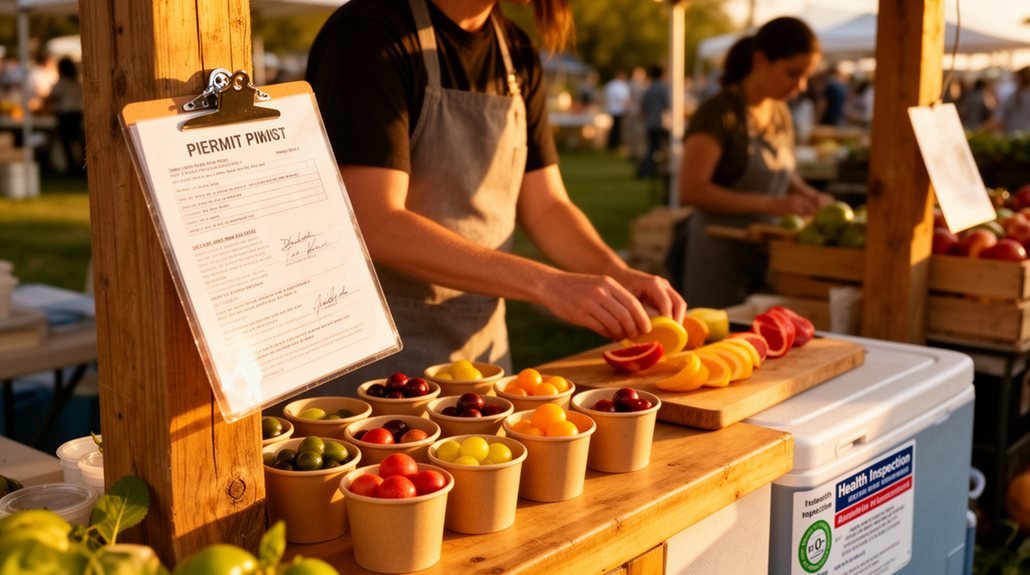
Whether you need a permit to sample at a farmers market depends almost entirely on your state — and sometimes your county.
Some states, like Texas, have written into law that fresh produce sampling at a farmers market doesn’t require a temporary food permit at all.
Others, like Washington, require you to get market manager approval and submit a courtesy application to your county health department before you can hand out a single sample.
States Where No Permit Is Required for Fresh Produce Sampling
For fresh produce sampling at a farmers market, some states make it genuinely simple. Texas is the clearest example. Under Health and Safety Code Section 437.020, you don’t need a temporary food permit to offer produce samples at a farmers market. That’s codified in state law — not a rumor, not a loophole.
If you’re wondering do you need a permit to sample at a farmers market, the answer depends on your state. But in Texas, fresh microgreens qualify as produce. That classification keeps you out of the processed food permit requirements.
Farmers market demo rules in these states still require the four core practices. No permit doesn’t mean no rules. Wash, glove up, keep cold, and discard on time.
States and Counties Where Advance Approval Is Required
Some states won’t let you set out a sample cup until you’ve cleared it with two separate parties first. Washington is the clearest example. You need your market manager’s sign-off and a county health department farmers market sampling courtesy application before you touch a cutting board. That’s two checkboxes before one cup hits the table.
| State | Who approves first | Who approves second |
|---|---|---|
| Washington | Market manager | County health department |
| California | County health department | Local market rules |
| New York | County health department | Market operator |
Knowing how to sample at a farmers market in these states means starting the approval process weeks early. Don’t wait until setup day.
How Do Sampling Rules Differ for Produce vs. Processed Food Vendors?
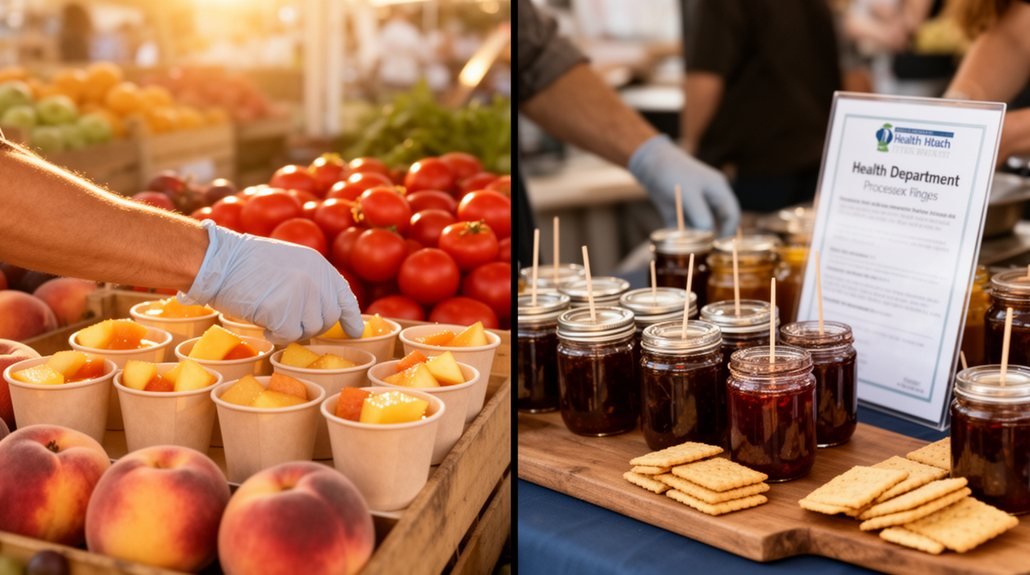
What you’re selling determines which regulatory category you fall into — and that category shapes almost everything about how sampling rules apply to you.
If you’re handing out fresh-cut microgreens, you’re working with produce, and most states treat that differently than a packaged salsa or a baked good.
The moment you add a value-added or cottage food product to your booth, you’re often stepping into a separate permit lane with stricter sampling requirements.
Why Fresh-Cut Microgreens Are Classified as Produce
The classification of your product determines nearly everything about how you sample it legally. Fresh-cut microgreens are produce. That one fact changes how sampling rules farmers market inspectors apply to your booth actually work.
Produce vendors typically face lighter requirements than processed food vendors. No cooking, no transformation, no added ingredients. You grew it, you cut it, you hand it to someone. That’s the chain regulators look at when they decide what permit category you fall under.
Microgreens produce classification matters because processed food vendors often need separate permits, licensed kitchens, or more paperwork. Farmers market food tasting rules can shift significantly depending on which category you land in.
Know your classification before you set up your first sample tray. It saves real headaches later.
What Changes When You Sample a Value-Added or Cottage Food Product
If you’re selling a microgreens pesto, a dried microgreens blend, or anything you’ve mixed, cooked, or packaged beyond raw cuts, you’ve crossed into value-added or cottage food territory. That changes everything about your sampling setup.
Raw microgreens fall under produce rules. Processed products fall under a different regulatory category entirely. Most states require a separate permit to sample those products at a booth.
Sampling rules california farmers market vendors follow, for example, run through county health departments. Cottage food items often can’t be openly sampled at all. Arizona requires individually sealed and labeled samples.
Check AFDO farmers market regulations at afdo.org for your state’s starting point. Then call your county health department. Farmers market health regulations for processed products are stricter than most vendors expect.
What Do the Rules Look Like in the Biggest Market States?
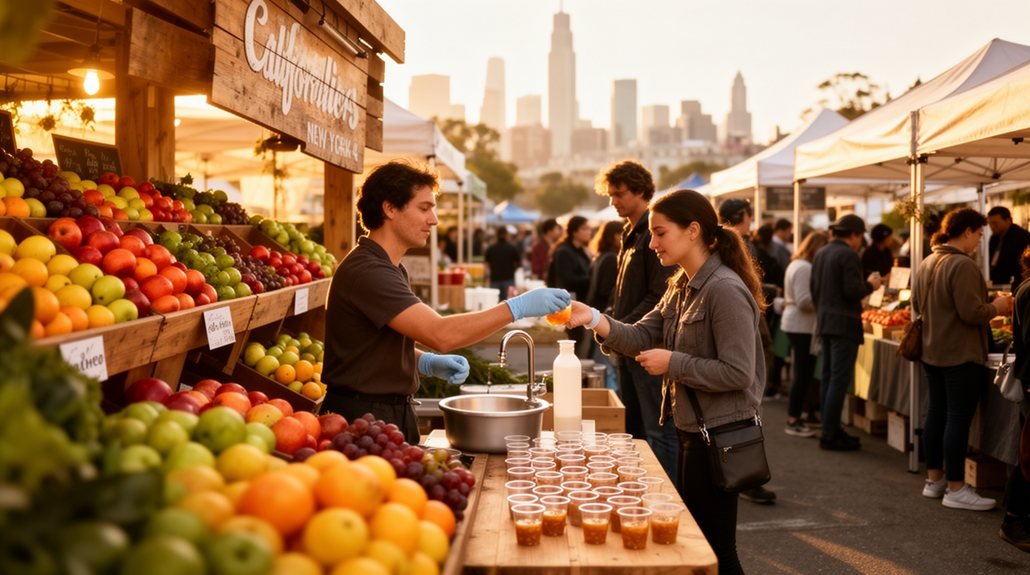
If you sell microgreens in Texas, California, Arizona, Washington, or Florida, the rules you’re working under are genuinely different from each other — not just in small ways, but in ways that change whether you need a permit at all.
Those five states cover a huge share of U.S. farmers markets, so chances are good that one of them is yours.
Once you see how each one handles sampling, you’ll know exactly what to look up when you check your county health department or the AFDO state directory at afdo.org.
Texas, California, Arizona, Washington, and Florida Compared
Five states. Five very different sets of rules.
Texas is one of the most vendor-friendly. State law (Health and Safety Code Section 437.020) says you don’t need a temporary food permit to sample produce at a farmers market.
California hands that decision to county health departments. What’s allowed in Sacramento may not fly in San Diego.
Arizona is strict. If you sell as a cottage food vendor, your samples must be individually packaged, sealed, and labeled. No open trays.
Washington requires two things before you sample: market manager approval and a courtesy application to your county health department.
Florida doesn’t have a single unified rule either. County rules run the show there too.
The pattern here is clear. State lines don’t tell the whole story.
Where to Find Your State’s Official Sampling Guidance
Where do you actually look when you need the official word? Start with two sources.
First, the AFDO state directory at afdo.org. It links directly to food safety agencies for all 50 states. That’s your fastest path to the agency that actually writes the rules in your state.
Second, your county health department. State rules set the floor. Counties often add their own requirements on top. The county is the one that can tell you exactly what applies to your booth.
Call them. Don’t rely on what another vendor told you at the market. Rules shift. What was true two seasons ago mightn’t be true now.
You’re building something real here. Get the right answer from the right source.
What Should You Do Before You Sample at a New Market?
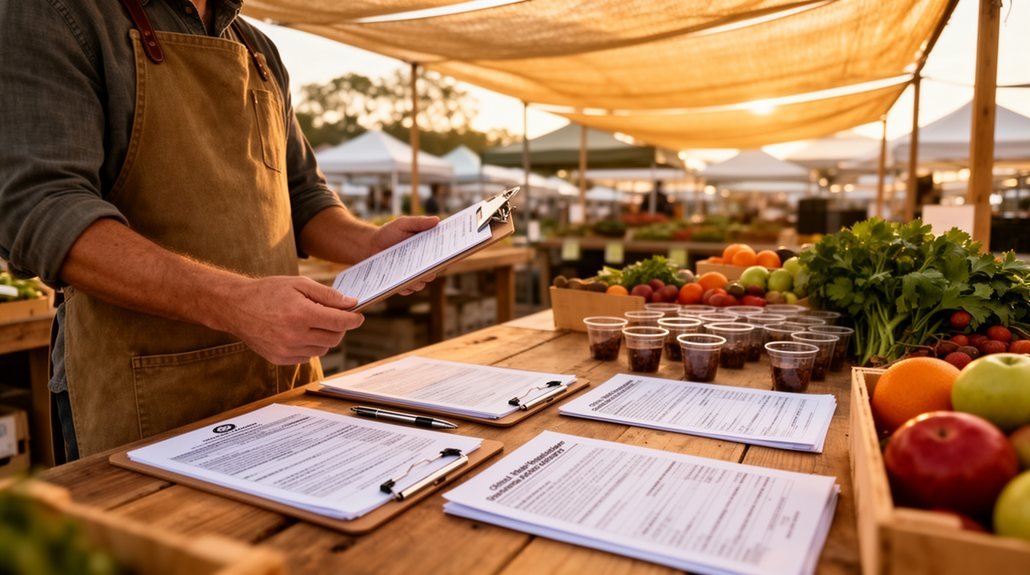
Before your first sample tray goes out, you need to confirm three things: your county health department‘s rules, your market manager‘s rules, and whether you need any paperwork filed in advance.
Those two sources don’t always agree, and the market manager sometimes has stricter standards than the county.
Start at your county health department’s website, search “farmers market sampling,” and if you can’t find a clear answer, call them directly.
The Three Things to Confirm Before Your First Sample Tray Goes Out
Setting up your first sample tray at a new market without checking the rules first is how vendors get shut down on day one.
Before anything hits the table, confirm three things.
First, talk to your market manager. They know what’s allowed at that specific market and can save you a call to the county.
Second, contact your county health department. State rules set the floor. County rules often go further.
Third, find out if fresh-cut microgreens require a permit at your location. In most states they’re classified as produce, not processed food.
That distinction changes what paperwork you need.
Do this before you slice a single tray. Your neighbors at the market did the same homework.
Now you’re part of that group.
How to Find Your County Health Department’s Farmers Market Rules
Once you’ve confirmed your market manager’s rules and identified how microgreens are classified in your state, the next step is going straight to your county health department. Search “[your county name] county health department farmers market sampling” and look for their environmental health or food safety division. That’s the team that handles vendor rules.
When you reach them, ask two things: whether fresh-cut produce sampling requires a permit, and whether there are any temporary food establishment rules that apply to your booth.
Most departments answer these questions by phone or email within a few days. You’re not the first grower to ask. Getting it in writing protects you if anyone questions your setup later.
Frequently Asked Questions
Can a Market Manager Override Your County Health Department’s Sampling Rules?
No, they can’t. Your county health department sets the legal floor. A market manager can add requirements on top of that, but they can’t waive rules your county mandates.
What Happens if a Health Inspector Finds Your Samples Out of Temperature?
You’ll get cited on the spot. The inspector can order you to discard all out-of-temperature samples immediately, and repeat violations can cost you your market permit.
Do Sampling Rules Change if You Share a Booth With Another Vendor?
Yes, they can. If you’re sharing a booth, both vendors may fall under the same permit or each need their own — check with your county health department before market day.
Are There Sampling Rules Specific to Selling at Indoor Versus Outdoor Markets?
Most jurisdictions don’t distinguish between indoor and outdoor markets, but your county health department might. Check with them directly — your market manager’s approval process often reflects those local requirements too.
Can You Sample Microgreens That Were Cut and Refrigerated the Night Before?
You can’t. The two-hour discard rule applies from the time of cutting, not from when you arrive at the market. Cut your microgreens fresh at the booth to stay compliant.
Wrap-up
Sampling operates. It moves product and builds loyal customers. But getting shut down on market day because you skipped a permit or utilized the wrong setup? That’s an expensive lesson. Check your state rules. Then check your county. Then talk to your market manager. Do all three before you hand out your first sample. It takes an hour now and saves you a real headache later.