Tag: microgreens

  • Farmers Markets in Minnesota for Microgreens Vendors

    Farmers Markets in Minnesota for Microgreens Vendors

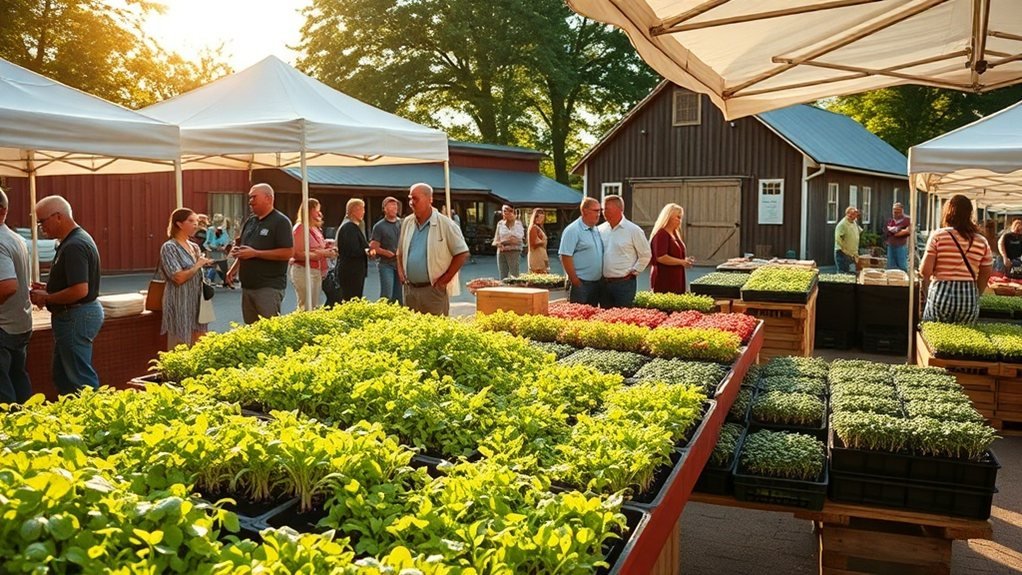
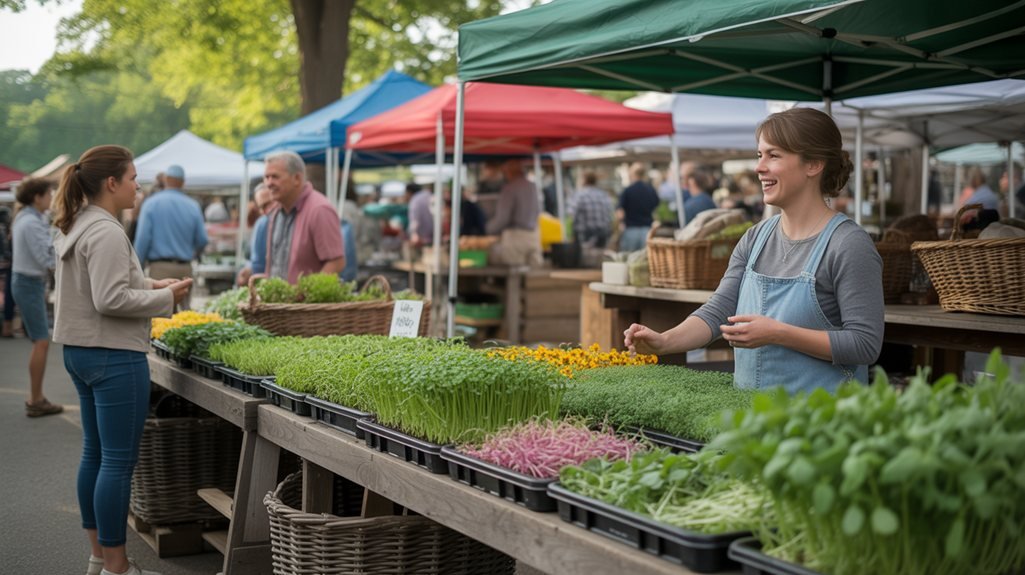
    Minnesota’s 168 USDA-listed farmers markets provide microgreens vendors with a structured, high-frequency distribution network spanning roughly May through October. You’ll find the densest opportunities in the Twin Cities metro, where Minneapolis and St. Paul markets generate consistent weekly foot traffic, while Duluth serves a smaller but loyal local-sourcing demographic. Sunflower shoots and pea shoots perform reliably across most venues due to strong customer recognition. Strategic market selection, precise application preparation, and product differentiation determine your entry success—and each factor rewards closer examination.

    Key Takeaways

    • Minnesota has approximately 168 USDA-listed farmers markets, with the primary selling season running May through October.
    • The Twin Cities metro hosts the highest concentration of markets, making it the logical starting point for microgreens vendors.
    • Sunflower and pea shoots perform best across Minnesota markets due to strong visual recognition and versatile culinary use.
    • Booth fees range from $15–$45 per daily spot to $400–$900 for a full urban seasonal slot.
    • Submitting complete documentation, including liability insurance and cottage food registration, is critical for a successful vendor application.

    Farmers Markets in Minnesota for Microgreens Vendors

    Minnesota hosts approximately 168 farmers markets listed in the USDA database, making it one of the more market-dense states in the Upper Midwest and a viable territory for vendors seeking consistent retail volume.

    The season runs primarily from spring through fall, with most markets operating between May and October, which aligns well with the short production cycles that make microgreens a practical crop for high-frequency restocking.

    If you’re already producing and looking for your first or next vendor slot, understanding how Minnesota‘s market calendar and regional concentrations work gives you a real structural advantage when timing your applications.

    Why Minnesota Markets Are Worth Your Attention

    If you’ve been looking for a regional market scene worth committing to, Minnesota’s roughly 168 USDA-listed farmers markets represent a meaningful distribution network for a microgreens operation at almost any scale. As a microgreens vendor in Minnesota, you’re entering a state where urban density and agricultural culture intersect productively. Minneapolis and St. Paul anchor the highest-volume opportunities, while Duluth offers a distinct buyer demographic worth understanding separately.

    The spring-through-fall calendar gives you a structured selling window, which makes planning production cycles significantly more precise than year-round markets demand. For growers serious about building consistent wholesale and retail exposure, the farmers markets Minnesota offers aren’t just convenient outlets. They’re infrastructure. Knowing which markets align with your current output capacity is where the real strategic work begins.

    What the Minnesota Market Season Looks Like

    Seasonality shapes everything about how you’ll plan a microgreens operation in Minnesota, and the state’s primary market calendar runs from roughly May through October, with some markets opening as early as April and closing as late as November depending on location.

    Minneapolis and St. Paul markets tend to anchor the season with consistent weekly schedules, while smaller regional markets operate on compressed timelines, sometimes running only eight to ten weeks total.

    As a microgreens farmers market vendor, understanding this compression matters because your production schedule, tray turnover, and varietal selection all need to align with specific open dates.

    Farmers market Minnesota vendors who plan their grow cycles backward from market start dates consistently manage inventory better than those who don’t.

    How to Find the Right Market in Minnesota
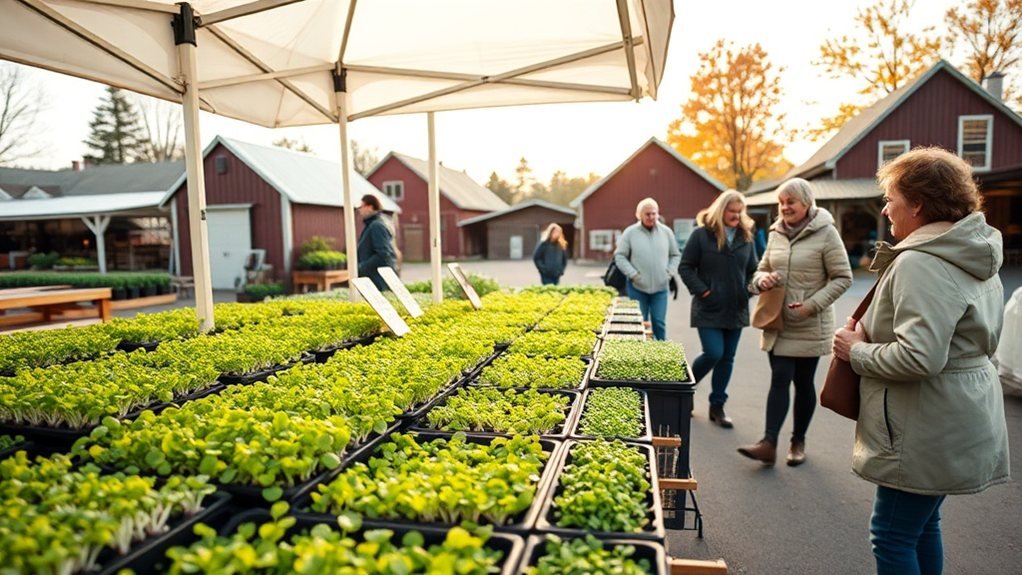
    evaluate markets by region

    Before you apply to any market in Minnesota, you need to evaluate each opportunity against a clear set of criteria, including vendor density, foot traffic patterns, and the market’s existing microgreens presence. Minneapolis concentrations offer high-volume exposure but frequently come with competitive waitlists, whereas smaller surrounding markets may grant faster entry with comparable customer engagement. St. Paul and Duluth markets operate on distinct seasonal calendars and demographic profiles, so your approach to each region should reflect those differences rather than treating them as interchangeable options.

    What to Look for Before You Apply

    Not every farmers market in Minnesota is the right fit for a microgreens vendor, and applying without vetting a market first is one of the more reliable ways to waste a season. Before you submit an application for any microgreens booth farmers market opportunity, visit the market as a customer. Observe foot traffic patterns, note whether existing vendors sell fresh produce, and assess whether shoppers are already buying specialty greens.

    As a farmers market vendor Minnesota, you need to understand a market’s customer base before committing booth fees and inventory. Check vendor density in the produce category, confirm the market’s operating dates align with your production schedule, and request the market’s application requirements directly from the manager before assuming you qualify.

    Markets Near Minneapolis

    The Twin Cities metro concentrates more farmers market activity than any other region in Minnesota, which makes it a logical starting point if you’re trying to find your first or next vendor slot.

    As a microgreens grower in Minnesota, you’re looking at a dense cluster of markets operating across Minneapolis, surrounding suburbs, and St. Paul, each carrying distinct customer demographics and vendor requirements. The Minneapolis Farmers Market, one of the region’s highest-traffic venues, draws consistent foot traffic throughout the spring-to-fall season.

    Smaller neighborhood markets often have shorter application queues and more flexible table arrangements, giving newer vendors a realistic entry point. Knowing which markets align with your production volume and schedule determines where you should direct your application energy first.

    Markets Near St. Paul and Duluth

    St. Paul and Duluth represent two distinct market environments worth analyzing carefully before you commit vendor fees.

    The St. Paul Farmers Market operates across multiple locations, including its flagship downtown site, giving you access to consistent weekend foot traffic from an established urban customer base.

    If you’re positioning microgreens as a premium product, that market’s reputation supports the ask.

    Duluth operates differently, serving a smaller but loyal regional population with strong seasonal participation concentrated in warmer months.

    The Duluth Farmers Market draws buyers who prioritize local sourcing, which aligns well with microgreens as a category.

    Evaluate both markets based on vendor density, booth costs, and application timelines before deciding.

    Utilize the free Market Finder at markets.microgreensworld.com to pull current listings for both cities.

    What to Expect When You Get There

    urban fees familiar produce

    Once you’ve secured a spot, the operational realities of vending at a Minnesota farmers market will shape your approach from the first morning you unload. Booth fees across the state’s approximately 168 USDA-listed markets vary considerably, with weekly fees at smaller rural markets often running lower than those at high-traffic urban venues in Minneapolis or St. Paul, where seasonal contracts and competitive waitlists are more common.

    Understanding what actually sells in this market environment matters just as much as understanding the costs, because Minnesota customers tend to gravitate toward familiar, versatile greens like sunflower and pea shoots, particularly during the peak spring-through-fall season when local produce demand is at its highest.

    Booth Fees and Setup Basics

    Booth fees across Minnesota’s farmers markets vary considerably, and understanding that range before you apply will keep your budgeting grounded in reality rather than assumption. Seasonal rates at established urban markets tend to run higher, while smaller community markets offer lower entry points for vendors just learning to sell microgreens at farmers market settings.

    Market Type Typical Fee Range
    Large urban seasonal $400 – $900/season
    Mid-size community $150 – $350/season
    Daily/single vendor spot $15 – $45/day

    Your microgreens market stand will need a 10×10 canopy, weighted anchors, and a table configured for product visibility. Many Minnesota markets require proof of liability insurance before your first setup date, so confirm that requirement during the application process.

    What Moves at Minnesota Markets

    Selling microgreens at Minnesota farmers markets means understanding, before your first setup day, that not all varieties move at the same pace or command the same customer attention. Sunflower and pea shoots perform consistently across urban and suburban markets, because buyers recognize them visually and understand how to employ them. Radish moves well where you’ve built repeat traffic, since its assertive flavor profile requires some customer education.

    If you’re figuring out how to get a farmers market booth, also research what neighboring vendors already carry. Farmers markets Minnesota microgreens vendors steer successfully tend to differentiate through variety depth rather than price competition. Broccoli and amaranth attract health-conscious regulars, particularly in Minneapolis and St. Paul markets, where repeat buyers account for a substantial portion of weekly revenue.

    Getting Your Application Ready
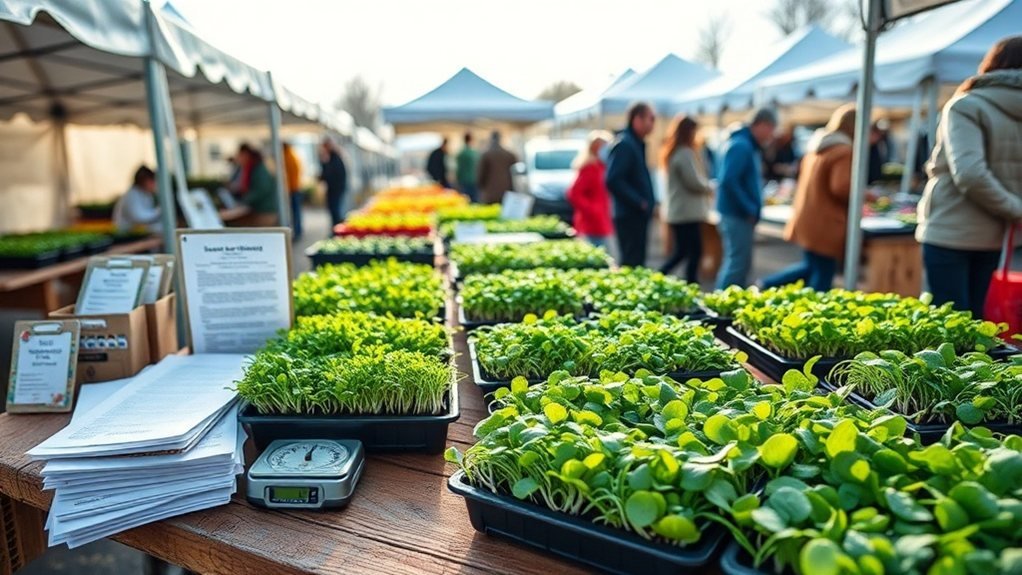
    demonstrate consistent documented supply

    When you’re ready to apply, most Minnesota market managers are evaluating whether your operation fits their existing vendor mix, your product’s shelf stability, and your ability to maintain consistent weekly supply.

    Your application needs to demonstrate these qualities through documentation, not just assertions, so include recent photos of your growing setup, a clear product list with approximate harvest quantities, and any relevant food handler certifications your state requires.

    Vendors who skip the booth photo or leave the “weekly volume” field vague tend to get deprioritized, because managers are allocating limited table space and they need confidence that you’ll show up prepared every week.

    What Market Managers Want to See

    Market managers in Minnesota are gatekeepers with real discretion, and understanding what they’re evaluating before you submit a farmers market vendor application saves you from common, avoidable rejections. They’re assessing product fit, presentation consistency, and your operational credibility.

    Knowing how to sell microgreens starts with recognizing that managers prioritize vendors whose offerings complement existing product diversity rather than duplicate it. Submit clean, professional photos of your actual setup, not staged stock imagery.

    Include your food handler certification, cottage food registration if applicable, and a clear product list with pricing. Managers notice when applications are incomplete or vague, and those go to the bottom.

    Treat the application as your first sales interaction with that market, because functionally, it is.

    Common Mistakes to Avoid

    Knowing what managers evaluate is only half the equation; the other half is understanding where applicants consistently undermine their own chances before a decision is even made.

    Submitting incomplete paperwork is the most documented failure point, particularly missing cottage food registration or liability insurance certificates.

    When you’re positioning microgreens for sale minnesota markets review carefully, an incomplete file signals operational immaturity.

    Selling microgreens locally requires understanding that managers process dozens of applications simultaneously, so an unclear product description or absent pricing structure gets deprioritized without explanation.

    Don’t assume follow-up emails compensate for a weak initial submission.

    Your first application is your actual first impression, and Minnesota’s more competitive markets, especially in Minneapolis and St. Paul, rarely extend second opportunities to underprepared vendors.

    searchable minnesota farmers markets

    Searching for farmers markets one by one across Minnesota’s 168 USDA-listed venues is a slow, fragmented process that most growers can’t afford to spend time on.

    The MGW Market Finder at markets.microgreensworld.com consolidates that data into a searchable interface, allowing you to filter by location and identify viable entry points for your microgreens business without manual cross-referencing.

    If you’re targeting local microgreens Minnesota customers in the Twin Cities corridor or expanding toward Duluth, the tool narrows your options systematically rather than leaving you sorting through directories that were last updated months ago.

    Employ it to build your target list, then apply the application strategy and booth positioning principles you’ve already honed.

    Your next market slot starts with knowing exactly where to look.

    Frequently Asked Questions

    Can I Sell Microgreens at a Minnesota Farmers Market Without a License?

    You can sell microgreens at most Minnesota farmers markets without a license if your gross sales stay under $18,500 annually under the state’s cottage food exemption, but verify each market’s individual vendor requirements first.

    How Much Does It Typically Cost to Rent a Booth Space?

    Booth fees in Minnesota typically run $20 to $50 per day at smaller markets, while larger metro markets can charge $400 to $800 seasonally. Confirm fees directly with each market manager before applying.

    Do Minnesota Markets Require Vendors to Grow Everything They Sell?

    Most don’t require it, but many prefer it. You’ll want to confirm each market’s producer-only rules directly with the manager before you apply, since policies vary widely across Minnesota.

    What Happens if My Application Gets Rejected the First Time?

    Don’t take it personally. Ask the market manager for feedback, fix what you can, and reapply next season. Some markets reject first-timers simply because they’re already at vendor capacity.

    Can I Sell at Multiple Minnesota Markets During the Same Season?

    Yes, you can sell at multiple Minnesota markets in the same season. Most vendors stack two or three markets weekly to maximize exposure and revenue across different neighborhoods or cities.

    Wrap-up

    You’ve got the framework now. Minnesota’s market landscape is dense enough to support a focused vendor strategy, and you don’t need to guess which markets perform. Employ the MGW Farmers Market Finder at markets.microgreensworld.com to filter by location, assess vendor mix, and identify where specialty produce actually moves. Your application, your positioning, and your timing all improve when you’re working from real data rather than assumptions.

  • Farmers Markets in Colorado for Microgreens Vendors

    Farmers Markets in Colorado for Microgreens Vendors

    Colorado offers roughly 198 USDA-listed farmers markets, with the Front Range corridor—Denver, Boulder, and Fort Collins—concentrating the strongest microgreens demand, premium price tolerance, and repeat customer behavior in the state. You’ll find peak attendance in July and August, though shoulder months like May and September present lower vendor competition. Sunflower, pea shoots, and radish consistently perform well across these urban markets. The details ahead will sharpen your approach considerably.

    Key Takeaways

    • Colorado has approximately 198 USDA-listed farmers markets, with Denver metro alone hosting 60–70 active markets across multiple municipalities.
    • Top-selling microgreens varieties for Colorado Front Range markets include sunflower, pea shoots, and radish, which generate strong repeat buyers.
    • Most established Denver and Boulder markets require liability insurance certificates, food safety compliance documentation, and a specified product variety list.
    • Booth fees range from $15–$30 daily at smaller community markets to $50–$150 weekly at established Denver and Boulder markets.
    • Shoulder months like May and September offer lower vendor competition, while peak attendance concentrates in July and August.

    Farmers Markets in Colorado for Microgreens Vendors

    Colorado’s approximately 198 USDA-listed farmers markets represent a substantive commercial opportunity for microgreens vendors, particularly given the state’s concentrated demand in urban corridors like Denver, Boulder, and Fort Collins.

    You’re working within a market calendar that runs primarily spring through fall, which means your production schedule and vendor applications need to align with seasonal opening windows that most market managers post months in advance.

    Understanding both the scale of available venues and the rhythms of Colorado’s selling season gives you a practical foundation for targeting the right markets before spots fill.

    Why Colorado Markets Are Worth Your Attention

    Farmers markets across Colorado have consistently demonstrated strong consumer demand for specialty produce, and microgreens occupy a particularly advantageous position within that landscape.

    As a microgreens vendor in Colorado, you’re entering a market ecosystem where health-conscious buyers actively seek nutrient-dense, locally grown products. The denver farmers market circuit alone draws hundreds of thousands of visitors annually, creating substantial vendor opportunities across multiple operating days.

    Colorado’s broader demographic profile, characterized by high educational attainment and above-average disposable income in urban corridors, correlates directly with willingness to pay premium prices for specialty crops. Boulder’s Saturday markets, for instance, regularly sustain vendors selling value-added produce at competitive price points.

    Understanding this regional consumer behavior gives you a meaningful strategic advantage before you’ve even submitted your first vendor application.

    What the Colorado Market Season Looks Like

    Knowing where Colorado consumers spend their dollars is only part of the equation; understanding *when* they show up at markets shapes everything about how you plan your growing calendar.

    Most farmers markets in Colorado operate from late May through early October, with peak attendance concentrated in July and August. Denver’s larger markets, including the Cherry Creek Farmers Market, run nearly year-round, giving you extended selling windows that most Colorado vendors can’t access elsewhere.

    Fort Collins and Boulder markets follow tighter seasonal schedules, typically wrapping by late September. If you’re targeting a microgreens farmers market debut, plan your production schedule backward from opening weekend.

    Colorado’s shoulder months, particularly May and September, often have lower vendor competition, which makes them strategically useful entry points.

    How to Find the Right Market in Colorado

    evaluate colorado farmers markets

    Before you submit a single application, you need to evaluate each market against criteria that directly affect your viability as a vendor: customer foot traffic, competing microgreens sellers already established in the stall lineup, and the market’s operational season relative to your production capacity.

    Denver’s density of markets, including well-established venues like the Cherry Creek Farmers Market and the South Pearl Street Farmers Market, gives you multiple entry points across different customer demographics and price tolerances.

    Boulder and Fort Collins present a distinct strategic profile, where health-conscious, higher-income consumer bases have historically demonstrated strong receptivity to specialty produce like microgreens, making those markets particularly worth prioritizing if you’re still building your initial customer base.

    What to Look for Before You Apply

    Applying to the wrong market wastes your time, your application fee, and sometimes months on a waitlist that leads nowhere. Before you submit anything as a farmers market vendor in Colorado, pull the market’s vendor category data. Some Colorado markets cap specialty produce vendors at two or three slots total, meaning your microgreens booth at a farmers market competes directly against established growers who’ve held those spots for years.

    Check average weekly attendance, not just the market’s claimed numbers. A Fort Collins market drawing 400 shoppers consistently outperforms a Denver market that peaks once seasonally. Verify whether the market requires liability insurance before approval, because Colorado’s larger markets almost universally do. Knowing these details before applying separates vendors who get accepted from those who keep reapplying indefinitely.

    Markets Near Denver

    Denver’s metro area concentrates more farmers market opportunities than any other region in Colorado, with roughly 60 to 70 active markets operating across the city proper, its suburbs, and surrounding municipalities like Aurora, Lakewood, and Englewood.

    For farmers markets colorado microgreens vendors, this density creates meaningful options for testing different customer bases and price points. Denver farmers market vendors who work the Cherry Creek market encounter a high-income demographic with demonstrated interest in specialty produce, while suburban markets in Lakewood tend toward regulars who prioritize consistency over novelty.

    Understanding these distinctions before you apply saves you from placing yourself in the wrong environment entirely. Each market carries its own vendor culture, application timeline, and competitive landscape worth analyzing before you commit.

    Markets Near Boulder and Fort Collins

    Along the Front Range corridor north of Denver, Boulder and Fort Collins each support distinct market ecosystems that reward microgreens vendors who understand their structural differences before plunging in.

    The boulder farmers market operates under a selective juried model, meaning your application competes against established vendors, and product presentation standards run high. Boulder shoppers have sophisticated palates, which raises the baseline expectation for variety and quality.

    The fort collins farmers market draws a different demographic, blending university-adjacent consumers with longtime residents who prioritize local sourcing. Fort Collins also hosts multiple market locations across the season, giving you more than one entry point if your first application doesn’t land.

    Research each market’s vendor guidelines carefully before submitting, because requirements between these two cities diverge more than proximity suggests.

    What to Expect When You Get There

    booth fees presentation microgreens ah a

    Once you secure a spot at a Colorado farmers market, you’ll encounter booth fees that typically range from a flat daily rate to seasonal contracts, with urban markets in Denver or Boulder often commanding higher fees than smaller community markets in rural areas.

    Setup requirements vary by market, but most expect a professional presentation: a canopy, signage, and organized product displays that meet the aesthetic standards other vendors have already established.

    Understanding what actually sells in Colorado markets matters as much as showing up, because microgreens varieties like sunflower, pea shoots, and radish tend to perform well with health-conscious Front Range shoppers who frequent these markets specifically for fresh, locally grown produce.

    Booth Fees and Setup Basics

    When you finally secure a vendor spot at a Colorado farmers market, one of the first practical realities you’ll face is the booth fee structure, which varies considerably depending on the market’s size, location, and organizational model. Smaller community markets often charge $15 to $30 per day, while established Denver or Boulder markets can run $50 to $150 weekly. Your farmers market vendor application typically discloses the fee schedule upfront, so review it carefully before committing.

    Most markets require a standard 10×10 canopy, weights for wind stability, and a visible price display. If you’re selling microgreens for sale colorado customers expect variety, so bring sufficient inventory. Colorado’s wind and afternoon sun make a weighted, shaded setup non-negotiable rather than optional.

    What Moves at Colorado Markets

    Microgreens consistently perform well at Colorado farmers markets, but performance isn’t uniform across all varieties or market contexts.

    When you sell microgreens at farmers market settings in Denver or Boulder, sunflower and pea shoots tend to generate repeat buyers quickly, largely because customers recognize them from restaurant menus and health-focused media. Radish and broccoli move steadily in Fort Collins, where the demographic skews toward nutrition-literate shoppers who ask direct questions about growing methods.

    Local microgreens Colorado customers prioritize tend to be varieties with visible texture and vivid color, which photographs well and draws booth traffic organically.

    Clamshell packaging at consistent gram weights also reduces transaction friction significantly, allowing you to move volume without extended negotiation at each sale.

    Getting Your Application Ready

    documented production detailed varietals

    Your application is the market manager‘s first and often only basis for evaluating whether you’re a credible vendor, so it functions less as a formality and more as a professional case file.

    Most Colorado market managers want documented proof of your production setup, a clear product list with varietals specified, and evidence that you understand basic food safety compliance, including whether your state cottage food exemption covers your specific microgreens offerings.

    Vendors who submit vague descriptions, inconsistent pricing structures, or incomplete insurance certificates are routinely passed over, even when their product quality is strong enough to compete.

    What Market Managers Want to See

    Getting into a Colorado farmers market takes more preparation than most new vendors expect, and market managers are evaluating your application against a competitive field of established sellers. Knowing how to get a farmers market booth means understanding exactly what managers prioritize before you submit anything.

    What Managers Evaluate What You Need Ready
    Product category fit Microgreens variety list
    Food safety compliance Colorado cottage food or commercial license
    Visual booth presentation Photos of your setup
    Vendor reliability signals References or prior market history

    For farmers market Colorado vendors, presenting incomplete documentation is the most common reason applications stall. Your application package should read like a business case, not a hobbyist inquiry.

    Common Mistakes to Avoid

    Even experienced producers stumble at the application stage, not because their microgreens aren’t market-ready, but because they treat the submission as a formality rather than a structured argument for why they belong at that market.

    When you’re focused on selling microgreens locally, incomplete documentation is the most common disqualifier, particularly missing cottage food permits or unverified grow logs.

    Many vendors pursuing how to sell microgreens for the first time underestimate how thoroughly Colorado market managers cross-reference submitted materials against stated production capacity.

    Submitting a generic application to multiple Denver or Boulder markets simultaneously, without tailoring your variety list or production volume to each market’s specific vendor gaps, signals inexperience that managers recognize immediately and penalize accordingly.

    zip based colorado market rankings

    Searching through 198 markets one by one would cost you time that’s better spent growing, and that’s precisely where the MGW Market Finder cuts through the noise. As a microgreens grower colorado vendors compete in, you need geographic precision, not guesswork.

    What You Enter What You Get
    Your zip code Nearby markets ranked by proximity
    State filter Colorado-specific listings only

    Use these results to cross-reference your microgreens market stand capacity against each market’s vendor density. A market running fifteen produce vendors already may not need another. The Finder surfaces that context quickly, letting you prioritize applications strategically rather than reactively.

    Start your search now at [markets.microgreensworld.com](https://markets.microgreensworld.com).

    Frequently Asked Questions

    Can I Sell Microgreens at Colorado Markets Without a Commercial Kitchen?

    You can sell microgreens at Colorado farmers markets without a commercial kitchen because they’re classified as an exempt cottage food product, but verify your specific market’s rules since individual managers sometimes set stricter requirements.

    How Early Should I Arrive to Set up My Microgreens Booth?

    Arrive 90 minutes before opening. You’ll need time to unload, arrange your trays, set up signage, and troubleshoot anything unexpected before customers walk in. Rushed setups cost you sales.

    Do Colorado Farmers Markets Require Vendors to Grow Everything Themselves?

    Most Colorado markets require a producer-only pledge, meaning you’ve grown what you’re selling. Verify each market’s specific rules before applying, since enforcement and definitions vary by market manager.

    What Happens if My Application Gets Rejected the First Time?

    A rejection isn’t final. Ask the market manager for specific feedback, fix whatever they flagged, and reapply next season. Most Colorado markets accept new vendors annually, so you’ve got another shot coming.

    Can I Vend at Multiple Colorado Markets on the Same Weekend?

    Yes, you can vend at multiple Colorado markets on the same weekend, but you’ll need enough product, reliable help, and schedules that don’t overlap. Most growers start with one market before splitting weekends.

    Wrap-up

    You’ve got the product and now you need the right venue to move it. Colorado’s market landscape rewards vendors who research before they apply, choose markets aligned with their current capacity, and approach managers with a complete, professional application. Utilize the market finder at markets.microgreensworld.com to identify your best-fit options, narrow your list strategically, and get into a market where your microgreens can build consistent, repeat demand.

  • Farmers Markets in Oregon for Microgreens Vendors

    Farmers Markets in Oregon for Microgreens Vendors

    Oregon has approximately 261 USDA-listed farmers markets, concentrated in Portland, Eugene, and Bend, each operating distinct seasonal calendars and vendor policies. You’ll need to match your production capacity to a market’s opening window before applying, since timing misalignment generates costly gaps. Portland supports year-round sales through covered venues, while Eugene and Bend compress activity into spring through fall. Continue exploring this guide to understand selection criteria, application requirements, and the tools that accelerate your search.

    Key Takeaways

    • Oregon has approximately 261 USDA-listed farmers markets, with the highest density in Portland, Eugene, and Bend.
    • Use the MGW Market Finder at markets.microgreensworld.com to locate and filter verified Oregon market listings efficiently.
    • Sunflower microgreens, pea shoots, and radish are the fastest-moving, highest-demand varieties at Oregon markets.
    • Booth fees range from $15–$30 weekly at small rural markets to $60–$120 at large urban venues.
    • An ODA food handler license is required before applying; missing it causes immediate application disqualification.

    Farmers Markets in Oregon for Microgreens Vendors

    year round oregon microgreens markets

    Oregon’s approximately 261 USDA-listed farmers markets represent a substantial commercial landscape for microgreens vendors seeking consistent, high-volume retail exposure.

    Portland, Eugene, and Bend anchor the state’s market density, giving you concentrated geographic targets where foot traffic and buyer sophistication tend to support specialty produce.

    What further distinguishes Oregon is its year-round market calendar in several regions, meaning you’re not locked into a narrow seasonal window to build and sustain a vendor presence.

    Why Oregon Markets Are Worth Your Attention

    If you’re growing microgreens at scale and looking for consistent retail exposure, Oregon deserves serious consideration. The state maintains approximately 261 farmers markets listed in the USDA database, giving you a substantial pool of venues to evaluate as a microgreens vendor in Oregon. Portland, Eugene, and Bend anchor the highest-density market corridors, where foot traffic and buyer sophistication tend to reward specialty producers.

    Several Oregon markets operate year-round, which matters considerably when you’re managing crop cycles and need predictable weekly sales channels rather than seasonal gaps. Farmers markets in Oregon also reflect a regional food culture that responds well to locally grown specialty produce, positioning microgreens competitively alongside conventional offerings. That market density, combined with calendar depth, makes Oregon a structurally sound environment for building a vendor operation.

    What the Oregon Market Season Looks Like

    That density of market options only pays off when you understand how the calendar actually distributes across the year. Oregon’s market season doesn’t follow a single statewide rhythm, and that distinction matters considerably for farmer market Oregon vendors planning their production schedules.

    Portland supports year-round microgreens farmers market opportunities, where consistent indoor or covered venues keep weekly sales viable through winter. Eugene and Bend operate on compressed seasonal windows, with peak activity running spring through fall, requiring tighter production timing.

    If you’re targeting multiple regions simultaneously, you’re managing overlapping calendars with different start dates, application windows, and peak demand periods. Understanding this layered structure before you apply prevents the costly mistake of scaling production for a market that won’t open for another four months.

    How to Find the Right Market in Oregon

    microgreens focused oregon market insights

    Before you submit a single application, you need to evaluate each market’s vendor composition, foot traffic patterns, and management responsiveness, because a poorly matched market will cost you time and product with little return.

    Portland’s density of year-round markets, particularly those operating in the metro’s eastside neighborhoods, gives you multiple viable entry points where specialty produce vendors like microgreens growers have historically found consistent buyer demand.

    Eugene and Bend operate on different rhythms, with Eugene’s market culture skewing toward established agricultural vendors and Bend’s tourist-heavy demographic creating openings for premium, visually distinctive products that microgreens reliably deliver.

    What to Look for Before You Apply

    Once you’ve got product moving consistently, the next step is finding a market that actually fits what you’re growing, and that process starts well before you submit any application. As a farmers market vendor Oregon requires you to assess foot traffic patterns, vendor density, and existing microgreens representation before committing your time.

    A microgreens booth farmers market placement that already hosts two established greens vendors signals oversaturation, reducing your negotiating influence and potential turn rates significantly. Review each market’s vendor policies, seasonal calendars, and application windows, since many Oregon markets close their vendor rolls months before opening day.

    Portland’s Saturday Market, for example, maintains a waitlist system that demands early, strategic positioning. Knowing these structural realities before applying separates growers who secure spots from those who repeatedly miss them.

    Markets Near Portland

    Portland’s metro area gives you more market density than almost anywhere else in Oregon, which means more options but also more competition you’ll need to steer through strategically. As a microgreens grower oregon-based vendors compete within, you’re looking at established portland farmers market locations running weekly across multiple neighborhoods, each with distinct customer demographics and vendor saturation levels.

    Inner southeast Portland markets trend toward younger, ingredient-conscious buyers, while suburban markets in Beaverton or Lake Oswego often have more booth availability and less direct competition from specialty greens vendors. Study each market’s current vendor mix before applying. If another grower already holds a microgreens spot, your application faces a steeper path unless you’re offering something demonstrably different in variety or presentation.

    Markets Near Eugene and Bend

    Moving south to Eugene or east to Bend opens up a fundamentally different market landscape than what Portland offers. The eugene farmers market operates within a university-influenced consumer base, meaning buyers skew younger and prioritize local provenance heavily. The bend farmers market reflects a resort-town demographic, where premium pricing encounters less resistance.

    Market Area Consumer Profile Competitive Density
    Eugene University-adjacent, value-conscious Moderate
    Bend Affluent, tourism-driven Lower
    Portland Urban, high-volume High

    Understanding these distinctions shapes your vendor strategy before you ever submit an application. Eugene rewards differentiation through variety; Bend rewards clear premium positioning. Both markets reward preparation, consistency, and knowing exactly who you’re selling to when you arrive.

    Use the free Market Finder at [markets.microgreensworld.com](https://markets.microgreensworld.com) to locate verified listings across Oregon.

    What to Expect When You Get There

    booth rules fees produce

    Once you secure a vendor spot, you’ll encounter booth fees that typically range from flat daily rates to seasonal contracts, with Oregon’s larger urban markets like Portland Saturday Market operating under more structured, competitive fee arrangements than smaller rural venues.

    Setup expectations vary considerably: most markets require a canopy, signage, and a display table, while high-traffic sites in Eugene or Bend may impose stricter aesthetic standards to maintain visual cohesion across the vendor floor.

    What moves consistently at Oregon markets tends toward specialty varieties like sunflower, pea shoots, and radish, particularly among health-conscious shoppers in metro areas, though you’ll want to observe your specific market’s buyer behavior before committing to a fixed production volume.

    Booth Fees and Setup Basics

    Before you commit to any market in Oregon, you need to understand what booth fees actually look like on the ground, because the range is wider than most new vendors expect. Knowing how to get a farmers market booth starts with budgeting accurately for what each market actually costs you weekly.

    Market Type Typical Weekly Fee
    Small rural market $15 – $30
    Mid-size suburban market $30 – $60
    Large urban market $60 – $120
    Seasonal specialty market $25 – $50
    Year-round covered market $75 – $150

    For farmers markets Oregon microgreens vendors compete in, a standard 10×10 space is the norm. Bring your own tent, weights, and table, because most markets supply nothing beyond the ground beneath your feet.

    What Moves at Oregon Markets

    Selling out at an Oregon market doesn’t happen by accident, and understanding what customers there actually reach for gives you a measurable advantage before you’ve unpacked your first tray.

    Farmers market Oregon vendors who track weekly sales consistently report that sunflower, pea shoots, and radish move fastest, particularly when positioned near prepared food stalls.

    If you sell microgreens at farmers market venues in Portland or Eugene, you’ll notice health-conscious buyers scrutinizing variety labels carefully, which means clear signage on flavor profiles directly accelerates purchasing decisions.

    Bend’s markets skew toward outdoor enthusiasts who favor nutrient-dense, portable additions to meals. Pricing relative to perceived freshness matters considerably here, since Oregon shoppers regularly compare your product against grocery store alternatives they encountered that same week.

    Getting Your Application Ready

    well prepared vendor application materials

    Your application is the market manager‘s first substantive impression of your operation, and most vendors underestimate how much a poorly assembled submission can disqualify them before a single conversation occurs.

    Market managers in Oregon typically evaluate vendor applications against a defined set of criteria, including product diversity relative to current vendor mix, proof of food handler certification, and demonstrated production capacity.

    If you’re applying to a Portland Saturday Market or a mid-size Eugene operation, understanding what each manager is actively looking for, versus what they’re trying to avoid adding to an already saturated vendor lineup, determines whether your microgreens earn a spot or sit on a waitlist indefinitely.

    What Market Managers Want to See

    Market managers across Oregon’s 261 USDA-listed markets are evaluating dozens of vendor applications at any given time, and they’re looking for signals that you can operate professionally within their ecosystem. When you’re selling microgreens locally, your application competes against established vendors with documented track records.

    Application Element What It Signals Common Mistake
    ODA food handler license Regulatory compliance Submitting before obtaining it
    Product photos Visual merchandising ability Low-resolution or cluttered shots
    Variety list Harvest planning capability Generic descriptions like “greens”

    Managers evaluating microgreens for sale oregon vendors prioritize producers who demonstrate operational consistency. Your application should reflect someone who understands the market’s customer base, respects setup protocols, and communicates proactively before problems arise.

    Common Mistakes to Avoid

    Getting your application rejected once rarely ends your chances at a market permanently, but it does set you back weeks or months while the manager moves on to other candidates.

    The most consequential error growers make when submitting a farmers market vendor application is applying before their production operation can reliably supply consistent volume. Managers notice when you can’t answer basic yield questions.

    A second critical mistake involves misrepresenting your product category, which creates immediate credibility problems when understanding how to sell microgreens across multiple Oregon markets simultaneously.

    Submit only what you can document, photograph clearly, and deliver repeatedly.

    If your setup isn’t ready, waiting one additional season and applying with a complete, accurate packet will outperform a premature submission every time.

    searchable oregon market database

    Searching for the right market manually, one county website at a time, is the kind of inefficiency that costs growers weeks they don’t have.

    The MGW Market Finder at markets.microgreensworld.com pulls from USDA data to surface Oregon’s approximately 261 markets in a single searchable interface, letting you filter by location without combing through fragmented county directories.

    For anyone building a microgreens business, that compression of research time is operationally significant. You’re not browsing, you’re qualifying venues against your production capacity and delivery range.

    Growers pursuing local microgreens Oregon markets benefit most when they approach the tool with defined criteria already in hand, such as target geography and preferred market size, so each search session produces actionable results rather than raw, unprocessed leads.

    Frequently Asked Questions

    Can I Sell Microgreens at Oregon Markets Without a Business License?

    You can often start without a formal business license, but Oregon’s Cottage Food Law and your county’s environmental health rules will still apply, so check both before you set up your first table.

    How Many Varieties Should I Bring to My First Oregon Market?

    Bring three to five varieties. You want enough to look like a real operation, but not so many that you run out of product or confuse buyers who are still learning what microgreens are.

    Do Oregon Farmers Markets Require Proof of Where You Grow?

    Most Oregon markets will ask for your business address or production location when you apply. Some require a site visit or photos of your grow space before they’ll approve your vendor application.

    What Happens if My Microgreens Don’t Sell at the Market?

    If your microgreens don’t sell, you take them home, you reflect on your pricing and placement, and you show up next week with adjustments. Slow days teach you more than good ones ever will.

    Can I Apply to Multiple Oregon Markets at the Same Time?

    Yes, you can apply to multiple Oregon markets simultaneously. Most applications are independent, so submit to several at once to improve your odds of landing a spot before the season fills up.

    Wrap-up

    You’ve got the information, the market landscape, and a tool that cuts the guesswork out of your search. What’s left is making the decision and acting on it. Start with one or two markets that align with your production volume, review the vendor requirements carefully, and submit a complete application. Oregon’s buying communities are active, the infrastructure exists, and microgreens occupy a defensible niche. Leverage that advantage.

  • Farmers Markets in Virginia for Microgreens Vendors

    Farmers Markets in Virginia for Microgreens Vendors

    Virginia’s approximately 198 USDA-listed farmers markets form a structured, multi-regional network spanning urban corridors like Arlington and Richmond to university-adjacent venues in Charlottesville, giving you concrete entry points rather than scattered opportunities. Sunflower and pea shoots sell consistently across most venues, while specialty mixes perform stronger in Charlottesville and Northern Virginia markets. Booth fees range from $15–$30 in rural settings to $75-plus in urban corridors, directly affecting your volume requirements. Continue ahead to sharpen your market selection strategy.

    Key Takeaways

    • Virginia has approximately 198 USDA-listed farmers markets, with the highest density concentrated in Richmond, Charlottesville, and Arlington.
    • Richmond, Charlottesville, and Arlington sustain year-round buying patterns, making them favorable regions for consistent microgreens vendor presence.
    • Charlottesville’s university-adjacent customer base is especially responsive to specialty produce, making microgreens viable as a primary product.
    • Arlington markets often have multi-season waitlists, requiring vendors to differentiate through variety rotation and sharp product positioning.
    • Market applications should be tailored to each specific market, highlighting product mix contribution rather than submitting generic, identical descriptions.

    Farmers Markets in Virginia for Microgreens Vendors

    seasonal microgreens market strategy

    Virginia’s approximately 198 USDA-listed farmers markets represent a substantial commercial infrastructure for microgreens vendors seeking consistent retail outlets, with notable market density concentrated in Richmond, Charlottesville, and Arlington.

    You’re working within a primary spring-through-fall operating calendar, which means your production planning, variety selection, and customer relationships all need to align with that seasonal window.

    Understanding both the geographic distribution of these markets and the rhythm of their operating schedules gives you a measurable advantage when you’re deciding where to apply for a vendor spot first.

    Why Virginia Markets Are Worth Your Attention

    The density of agricultural commerce in Virginia creates a distribution environment that most microgreens growers underestimate until they’re actually operating inside it. With approximately 198 farmers markets virginia vendors can access through the USDA database, the state supports a genuinely competitive microgreens farmers market ecosystem rather than isolated pockets of consumer activity.

    Richmond, Charlottesville, and Arlington each sustain year-round buying patterns that reward consistent vendor presence. Virginia’s proximity to Washington D.C. also pulls affluent consumer traffic into Northern Virginia markets specifically, where health-conscious purchasing behavior is documented and measurable.

    You’re not entering a fragmented rural landscape here. You’re entering a structured, multi-regional market network where your production schedule, your canopy placement, and your pricing discipline will determine outcomes far more than location luck ever will.

    What the Virginia Market Season Looks Like

    Most Virginia farmers markets operate on a spring-through-fall calendar, with the bulk of market activity concentrated between April and November, though this structure varies considerably depending on the region you’re targeting.

    Northern Virginia markets, particularly those near Arlington, tend to extend their seasons due to milder shoulder conditions and consistent customer density.

    Richmond’s urban markets follow a tighter schedule, while Charlottesville’s scene offers reliable mid-season windows that suit microgreens production cycles well.

    As a microgreens vendor in Virginia, you’ll want to map your grow schedule backward from your target opening date.

    Farmers markets in Virginia for microgreens operate within predictable rhythms once you understand the regional patterns, and that knowledge lets you plan inventory, succession plantings, and application timelines with considerably more precision.

    How to Find the Right Market in Virginia

    urban virginia farmers market locations

    Before you apply to any Virginia farmers market, you’ll want to evaluate several practical variables that directly affect whether microgreens can move consistently at that location. Markets near Richmond, particularly those operating in high-traffic urban corridors, tend to draw a health-conscious demographic that’s already familiar with specialty produce, which reduces the educational burden on you as a vendor. Charlottesville and Arlington present likewise strong conditions, though each market carries its own competitive density, seasonal schedule, and management requirements that you’ll need to assess before committing application fees and table time.

    What to Look for Before You Apply

    Finding the right market before you apply is less about proximity and more about fit, because a market two hours away with consistent foot traffic and a customer base that already buys specialty produce will outperform a neighborhood market where vendors struggle to move anything beyond conventional vegetables.

    Before you submit a farmers market vendor application, audit the market itself. Visit on a peak day, observe whether specialty greens and living products are already selling, and note how the microgreens booth farmers market setup compares to competing vendors. Check the vendor mix for saturation. Review the market’s demographic profile against your price point.

    A thorough pre-application assessment separates strategic placement from wasted fees, and it’s the difference between building a real customer base and spinning your wheels.

    Markets Near Richmond

    Richmond’s farmers market landscape is denser than many growers assume, with the metro area and surrounding counties hosting a range of markets that vary significantly in foot traffic, vendor composition, and customer willingness to pay for specialty produce.

    The South of the James Market, for example, draws a demographic that actively seeks microgreens for sale Virginia vendors regularly report strong repeat buyers there.

    Competing at a richmond farmers market means knowing which locations already have saturated produce sections and which have genuine gaps. Chesterfield and Hanover County markets adjacent to the city often have lower vendor fees with comparable buyer quality.

    You’ll want to cross-reference application windows carefully, since many Richmond-area markets open vendor spots only once annually.

    Markets Near Charlottesville and Arlington

    Charlottesville and Arlington represent two structurally distinct market environments, and understanding that distinction before you apply saves you from misallocating your early vendor seasons.

    The Charlottesville farmers market draws a university-adjacent customer base that responds well to specialty produce, making microgreens a viable primary product rather than a supplemental offering.

    Arlington operates within a dense suburban corridor where farmers market virginia vendors compete against significant product saturation, requiring sharper differentiation through variety rotation and consistent quality.

    Charlottesville markets typically maintain more accessible application cycles, while Arlington markets often carry waitlists that extend across multiple seasons.

    Assess each market’s vendor composition before submitting your application.

    Utilize the free Market Finder at markets.microgreensworld.com to identify current openings across both regions and prioritize markets where microgreens representation remains thin.

    What to Expect When You Get There

    market specific fees and demand

    Once you’ve secured a spot, the operational realities of a Virginia farmers market will shape your setup decisions more than any planning guide can.

    Booth fees vary considerably across the state, with smaller community markets in the Shenandoah Valley often charging $15–$30 per day, while established urban markets in Richmond or Arlington can run $40–$75 or more per session, a cost differential that directly affects your volume requirements before you’ve sold a single tray.

    What moves consistently at Virginia markets tends to skew toward familiar, fast-recognition varieties like sunflower and pea shoots, though Charlottesville and Northern Virginia markets, with their higher concentrations of culinary-conscious shoppers, have shown stronger uptake for specialty mixes that independent vendors with niche product lines can exploit early in the season.

    Booth Fees and Setup Basics

    Booth fees at Virginia farmers markets vary more than most new vendors expect, ranging from flat daily rates around $25 to $50 at smaller community markets, to seasonal contracts exceeding $500 at high-traffic venues in the Richmond metro or Arlington corridor.

    When you’re figuring out how to get a farmers market booth, understanding this fee structure determines your margin before you sell a single tray.

    Most markets require a six-foot table, canopy, and weights, with setup windows typically opening sixty to ninety minutes before gates open.

    As a farmers market vendor in Virginia, you’ll encounter both daily-pay and pre-pay seasonal models, each carrying distinct cash flow implications.

    Confirm the specific requirements during your application process, because infrastructure expectations differ meaningfully between urban and rural market settings.

    What Moves at Virginia Markets

    Virginia markets will sort your product line out fast, because shoppers in Richmond’s Saturday morning circuits buy differently than the weekday crowd at a Charlottesville co-op market or the year-round Arlington farmers market, where commuter-adjacent foot traffic drives demand toward convenience-sized packaging and familiar varieties.

    Sunflower and pea shoots consistently perform across most Virginia venues, because shoppers recognize them and understand preparation without coaching.

    When you sell microgreens at farmers market locations embedded in urban commuter corridors, smaller clamshells move faster than bulk trays.

    Richmond’s weekend markets tend to favor variety depth, where adventurous buyers will reach for amaranth or shiso.

    Matching your product mix to the specific market’s demographic profile, rather than defaulting to a single lineup everywhere, determines how efficiently you turn inventory each week.

    Getting Your Application Ready

    tailored complete microgreens application

    Your application is the market manager‘s first and often only basis for evaluating whether you belong in their vendor lineup, so precision and completeness matter more than most growers initially assume.

    Many applicants submit vague product descriptions, omit required certifications, or fail to demonstrate that their microgreens align with the market’s existing vendor mix, which signals to managers that the applicant hasn’t researched the market thoroughly.

    Before you fill out a single field, pull up the market’s current vendor roster, identify any gaps your microgreens could fill, and tailor your application language to reflect that awareness directly.

    What Market Managers Want to See

    Market managers in Virginia aren’t just filling vendor slots, they’re building a thoughtfully assembled ecosystem of products that serves their specific customer base, and understanding that distinction changes how you approach your application. As a microgreens grower Virginia applicants compete alongside established vendors, so your materials must demonstrate production consistency and market readiness.

    What They Evaluate Why It Matters
    Product variety Prevents overlap with existing vendors
    Food safety documentation Legal and liability compliance
    Production volume Confirms reliable weekly supply
    Display presentation photos Signals professionalism
    Local sourcing evidence Aligns with market identity

    When selling microgreens locally, frame your application around what you contribute to that specific market’s product mix, not simply what you grow.

    Common Mistakes to Avoid

    Submitting a generic application is the most consistent way to disqualify yourself before a market manager ever considers your product. When you apply to multiple Virginia markets using identical language, managers recognize it immediately, and it signals that you haven’t studied their specific vendor community. Your microgreens market stand competes against established growers who’ve customized their materials to reflect each market’s demonstrated priorities.

    Another critical error involves misrepresenting your production scale. If you’re still learning how to sell microgreens and haven’t confirmed consistent weekly yields, don’t overstate your volume capacity. Market managers verify these claims through your first season, and credibility lost early is difficult to recover. Apply honestly, with documentation that accurately reflects your current operation rather than your projected potential.

    virginia microgreens market finder

    Searching Virginia’s 198 farmers markets one by one is an inefficient approach that most experienced vendors abandoned early in the process. The MGW Market Finder at markets.microgreensworld.com consolidates that USDA data into a searchable format, allowing you to filter by location and identify viable opportunities for your local microgreens Virginia operation without manually auditing each listing.

    If you’re building a microgreens business around Richmond or Charlottesville, that filtering capability compresses weeks of research into a single session. You enter your geography, review what’s available, and begin prioritizing markets based on proximity and seasonal timing.

    The tool doesn’t replace your judgment, but it removes the friction that causes most vendors to stall before they ever submit an application. Start your search at markets.microgreensworld.com.

    Frequently Asked Questions

    Can I Sell Microgreens at Multiple Virginia Farmers Markets Simultaneously?

    You can vend at multiple Virginia farmers markets simultaneously, but you’ll need enough product, staff, and logistics to cover each location. Most successful multi-market growers start with one market first.

    Do Virginia Farmers Markets Require Vendors to Grow Products In-State?

    Most Virginia farmers markets do require in-state production, but policies vary by market. You’ll need to contact each market manager directly to confirm their specific sourcing rules before applying.

    How Do Virginia Cottage Food Laws Affect Microgreens Sales Specifically?

    Virginia’s cottage food laws don’t really apply to your microgreens. You’re selling a fresh agricultural product, not a processed food, so you’re operating outside cottage food territory entirely.

    What Liability Insurance Do Virginia Market Managers Typically Require From Vendors?

    Most Virginia market managers require you to carry $1 million per occurrence in general liability insurance, with the market listed as an additional insured on your certificate.

    Are There Virginia Farmers Markets That Run Indoors During Winter Months?

    Yes, some Virginia markets run indoors through winter, particularly in Richmond, Charlottesville, and Arlington. Check each market’s specific schedule directly, since indoor winter operations vary widely by venue availability and organizer resources.

    Wrap-up

    Virginia’s farmers market landscape offers microgreens vendors a legitimate, scalable sales channel, provided you approach it methodically. You’ve got roughly 198 markets to evaluate, a defined application process to steer through, and a short seasonal window that rewards early action. Don’t treat market selection as secondary to production. Employ the MGW Market Finder to prioritize your outreach, get your documentation in order, and secure your spot before the season fills.

  • Farmers Markets in North Carolina for Microgreens Vendors

    Farmers Markets in North Carolina for Microgreens Vendors

    North Carolina’s approximately 223 USDA-listed farmers markets span urban corridors like Raleigh, Charlotte, and Asheville, each operating under distinct seasonal windows, application timelines, and vendor expectations. You’ll find peak activity running April through October, though coastal markets extend slightly longer. Sunflower, pea shoots, radish, and broccoli microgreens perform consistently across most markets, but demand varies by region. Understanding which markets align with your production capacity, location, and product mix determines your commercial viability—and what follows breaks that decision down systematically.

    Key Takeaways

    • North Carolina has approximately 223 USDA-listed farmers markets, with the highest vendor density concentrated in Raleigh, Charlotte, and Asheville urban corridors.
    • The primary sales season runs April through October, though the State Farmers Market on Lake Wheeler Road operates year-round.
    • Charlotte markets favor high-volume consistency and early spring applications, while Asheville rewards specialty varieties and relationship-based vendor selection.
    • Market managers prioritize complete applications, accurate product descriptions, proof of production capacity, and relevant food safety certifications or cottage food registration.
    • The MGW Farmers Market Finder allows vendors to filter all 223 markets by geography, season, and type to identify the best opportunities.

    Farmers Markets in North Carolina for Microgreens Vendors

    plan production for markets

    North Carolina’s approximately 223 USDA-listed farmers markets represent a substantial commercial infrastructure for microgreens vendors, with notable market density concentrated in urban corridors like Raleigh, Charlotte, and Asheville.

    You’re working with a season that runs primarily spring through fall, which means your production schedule needs to align with market calendars that typically open around April and wind down by October or November.

    Understanding both the scale of available venues and the seasonal rhythm of North Carolina markets gives you a concrete framework for deciding when to apply, where to focus your outreach, and how to structure your growing capacity around actual selling windows.

    Why North Carolina Markets Are Worth Your Attention

    With roughly 223 farmers markets spread across the state, North Carolina gives microgreens vendors a volume of entry points that most states simply can’t match. That density matters when you’re building a vending strategy, because it lets you test multiple formats, from urban destination markets in Raleigh and Charlotte to smaller community markets in mid-sized towns, without committing prematurely to a single location.

    As a microgreens vendor in North Carolina, you’re also working within a population that increasingly prioritizes local produce, which creates real transactional demand rather than novelty interest. The spring-through-fall calendar gives you a structured operating window, and the geographic spread across the state means you can identify underserved pockets where competition among specialty crop vendors remains low.

    What the North Carolina Market Season Looks Like

    Understanding the shape of North Carolina’s market season is what lets you plan production schedules that actually align with vendor demand, rather than growing on a calendar that doesn’t match when markets are operating.

    Most farmers markets in North Carolina run spring through fall, with peak activity concentrated between April and October. If you want to sell microgreens at a farmers market in the Piedmont or mountain regions, you’re working within a compressed window where competition for vendor slots intensifies quickly.

    Coastal markets sometimes extend slightly longer given milder temperatures. Knowing these regional timing differences means you can target applications before spots fill.

    The growers who secure consistent placements in farmers markets north carolina microgreens scenes are the ones who submit applications before the season opens.

    How to Find the Right Market in North Carolina

    choose markets matching capacity

    Selecting the right market before you apply saves time, protects your product’s positioning, and significantly improves your odds of building a consistent customer base in a competitive vendor environment. North Carolina’s approximately 223 USDA-listed markets vary considerably in foot traffic, vendor density, and buyer demographics, so markets near Raleigh, Charlotte, and Asheville each present distinct competitive conditions worth evaluating against your current production capacity.

    You’ll want to assess application requirements, market frequency, and proximity to your grow operation before committing, since misaligned market selection is one of the more common and avoidable early mistakes microgreens vendors make in this state.

    What to Look for Before You Apply

    Before you submit a single application, you need to assess whether a given market is actually a viable sales environment for microgreens. Foot traffic patterns, customer demographics, and existing vendor composition all determine whether your microgreens farmers market presence will generate consistent movement. A market in Asheville’s Lexington Avenue corridor draws health-conscious buyers who already understand microgreens; a rural weekly market may require significantly more consumer education before sales stabilize.

    When researching how to get a farmers market booth, prioritize markets where prepared food vendors and specialty produce sellers already perform well, since that buyer behavior transfers directly to microgreens. Review vendor directories, visit markets before applying, and note whether premium pricing exists anywhere on the floor. That pricing culture matters considerably.

    Markets Near Raleigh

    Once you’ve identified what a viable market looks like on the ground, the next step is locating specific opportunities within your target geography, and the Raleigh metro gives microgreens vendors a concentrated cluster of markets worth serious consideration.

    The State Farmers Market on Lake Wheeler Road operates year-round, making it structurally different from seasonal community markets that close after October.

    Weekly neighborhood markets in Cary, Wake Forest, and Durham expand your options considerably, distributing customer demand across multiple zip codes.

    If you’re already producing microgreens for sale in North Carolina, this density means you can test one farmers market in Raleigh while keeping a backup application moving at another location simultaneously, which reduces your exposure to waitlists and last-minute cancellations.

    Markets Near Charlotte and Asheville

    Charlotte and Asheville operate as distinct market ecosystems, and understanding what makes each one structurally different will determine how you position your microgreens application. Charlotte’s farmers market charlotte infrastructure skews toward volume-driven, suburban weekend markets, where north carolina farmers market vendors compete across established produce categories. Asheville’s markets reward differentiation and regional food identity.

    Market Variable Charlotte Asheville
    Buyer Expectation Consistency, familiar crops Specialty, unique varieties
    Application Timing Early spring cycle Rolling, relationship-based
    Vendor Competition High density Moderate, curated
    Microgreens Positioning Supplement staple vendors Lead with craft narrative

    Study each market’s existing vendor roster before applying. Your application strengthens considerably when you identify gaps rather than simply expressing general interest.

    What to Expect When You Get There

    booth fees and sales patterns

    Once you’ve identified a promising North Carolina market, the operational realities of booth fees and product movement will shape your vendor experience more than any other factor.

    Booth fees across the state’s approximately 223 USDA-listed markets vary considerably, with urban markets in Raleigh and Charlotte typically commanding higher weekly rates than smaller regional venues in rural counties.

    Understanding which microgreens varieties consistently move at North Carolina markets, particularly during the spring-through-fall season when competition among vendors peaks, lets you calibrate your grow schedule and booth presentation before your first setup day.

    Booth Fees and Setup Basics

    Booth fees across North Carolina’s farmers markets vary considerably depending on the market’s size, location, and organizational structure, so understanding the cost landscape before you apply saves you from financial surprises later.

    As a farmers market vendor in North Carolina, you’ll typically encounter daily fees ranging from $20 to $75, with larger urban markets in Raleigh or Charlotte often charging seasonal memberships instead.

    Your microgreens booth farmers market setup requires a six-foot table, a canopy rated for wind, and weights securing each leg, because most market managers enforce these standards strictly.

    Some markets also require liability insurance certificates before your first setup day.

    Knowing these requirements ahead of time lets you budget accurately and arrive prepared, rather than scrambling on opening morning.

    What Moves at North Carolina Markets

    Selling microgreens at North Carolina farmers markets means understanding which varieties actually turn over consistently, because not every tray you grow will move at the same pace across different market environments.

    Sunflower and pea shoots perform reliably across urban and rural markets alike, appealing to shoppers who recognize them visually.

    Radish and broccoli move steadily among health-conscious buyers concentrated in Raleigh and Asheville.

    Building a sustainable microgreens business requires matching your production schedule to demonstrated local demand, not assumptions. Farmers market North Carolina vendors who track weekly sales by variety quickly identify which SKUs justify bench space and which pull resources without return.
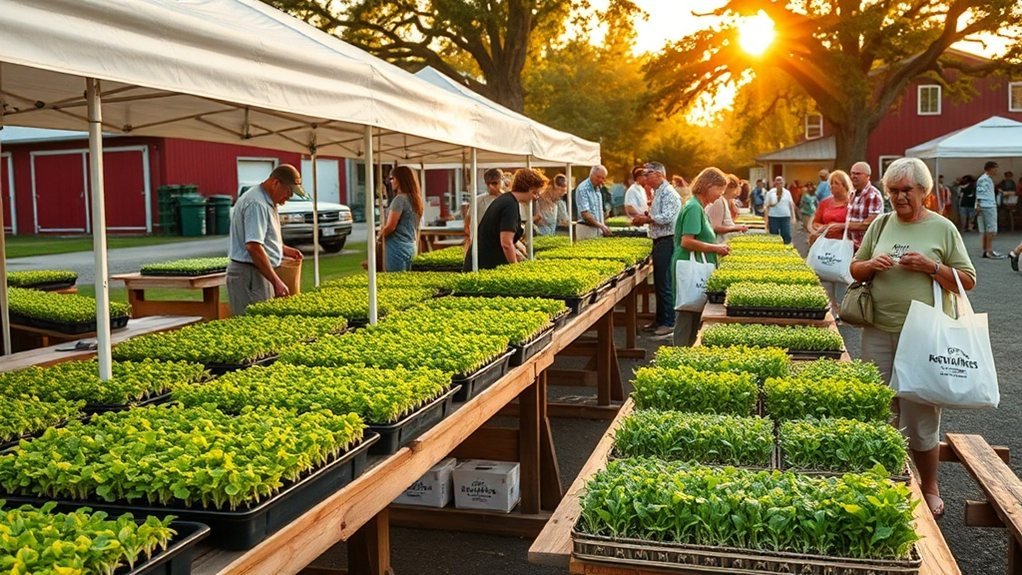
    That data shapes your grow calendar more effectively than any general recommendation could.

    Getting Your Application Ready

    proof of production capacity

    Your application is the first data point a market manager employs to evaluate whether you’re a viable vendor candidate, so treating it as a professional document rather than a casual inquiry significantly improves your odds of acceptance.

    Most North Carolina market managers are specifically looking for proof of production capacity, a clear product description, and compliance documentation like your cottage food registration or Department of Agriculture certifications, particularly at larger urban markets in Raleigh and Charlotte where competition for limited vendor slots is measurably higher.

    Growers who submit incomplete applications, omit required food safety credentials, or fail to specify their growing method, whether soil-based, hydroponic, or coco coir, consistently see their submissions deprioritized or rejected outright before any personal evaluation occurs.

    What Market Managers Want to See

    When a market manager opens your farmers market vendor application, they’re making a quick judgment call about whether you’ll be a reliable, professional presence at their market week after week. They’re scanning for clarity, consistency, and evidence that you understand what you’re selling.

    For local microgreens north carolina vendors, that means presenting a clean product list with accurate variety names, not vague descriptors. Include your growing medium, whether soil or hydroponic, because managers increasingly ask.

    A photo of your actual booth setup, even a simple one, signals operational readiness. References from other markets carry weight, particularly if you’ve vended previously.

    Managers at established Raleigh or Asheville markets review dozens of applications, so yours needs to demonstrate that you’ve thought through the logistics before submitting.

    Common Mistakes to Avoid

    Most application rejections aren’t about your microgreens at all. As a microgreens grower North Carolina markets evaluate, your product quality rarely becomes the deciding factor at the application stage. What disqualifies you is incomplete paperwork, missing your state cottage food registration, or submitting photos that don’t represent your actual setup.

    Market managers, particularly at competitive urban venues where selling microgreens locally means traversing waitlists, notice when vendors haven’t read their specific vendor guidelines. Applying to every market simultaneously without tailoring each submission signals inexperience. Your application communicates operational readiness before you ever set up a table. Treat it with the same precision you bring to your grow trays, and your approval odds improve substantially.

    Find your next opportunity at [markets.microgreensworld.com](https://markets.microgreensworld.com).

    find nc farmers markets

    Searching for a vendor spot across North Carolina‘s 223 USDA-listed markets by hand is a slow, inefficient process, particularly when you’re trying to narrow results by location, season, or market type. The MGW Farmers Market Finder at markets.microgreensworld.com consolidates that data into a searchable format, letting you filter by geography and operational calendar rather than parsing spreadsheets manually.

    If you’re figuring out how to sell microgreens near a metro hub, you can isolate Raleigh farmers market options specifically, comparing application windows and vendor categories without contacting each market individually. That specificity matters when you’re managing production schedules and need confirmed dates before scaling output.

    Employ the tool now at markets.microgreensworld.com to identify your most viable North Carolina market opportunities before the spring season fills available vendor slots.

    Frequently Asked Questions

    Do North Carolina Farmers Markets Require Microgreens Vendors to Carry Liability Insurance?

    Most North Carolina farmers markets require you to carry general liability insurance before you can vend. Coverage amounts vary by market, so confirm requirements directly with each market manager before applying.

    Can You Share a Booth With Another Vendor at NC Markets?

    Some NC markets allow booth sharing, but you’ll need written approval from the market manager first. Each vendor typically still needs their own application, insurance, and may owe separate fees.

    How Early Should You Arrive to Set up Your Microgreens Booth?

    Arrive at least 90 minutes before opening. You’ll need time to unload, build your display, and troubleshoot anything that went sideways. Rushing your setup shows, and first impressions matter with market managers watching new vendors.

    Are There NC Markets That Operate Exclusively Indoors Year-Round?

    A handful of NC markets do run indoors year-round, typically in permanent municipal or community spaces. Check each market’s individual listing to confirm their facility type and winter schedule before committing to applications.

    What Happens if Your Microgreens Sell Out Before the Market Ends?

    If you sell out early, don’t pack up and leave. Stay at your table, talk to customers, collect contacts, and utilize the time to learn what neighboring vendors are doing right.

    Wrap-up

    You’ve got the information you need to move forward with confidence. North Carolina‘s market landscape is dense enough to give you real choices, yet structured enough that a methodical approach will separate productive placements from wasted effort. Pick your region, assess the market criteria outlined here, and get your application materials ready before you reach out. The right table is available; you just need to claim it.

  • Farmers Markets in Georgia for Microgreens Vendors

    Farmers Markets in Georgia for Microgreens Vendors

    Georgia’s approximately 178 USDA-listed farmers markets offer microgreens vendors a substantial entry network, with peak selling concentrated between April and October. Atlanta, Savannah, and Athens represent the strongest regional opportunities, each carrying distinct buyer profiles — from high-traffic urban consumers to tourism-adjacent shoppers with heightened price tolerance. Sunflower, pea shoots, and radish varieties consistently outperform less recognizable options. Understanding market selection, application requirements, and operational standards separates vendors who secure spots from those who don’t, and what follows covers each layer systematically.

    Key Takeaways

    • Georgia has approximately 178 USDA-listed farmers markets, with the strongest vendor opportunities concentrated in Atlanta, Savannah, and Athens.
    • Market season runs primarily April through October, making spring the ideal window to submit vendor applications.
    • Sunflower, pea shoots, and radish are the best-selling microgreens varieties, with sampling consistently converting browsers into repeat buyers.
    • Applications require liability insurance, grower registration, food safety documentation, and clear product descriptions to meet market manager standards.
    • Use the MGW Market Finder at markets.microgreensworld.com to filter Georgia markets by location and identify open vendor opportunities efficiently.

    Farmers Markets in Georgia for Microgreens Vendors

    georgia microgreens farmers markets

    Georgia’s approximately 178 USDA-listed farmers markets represent a substantial and geographically distributed opportunity for microgreens vendors seeking consistent, repeat-customer sales channels.

    You’ll find the strongest market density concentrated in Atlanta, Savannah, and Athens, where consumer demand for specialty produce tends to outpace what conventional suppliers can reliably fulfill.

    The state’s market calendar, running primarily spring through fall, gives you a defined window to establish vendor relationships, build a customer base, and assess which markets justify the logistical investment of a recurring booth presence.

    Why Georgia Markets Are Worth Your Attention

    Running a microgreens operation in Georgia puts you within reach of roughly 178 registered farmers markets, a density that gives you real flexibility when you’re deciding where to test your product, build a customer base, or expand into a second location.

    Farmers markets Georgia vendors access span everything from high-traffic urban venues in Atlanta to smaller community markets in Athens and Savannah, each carrying distinct buyer profiles and volume expectations. That range matters because your microgreens farmers market strategy doesn’t have to be the same in every location.

    Georgia’s extended spring-through-fall calendar also gives you meaningful runway to move product consistently before winter slows foot traffic. The sheer number of options means you’re not locked into one market if the first one isn’t the right fit.

    What the Georgia Market Season Looks Like

    That density of market options across Georgia only holds practical value if you understand when those markets are actually open and what the seasonal rhythm looks like for vendors working a microgreens operation.

    Most farmers markets georgia microgreens vendors target run from spring through fall, with peak activity concentrated between April and October.

    Atlanta’s larger markets often extend their calendars further, while rural markets operate on tighter windows.

    As a microgreens vendor georgia growers typically enter a favorable position here, because your product’s short production cycle lets you respond quickly to a market’s opening date without the lead time row crops require.

    Understanding which markets open early, which run year-round, and which compress into a narrow summer window directly shapes your production scheduling decisions.

    How to Find the Right Market in Georgia

    evaluate markets by location season

    Before you apply to any Georgia market, you’ll want to evaluate vendor density, customer demographics, and seasonal schedules with the same rigor you apply to your growing operation.

    Atlanta’s metro markets, including Peachtree Road Farmers Market and Grant Park Farmers Market, draw high foot traffic but often maintain competitive vendor waitlists, making early application timing critical.

    Savannah and Athens, while operating on smaller scales, offer growers consistent repeat-customer bases that tend to support specialty produce vendors like microgreens more reliably than high-turnover urban markets.

    What to Look for Before You Apply

    Choosing the right market before you apply is one of the most consequential decisions you’ll make as a microgreens vendor in Georgia, because the wrong fit costs you time, fees, and inventory that you won’t recover.

    Before you pursue a farmers market vendor Georgia opportunity, audit each market’s existing vendor roster for produce saturation. If three growers already sell leafy greens, your sunflower and pea shoot trays face an uphill positioning challenge.

    Foot traffic data, booth fee structures, and seasonal operating calendars all determine whether how to get a farmers market booth translates into actual sales volume.

    Visit the market as a customer first, observe turnover rates at produce tables, and speak directly with the market manager about microgreens demand before submitting a single application.

    Markets Near Atlanta

    Atlanta’s density works in your favor as a microgreens vendor, because the metro area accounts for a disproportionate share of Georgia’s approximately 178 USDA-listed markets, concentrating foot traffic, culinary demographics, and buyer diversity within a manageable geographic radius.

    You’re looking at distinct market tiers here: established anchor markets like Peachtree Road and Grant Park draw consistent weekend volume, while smaller neighborhood markets in Decatur or Marietta attract repeat buyers who shop intentionally.

    Running a microgreens booth at an atlanta farmers market inside the perimeter means you’re competing in a more saturated field, but you’re also accessing customers who understand specialty produce, pay accordingly, and return weekly.

    Proximity to multiple markets also lets you explore product mix across different buyer profiles without significant travel overhead.

    Markets Near Savannah and Athens

    Savannah and Athens operate on fundamentally different market dynamics than Atlanta, and understanding that distinction shapes how you position your microgreens before you ever set up a table. The Savannah farmers market draws a tourism-adjacent customer base alongside locals, meaning presentation standards and price tolerance both run higher than average.

    Athens, anchored by university culture, attracts buyers who prioritize sourcing transparency and producer relationships over novelty alone. When you’re researching microgreens for sale Georgia opportunities across these two cities, you need to assess foot traffic patterns, seasonal schedules, and vendor category saturation before committing.

    Both markets reward vendors who arrive with clear production knowledge and consistent weekly supply. Employ the free Market Finder at markets.microgreensworld.com to identify current openings in Savannah, Athens, and beyond.

    What to Expect When You Get There

    market fees popular microgreens

    Once you’ve secured a spot, the operational realities of a Georgia farmers market will determine how efficiently you move product and manage overhead. Booth fees across the state’s approximately 178 USDA-listed markets vary considerably, with weekend markets in Atlanta metro areas typically running higher than smaller community markets in rural counties, so you’ll want to factor that cost against your projected volume before committing.

    Knowing which microgreens varieties perform well in Georgia’s market culture, particularly sunflower, pea shoots, and radish among health-conscious urban shoppers in Athens and Savannah, helps you allocate tray space and arrive with inventory that actually sells.

    Booth Fees and Setup Basics

    Before you secure your first vendor spot at a Georgia farmers market, you’ll want to understand the cost structure and physical logistics that govern how these markets actually operate. Booth fees across Georgia typically range from $20 to $50 per day, though established urban markets like the Athens Farmers Market operate on seasonal or annual vendor application cycles, requiring upfront commitments and juried selection processes. Your farmers market vendor application will often request photos of your product display, proof of liability insurance, and a completed Georgia Department of Agriculture cottage food or commercial grower registration. Most markets allocate a 10×10 foot space, expecting you to supply your own canopy, weights, tables, and signage. Budget accordingly before your first market weekend.

    What Moves at Georgia Markets

    Georgia farmers market shoppers consistently gravitate toward products that feel both novel and functional, and microgreens occupy that intersection well, particularly when you’re positioned near complementary vendors selling prepared foods, artisan breads, or local eggs.

    When you’re selling microgreens locally, sunflower and pea shoots tend to move fastest because shoppers recognize them visually and understand the flavor profile without explanation. Radish and broccoli varieties perform well with health-conscious buyers, who represent a significant demographic at urban Georgia markets like Atlanta’s Peachtree Road and Savannah’s Forsyth Park.

    To sell microgreens at farmers market venues effectively, you’ll want to bring samples, because trial consistently converts hesitant browsers into repeat customers. Positioning, product familiarity, and sampling protocol collectively determine your weekly sell-through rate more than variety selection alone.

    Getting Your Application Ready

    complete detailed vendor application

    Your application is the first substantive evidence a market manager reviews when assessing whether your operation fits their vendor mix, so treating it as a formal business document rather than a casual inquiry significantly improves your approval odds.

    Most Georgia market managers evaluate applications against specific criteria: proof of liability insurance, a cottage food or commercial kitchen compliance record, and a clear product description that distinguishes your microgreens within an already-competitive specialty produce category.

    Vendors who submit incomplete paperwork, underestimate the specificity required in product descriptions, or overlook local permitting requirements are the ones most commonly passed over, even when their growing operation is otherwise well-qualified.

    What Market Managers Want to See

    Getting accepted into a Georgia farmers market requires more than showing up with a folding table and a tray of sunflower shoots, because market managers are evaluating whether you’ll strengthen the market’s overall product mix and operate professionally week after week.

    Your microgreens business needs to present documented food safety practices, proof of cottage food registration or commercial kitchen use, and consistent product variety.

    Managers want visual evidence of your microgreens market stand, so include photos showing clean labeling, organized display, and professional packaging.

    They’re also assessing reliability, meaning your application should communicate that you’ll commit to a full season, not just peak weekends.

    Address these specifics directly in your written materials rather than assuming a strong product speaks for itself.

    Common Mistakes to Avoid

    Most application rejections in Georgia’s farmers market system trace back to a handful of correctable errors that growers make before they ever submit a single document.

    Mistake Fix
    Missing food handler certification Obtain it before applying
    Vague product descriptions List specific varieties and formats
    No proof of growing location Prepare photos and address documentation
    Applying off-season Target spring application windows

    If you’re serious about learning how to sell microgreens through local microgreens Georgia markets, treat your application like a business proposal. Managers review dozens of vendors simultaneously, so incomplete submissions get cut immediately. Verify every document requirement directly with the market before submitting, because requirements vary significantly across Georgia’s 178 listed markets.

    Start your search at [markets.microgreensworld.com](https://markets.microgreensworld.com) to find markets actively accepting vendor applications.

    georgia microgreens market finder

    Sorting through 178 farmers markets scattered across Georgia by hand is the kind of task that burns hours you don’t have, especially when you’re already managing trays, germination schedules, and harvest timing. The MGW Market Finder at markets.microgreensworld.com pulls from USDA data, allowing you, as a microgreens grower in Georgia, to filter markets by location rather than scrolling through irrelevant listings.

    Farmers market Georgia vendors operate across a wide geographic range, from metro Atlanta corridors to coastal Savannah, and the tool narrows that field quickly. You enter your area, review what’s available, and move directly into outreach. That efficiency matters when market application windows are short and spots fill without announcement. Employ it before your next season opens.

    Frequently Asked Questions

    Can I Sell Microgreens at Georgia Farmers Markets Without a License?

    You can sell microgreens at most Georgia farmers markets without a license, but you’ll need a Cottage Food registration if you’re operating under that exemption. Check each market’s individual vendor requirements too.

    How Do Georgia Cottage Food Laws Affect Microgreens Vendors Specifically?

    Georgia’s cottage food law doesn’t cover microgreens because they’re a fresh agricultural product, not a processed food. You’re operating under Georgia’s farm sales exemption instead, which has its own separate rules.

    Do Georgia Markets Require Liability Insurance Before Approving Vendor Applications?

    Most Georgia farmers markets do require liability insurance before approving your vendor application. Coverage amounts vary by market, but you’ll typically see $1 million per occurrence requested. Confirm specifics directly with each market manager during your application process.

    Can I Sell at Multiple Georgia Farmers Markets During the Same Season?

    Yes, you can sell at multiple Georgia farmers markets during the same season. Most markets operate on different days, so stacking two or three stops weekly is common once you’ve secured your vendor spots.

    What Georgia-Specific Produce Regulations Apply to Microgreens Sold Fresh?

    Georgia classifies fresh-cut microgreens as a produce item, so you’ll fall under the Georgia Department of Agriculture’s produce safety rules. If your annual sales stay under $25,000, you’re likely exempt from full PSA coverage.

    Wrap-up

    Georgia’s farmers market landscape offers microgreens vendors a genuinely workable entry point, provided you’ve done the research, prepared your application thoroughly, and aligned your production schedule with seasonal demand. You’re not guessing when you employ structured tools like the MGW Farmers Market Finder at markets.microgreensworld.com, which narrows your options to what’s actually near you. Find your market, secure your spot, and build from there.

  • Farmers Markets in Michigan for Microgreens Vendors

    Farmers Markets in Michigan for Microgreens Vendors

    Michigan’s 241 USDA-listed farmers markets span community, regional, and established urban venues, each carrying distinct fee structures, buyer demographics, and competitive dynamics you’ll need to evaluate carefully. Detroit’s Eastern Market operates year-round, while most markets run May through October, making production timing critical. Sunflower shoots, radish, and accessible mixes consistently convert buyers, but vendor density varies significantly by location. Matching your volume to the right market profile—rather than chasing reputation—determines whether you recover booth costs and build sustainable revenue.

    Key Takeaways

    • Michigan has approximately 241 USDA-listed farmers markets, with density concentrated in Detroit, Ann Arbor, and Grand Rapids for microgreens vendors.
    • Sunflower shoots, pea shoots, radish, and broccoli microgreens sell consistently at Michigan markets among health-conscious buyers.
    • Booth fees range from $15–$25 at small markets to $50+ at established urban venues like Eastern Market.
    • Apply early, include exact variety names, product photos, liability insurance, and a valid cottage food license to avoid rejection.
    • The free Market Finder at markets.microgreensworld.com filters all 241 Michigan markets by geography and season for vendor planning.

    Farmers Markets in Michigan for Microgreens Vendors

    Michigan’s approximately 241 USDA-listed farmers markets represent a substantial commercial infrastructure for microgreens vendors seeking consistent, direct-to-consumer sales channels, with notable market density concentrated in Detroit, Ann Arbor, and Grand Rapids.

    You’re working within a defined seasonal window here, as the Michigan market calendar operates primarily spring through fall, which shapes how you’ll plan your production cycles, manage inventory, and time your vendor applications.

    Understanding both the scale of available market opportunities and the seasonal constraints specific to Michigan gives you a strategic foundation before you commit booth fees, adjust grow schedules, or submit a single application.

    Why Michigan Markets Are Worth Your Attention

    The scale of opportunity in Michigan’s farmers market ecosystem is something most microgreens growers underestimate until they start mapping it out. With approximately 241 farmers markets michigan vendors can access through the USDA database, the state presents a genuinely substantial landscape for building consistent sales channels. Markets in Detroit, Ann Arbor, and Grand Rapids operate with meaningful foot traffic and customer bases already familiar with specialty produce.

    When you’re positioning microgreens farmers market inventory across these urban corridors, you’re working within an established buyer culture, not creating demand from scratch. Michigan’s spring-through-fall calendar gives you a defined selling window with predictable planning parameters. That structure actually helps you allocate production capacity more deliberately than year-round markets in warmer states typically allow.

    What the Michigan Market Season Looks Like

    Once you understand the rhythm of Michigan’s agricultural calendar, planning your microgreens production schedule around it becomes considerably more straightforward.

    Most farmers markets michigan microgreens vendors target open between May and October, with peak activity concentrated in summer months when foot traffic justifies higher production volumes.

    Detroit’s Eastern Market operates year-round, offering a rare winter opportunity for the microgreens vendor michigan growers often overlook when first mapping their season.

    Ann Arbor and Grand Rapids markets follow tighter seasonal windows, typically closing by late October.

    Your grow cycles need to align with these opening and closing dates, not the other way around. Build your production calendar backward from your target market start date, accounting for germination and harvest timelines specific to each variety you’re running.

    How to Find the Right Market in Michigan

    match production to market demand

    Before you apply to any market, you need to evaluate vendor density, customer foot traffic patterns, and whether competing microgreens sellers are already established there. Michigan’s 241 USDA-listed markets vary significantly in scale and audience, from Detroit’s Eastern Market, which draws tens of thousands of visitors weekly, to smaller community markets in Ann Arbor and Grand Rapids that offer tighter vendor communities and more consistent repeat customers. Matching your current production volume to a market’s actual demand profile, rather than its reputation alone, determines whether you can sustain a vendor spot through Michigan’s spring-to-fall season.

    What to Look for Before You Apply

    Applying to the wrong market wastes time you could spend growing, so evaluating fit before you submit an application is a non-negotiable step in your vendor strategy.

    Before you pursue how to get a farmers market booth, confirm the market already attracts buyers who purchase specialty produce, since microgreens for sale Michigan vendors move consistently in markets where customers prioritize local, nutrient-dense food.

    Review the vendor mix carefully. If three other greens vendors already hold spots, your margin for differentiation narrows considerably.

    Check application fees, annual versus seasonal structures, and whether the market requires liability insurance minimums that affect your operating costs.

    A market in Ann Arbor‘s dense food-culture corridor performs differently than a rural weekend market, and that distinction shapes your entire sales approach.

    Markets Near Detroit

    Detroit’s market ecosystem is dense enough that choosing the wrong entry point can set your vendor trajectory back by a full season.

    The Eastern Market district operates year-round with Saturday markets drawing substantial foot traffic, making it a competitive but high-visibility environment for any microgreens vendor in Michigan.

    Smaller neighborhood markets in Ferndale and Royal Oak attract buyers who already understand specialty produce, which reduces your education burden at the table considerably.

    As a detroit farmers market applicant, you’re competing against established vendors who’ve held spots for years, so timing your application early, understanding each market’s vendor composition, and identifying gaps in current microgreens coverage will sharpen your positioning before you ever submit paperwork.

    Find markets near Detroit at [markets.microgreensworld.com](https://markets.microgreensworld.com).

    Markets Near Ann Arbor and Grand Rapids

    Moving west from the Detroit metro, the vendor landscape shifts in ways that matter for how you position your microgreens. The ann arbor farmers market operates under city management, attracting a buyer demographic that consistently responds to specialty produce with strong provenance. You’re competing alongside established growers there, so product differentiation isn’t optional.

    Grand Rapids presents a different dynamic. The grand rapids farmers market draws both wholesale-adjacent buyers and direct consumers, giving you two distinct conversion opportunities within a single selling session. Michigan’s 241 USDA-listed markets mean neither city exhausts your options, and surrounding communities often have shorter waitlists with buyers just as motivated to spend. Employ the free Market Finder at markets.microgreensworld.com to identify which specific markets currently have vendor openings near you.

    What to Expect When You Get There

    pricing packing presentation determine success

    Once you secure a vendor spot, the operational realities of a Michigan farmers market will shape how you price, pack, and present your microgreens from the first Saturday morning onward.

    Booth fees across Michigan markets typically range from modest daily rates at smaller community markets to higher seasonal contracts at established venues like the Ann Arbor Farmers Market, where consistent foot traffic justifies the premium. Understanding what actually moves at Michigan markets, particularly which varieties and pack sizes generate consistent turnover, determines whether you recover your costs or simply practice your sales pitch.

    Booth Fees and Setup Basics

    Booth fees across Michigan’s farmers markets vary more than most new vendors anticipate, ranging from roughly $15 per day at smaller community markets to $50 or more at established urban venues like Eastern Market in Detroit or the Ann Arbor Farmers Market, where foot traffic and vendor competition drive costs upward.

    Market Type Typical Fee Range Setup Expectation
    Small community $15–$25/day Minimal infrastructure
    Mid-size regional $25–$40/day Designated stall spacing
    Urban established $50+/day Strict layout compliance

    As a farmers market vendor michigan, you’ll need a canopy, folding table, and weights. Your microgreens booth farmers market setup should communicate freshness immediately, because buyers form judgments within seconds of approaching your space.

    What Moves at Michigan Markets

    Veteran microgreens vendors at Michigan markets will tell you that not every variety sells at the same pace, and understanding those patterns before your first market day saves you from packing out product you thought would fly.

    Sunflower and pea shoots consistently draw farmers market michigan vendors toward high-volume production because buyers recognize them immediately. Radish and broccoli move steadily among health-conscious shoppers who already seek out local microgreens michigan growers. Mixes priced accessibly tend to convert first-time buyers faster than single-variety trays, which sell better to returning customers who’ve developed preferences.

    What stalls are you bringing those trays to, though? Start identifying your best Michigan market options at [markets.microgreensworld.com](https://markets.microgreensworld.com) using the free Market Finder tool before your next grow cycle finishes.

    Getting Your Application Ready

    clear compliant microgreens vendor application

    Your application is the first filter market managers employ to assess whether your product fits their vendor mix, so treating it as a formal business document rather than a casual inquiry significantly improves your acceptance rate.

    Most Michigan market managers evaluate applications on product category alignment, food safety compliance, and table presentation consistency, meaning a microgreens vendor who submits clear product photos, a valid cottage food or processor license, and a defined price list stands out from the majority of incomplete submissions.

    The most common mistake growers make is applying without researching whether the market already has a microgreens vendor, since many markets cap category representation to maintain product diversity across their vendor roster.

    What Market Managers Want to See

    When a market manager opens your application, they’re making a judgment call within the first few minutes, often before they’ve finished reading the second page. Your farmers market vendor application signals whether you understand professional market culture or whether you’ll create administrative friction later.

    To successfully sell microgreens at farmers market venues across Michigan, you need documentation that reflects operational clarity: current cottage food or commercial kitchen certification, liability insurance meeting the market’s minimum threshold, and product photos showing clean, labeled packaging. Managers reviewing dozens of applications will prioritize vendors who demonstrate they’ve already solved compliance problems independently. If your application reads like you’re still figuring out your setup, they’ll move to the next file. Precision and completeness in your submission communicate vendor maturity before you’ve spoken a single word.

    Common Mistakes to Avoid

    Most application rejections aren’t random, and if you study the pattern, a handful of consistent errors account for the majority of declined submissions across Michigan markets.

    Submitting without a complete product list is the first critical failure, because managers evaluating how to sell microgreens need exact variety names, not vague descriptions.

    Sending applications outside the acceptance window signals poor research, particularly at high-traffic Detroit and Ann Arbor markets where timing matters considerably.

    When you’re selling microgreens locally, arriving without liability insurance documentation or cottage food compliance materials eliminates you immediately, regardless of product quality.

    Many growers also underestimate the value of professional photography, submitting blurry booth images that undercut an otherwise strong application.

    Each of these errors is preventable through disciplined preparation before you submit anything.

    find michigan farmers markets

    Searching for available vendor spots across Michigan’s 241 USDA-listed farmers markets can eat up hours of manual research, but the MGW Market Finder at markets.microgreensworld.com consolidates that database into a single, searchable interface built specifically for growers.

    Michigan has 241 USDA-listed farmers markets. The MGW Market Finder puts them all in one place.

    As a microgreens grower Michigan-based or otherwise, you filter by geography and season, eliminating markets that don’t align with your production schedule before you’ve made a single call.

    The tool surfaces market contacts, locations, and operational details that would otherwise require individual site visits or phone inquiries.

    Rather than assembling a patchwork of county extension websites and local directories, you work from one structured source.

    When you’re ready to position your microgreens market stand in front of consistent foot traffic, start your search at markets.microgreensworld.com.

    Frequently Asked Questions

    Can I Sell Microgreens at Multiple Michigan Markets Simultaneously?

    You can absolutely run multiple Michigan markets simultaneously. Most vendors stack weekend markets strategically, covering Saturday and Sunday slots across different cities to move more product before your harvest window closes.

    Do Michigan Farmers Markets Require Proof of Commercial Kitchen Use?

    Most don’t, but some do. You’ll need to contact each market manager directly to confirm their specific requirements before you apply. Utilize the Market Finder at markets.microgreensworld.com to locate Michigan markets fast.

    How Early Should I Arrive to Set up My Microgreens Booth?

    Arrive at least 90 minutes before opening. You’ll need time to unload, find your assigned spot, set up your display, and arrange your trays before shoppers walk in. Early arrival also lets you connect with neighboring vendors.

    What Happens if My Microgreens Sell Out Before the Market Ends?

    Selling out early is a win, but don’t pack up yet. Put out a sign-up sheet for pre-orders, chat up browsers, and note what sold fastest so you’re better stocked next week.

    Are There Michigan Markets That Run Indoors During Winter Months?

    Yes, several Michigan markets run indoors through winter, including year-round venues in Detroit, Ann Arbor, and Grand Rapids. Search your target area at markets.microgreensworld.com to find markets listing winter or indoor operating schedules.

    Wrap-up

    You’ve got the framework now—finding the right Michigan market, steering applications, and showing up prepared. The state’s 241 listed markets represent real selling opportunities, particularly in Detroit, Ann Arbor, and Grand Rapids, where specialty produce demand remains consistently strong. Work within the seasonal window rather than against it, target markets matching your production volume, and submit complete applications early. Your next step is straightforward: employ the market finder and identify three viable locations within your region.

  • Farmers Markets in Ohio for Microgreens Vendors

    Farmers Markets in Ohio for Microgreens Vendors

    Ohio’s approximately 286 USDA-listed farmers markets give you a substantial network to enter as a microgreens vendor, spanning urban anchors like Columbus, Cleveland, and Cincinnati down to smaller community venues. Each city supports distinct buyer profiles, with health-conscious, food-literate demographics that reduce your educational burden considerably. You’ll need to assess vendor density, booth fees ranging from $25 to $75+, and seasonal scheduling before applying. The sections ahead break down exactly how to negotiate each step strategically.

    Key Takeaways

    • Ohio has approximately 286 USDA-listed farmers markets, concentrated in Columbus, Cleveland, and Cincinnati, offering microgreens vendors numerous venue options.
    • Market season runs late April through early November, with peak microgreens demand occurring mid-July through August.
    • Urban markets attract health-conscious, food-literate buyers, reducing the educational burden when selling specialty produce like microgreens.
    • Use the MGW Farmers Market Finder at markets.microgreensworld.com to filter Ohio markets by location and identify realistic delivery radii.
    • Before applying, visit markets on peak days to assess vendor density, existing greens categories, and potential saturation.

    Farmers Markets in Ohio for Microgreens Vendors

    Ohio’s approximately 286 USDA-listed farmers markets represent a substantial commercial infrastructure for microgreens vendors seeking consistent, repeat-customer sales channels.

    The state’s primary urban corridors, Columbus, Cleveland, and Cincinnati, concentrate significant market density, giving you multiple venue options within a manageable driving radius.

    Your market season runs predominantly spring through fall, which aligns naturally with peak microgreens production cycles and consumer demand for fresh, locally grown product.

    Why Ohio Markets Are Worth Your Attention

    When you’re evaluating where to sell microgreens, the scale and distribution of Ohio’s farmers market infrastructure makes it a genuinely competitive option. The USDA database lists approximately 286 farmers markets ohio vendors can access, with market density concentrated in Columbus, Cleveland, and Cincinnati. That concentration matters because it gives you real geographic flexibility when you’re mapping your vendor strategy.

    As a microgreens vendor ohio has enough active markets that you can test multiple venues without exhausting your options quickly. The spring-through-fall calendar aligns well with microgreens production cycles, giving you a sustained selling window rather than a narrow one.

    Ohio’s urban corridors also support health-conscious buyer demographics that consistently respond well to specialty produce, which positions microgreens favorably against conventional market offerings.

    What the Ohio Market Season Looks Like

    The Ohio market season typically runs from late April through early November, giving microgreens vendors a sustained operational window of roughly six to seven months across the state’s primary urban corridors. Columbus markets tend to open earlier in spring, while Cleveland’s lakefront locations often extend into October given their consistent weekend foot traffic.

    If you’re planning to sell microgreens at farmers markets in Ohio, you need to account for mid-July through August as your peak demand window, when competition increases but so does buyer volume. Understanding this seasonal arc matters because your production schedule, variety selection, and booth application timing all connect directly to it. Farmers markets Ohio microgreens vendors who ignore seasonal pacing often find themselves unprepared during the highest-value weeks of the calendar.

    How to Find the Right Market in Ohio

    evaluate markets for microgreens

    Before you apply to any Ohio market, you need to evaluate vendor density, customer traffic patterns, and seasonal scheduling to determine whether a given market can realistically support a specialty crop like microgreens.

    Columbus-area markets, particularly those operating through the North Market network, tend to attract health-conscious urban buyers who are already familiar with microgreens as a product category, which reduces your educational burden at the table.

    Cleveland and Cincinnati each host distinct market ecosystems, with Cleveland’s West Side Market drawing high foot traffic in a competitive, established vendor environment, while Cincinnati’s Findlay Market offers a comparably dense commercial atmosphere that rewards vendors who come prepared with consistent weekly supply.

    What to Look for Before You Apply

    Finding the right Ohio farmers market isn’t simply a matter of proximity, and applying to the nearest option rarely yields the best outcome for a microgreens vendor. Before you pursue how to get a farmers market booth, you need to assess each market’s customer demographics, foot traffic patterns, and existing vendor composition. A Columbus neighborhood market drawing health-conscious professionals will convert microgreens sales far more efficiently than a rural flea-style market where commodity produce dominates.

    As a farmers market vendor in Ohio, you should request current vendor lists, visit on peak days before applying, and identify whether a saturated greens category already exists. That pre-application research separates vendors who build sustainable weekly revenue from those who abandon markets after a single unproductive season.

    Markets Near Columbus

    Columbus gives microgreens vendors a meaningful advantage that most Ohio metros can’t match: a dense, geographically concentrated population of food-literate buyers distributed across distinct neighborhood markets. The North Market Downtown anchor draws consistent foot traffic from buyers already accustomed to premium specialty produce.

    Smaller satellite markets in Clintonville, Bexley, and Dublin serve hyperlocal clientele with demonstrated spending habits around fresh, locally grown food. When you position your microgreens booth at a Columbus farmers market strategically, you’re not guessing at demand, you’re entering an ecosystem where that demand already exists.

    Employ USDA-listed data to cross-reference which Columbus farmers market locations have the shortest vendor waitlists and the highest weekly attendance, then apply accordingly.

    Find Columbus markets and beyond at [markets.microgreensworld.com](https://markets.microgreensworld.com).

    Markets Near Cleveland and Cincinnati

    When you shift focus from Columbus to Cleveland and Cincinnati, you’re entering two distinct market ecosystems, each shaped by its own demographic pressures, neighborhood geography, and buyer behavior.

    Factor Cleveland Farmers Market Cincinnati Farmers Market
    Market Culture Working-class roots, growing foodie corridor Health-conscious, strong urban core demand
    Vendor Competition Moderate, concentrated near West Side Market Higher saturation in premium neighborhoods
    Buyer Behavior Value-driven with emerging premium interest Willing to spend on specialty crops
    Best Entry Points Suburban satellite markets Hyde Park, Findlay Market adjacents

    Both cities reward vendors who study neighborhood income patterns before applying. Employ the free Market Finder at [markets.microgreensworld.com](https://markets.microgreensworld.com) to filter Ohio listings by region.

    What to Expect When You Get There

    ohio market operational realities

    Once you’ve secured a spot, the operational realities of Ohio markets will shape nearly every decision you make, from how you price your trays to how you structure your production schedule. Booth fees across the state’s 286 USDA-listed markets vary considerably, with urban Columbus and Cleveland venues often running higher than rural or seasonal markets, so your cost-per-market calculation needs to account for that variance before you commit.

    Understanding which microgreens varieties actually move in your specific market, whether that’s sunflower in a health-focused neighborhood market or specialty mixes at a high-traffic urban venue, determines whether you leave with empty trays or haul product back home.

    Booth Fees and Setup Basics

    Booth fees across Ohio’s farmers markets vary more than most new vendors expect, and understanding that variance before you apply saves you from committing to a market that quietly eats into your margins.

    As a microgreens farmers market vendor in Ohio, you’ll encounter daily fees ranging from roughly $25 at smaller community markets to $75 or more at established urban venues. Some farmers market Ohio vendors pay seasonal flat rates instead, which rewards consistent attendance but demands upfront capital.

    Beyond fees, most markets require a six-foot table, a canopy with weighted legs, and your applicable Ohio cottage food or produce vendor permits. Know these requirements before your first setup day, not after you’ve already loaded the van.

    What Moves at Ohio Markets

    Knowing your fees and setup requirements gets you through the gate, but what actually sells once you’re behind the table is a separate education entirely. As a microgreens grower Ohio markets have trained, you’ll notice buyers respond to visual contrast and variability across your spread.

    What Shoppers Notice What Converts to Sales
    Dense, colorful trays Sunflower and pea shoots
    Familiar names Radish and broccoli
    Sample availability Repeat purchases
    Professional labeling Perceived value increase
    Consistent weekly presence Customer loyalty

    Positioning microgreens for sale Ohio-wide means understanding that Columbus weekend markets move volume differently than rural county markets. Expertise here requires tracking what sells by location, not assumptions.
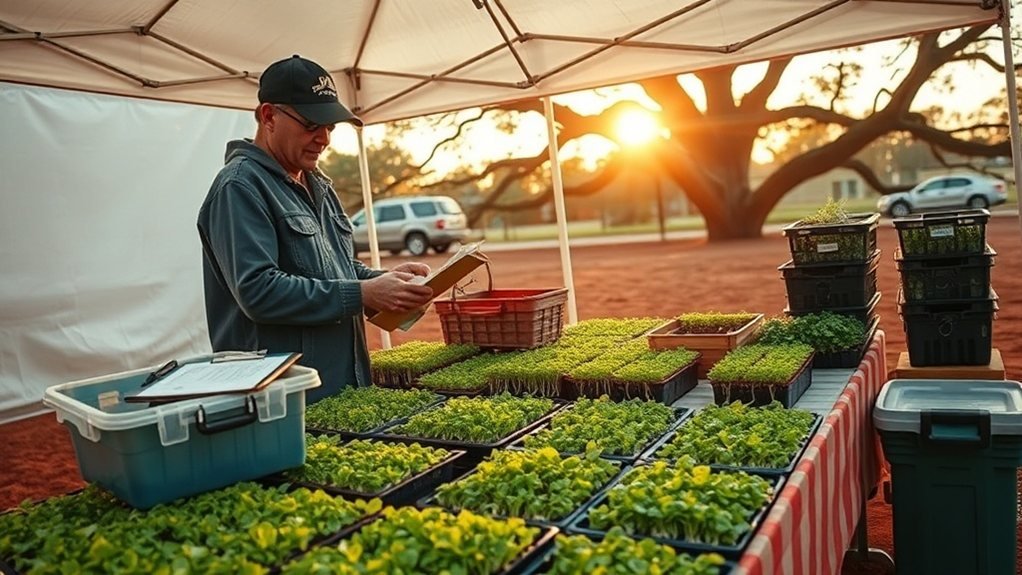
    Find your next Ohio market at [markets.microgreensworld.com](https://markets.microgreensworld.com).

    Getting Your Application Ready

    prepare detailed vendor application

    Your application is the market manager’s first point of evaluation, and it needs to demonstrate that you’re a serious, prepared vendor before you’ve ever set up a table.

    Most Ohio market managers are reviewing multiple applicants simultaneously, so your submission has to clearly communicate what you grow, how you handle food safety compliance, and why your product fits their existing vendor mix.

    Growers who treat the application as a formality, submitting vague product descriptions or missing liability insurance documentation, typically get passed over in favor of applicants who’ve addressed every requirement with specificity.

    What Market Managers Want to See

    Market managers in Ohio are gatekeepers with limited booth space and consistent pressure to maintain product diversity, so understanding what they’re assessing before you submit your application will save you from easily avoidable rejections.
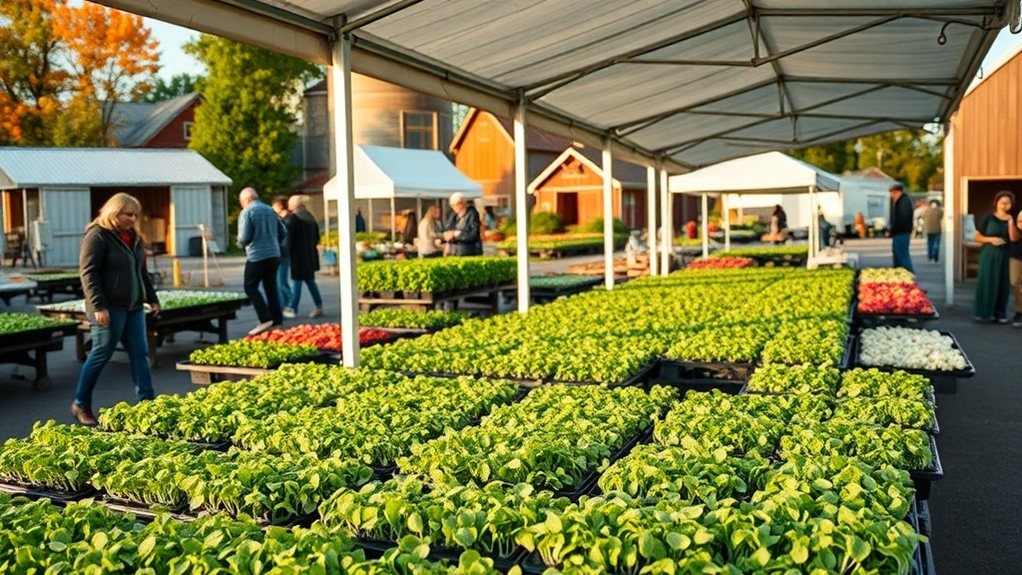
    Your farmers market vendor application signals whether your microgreens business operates with professionalism or improvisation.

    Managers evaluate proof of liability insurance, your Ohio cottage food registration or commercial kitchen documentation, and evidence that your product fills a gap rather than duplicating an existing vendor.

    Columbus markets, for instance, often already carry one microgreens vendor, making differentiation through specialty varieties or value-added products strategically crucial.

    Present clean product photography, a clear pricing structure, and a defined growing practice.

    Applications lacking these elements get deprioritized, regardless of product quality.

    Common Mistakes to Avoid

    Understanding what managers evaluate is only part of the equation; the other part is recognizing where growers consistently undermine their own applications before a manager ever reads them carefully.

    Mistake Why It Costs You
    Vague product descriptions Managers can’t assess your market fit
    No proof of compliance Applications get deprioritized immediately
    Generic cover letters Shows no knowledge of that specific market
    Late submissions Spots fill before you’re even considered

    When you’re selling microgreens locally in Ohio, these errors signal inexperience to managers who review dozens of applications. Local microgreens ohio vendors who research each market’s specific vendor demographics, customer base, and product gaps before applying consistently outperform those who submit identical packets everywhere.

    ohio microgreens market finder

    Searching for a viable market slot in Ohio doesn’t have to mean driving across counties on a hunch or cold-calling market managers who may not have openings. The MGW Farmers Market Finder at markets.microgreensworld.com pulls from USDA data across Ohio’s approximately 286 listed markets, letting you filter by location before you commit a single hour of outreach. If you’re figuring out how to sell microgreens systematically rather than reactively, this tool compresses weeks of manual research into a focused, actionable shortlist.

    You can identify which microgreens market stand opportunities exist within a realistic delivery radius, cross-reference market schedules against your production timeline, and approach managers with precision. Try the free Market Finder at markets.microgreensworld.com to start building your Ohio vendor strategy today.

    Frequently Asked Questions

    Can I Sell Microgreens at Ohio Farmers Markets Without a License?

    You can sell microgreens at Ohio farmers markets without a license in most cases, but you’ll need to verify each market’s specific vendor requirements, since individual markets sometimes add their own rules beyond state regulations.
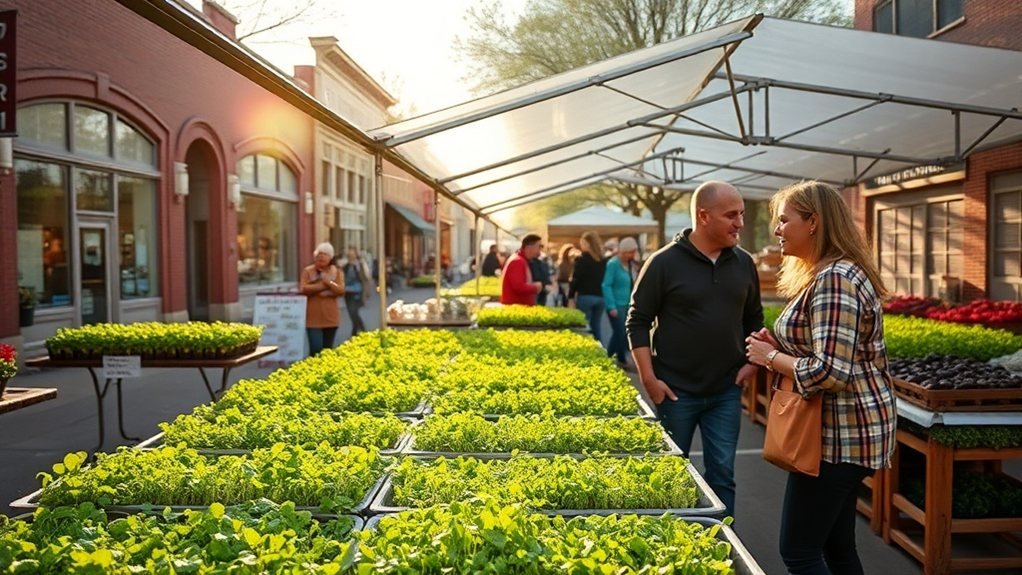
    How Much Does a Typical Ohio Farmers Market Vendor Booth Cost?

    Ohio farmers market booth fees typically run $20 to $50 per day, though seasonal spots can cost $200 to $800 upfront. Find markets that fit your budget at markets.microgreensworld.com.

    Do Ohio Markets Require Liability Insurance From Microgreens Vendors?

    Most Ohio markets require it. You’ll typically need a general liability policy with $1 million coverage and the market listed as an additional insured. Budget around $300 to $500 annually.

    Can I Sell at Multiple Ohio Farmers Markets on the Same Weekend?

    Yes, you can, but you’ll need separate vendor applications and fees for each market. Scheduling conflicts and staffing your tables simultaneously are the real barriers most Ohio microgreens vendors hit first.

    What Ohio Cottage Food Laws Apply to Packaged Microgreens Sales?

    Ohio’s cottage food law doesn’t cover microgreens because they’re considered produce, not processed food. You’ll sell them as fresh agricultural products, so standard food handler requirements and market rules apply instead.

    Wrap-up

    Ohio’s farmers market landscape offers microgreens growers genuine, scalable entry points, from high-volume Columbus markets to lower-competition regional venues. You’ve got the production side covered; now it’s about matching your output to the right venue, submitting a complete application, and arriving prepared. Don’t wait until the season opens to start researching. Employ the Market Finder at markets.microgreensworld.com to identify Ohio markets near you and begin the vendor process before available spots disappear.

  • Farmers Markets in Illinois for Microgreens Vendors

    Farmers Markets in Illinois for Microgreens Vendors

    Illinois hosts approximately 249 farmers markets, with the densest concentrations in Chicago, Naperville, and Evanston — each presenting distinct buyer behaviors and revenue potential for microgreens vendors. You’ll find urban Chicago markets deliver higher foot traffic and culinary engagement, while Naperville’s suburban demographic responds strongly to premium positioning. Application deadlines for high-traffic locations typically close January–February, so aligning production planning with your market search is essential. What follows breaks down exactly how to manage that process strategically.

    Key Takeaways

    • Illinois has approximately 249 farmers markets listed in the USDA database, with the highest density in Chicago, Naperville, and Evanston.
    • The primary selling season runs May through October, with Chicago-area markets sometimes extending from late April through November.
    • Urban markets like Lincoln Park and Logan Square offer high foot traffic but attract more competition among microgreens vendors.
    • Vendor application deadlines for high-traffic urban markets frequently close in January or February, requiring early preparation.
    • Sunflower, pea shoots, and radish are the most consistently moving microgreens varieties across Illinois farmers markets.

    Farmers Markets in Illinois for Microgreens Vendors

    illinois microgreen market density

    Illinois offers microgreens vendors a substantial entry point into direct-to-consumer sales, with approximately 249 farmers markets listed in the USDA database spanning urban centers, suburban corridors, and smaller agricultural communities.

    If you’re already producing and looking to move product consistently, the state’s market density, particularly in Chicago, Naperville, and Evanston, means you’re rarely more than a short drive from a viable selling opportunity.

    The Illinois market calendar runs primarily spring through fall, so you’ll want to identify your target markets early, since vendor applications for the busiest urban locations close well before the first Saturday of the season.

    Why Illinois Markets Are Worth Your Attention

    With roughly 249 farmers markets listed in the USDA database, Illinois offers microgreens vendors a substantial pool of potential selling locations, concentrated heavily in the Chicago metro area, Naperville, and Evanston.

    That density matters because it gives you genuine optionality when you’re deciding where to test your product and pricing. As a microgreens vendor in Illinois, you’re not limited to one seasonal window either, since the spring-through-fall calendar across the state provides enough active market weeks to build consistent revenue patterns.

    Chicago’s sheer population base means foot traffic at established markets runs high, which accelerates your ability to gather customer feedback and hone your variety mix. If you’re serious about scaling, Illinois is a competitive but genuinely viable landscape worth entering deliberately.

    What the Illinois Market Season Looks Like

    Most Illinois farmers markets operate on a spring-through-fall schedule, typically running from May through October, though some Chicago-area markets extend into November or open as early as late April. When you’re planning to sell microgreens at farmers markets, understanding this seasonal window shapes your entire production calendar.

    Season Phase Months Vendor Opportunity
    Early Season April–May Limited competition, high demand
    Peak Season June–August Maximum foot traffic
    Late Season September–November Dedicated buyer loyalty

    Chicago-area farmers market Illinois schedules tend to compress vendor application deadlines into January and February, meaning your production planning and market applications need to run simultaneously, well before your first tray gets seeded.

    How to Find the Right Market in Illinois

    assess foot traffic and exclusivity

    Finding the right Illinois market starts before you ever fill out an application, because the variables you assess early, such as foot traffic patterns, vendor density, and category exclusivity policies, determine whether your microgreens will actually move.

    Chicago’s concentration of high-volume markets, including those operating in Lincoln Park, Logan Square, and the broader North Shore corridor, offers competitive but lucrative placement opportunities for vendors who can sustain consistent weekly supply.

    Naperville and Evanston each support well-established market ecosystems where buyer demographics skew toward health-conscious households, making them strategically viable entry points if Chicago’s saturation presents barriers.
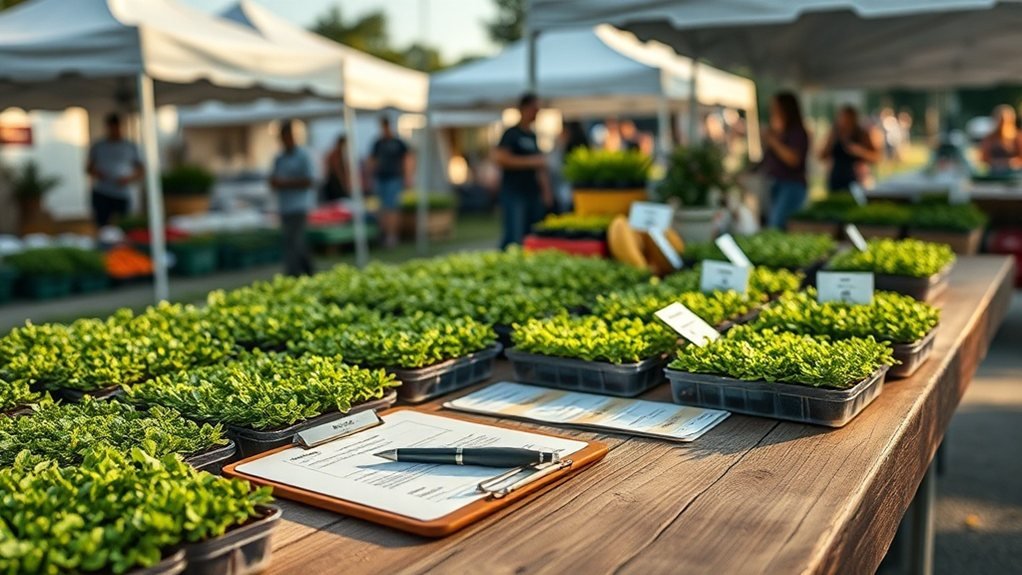
    What to Look for Before You Apply

    Before you submit a single application, you need to assess whether a given Illinois market is actually worth your time and effort. Not every microgreens farmers market opportunity translates into productive vendor activity, and Illinois presents enough variety across its 249 USDA-listed markets to demand deliberate selection criteria. Examine foot traffic patterns, vendor density, and whether existing produce sellers already dominate the stall layout.

    As a farmers market vendor Illinois operates within a competitive, region-specific ecosystem, where Chicago’s Saturday markets draw substantially different demographics than Naperville’s mid-week formats. Confirm the market’s operating schedule aligns with your production cycles, since microgreens have narrow harvest windows.

    Request the vendor agreement before applying, reviewing fee structures, product restrictions, and exclusivity clauses that could limit your positioning against competing specialty growers.

    Markets Near Chicago

    Chicago’s metropolitan footprint spans enough distinct neighborhoods and suburbs that you’re effectively steering through multiple micro-markets within a single regional context, each carrying its own demographic profile, purchasing behavior, and vendor saturation level.

    A microgreens booth at a chicago farmers market in Lincoln Park competes differently than one operating in Evanston or Oak Park, where foot traffic patterns, price tolerance, and buyer familiarity with specialty produce shift considerably.

    You need to identify which markets have existing microgreens vendors before applying, because walking into a saturated slot rarely produces the results you want.

    Naperville’s suburban markets tend toward consistent weekend attendance, while Chicago’s neighborhood markets reward vendors who understand hyperlocal buyer identity.

    Match your production volume and variety selection to the specific market’s demonstrated demand before committing an application.

    Markets Near Naperville and Evanston

    Naperville and Evanston represent two structurally different market environments, and understanding that distinction shapes how you approach vendor applications in each area.

    The Naperville farmers market draws a suburban consumer base with strong disposable income, meaning buyers there respond well to premium positioning and consistent weekly presence.

    Evanston operates differently. The Evanston farmers market sits adjacent to a dense urban corridor, attracting shoppers who prioritize sourcing transparency and product variety, which rewards vendors who communicate growing methods clearly.

    Both markets carry competitive vendor pools, so your application needs to demonstrate reliability and production capacity, not just product quality.

    Employ the free Market Finder at markets.microgreensworld.com to identify current vendor opportunities across both markets and compare application windows before committing to either location.

    What to Expect When You Get There

    farmers market microgreens margins

    Once you’ve secured a spot, the operational realities of an Illinois farmers market will shape how you allocate your time, capital, and product inventory from the first weekend forward.

    Booth fees across the state vary considerably, ranging from modest flat rates at smaller suburban markets to percentage-based structures at high-traffic venues in Chicago and Naperville, so your margin calculations need to account for that variability before you commit.

    Knowing which microgreens varieties move consistently at Illinois markets, particularly sunflower, pea shoots, and radish in spring-to-fall conditions, lets you calibrate your grow schedule to actual demand rather than assumption.

    Booth Fees and Setup Basics

    Expect booth fees at Illinois farmers markets to vary considerably depending on the market’s location, size, and organizational structure, with weekly vendor fees typically ranging from $25 to $75 at mid-sized community markets and climbing well above $100 at high-traffic urban markets in Chicago or Naperville. Knowing how to get a farmers market booth means budgeting accurately before you apply.

    Market Type Typical Weekly Fee
    Small community market $25 to $45
    Mid-sized suburban market $50 to $75
    High-traffic urban market $100 and above

    For farmers markets Illinois microgreens vendors target, most require a six-foot table, a canopy, and liability insurance. Confirm electrical access requirements early, since some markets prohibit extension cords entirely.

    What Moves at Illinois Markets

    Budgeting your booth fee is only part of what determines whether a market works for you, because the other half is understanding what Illinois shoppers actually buy once you’re set up behind that table.

    Farmers market Illinois vendors who track sales consistently report that sunflower and pea shoots move fastest, particularly at urban markets where culinary awareness runs higher.

    If you’re putting microgreens for sale Illinois customers haven’t seen before, expect questions before purchases.

    Shoppers in Evanston and Naperville tend to engage more deeply than those at smaller rural stops, which affects how you position variety against volume.

    You’ll learn more from two markets than from any prep work, so get in front of actual buyers and let the data guide your next decision.

    Getting Your Application Ready

    present complete professional microgreens application

    Your application is the market manager‘s first and only impression of you before you ever set up a table, so treating it as a formal business document rather than a casual inquiry significantly improves your odds of acceptance.

    Most Illinois market managers are evaluating product fit, vendor reliability, and whether your microgreens complement or duplicate what’s already in their lineup, which means you’ll want to present clean product photography, a clear growing methodology, and any applicable food handler certifications upfront.

    Growers who submit incomplete applications, omit their product list, or fail to specify whether they’re selling fresh-cut or living product are routinely passed over, even when the market has open slots.

    What Market Managers Want to See

    When you submit an application to an Illinois farmers market, the manager reviewing it isn’t looking for enthusiasm — they’re performing a functional audit of whether your operation fits the market’s existing vendor mix, regulatory standing, and logistical capacity. As a microgreens farmers market vendor application, your documentation signals professionalism before you ever set up a table.

    What They Review Why It Matters
    Illinois food handler certification Confirms regulatory compliance
    Cottage food or processing license Establishes legal product category
    Proof of grow location Validates local microgreens illinois sourcing
    Liability insurance certificate Protects market from vendor incidents
    Product photos or samples Demonstrates presentation and quality standards

    Submit complete packages only. Incomplete applications get deprioritized, not followed up on.

    Common Mistakes to Avoid

    Most application rejections don’t come from bad microgreens — they come from incomplete paperwork, misread deadlines, and documentation that doesn’t match what Illinois market managers are actually required to verify.

    When you’re pursuing a farmers market vendor application, submit every document requested, not just what seems relevant to you. Your cottage food registration, liability insurance certificate, and grow space photos should arrive together, not piecemeal.

    Many growers selling microgreens locally underestimate how seriously managers treat incomplete files; an application missing one attachment gets shelved, not followed up on.

    Confirm the application window directly with each market, because USDA listing dates frequently differ from actual submission deadlines. Read the vendor category requirements carefully before applying, since misclassifying your product creates avoidable friction with managers from the first contact.

    find illinois microgreens markets

    Tracking down viable farmers markets in Illinois doesn’t have to mean hours of scattered web searches, cold calls to municipal offices, and half-updated event pages. The MGW Farmers Market Finder at markets.microgreensworld.com consolidates USDA data covering approximately 249 Illinois markets, giving you a structured starting point rather than a fragmented one.

    If you’re still figuring out how to vend microgreens at your first market, filtering by region narrows the field immediately. Chicago, Naperville, and Evanston show the densest concentrations, which matters when you’re evaluating whether your microgreens market stand can realistically serve a location without unsustainable travel.

    Employ the tool to identify markets aligned with your production capacity and season, then move directly into outreach. Start your search at markets.microgreensworld.com.

    Frequently Asked Questions

    Can I Sell Microgreens at Multiple Illinois Markets Simultaneously?

    You can sell at multiple Illinois markets simultaneously by assigning different team members or trusted reps to each location. Just confirm each market’s exclusivity clauses first, since some prohibit vendors from working competing nearby markets.

    Do Illinois Farmers Markets Require Product Liability Insurance for Microgreens Vendors?

    Most Illinois farmers markets require product liability insurance, and you’ll typically need $1M per occurrence. Get your certificate before applying because market managers ask for it upfront during the vendor approval process.

    How Early Should I Arrive to Set up My Microgreens Booth?

    Arrive 90 minutes before opening. You’ll need time to unload, position your table, set up your display, and still have a few minutes to breathe before customers walk in.

    Are There Illinois Markets That Run Indoors During Winter Months?

    Yes, some Illinois markets do run indoors during winter, particularly in Chicago and surrounding suburbs. You’ll want to verify each market’s season dates directly, since indoor winter schedules vary widely by location and venue availability.

    What Licenses Do Illinois Microgreens Growers Need Before Selling?

    You’ll need an Illinois Food Handler certificate and must register as a cottage food operation or obtain a food business license depending on your annual sales volume and where you’re selling.

    Wrap-up

    You’ve got the information you need to move forward. Illinois markets are competitive, but they’re also accessible if you approach the process systematically—researching vendor requirements early, preparing compliant documentation, and targeting markets where foot traffic justifies your setup costs. Don’t wait until spring to start your outreach. Vendor rosters close before the season opens, and the microgreens category fills quickly. Employ the market finder, identify your targets, and submit your applications now.

  • Farmers Markets in Texas for Microgreens Vendors

    Farmers Markets in Texas for Microgreens Vendors

    Texas offers roughly 298 USDA-listed farmers markets, giving microgreens vendors a substantial and geographically diverse pool of venues to evaluate. Peak market activity runs October through May, though Austin, Dallas, and Houston sustain year-round opportunities across distinct neighborhood demographics. Southern Texas mild temperatures extend consumer foot traffic beyond northern seasonal limits. You’ll need to assess booth fees, vendor rules, and specialty produce gaps before committing to any application—factors this guide breaks down systematically ahead.

    Key Takeaways

    • Texas has roughly 298 USDA-listed farmers markets statewide, with peak vendor activity running October through May.
    • Austin, Dallas, and Houston offer the densest market clusters, giving microgreens vendors multiple application opportunities within single metros.
    • Peripheral Austin markets in Cedar Park, Round Rock, and Pflugerville present lower competition for first-time microgreens vendors.
    • Use the MGW Market Finder at markets.microgreensworld.com to filter Texas markets and identify openings without manually searching all 298 listings.
    • Target markets where specialty produce exists but microgreens remain underrepresented to maximize sell-through and reduce direct competition.

    Farmers Markets in Texas for Microgreens Vendors

    Texas holds roughly 298 farmers markets in the USDA database, making it one of the more target-rich environments for a microgreens vendor building a consistent sales schedule. Because the state’s climate runs hot through the summer months, most markets concentrate their peak activity from fall through spring, which aligns well with the production cycles many indoor microgreens growers already maintain. You’re working with a seasonal window that actually favors your operation, particularly in cities like Austin, Dallas, and Houston, where market density gives you multiple venue options within a single metro area.

    Why Texas Markets Are Worth Your Attention

    If you’re looking for a regional market environment with genuine scale, Texas stands out for straightforward reasons. The USDA database lists approximately 298 texas farmers markets statewide, a figure that represents meaningful vendor opportunity across urban, suburban, and rural corridors.

    As a microgreens vendor texas, you’re operating in a state where year-round mild temperatures, particularly across the southern regions, sustain consistent consumer foot traffic well outside typical northern growing seasons. The Texas market calendar runs primarily fall through spring, which aligns precisely with when microgreens perform best in controlled indoor growing environments.

    Austin, Dallas, and Houston each anchor dense market clusters, giving you multiple entry points within a single metropolitan radius, reducing travel costs while maximizing application attempts across high-volume, well-attended venues.

    What the Texas Market Season Looks Like

    Understanding the scale of available markets gets you only so far without understanding when those markets are actually open and accepting vendors. Texas operates primarily on a fall-through-spring calendar, which aligns directly with your production cycles as a microgreens farmer.

    The brutal summer heat compresses outdoor market activity significantly, particularly in Houston and Dallas, where August temperatures routinely exceed 100°F. You’ll find the densest vendor opportunity windows running October through May, with some year-round farmers markets in Texas cities maintaining weekly schedules regardless of season. Austin’s markets tend to sustain stronger off-season attendance than most.

    Timing your vendor applications to arrive well before fall openers, typically around August or September, positions you ahead of the competition at any microgreens farmers market worth pursuing.

    How to Find the Right Market in Texas

    assess markets by timing traffic

    Before you apply to any market, you need to assess foot traffic patterns, vendor fee structures, and whether the market’s customer base aligns with the price points microgreens command. Texas offers roughly 298 USDA-listed markets, with dense clusters in Austin, Dallas, and Houston, giving you multiple viable options within a single metropolitan area. Austin’s year-round market activity, compared to Dallas and Houston markets that follow a more pronounced fall-through-spring calendar, means your timing and product availability will factor directly into which application you prioritize.

    What to Look for Before You Apply

    Choosing the right market before you apply matters far more than most new vendors realize, because not every farmers market in Texas is structured to support specialty produce like microgreens.

    As a farmers market vendor Texas, you need to assess customer demographics, foot traffic patterns, and vendor category saturation before committing your application fee. A microgreens booth farmers market setup performs best where health-conscious shoppers already dominate the buyer pool, such as markets adjacent to fitness districts or university neighborhoods.

    Review each market’s vendor rules carefully, particularly restrictions on pre-packaged goods, signage dimensions, and table configurations.

    Contact the market manager directly to ask whether a produce or specialty greens slot is currently open, because many Texas markets maintain waitlists that aren’t publicly disclosed.

    Markets Near Austin

    Around Austin, the density of farmers markets gives microgreens vendors more entry points than almost any other metro area in Texas, but that volume also means you’ll encounter more competition for specialty produce slots.

    The austin farmers market ecosystem spans multiple neighborhoods, each with distinct customer demographics and vendor saturation levels. Established markets in central Austin draw experienced microgreens growers texas-wide, making newer satellite markets in Cedar Park, Round Rock, and Pflugerville more accessible for first-time vendors building a track record.

    Applying to a smaller peripheral market first lets you hone your display, pricing, and sales rhythm before competing for limited slots at higher-traffic venues.

    Employ the MGW Market Finder at markets.microgreensworld.com to identify which Austin-area markets currently have openings.

    Markets Near Dallas and Houston

    Dallas and Houston operate on a scale that changes how you approach market selection entirely. A dallas farmers market in a high-traffic district like Farmers Market Dallas draws consistent foot traffic, but so does intense vendor competition. You’re not just showing up; you’re competing against established microgreens producers who’ve held those spots for years.

    Houston follows a similar pattern. The houston farmers market network spans multiple neighborhoods, each with distinct buyer demographics and vendor expectations. Midtown attracts different customers than suburban Katy or The Heights.

    In both metros, your strategy should prioritize markets where specialty produce vendors are present but microgreens specifically remain underrepresented. Employ the MGW Market Finder at [markets.microgreensworld.com](https://markets.microgreensworld.com) to identify exactly those gaps.

    What to Expect When You Get There

    market specific microgreens booth realities

    Once you secure a vendor spot, the operational realities of Texas markets will define your early weeks more than your growing schedule will.

    Booth fees across the state vary considerably, typically ranging from modest daily rates at smaller community markets to recurring weekly commitments at established urban venues in Austin, Dallas, and Houston, where demand and foot traffic justify the higher cost.

    Understanding which microgreens varieties actually move in your specific market, whether that’s sunflower in high-volume suburban settings or specialty blends at curated urban markets, shapes how you allocate tray space before you ever load the truck.

    Booth Fees and Setup Basics

    Booth fees at Texas farmers markets vary more than most new vendors expect, typically ranging from $25 to $75 per market day at mid-sized urban markets, though premium spots in Austin’s SFC Farmers’ Market or Houston’s Urban Harvest can climb higher depending on placement and season. When you’re figuring out how to get a farmers market booth, factor that fee against your projected sell-through before committing.

    Most Texas markets require a 10×10 canopy, weighted properly against wind, which is a real consideration at open-air venues. Tables, signage, and a cash or card processing setup complete your footprint.

    Selling farmers markets Texas microgreens means your display needs refrigeration awareness too, since living trays or cut product degrades fast in direct heat. Plan accordingly before your first market day.

    What Moves at Texas Markets

    Getting your setup dialed in matters, but it won’t tell you what actually sells once you’re standing behind that table. Texas farmers market vendors operating in fall-through-spring windows consistently report stronger movement on mild, versatile varieties that complement regional cooking. As a microgreens for sale texas vendor, understanding demand patterns gives you a real operational edge.

    Variety Market Performance
    Sunflower High visual appeal, strong repeat buyers
    Radish Fast turnover, price-sensitive customers
    Pea Shoots Consistent demand, chef interest

    Farmers market texas vendors who track weekly sales by variety outperform those who guess. Your table data, collected across four to six market days, will reveal which crops justify expanded tray production and which occupy space inefficiently.

    Getting Your Application Ready

    tailored complete vendor application essentials

    Your application is the market manager‘s first substantive evidence of whether you’re a serious vendor, and most rejections stem from incomplete submissions rather than weak product lines. When you prepare your materials, you’ll want to anticipate what managers are actually evaluating: proof of food handler certification, liability insurance documentation, and clear product descriptions that situate your microgreens within the market’s existing vendor mix.

    The growers who secure spots consistently are those who treat the application as a competitive brief, tailoring each submission to reflect that specific market’s stated priorities rather than submitting a generic packet across every available venue.

    What Market Managers Want to See

    Market managers in Texas receive dozens of vendor applications each season, and the ones that move to the top aren’t necessarily from the most experienced growers. What distinguishes a strong farmers market vendor application is evidence of operational readiness, not just enthusiasm.

    When you sell microgreens at farmers market locations across Texas, managers are evaluating your food handler certification, liability insurance documentation, and your understanding of the market’s existing vendor mix. They want confirmation that you won’t create logistical problems.

    Bring photos of your booth setup, your product labeling, and a clear description of your growing methods. A manager reviewing twenty applications will favor the vendor who demonstrates they’ve already solved the problems that newer growers typically create on their first market day.

    Common Mistakes to Avoid

    Knowing what managers want is only half the work, because the application itself is where many growers quietly eliminate themselves from consideration. Incomplete product lists, vague descriptions, and missing permits signal inexperience to managers reviewing dozens of submissions for your local microgreens texas market.

    Mistake Why It Hurts Fix It
    Vague product descriptions Managers can’t assess fit List every variety specifically
    Missing cottage food permits Automatic disqualification File before applying
    No photos submitted Weakens credibility Include booth and product shots

    Your microgreens business depends on treating the application like a professional document, not a formality. Review every field twice, attach everything requested, and submit before the deadline without assuming extensions exist.

    texas microgreens market finder

    Searching through 298 markets manually isn’t a viable approach when you’re already managing grow cycles, harvest schedules, and delivery logistics. The MGW Farmers Market Finder at markets.microgreensworld.com filters that entire Texas database into actionable results, letting you identify viable selling microgreens locally opportunities without the friction of unstructured research.

    As a microgreens grower Texas, you need proximity, scheduling compatibility, and market fit working together before you commit to an application. The tool pulls directly from USDA data, so the listings reflect verified markets rather than outdated directories.

    Enter your location, review what surfaces near you, and prioritize based on what your current production volume can actually support. Start your search now at markets.microgreensworld.com and move from research to application faster.

    Frequently Asked Questions

    Can I Sell Microgreens at Multiple Texas Markets Simultaneously?

    You can absolutely run multiple Texas markets at once. Most vendors stack weekend markets across different cities to move more volume. Just make sure your production schedule can actually support the demand before you commit.

    Do Texas Markets Require a Cottage Food License for Microgreens?

    Microgreens don’t fall under Texas cottage food law since they’re not processed foods. You’ll likely need a grower’s permit or nursery license instead. Check with your specific market manager before assuming either applies.

    How Early Should I Arrive to Set up My Market Booth?

    Arrive at least 90 minutes before opening. You’ll need time to unload, organize your display, and troubleshoot anything unexpected. Most experienced vendors show up even earlier when they’re working a new market.

    What Happens if My Application Gets Rejected by a Market?

    Don’t take it personally. Ask the market manager for feedback, fix whatever they flagged, and reapply next season. Meanwhile, apply to other markets. Rejection from one rarely means rejection everywhere.

    Are There Texas Markets That Run Year-Round Indoors During Summer?

    A few Texas markets do run year-round indoors, but they’re rare. Check Houston’s Urban Harvest and Austin’s HOPE Farmers Market. Employ the Market Finder at markets.microgreensworld.com to confirm current schedules before you apply.

    Wrap-up

    You’ve got the foundational knowledge to move forward strategically. Texas offers a substantial market infrastructure, but your success depends on matching your production capacity, schedule, and geographic reach to the right venues. Don’t waste time on guesswork—use the MGW Farmers Market Finder at markets.microgreensworld.com to identify viable options near you, evaluate them against the criteria covered here, and submit applications to the markets that align with your operational realities.