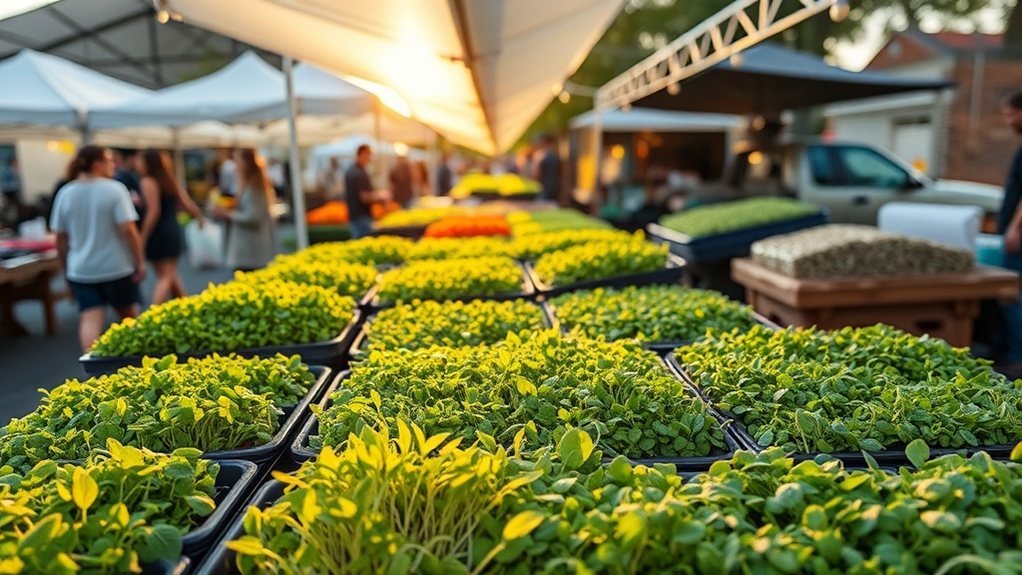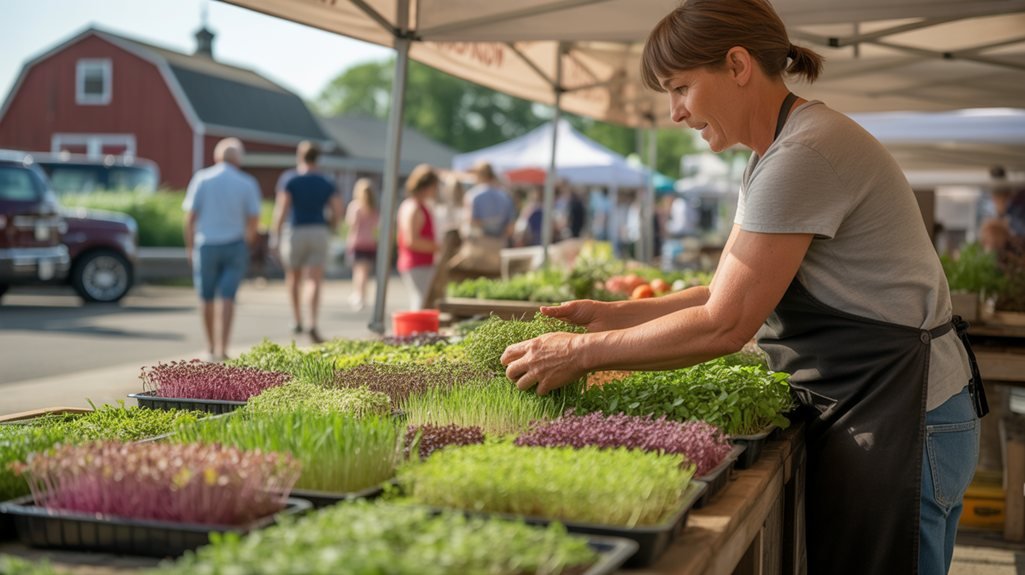
Category: State Market Guides

  • Farmers Markets in Indiana for Microgreens Vendors

    Farmers Markets in Indiana for Microgreens Vendors

    Indiana’s approximately 143 USDA-listed farmers markets give microgreens vendors a structured, seasonally aligned landscape running primarily May through October. You’ll find the strongest consumer bases in Indianapolis, Bloomington, and Fort Wayne, where health-conscious shoppers favor varieties like sunflower, pea shoots, and spicy radish. Shoulder months, particularly May and September, offer lower competition and faster entry points. Smaller regional markets within 30 miles of urban centers let you build sales rhythm without overcommitting production capacity. Continue ahead to sharpen your market selection and application strategy.

    Key Takeaways

    • Indiana has approximately 143 USDA-listed farmers markets, with concentrations in Indianapolis, Bloomington, and Fort Wayne offering strong microgreens sales opportunities.
    • The primary market season runs May through October, with shoulder months offering lower competition and strategic entry points for new vendors.
    • Indianapolis customers favor sunflower, pea shoots, and radish, while Bloomington skews toward specialty varieties like amaranth and micro basil.
    • Booth fees typically range from $15 to $40 per day; some urban markets charge $50 or more with additional setup requirements.
    • Smaller regional markets within 30 miles of Bloomington and Fort Wayne allow faster vendor entry with less competition than larger urban markets.

    Farmers Markets in Indiana for Microgreens Vendors

    Indiana’s approximately 143 USDA-listed farmers markets represent a substantial distribution network for microgreens vendors looking to move product consistently across the state.

    The market calendar runs primarily spring through fall, which aligns well with peak microgreens production cycles and gives you a predictable window to build a customer base, establish pricing, and hone your booth operations.

    Concentrations in Indianapolis, Bloomington, and Fort Wayne mean you have genuine options for high-traffic venues, whether you’re positioning for volume or testing a specific regional demographic before committing to a full season.

    Why Indiana Markets Are Worth Your Attention

    Roughly 143 farmers markets operate across Indiana, according to USDA data, and that concentration alone makes the state a credible target for microgreens vendors looking to establish consistent sales channels.

    Indianapolis, Bloomington, and Fort Wayne anchor the densest clusters, giving you geographically distinct entry points depending on where you’re based.

    The microgreens farmers market opportunity here isn’t theoretical. Indiana’s spring-through-fall calendar aligns closely with peak microgreens production cycles, which means your supply and market demand can run in genuine parallel.

    Farmers markets Indiana vendors negotiate tend to draw health-conscious, ingredient-aware shoppers who already understand what microgreens are, shortening your time spent on product education. That’s a structural advantage worth factoring into your market selection strategy before you commit to an application.

    What the Indiana Market Season Looks Like

    Understanding the market calendar is what turns a credible production schedule into an actual sales strategy. Indiana’s farmers markets run primarily from May through October, with peak activity concentrated in the summer months, when foot traffic and buyer intent are both highest. As a microgreens vendor Indiana, you’re working within a season that rewards growers who plan their production timelines backward from opening day.

    Indianapolis markets tend to open earlier and close later than rural counterparts, giving you a longer operational window. Farmers markets Indiana microgreens vendors who treat the shoulder months, particularly May and September, as strategic entry points often face less competition for vendor spots. Knowing these rhythms before you apply puts you ahead of growers who show up without that context.

    How to Find the Right Market in Indiana

    evaluate indiana farmers market viability

    Before you apply to any market in Indiana, you need to evaluate foot traffic patterns, vendor fee structures, and whether the existing vendor mix leaves room for a specialty crop like microgreens. Indianapolis-area markets, particularly those operating in Broad Ripple, Carmel, and the Indy Winter Farmers Market circuit, tend to draw consistent consumer bases that support premium-priced produce, making them worth prioritizing if you’re positioned to handle volume. Bloomington and Fort Wayne each anchor regional market ecosystems where smaller surrounding markets, often operating on weekends within a 30-mile radius, can serve as lower-competition entry points while you build your booth presence.

    What to Look for Before You Apply

    Not every farmers market in Indiana is going to be the right fit for a microgreens vendor, and walking into an application without doing your homework first is how you end up paying booth fees for a market that moves little to no product.

    Before you figure out how to get a farmers market booth, assess the market’s foot traffic, its existing vendor mix, and whether the customer base actually buys specialty produce. A microgreens booth at a farmers market saturated with commodity vegetables faces a different challenge than one positioned among prepared food vendors and health-conscious shoppers.

    Visit the market as a customer first, observe purchasing behavior, and talk to current vendors. That reconnaissance shapes every decision you make in your application.

    Markets Near Indianapolis

    Indianapolis sits at the center of Indiana’s most concentrated cluster of farmers markets, which means you have more options to evaluate but also more competition to account for when you’re positioning a microgreens booth.

    The Indianapolis farmers market landscape includes established venues like Broad Ripple and Indy Winter Farmer’s Market, each drawing distinct customer demographics and foot traffic patterns.

    As a farmers market Indiana vendor, you’ll want to cross-reference attendance data against your current production volume before committing to any single location.

    Larger markets generate higher visibility but typically enforce stricter vendor requirements and longer waitlists.

    Smaller Indianapolis-area markets often offer faster entry points, letting you build your sales rhythm and customer base before scaling into more competitive venues.

    Markets Near Bloomington and Fort Wayne

    Moving beyond Indianapolis, the two markets worth mapping first in the rest of Indiana are Bloomington and Fort Wayne, each representing a structurally different selling environment for microgreens vendors. The Bloomington farmers market draws a university-adjacent demographic that skews heavily toward specialty produce, meaning your sunflower shoots and pea tendrils find genuinely receptive buyers there.

    Fort Wayne operates differently, with a broader regional customer base, stronger foot traffic on peak summer Saturdays, and vendor competition that tends toward volume crops rather than specialty greens. That gap is where you position your trays strategically. Knowing which structure fits your current production capacity determines which market you pursue first, not which city sounds appealing.

    Use the free Market Finder at markets.microgreensworld.com to locate both markets and review their vendor details.

    What to Expect When You Get There
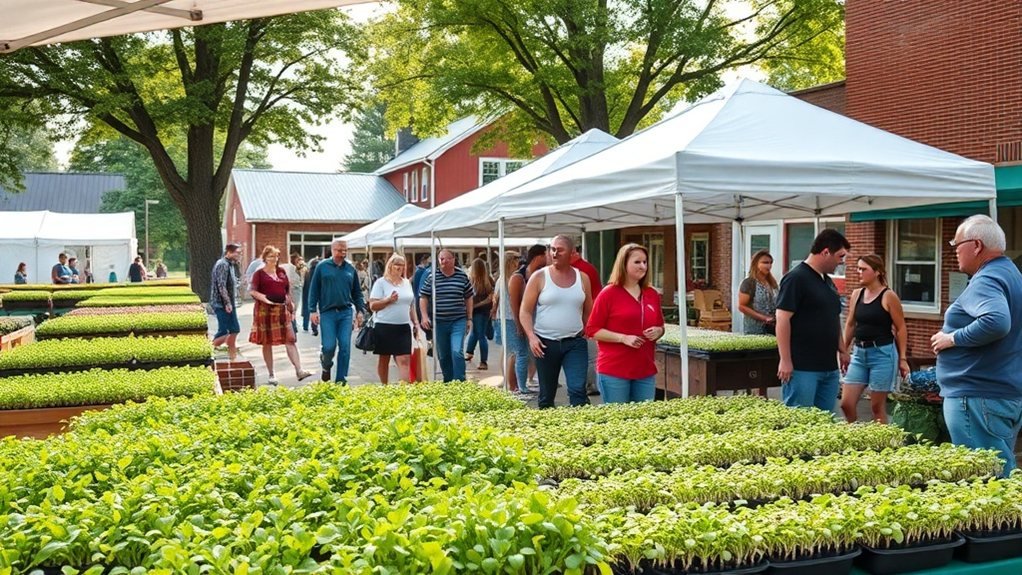
    booth ready microgreens sell consistently

    Once you’ve secured a spot, the operational realities of Indiana farmers markets come into sharp focus, and booth fees typically range from $15 to $40 per day depending on the market’s size, location, and whether you’re in Indianapolis versus a smaller regional venue like Bloomington or Muncie.

    Your setup needs to be functional before customers arrive, which means a folding table, a canopy rated for wind, and clearly priced signage are non-negotiable baseline requirements at virtually every market in the state.

    What actually moves at Indiana markets reflects local buying patterns, and cut sunflower, pea shoots, and spicy radish microgreens tend to draw consistent repeat buyers, particularly at markets where vendors have taken time to offer samples and brief, direct explanations of preparation.

    Booth Fees and Setup Basics

    Booth fees across Indiana’s farmers markets vary more than most new vendors expect, and understanding that range before you apply saves you from committing to a market that doesn’t fit your margin structure.

    As a microgreens grower in Indiana, you’ll encounter daily fees ranging from roughly $15 at smaller community markets to $50 or more at established urban venues. Some markets charge seasonal flat rates instead, which demands careful volume projections on your part.

    Setup expectations also shift by location, where some markets require a canopy, a weight system for wind, and a tablecloth meeting specific color standards.

    Every farmers market vendor in Indiana should confirm these requirements directly with the market manager before purchasing equipment or submitting an application.

    What Moves at Indiana Markets

    Selling microgreens at Indiana farmers markets isn’t uniform across the state, and what customers reach for in Indianapolis differs meaningfully from what moves in Bloomington or a smaller agricultural community like Terre Haute.

    Urban shoppers, particularly in Indianapolis, tend toward sunflower, pea shoots, and radish, varieties with immediate culinary recognition. Bloomington’s market, shaped by a university population, skews toward experimental cuts like amaranth and micro basil.

    When you position microgreens for sale indiana across these distinct contexts, your variety selection becomes a strategic decision, not an afterthought. Smaller markets reward consistency over novelty, where a reliable weekly sunflower tray builds trust faster than rotating specialty cuts.

    To sell microgreens at farmers market locations that actually fit your production capacity, start your search at markets.microgreensworld.com using the free Market Finder tool.

    Getting Your Application Ready

    complete professional vendor application

    Your application is the first real signal you send to a market manager, and how it’s assembled tells them whether you understand professional vendor standards before you’ve sold a single tray. Most Indiana markets, particularly those in Indianapolis and Bloomington, require documentation of your production setup, a liability insurance certificate, and product photography that accurately represents what you’ll bring to the booth.

    Growers who submit incomplete paperwork, generic product descriptions, or photos that don’t match their actual microgreens frequently get passed over, not because their product is inferior, but because the application itself signals unreliability.

    What Market Managers Want to See

    Getting accepted into an Indiana farmers market rarely comes down to luck, and most market managers are evaluating your application against a fairly consistent set of criteria before you ever set up a table. Your farmers market vendor application needs to demonstrate compliance first, specifically your business registration, liability insurance, and any applicable Indiana cottage food documentation.

    Beyond paperwork, managers assess whether your product fills a gap in their current vendor mix. Selling microgreens locally works in your favor because most Indiana markets carry limited specialty produce, which positions you as an additive rather than a competitive vendor. Bring clear production photos, labeled packaging samples, and a brief description of your growing method. Managers respond to specificity, not vague promises about freshness or quality.

    Common Mistakes to Avoid

    Most microgreens vendors who get passed over for Indiana market spots don’t fail because their product is weak — they fail because their application signals unpreparedness before a manager ever reads past the first section.

    Submitting generic descriptions of your microgreens market stand, without specifying varieties, packaging format, or pricing structure, tells a manager you haven’t thought this through.

    Vague language around how to sell microgreens, like “fresh and healthy greens,” carries no weight against a vendor who lists sunflower, pea shoot, and radish with documented sell-through rates.

    Missing documentation, incomplete food handler certifications, or ignoring Indiana’s cottage food thresholds are also common elimination factors.

    Treat the application as your first sale, because functionally, that’s exactly what it is.

    indiana usda market search shortcut

    Tracking down viable farmers markets in Indiana one by one is the kind of work that burns through hours you could spend growing. The MGW Market Finder at markets.microgreensworld.com consolidates USDA data across Indiana’s approximately 143 listed markets, giving your local microgreens indiana search a structured foundation rather than a fragmented one.

    Instead of cross-referencing county websites and calling market managers blindly, you work from a centralized database that filters by location and operational status. For anyone building a microgreens business with limited time, that efficiency matters considerably.

    You identify target markets faster, prioritize outreach strategically, and move toward your first vendor spot with actual momentum. Employ the free Market Finder tool at markets.microgreensworld.com to start locating Indiana markets that fit your production scale and schedule.

    Frequently Asked Questions

    Can I Sell Microgreens at Indiana Farmers Markets Without a Business License?

    You can often sell without a formal business license, but Indiana markets set their own vendor requirements. Check directly with each market manager before assuming you’re clear to set up.

    How Many Weeks in Advance Should I Contact Indiana Market Managers?

    Contact Indiana market managers 6 to 8 weeks before the season opens. Most markets fill vendor spots fast, and you’ll need time to submit paperwork, get approved, and handle any last-minute requirements they throw at you.

    Do Indiana Farmers Markets Require Vendors to Grow Everything They Sell?

    Most Indiana markets follow a producer-only rule, so you’ll need to grow what you sell. Confirm each market’s specific policy when you contact the manager, since requirements vary by location.

    What Happens if a Market Already Has a Microgreens Vendor Selling There?

    If a market already has a microgreens vendor, you’re not automatically shut out. Some markets cap similar vendors, but others don’t. Ask the market manager directly before assuming there’s no room for you.

    Are There Year-Round Indoor Farmers Markets Operating Anywhere in Indiana?

    Yes, a few Indiana cities run indoor year-round markets. Indianapolis and Bloomington are your best bets. Search markets.microgreensworld.com to find which ones are actively accepting vendors right now.

    Wrap-up

    You’ve got the framework now, so the next step is action. Indiana’s 143 markets represent a substantial range of formats, customer demographics, and seasonal structures, and identifying the right fit requires matching your production capacity to market demand. Start with one or two markets, hone your application materials, and build from there. The vendors who succeed aren’t necessarily growing the most, they’re placing their product where it moves consistently.
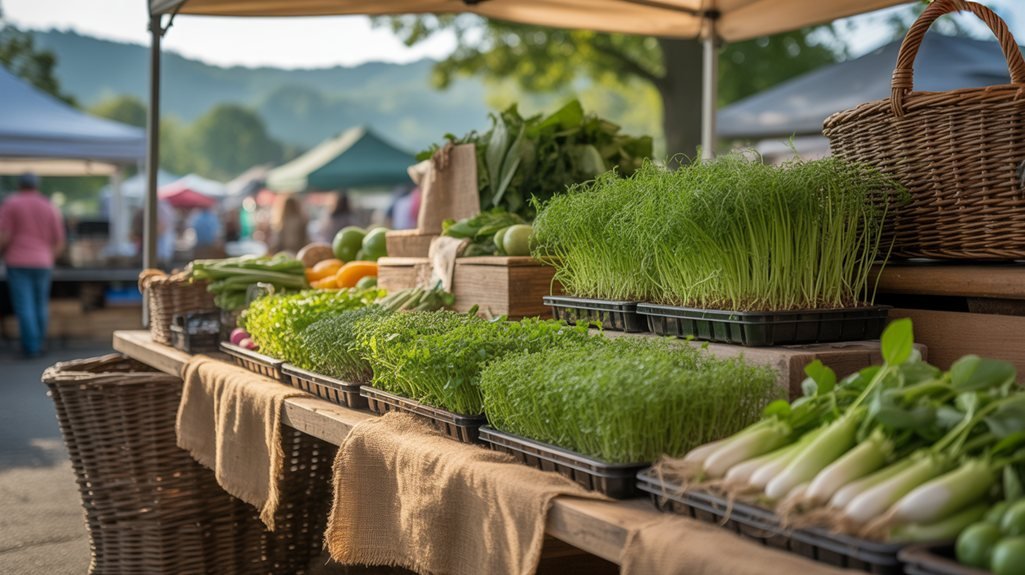
  • Farmers Markets in Tennessee for Microgreens Vendors

    Farmers Markets in Tennessee for Microgreens Vendors

    Tennessee hosts approximately 161 USDA-listed farmers markets, most operating seasonally from April through November, giving microgreens vendors a structured window to build direct customer relationships. Urban corridors like Nashville, Memphis, and Knoxville anchor the strongest foot traffic, though each city demands a distinct entry strategy. Sunflower shoots, pea shoots, and spicy mixes consistently outperform niche varieties across Tennessee markets. If you’re targeting the right stall, what follows will sharpen your approach considerably.

    Key Takeaways

    • Tennessee has approximately 161 USDA-listed farmers markets, with most operating seasonally from spring through fall, typically April through November.
    • Nashville, Memphis, and Knoxville are the primary urban markets, each requiring different application strategies based on competition and community culture.
    • Sunflower shoots, pea shoots, and spicy mixes consistently perform best at Tennessee markets, driven by familiarity and texture over complex flavor profiles.
    • Market managers prioritize vendors demonstrating production consistency, professional booth presentation, and clear operational details over general enthusiasm or product quality alone.
    • The MGW Market Finder at markets.microgreensworld.com provides structured, USDA-sourced access to all 161 Tennessee markets, filterable by region and vendor representation.

    Farmers Markets in Tennessee for Microgreens Vendors

    tennessee microgreens peak season markets

    Tennessee’s approximately 161 USDA-listed farmers markets represent a substantial distribution infrastructure for microgreens vendors who are ready to move product consistently.
    The state’s primary selling season runs spring through fall, which aligns well with the production cycles most growers are already managing, particularly in high-density markets like Nashville, Memphis, and Knoxville.

    If you’re looking for your first vendor spot or expanding beyond your current market, understanding where Tennessee’s market activity concentrates will shape how you allocate your production capacity and logistics.

    Why Tennessee Markets Are Worth Your Attention

    If you’re growing microgreens at any meaningful volume, Tennessee’s farmers market infrastructure deserves a serious look. The state carries roughly 161 markets in the USDA database, distributed across urban corridors and smaller regional hubs. That density matters when you’re mapping a viable vendor route.

    Market Characteristic Tennessee Reality
    Total USDA-listed markets ~161 statewide
    Primary season window Spring through fall
    Major urban concentrations Nashville, Memphis, Knoxville
    Microgreens market fit High, due to culinary demographics
    Vendor competition level Varies significantly by region

    Farmers markets in Tennessee skew toward food-literate buyers in metro areas, which directly supports microgreens farmers market viability. Understanding where demand concentrates before you apply for a booth spot is how serious growers operate.

    What the Tennessee Market Season Looks Like

    Knowing where markets concentrate is only part of the equation, because timing determines whether you can actually sustain a selling schedule week over week.

    Tennessee’s market calendar runs primarily spring through fall, with most venues opening between April and May, then closing in October or November.

    As a microgreens vendor Tennessee growers quickly learn that winter markets exist but remain sparse, concentrated mainly in larger metro areas like Nashville. You’ll find farmers market Tennessee vendors operating year-round at a handful of indoor venues, but those spots fill fast and competition intensifies.

    Planning your entry around April gives you maximum runway to establish customer relationships before the season contracts.

    Understanding this seasonal compression helps you prioritize applications strategically rather than scrambling reactively when prime slots disappear.

    How to Find the Right Market in Tennessee

    evaluate vendor density traffic

    Before you apply to any market in Tennessee, you need to evaluate vendor density, customer traffic patterns, and whether the market’s existing produce mix leaves room for specialty crops like microgreens. Nashville’s larger markets, including those in Davidson County, attract consistent foot traffic but often carry waitlists and higher booth fees that demand you arrive with a reliable, scalable production system. Memphis and Knoxville markets tend to operate with smaller vendor pools, which can mean faster acceptance and a stronger opportunity to establish yourself as the primary microgreens source before competition fills that gap.

    What to Look for Before You Apply

    Not every farmers market in Tennessee is worth your time, and applying to the wrong one early on can slow your momentum considerably.

    Before you commit to a microgreens booth farmers market setup, you need to evaluate foot traffic, vendor saturation, and whether the customer base actually buys specialty produce. A farmers market vendor Tennessee application takes real time to complete, so prioritize markets where perishable, value-added products already move well.

    Look at whether the market runs weekly or biweekly, since inconsistent schedules hurt product freshness and customer retention similarly.

    Check if competing microgreens vendors are already established there. A market with one existing microgreens seller isn’t automatically closed to you, but it demands a clear differentiation strategy before you invest in booth fees.

    Markets Near Nashville

    Once you’ve filtered out the markets that don’t fit your product, geography becomes your next variable, and the Nashville metro offers enough options to be both an opportunity and a decision problem.

    As a microgreens grower Tennessee-based or willing to drive, you’re looking at a cluster of markets ranging from high-volume urban settings to smaller community spots in surrounding counties.

    The Nashville farmers market operates year-round downtown, drawing consistent foot traffic from culinary-minded buyers.

    Surrounding markets in Williamson, Rutherford, and Wilson counties run seasonally and tend to attract buyers who return weekly.

    Your application strategy should account for saturation at larger markets, where multiple microgreens vendors may already hold spots, making secondary markets a smarter entry point for newer growers.

    Markets Near Memphis and Knoxville

    Though Nashville dominates most conversations about Tennessee’s farmers market landscape, Memphis and Knoxville each operate distinct market ecosystems that reward growers who understand their structural differences.

    The Memphis farmers market network skews toward weekend formats, with larger anchor markets drawing substantial foot traffic but also attracting more established vendors, meaning you’ll face real competition for booth space.

    Knoxville farmers market culture tends toward community-embedded formats, where smaller neighborhood markets often have shorter vendor waitlists and more receptive customers for specialty products like microgreens.

    Your application strategy should reflect these differences directly.

    Memphis demands a polished presentation and clear product differentiation from day one.

    Knoxville rewards consistency and relationship-building within tighter community networks.

    Research both cities thoroughly using the free Market Finder at markets.microgreensworld.com before committing to any application.

    What to Expect When You Get There

    tennessee markets adapt pricing produce

    Once you’ve secured a spot, the operational realities of Tennessee markets will shape how you structure your setup, your pricing, and your product mix from the first morning forward.

    Booth fees vary considerably across the state, ranging from nominal daily rates at smaller community markets to weekly or seasonal contracts at established urban venues like the Nashville Farmers Market, where demand and foot traffic justify higher entry costs.

    What actually moves at these markets reflects both regional culinary preferences and the demographic profile of each venue, so tracking which varieties sell through quickly at your first few markets gives you the data you need to fine-tune your grow schedule accordingly.

    Booth Fees and Setup Basics

    Two distinct cost structures define most Tennessee farmers markets: flat weekly booth fees and percentage-based commission arrangements.

    Flat fees at farmers markets Tennessee microgreens vendors frequent typically range from $20 to $50 per market day, depending on location size and foot traffic volume. Nashville and Memphis metro markets tend toward the higher end, while smaller regional markets offer more accessible entry points.

    Understanding how to get a farmers market booth means recognizing that some markets require annual membership fees alongside weekly stall costs.

    Your standard setup requires a 10×10 canopy, weighted appropriately for wind, plus a folding table, signage, and a payment processing solution.

    Budget for these infrastructure costs before your first market, because they represent fixed overhead regardless of your weekly sales volume.

    What Moves at Tennessee Markets

    Sunlight and foot traffic will tell you quickly which microgreens actually sell at Tennessee markets, and the answer tends to surprise growers who assumed broad appeal would distribute evenly across their tray lineup. When selling microgreens locally, you’ll find that sunflower and pea shoots consistently outperform more nuanced varieties, because shoppers respond to size, texture, and familiarity before flavor.

    Radish moves well in Nashville’s weekend markets, where health-conscious buyers recognize it on sight. Spicy mixes attract chefs and regulars who already cook with intention.

    To sell microgreens at farmers market venues successfully, you need to observe two or three market cycles before drawing determinations about your product mix, since regional food culture, seasonal timing, and neighboring vendors all shape what actually leaves your table.

    Getting Your Application Ready

    provide complete vendor application details

    When you submit a market application in Tennessee, the manager reviewing it’s evaluating whether your product fits the market’s current vendor mix, not simply whether microgreens are a viable crop.

    Most applications request proof of production origin, a basic product list, and documentation like a cottage food registration or state food handler’s certification, depending on the market’s requirements.

    Submitting an incomplete application, or one that omits your growing method and sourcing details, typically results in a rejection that could have been avoided with a single follow-up call before you applied.

    What Market Managers Want to See

    Market managers in Tennessee are evaluating far more than just your product when they review an application, and understanding that selection process gives you a measurable advantage before you ever submit a single form. They’re assessing vendor mix, meaning they already have a mental inventory of what’s currently represented at their market.

    Your farmers market vendor application needs to position microgreens for sale Tennessee customers haven’t already seen week after week at that specific location. Demonstrate production consistency by referencing your grow cycle, variety rotation, and volume capacity.

    Managers want evidence that you’ll show up reliably, maintain a professional booth, and contribute positively to the market’s overall identity. Concrete details outperform vague enthusiasm every time, so lead with specifics rather than generalities when completing any application form.

    Common Mistakes to Avoid

    Errors in your farmers market application rarely stem from ignorance of the product itself, but rather from a failure to understand what the submission process is actually evaluating.

    Managers reviewing your microgreens market stand application are assessing operational credibility, not just product quality.

    Submitting photos without context, skipping the business license documentation, or leaving insurance fields incomplete signals carelessness before you’ve said a word.

    When learning how to sell microgreens professionally, treat each application field as evidence supporting your case for a booth spot.

    Many rejections in Tennessee markets trace back to vague production descriptions, where growers list varieties without specifying scale, growing medium, or harvest protocols.

    Precision in those details separates vendors who get callbacks from those who don’t.

    Find Tennessee markets ready for your application at [markets.microgreensworld.com](https://markets.microgreensworld.com).

    centralized tennessee markets database

    Tracking down viable farmers markets across Tennessee doesn’t have to consume weeks of cold-calling and windshield time. The MGW Market Finder at markets.microgreensworld.com pulls directly from USDA data, giving you structured access to roughly 161 Tennessee markets without manual searching. For a developing microgreens business, that efficiency matters. You can filter by region, identify whether local microgreens Tennessee vendors are already represented, and prioritize markets that align with your production capacity before making a single call.

    Rather than working from incomplete lists or outdated chamber websites, you’re working from a centralized, regularly sourced database. That distinction affects how quickly you move from research to application. Employ the tool, build your target list, and spend your time on outreach that already has directional logic behind it.

    Frequently Asked Questions

    Can I Sell Microgreens at Tennessee Farmers Markets Without a Business License?

    You can often sell without a business license at smaller Tennessee markets, but each market sets its own vendor rules. Check directly with the market manager before you assume you’re covered.

    How Early Should I Arrive to Set up My Microgreens Booth?

    Arrive at least 90 minutes before opening. You’ll need time to unload, arrange your display, and handle anything unexpected. Most experienced vendors are set up and ready 30 minutes before the first customer walks in.

    Do Tennessee Markets Require Vendors to Grow Everything They Sell?

    Most Tennessee markets require a producer-only policy, meaning you’ll grow what you sell. Some allow resale with disclosure. Always confirm the specific rule with each market manager before you apply.

    What Happens if My Application Gets Rejected by a Market Manager?

    Don’t treat rejection as final. Ask the manager what’s missing from your application, fix it, and reapply. Some vendors get accepted on their second or third attempt after addressing specific concerns.

    Can I Vend at Multiple Tennessee Farmers Markets Simultaneously?

    Yes, you can vend at multiple Tennessee markets simultaneously. Most markets don’t require exclusivity, but confirm each market’s vendor agreement before committing, since some restrict competing at nearby markets on the same day.

    Wrap-up

    Tennessee’s market landscape offers you real entry points, but the work doesn’t stop at finding a listing. You’ve got to match your production capacity to market volume, submit your application early, and show up prepared. The vendors who succeed here treat market selection as a strategic decision, not an afterthought. Employ the tools available, narrow your options deliberately, and you’ll position your microgreens operation where it can actually grow.

  • Farmers Markets in Missouri for Microgreens Vendors

    Farmers Markets in Missouri for Microgreens Vendors

    Missouri’s approximately 156 USDA-listed farmers markets give microgreens vendors a dense statewide network with meaningful entry points across urban and rural corridors. Major hubs like Kansas City, St. Louis, and Columbia each carry distinct buyer demographics, vendor competition levels, and application timelines you’ll need to assess before committing. Peak season runs April through October, though several urban markets operate year-round. Selecting the right market requires evaluating booth fees, existing vendor mix, and production capacity — factors that directly determine your sell-through potential, all of which become clearer ahead.

    Key Takeaways

    • Missouri has approximately 156 USDA-listed farmers markets, with major hubs in Kansas City, St. Louis, and Columbia offering strong microgreens opportunities.
    • Peak selling season runs April through October, but select Kansas City and St. Louis markets operate year-round.
    • Sunflower and pea shoot microgreens generate the strongest repeat customer engagement across Missouri markets.
    • Avoid applying to markets already saturated with greens vendors, regardless of your product quality.
    • Use the MGW Market Finder at markets.microgreensworld.com to efficiently identify and filter viable Missouri market options.

    Farmers Markets in Missouri for Microgreens Vendors

    Missouri’s approximately 156 USDA-listed farmers markets represent a substantial distribution network for microgreens vendors seeking consistent, repeat-customer sales channels.

    The state’s market activity concentrates heavily in Kansas City, St. Louis, and Columbia, giving you multiple metropolitan entry points where consumer foot traffic and vendor competition both run high.

    The primary selling season stretches spring through fall, which aligns well with microgreens production cycles and gives you enough consecutive market weeks to build a recognizable booth presence.

    Why Missouri Markets Are Worth Your Attention

    With roughly 156 farmers markets operating across the state, Missouri gives microgreens vendors a meaningful volume of placement opportunities that many neighboring states simply can’t match. That density matters when you’re building a sustainable sales route, because redundancy in your market portfolio protects your revenue when one market underperforms.

    Market Factor Missouri Context
    Total Markets ~156 statewide
    Peak Season Spring through fall
    Major Hubs Kansas City, St. Louis, Columbia
    Vendor Competition Varies significantly by market size

    Missouri farmers markets skew heavily toward urban corridors, which means your microgreens farmers market strategy should prioritize those hubs first. Buyers in those zones already understand specialty produce, reducing the educational barrier you’d otherwise face at smaller rural markets.

    What the Missouri Market Season Looks Like

    Seasonality in Missouri generally follows a compressed arc, with the bulk of farmers market activity clustering between April and October, though a handful of urban markets in Kansas City and St. Louis operate year-round. As a microgreens vendor Missouri presents a meaningful strategic variable: your production schedule must align with market availability, not the other way around.

    Columbia’s mid-week markets tend to open later in spring, while weekend markets in Kansas City activate earlier, reflecting stronger cold-season consumer demand. Farmers markets Missouri operates on a tiered calendar, meaning application windows open well before the first market date. If you’re targeting a spring debut, you should be submitting applications by February, since competitive spots fill quickly at higher-traffic venues.

    How to Find the Right Market in Missouri

    match market to capacity

    Before you submit a single application, you need to evaluate each market against your production capacity, your price point, and the existing vendor mix, because a market already saturated with greens vendors will absorb you poorly regardless of your product quality.

    Kansas City’s network of established markets, including those operating in the metro’s denser residential corridors, tends to reward vendors who can commit to weekly attendance and volume consistency.

    St. Louis and Columbia present structurally different opportunities, where Columbia’s proximity to a university population creates demand patterns that differ measurably from the suburban St. Louis markets drawing a more traditional weekend-shopper demographic.

    What to Look for Before You Apply

    Choosing the right farmers market in Missouri isn’t simply a matter of proximity or convenience, because the structural characteristics of a given market will largely determine whether your microgreens move consistently or sit untouched. Before you pursue how to get a farmers market booth, evaluate each market against criteria that directly affect sell-through rate.

    Factor Strong Signal Weak Signal
    Vendor tenure High turnover Waitlisted spots
    Customer traffic Steady foot traffic Sparse weekday crowds
    Product overlap Few microgreens vendors Saturated with greens

    Farmers markets Missouri microgreens vendors should prioritize markets with established attendance patterns. A Columbia Saturday market drawing consistent crowds outperforms a newer market regardless of lower booth fees.

    Markets Near Kansas City

    Within the Kansas City metro area, Missouri microgreens vendors encounter one of the state’s most commercially active market ecosystems, where established venues like the Overland Park Farmers Market and the City Market in the River Market district draw consistent foot traffic across extended seasonal windows.

    As a microgreens farmer in Missouri, you’re working within a competitive but accessible landscape. The kansas city farmers market circuit spans both Missouri and Kansas sides of the metro, which effectively doubles your application pool. Vendors who map this geography carefully identify gaps in specialty produce coverage before submitting applications.

    City Market operates year-round, making it structurally different from seasonal alternatives. Understanding that distinction shapes which venues align with your current production volume and harvest scheduling capacity.

    Markets Near St. Louis and Columbia

    Shifting east from Kansas City, the St. Louis farmers market ecosystem offers considerably more density, with multiple established venues operating across the metro. You’ll find both nonprofit-managed markets and privately operated markets competing for quality vendors, which actually works in your favor when negotiating a microgreens booth farmers market placement. The Tower Grove Farmers Market and Soulard Market represent two distinct operational models worth studying before you apply.

    Columbia sits roughly midway between both metros and runs a tighter vendor community, meaning relationships matter more and turnover is slower. Getting into a St. Louis farmers market often requires documented production capacity, so bring your grow records when you apply.

    Missouri’s USDA-listed markets number around 156 statewide, and browsing them systematically saves considerable time. Employ the free Market Finder at markets.microgreensworld.com to map your options.

    What to Expect When You Get There

    market specific vending logistics

    Once you’ve identified a market and secured a spot, the operational realities of vending become your immediate focus, spanning booth fees, physical setup requirements, and product positioning strategies specific to Missouri’s market culture.

    Booth fees across Missouri markets vary considerably, ranging from modest weekly rates at smaller rural markets to higher seasonal commitments at established urban venues in Kansas City or St. Louis, so you’ll need to factor those costs into your pricing structure before your first setup day.

    What moves consistently at Missouri markets tends to skew toward familiar varieties like sunflower and pea shoots, though that can shift depending on whether you’re working a Columbia neighborhood market with an adventurous customer base or a mid-Missouri community market where buyers want something they already recognize.

    Booth Fees and Setup Basics

    Before you commit to a market, you need a clear-eyed picture of what booth fees actually look like in Missouri, because the range is wider than most new vendors expect. As a farmers market vendor Missouri, you’ll encounter significant variation based on market size, location, and frequency.

    Market Type Typical Weekly Fee Season Length
    Neighborhood/Rural $15 – $30 12-20 weeks
    Mid-Size City $30 – $60 20-28 weeks
    Kansas City/St. Louis $50 – $120 24-32 weeks
    Indoor Winter Markets $25 – $75 Variable
    Specialty/Niche Markets $20 – $50 8-16 weeks

    Booth fees and setup basics also include tent permits, insurance requirements, and weight anchoring standards. Budget accordingly before your first application.

    What Moves at Missouri Markets

    Knowing what actually sells before you set up your first table saves you from guessing games that cost both time and product.

    Among missouri farmers market vendors, sunflower and pea shoot varieties consistently draw the strongest repeat customer engagement, largely because their flavor profiles are immediately recognizable to buyers unfamiliar with specialty greens.

    Radish and broccoli microgreens for sale missouri vendors typically position as culinary accent products, which appeals to the restaurant-adjacent consumer demographic common in Columbia and St. Louis markets.

    Smaller, competitively priced clamshells move faster than bulk offerings at entry-level markets, where customers are still building purchase habits.

    Kansas City markets, particularly those with established vendor ecosystems, tend to reward vendors who maintain consistent weekly presence over those rotating product selection without clear category focus.

    Getting Your Application Ready

    operational competence clear documentation consistency

    Your application is the market manager‘s first substantive assessment of you as a vendor, so it needs to reflect operational competence, not just enthusiasm.

    Most Missouri market managers are evaluating whether your product fits their vendor mix, whether you understand food safety requirements, and whether you can reliably hold a weekly spot through the full season.

    A Missouri grower who submits an application with vague product descriptions, no mention of production scale, or missing cottage food documentation is likely to get passed over in favor of someone whose paperwork signals they’ve already thought through the logistics.

    What Market Managers Want to See

    Market managers in Missouri are, more often than not, evaluating vendor applications through a specific lens: does this grower understand what a market needs, not just what they want to sell?

    At a Columbia farmers market, for instance, managers prioritize product variety, consistent supply, and professional presentation over novelty alone.

    When you apply to any microgreens farmers market, your application should demonstrate that you’ve researched their existing vendor mix, identified a genuine gap, and can fill it reliably week after week.

    Managers want documented food safety practices, proof of consistent production capacity, and clarity about which varieties you’ll carry.

    Vague answers signal inexperience. Specific answers, like citing your weekly harvest yield or your growing system’s output, signal that you’ve done the operational work before showing up.

    Common Mistakes to Avoid

    Most vendors who get rejected from Missouri farmers markets don’t fail because their microgreens are poor quality; they fail because their application signals operational unpreparedness before a manager ever evaluates the product itself.

    Farmers market Missouri vendors consistently undermine strong products through avoidable application errors.

    Mistake Why It Hurts You What to Do Instead
    Vague product descriptions Signals inexperience to managers List specific varieties and weights
    Missing liability insurance Immediate disqualification Secure coverage before applying
    No defined setup footprint Creates logistical uncertainty Specify exact canopy dimensions
    Generic vendor statement Indistinguishable from competition Address market’s specific customer base
    Applying off-season Wastes relationship capital Target spring application windows

    When you sell microgreens at farmers market venues, precision in your application communicates the same professionalism your booth eventually will.

    missouri market prospecting shortcut

    Searching for open vendor spots across Missouri’s 156 USDA-listed markets one by one is the kind of inefficient process that burns time you’d rather spend in the grow room.

    The MGW Market Finder at markets.microgreensworld.com consolidates that data, allowing you, as a microgreens grower Missouri-based or otherwise, to filter by location and identify viable microgreens farmers market opportunities without the manual legwork.

    The MGW Market Finder consolidates Missouri’s scattered market data so you can filter, identify, and move forward faster.

    You enter your region, review what’s available, and move directly toward applications.

    The tool doesn’t replace your judgment about fit, foot traffic, or competition, but it eliminates the search friction that stalls most vendors before they ever submit a single form.

    Employ it to compress your prospecting timeline and redirect your energy toward actually getting to market.

    Frequently Asked Questions

    Can I Sell Microgreens at Missouri Farmers Markets Without a License?

    You can sell microgreens at Missouri farmers markets without a license in many cases, but you’ll need to verify each market’s specific vendor requirements, since rules vary by location and market management.

    How Early Should I Arrive to Set up My Microgreens Booth?

    Arrive at least 90 minutes before opening. You’ll need time to unload, arrange your trays, set up signage, and handle anything unexpected. Most experienced vendors show up even earlier than that.

    Do Missouri Farmers Markets Allow Shared Vendor Spaces for Microgreens Sellers?

    Some Missouri markets allow shared vendor spaces, but you’ll need to ask each market manager directly. Policies vary widely, and many markets restrict booth sharing to prevent product conflicts with established vendors.

    What Happens if My Application Gets Rejected by a Missouri Market?

    Don’t take it personally. Ask the market manager for specific feedback, fix what you can, and reapply next season. Meanwhile, utilize markets.microgreensworld.com to find other Missouri markets accepting vendors now.

    Should I Sell Microgreens at Indoor Winter Markets in Missouri?

    Yes, do it. Missouri’s indoor winter markets keep your name in front of buyers when competitors disappear. You’ll hold shelf space heading into spring before anyone else even reapplies.

    Wrap-up

    Missouri’s farmers market landscape offers microgreens vendors a structured, viable entry point into direct retail sales. You’ve got 156 listed markets spanning urban centers like Kansas City and St. Louis to smaller regional venues, each carrying distinct vendor requirements, seasonal windows, and competitive dynamics. Start your applications early, particularly for high-traffic markets where spots close quickly. When you’re ready to identify specific locations, filter by proximity, season, and market size using the MGW Market Finder.

  • Farmers Markets in Wisconsin for Microgreens Vendors

    Farmers Markets in Wisconsin for Microgreens Vendors

    Wisconsin’s 189 USDA-listed farmers markets give you a structured seasonal window—roughly May through October—to reach health-conscious urban buyers, suburban weekend shoppers, and rural communities simultaneously. Markets concentrate around Madison, Milwaukee, and Green Bay, each with distinct buyer behaviors; sunflower and pea shoots convert first-time buyers most reliably, while radish and broccoli gain traction among repeat customers. Strategic market selection, rather than exhaustive directory browsing, determines long-term viability—and what follows will sharpen that selection considerably.

    Key Takeaways

    • Wisconsin has approximately 189 USDA-listed farmers markets, with peak microgreens demand running June through September across spring-to-fall market seasons.
    • Madison, Milwaukee, and Green Bay offer the highest concentration of markets, with urban buyers favoring health-conscious specialty products like microgreens.
    • Sunflower and pea shoots perform best with first-time buyers, while radish and broccoli gain traction among returning, culinary-savvy customers.
    • Market applications require production documentation, product pricing, food handler certifications, and booth setup photos to avoid delays or rejection.
    • Booth fees range from $10–$75 per day depending on market size, making fee-to-sales-volume comparisons essential before committing to a market.

    Farmers Markets in Wisconsin for Microgreens Vendors

    Wisconsin’s approximately 189 USDA-listed farmers markets represent a substantial commercial infrastructure for microgreens vendors seeking consistent, repeat-customer sales channels.

    The state’s market calendar operates primarily across spring through fall, concentrating vendor opportunity within a defined seasonal window that rewards early planning and strategic market selection.

    If you’re already producing and looking to move volume, the market density around Madison, Milwaukee, and Green Bay gives you multiple viable entry points worth evaluating now.

    Why Wisconsin Markets Are Worth Your Attention

    If you’re already producing microgreens at scale, Wisconsin gives you a market infrastructure worth taking seriously. The USDA database lists approximately 189 farmers markets wisconsin vendors can access, concentrated in Madison, Milwaukee, and Green Bay. That density matters when you’re building a multi-market route.

    Market Concentration Key City
    Southeast hub Milwaukee
    South-central hub Madison
    Northeast hub Green Bay

    The microgreens farmers market opportunity here isn’t theoretical. Wisconsin’s urban centers support health-conscious buyer bases, and the spring-through-fall calendar aligns well with peak microgreens production cycles. If you’re rotating trays consistently, you can realistically sustain vendor presence across multiple markets within a single region, maximizing your output without overextending your logistics.

    What the Wisconsin Market Season Looks Like

    Most Wisconsin farmers markets operate on a spring-through-fall calendar, typically running from May into October, though a handful of year-round indoor markets in Madison and Milwaukee extend that window considerably.

    As a microgreens vendor in Wisconsin, you’ll find that peak demand concentrates between June and September, when foot traffic is highest and competing produce is abundant. That saturation actually works in your favor, because microgreens occupy a specialty niche that most other vendors don’t touch.

    If you’re targeting farmers markets in Wisconsin, microgreens give you consistent product availability regardless of weather interruptions that affect soil-grown crops. Planning your growing schedule around market start dates, particularly the common mid-May openers, lets you arrive with mature inventory rather than scrambling to catch up after securing your spot.

    How to Find the Right Market in Wisconsin

    evaluate markets by access

    Before you apply to any Wisconsin market, you need to evaluate several operational variables that directly affect your viability as a vendor, including foot traffic patterns, vendor fee structures, and existing competition from other specialty produce sellers. Madison’s network of markets, anchored by the Dane County Farmers’ Market on Capitol Square, operates with high vendor density and selective application processes, meaning your product differentiation as a microgreens grower matters significantly during review. Milwaukee and Green Bay present relatively accessible entry points, with neighborhood markets and regional venues that often have shorter waitlists and more flexible application windows for specialty crop vendors.

    What to Look for Before You Apply

    Choosing the right Wisconsin farmers market isn’t simply a matter of proximity or convenience — it’s a strategic decision that shapes how quickly your microgreens business gains traction.

    Before you submit a single application as a farmers market vendor in Wisconsin, audit each market’s vendor composition. If three other booths already carry microgreens, your differentiation challenge becomes structural, not just presentational.

    Examine foot traffic patterns, market tenure, and whether the customer base skews toward culinary-focused buyers. Your microgreens booth at a farmers market positioned near restaurant districts or food co-ops will perform differently than one anchored in a suburban parking lot.

    Scrutinize vendor fees against realistic volume, and confirm the market’s operating calendar aligns with your production cycle before committing your application.

    Markets Near Madison

    Once you’ve assessed what to look for before applying, the Madison metro area gives you one of the more concentrated testing grounds for microgreens in Wisconsin.

    The Dane County Farmers’ Market, operating on Capitol Square, draws substantial foot traffic and attracts buyers already familiar with specialty produce, making it a competitive but high-value target.

    Surrounding communities like Middleton, Sun Prairie, and Fitchburg run smaller weekly markets where vendor competition is considerably thinner.

    If you’re actively searching microgreens for sale wisconsin listings to benchmark your positioning, studying what Madison vendors already carry helps you identify gaps.

    Each madison farmers market within this corridor operates under distinct application timelines, so you’ll want current data before committing.

    Utilize the free Market Finder at markets.microgreensworld.com to locate every option available.

    Markets Near Milwaukee and Green Bay

    Across the Milwaukee and Green Bay corridors, the market landscape shifts considerably from what you’d encounter in the Madison metro, and that shift carries real implications for how you position your microgreens operation.

    The milwaukee farmers market scene operates within a dense, competitive urban environment where buyer sophistication is high and product differentiation matters more than volume.

    Green Bay presents a contrasting dynamic: the green bay farmers market draws a tighter regional customer base, meaning your presence compounds in value across consecutive weeks.

    Both corridors reward vendors who understand their specific buyer demographics before applying. You’re not just finding an open table, you’re selecting a commercial context that either accelerates or stalls your growth.

    Utilize the free Market Finder at markets.microgreensworld.com to identify current openings across both corridors.

    What to Expect When You Get There

    wisconsin farmers market logistics

    Once you secure a spot at a Wisconsin farmers market, you’ll encounter booth fees that typically range from a flat daily rate to a seasonal contract, with urban markets in Madison or Milwaukee often commanding higher fees than smaller community markets in Green Bay’s surrounding counties.

    Setup logistics vary by market, but most Wisconsin venues expect vendors to arrive one to two hours before opening, manage their own canopy, tables, and signage, and comply with specific placement rules that organizers enforce consistently.

    Knowing which microgreens varieties perform well in your target market’s customer base, such as sunflower and pea shoots at health-conscious urban markets versus milder varieties like radish and broccoli at suburban weekend markets, directly shapes how you structure your growing schedule before the season begins.

    Booth Fees and Setup Basics

    When you’re budgeting for your first Wisconsin farmers market, booth fees should be among the first operational costs you calculate with precision, because they vary considerably depending on market size, location, and organizational structure. Larger urban markets in Madison or Milwaukee charge more than rural weekly markets.

    Market Type Typical Fee Range
    Large urban daily $35–$75 per day
    Mid-size seasonal $20–$45 per day
    Small rural weekly $10–$25 per day
    Annual membership $200–$600 per season

    Knowing how to get a farmers market booth means understanding that fees are just one variable. Wisconsin farmers market vendors also budget for tent, weights, signage, and display infrastructure before ever selling a tray.

    What Moves at Wisconsin Markets

    Seasoned Wisconsin vendors will tell you that microgreens don’t market themselves on name recognition alone, because most shoppers at even the larger Madison or Milwaukee markets arrive without a clear understanding of what microgreens are, how to employ them, or why the price point differs from conventional produce.

    When you sell microgreens at farmers market events in Wisconsin, your booth becomes an active education point. Sunflower and pea shoots consistently outperform specialty varieties among first-time buyers, because the flavor profile translates immediately without explanation.

    Local microgreens Wisconsin customers tend to prioritize freshness indicators, meaning cut-to-order or harvest-dated packaging directly influences purchasing decisions. Radish and broccoli varieties gain traction once you’ve built repeat customers who already understand the product’s culinary utility.

    Getting Your Application Ready

    prepare complete vendor application materials

    Your application is the first substantive data point a market manager has on you, and a poorly constructed submission signals operational immaturity before you’ve sold a single tray.

    Most Wisconsin markets, particularly the larger ones in Madison and Milwaukee, require documentation of your production setup, a product list with pricing, and proof of any applicable food handler certifications, so assembling these materials in advance positions you as a credible, prepared vendor.

    The most common mistake growers make is submitting incomplete applications, which delays your review cycle and, in competitive markets where vendor slots fill by early spring, can push your start date back an entire season.

    What Market Managers Want to See

    Market managers in Wisconsin are gatekeepers operating under real constraints, and understanding what drives their decisions will determine whether your application moves forward or sits in a pile.

    They’re managing vendor mix, customer expectations, and booth aesthetics simultaneously. When you’re selling microgreens locally, your farmers market vendor application needs to signal that you understand their operational reality, not just your own product enthusiasm.

    Demonstrate that your packaging is clean, your pricing is retail-ready, and your booth presents professionally. Madison’s larger markets receive dozens of applications annually, so specificity matters.

    Reference their customer base directly, explain how your varieties complement existing produce vendors, and attach clear photos of your setup. Managers approve vendors who reduce their risk, so position yourself accordingly.

    Common Mistakes to Avoid

    Getting rejected from a Wisconsin farmers market often has less to do with your microgreens themselves and more to do with how your application reads to a manager reviewing it between scheduling calls and vendor disputes.

    Submitting vague product descriptions, omitting your microgreens market stand setup details, or failing to demonstrate how you’ll handle food safety documentation are consistent disqualifiers.

    Managers evaluating how to sell microgreens vendors into their roster want specificity, not enthusiasm.

    Don’t leave pricing structure blank because you’re still deciding.

    Don’t submit without confirming your product category aligns with that market’s current vendor gaps.

    Applications that arrive incomplete signal operational immaturity before you’ve sold a single tray, and Wisconsin’s more competitive markets in Madison and Milwaukee have no shortage of replacement applicants waiting.

    find wisconsin farmers markets

    Searching through Wisconsin‘s 189 USDA-listed farmers markets one by one is the kind of inefficiency that burns time you don’t have, particularly when you’re already managing trays, harvest schedules, and germination cycles. The MGW Market Finder at markets.microgreensworld.com consolidates that data into a searchable tool, letting you filter by location and identify viable opportunities without the manual research burden.

    For any microgreens grower Wisconsin-based or otherwise, proximity to your production space matters operationally, since frequent transport degrades shelf life and compresses your margin. Building a sustainable microgreens business depends on selecting markets strategically, not exhaustively browsing directories. Employ the free Market Finder at markets.microgreensworld.com to identify your next Wisconsin market, evaluate your options with precision, and move forward with a focused, informed vendor application strategy.

    Frequently Asked Questions

    Can I Sell Microgreens at Wisconsin Farmers Markets Without a License?

    You can sell microgreens at Wisconsin farmers markets without a license if your gross sales stay under $5,000 annually through the state’s pickle bill cottage food exemption, but verify requirements with your specific market manager.

    How Early Should I Arrive to Set up My Microgreens Booth?

    Arrive 90 minutes before opening. You’ll need time to unload, arrange your trays, set up signage, and still have a few minutes to breathe before customers walk in.

    Do Wisconsin Markets Require Liability Insurance From Microgreens Vendors?

    Most Wisconsin markets require it, but the coverage amount varies. Get a general liability policy before you apply — many market managers won’t even review your application without proof of insurance attached.

    What Happens if My Microgreens Sell Out Before the Market Ends?

    Selling out early is a good problem, but don’t just pack up and leave. Stay at your table, talk to customers, collect contact info, and bring a sign-up sheet for your next market day.

    Can I Apply to Multiple Wisconsin Farmers Markets at the Same Time?

    Yes, you can apply to multiple Wisconsin farmers markets simultaneously. Most markets operate independently, so there’s no shared application system stopping you. Just track each deadline carefully and confirm each market’s exclusivity policy before committing.

    Wrap-up

    Wisconsin’s 189 markets give you genuine flexibility in matching your operation to the right venue. You’ve got the framework now: locate markets through the finder, assess fit against your production capacity and schedule, prepare a tight application, and show up consistently once you’re in. The vendors building repeat customer bases here aren’t doing anything extraordinary — they’re simply finding the right market, applying early, and executing reliably week after week.

  • Farmers Markets in Minnesota for Microgreens Vendors

    Farmers Markets in Minnesota for Microgreens Vendors

    Minnesota’s 168 USDA-listed farmers markets provide microgreens vendors with a structured, high-frequency distribution network spanning roughly May through October. You’ll find the densest opportunities in the Twin Cities metro, where Minneapolis and St. Paul markets generate consistent weekly foot traffic, while Duluth serves a smaller but loyal local-sourcing demographic. Sunflower shoots and pea shoots perform reliably across most venues due to strong customer recognition. Strategic market selection, precise application preparation, and product differentiation determine your entry success—and each factor rewards closer examination.

    Key Takeaways

    • Minnesota has approximately 168 USDA-listed farmers markets, with the primary selling season running May through October.
    • The Twin Cities metro hosts the highest concentration of markets, making it the logical starting point for microgreens vendors.
    • Sunflower and pea shoots perform best across Minnesota markets due to strong visual recognition and versatile culinary use.
    • Booth fees range from $15–$45 per daily spot to $400–$900 for a full urban seasonal slot.
    • Submitting complete documentation, including liability insurance and cottage food registration, is critical for a successful vendor application.

    Farmers Markets in Minnesota for Microgreens Vendors

    Minnesota hosts approximately 168 farmers markets listed in the USDA database, making it one of the more market-dense states in the Upper Midwest and a viable territory for vendors seeking consistent retail volume.

    The season runs primarily from spring through fall, with most markets operating between May and October, which aligns well with the short production cycles that make microgreens a practical crop for high-frequency restocking.

    If you’re already producing and looking for your first or next vendor slot, understanding how Minnesota‘s market calendar and regional concentrations work gives you a real structural advantage when timing your applications.

    Why Minnesota Markets Are Worth Your Attention

    If you’ve been looking for a regional market scene worth committing to, Minnesota’s roughly 168 USDA-listed farmers markets represent a meaningful distribution network for a microgreens operation at almost any scale. As a microgreens vendor in Minnesota, you’re entering a state where urban density and agricultural culture intersect productively. Minneapolis and St. Paul anchor the highest-volume opportunities, while Duluth offers a distinct buyer demographic worth understanding separately.

    The spring-through-fall calendar gives you a structured selling window, which makes planning production cycles significantly more precise than year-round markets demand. For growers serious about building consistent wholesale and retail exposure, the farmers markets Minnesota offers aren’t just convenient outlets. They’re infrastructure. Knowing which markets align with your current output capacity is where the real strategic work begins.

    What the Minnesota Market Season Looks Like

    Seasonality shapes everything about how you’ll plan a microgreens operation in Minnesota, and the state’s primary market calendar runs from roughly May through October, with some markets opening as early as April and closing as late as November depending on location.

    Minneapolis and St. Paul markets tend to anchor the season with consistent weekly schedules, while smaller regional markets operate on compressed timelines, sometimes running only eight to ten weeks total.

    As a microgreens farmers market vendor, understanding this compression matters because your production schedule, tray turnover, and varietal selection all need to align with specific open dates.

    Farmers market Minnesota vendors who plan their grow cycles backward from market start dates consistently manage inventory better than those who don’t.

    How to Find the Right Market in Minnesota

    evaluate markets by region

    Before you apply to any market in Minnesota, you need to evaluate each opportunity against a clear set of criteria, including vendor density, foot traffic patterns, and the market’s existing microgreens presence. Minneapolis concentrations offer high-volume exposure but frequently come with competitive waitlists, whereas smaller surrounding markets may grant faster entry with comparable customer engagement. St. Paul and Duluth markets operate on distinct seasonal calendars and demographic profiles, so your approach to each region should reflect those differences rather than treating them as interchangeable options.

    What to Look for Before You Apply

    Not every farmers market in Minnesota is the right fit for a microgreens vendor, and applying without vetting a market first is one of the more reliable ways to waste a season. Before you submit an application for any microgreens booth farmers market opportunity, visit the market as a customer. Observe foot traffic patterns, note whether existing vendors sell fresh produce, and assess whether shoppers are already buying specialty greens.

    As a farmers market vendor Minnesota, you need to understand a market’s customer base before committing booth fees and inventory. Check vendor density in the produce category, confirm the market’s operating dates align with your production schedule, and request the market’s application requirements directly from the manager before assuming you qualify.

    Markets Near Minneapolis

    The Twin Cities metro concentrates more farmers market activity than any other region in Minnesota, which makes it a logical starting point if you’re trying to find your first or next vendor slot.

    As a microgreens grower in Minnesota, you’re looking at a dense cluster of markets operating across Minneapolis, surrounding suburbs, and St. Paul, each carrying distinct customer demographics and vendor requirements. The Minneapolis Farmers Market, one of the region’s highest-traffic venues, draws consistent foot traffic throughout the spring-to-fall season.

    Smaller neighborhood markets often have shorter application queues and more flexible table arrangements, giving newer vendors a realistic entry point. Knowing which markets align with your production volume and schedule determines where you should direct your application energy first.

    Markets Near St. Paul and Duluth

    St. Paul and Duluth represent two distinct market environments worth analyzing carefully before you commit vendor fees.

    The St. Paul Farmers Market operates across multiple locations, including its flagship downtown site, giving you access to consistent weekend foot traffic from an established urban customer base.

    If you’re positioning microgreens as a premium product, that market’s reputation supports the ask.

    Duluth operates differently, serving a smaller but loyal regional population with strong seasonal participation concentrated in warmer months.

    The Duluth Farmers Market draws buyers who prioritize local sourcing, which aligns well with microgreens as a category.

    Evaluate both markets based on vendor density, booth costs, and application timelines before deciding.

    Utilize the free Market Finder at markets.microgreensworld.com to pull current listings for both cities.

    What to Expect When You Get There

    urban fees familiar produce

    Once you’ve secured a spot, the operational realities of vending at a Minnesota farmers market will shape your approach from the first morning you unload. Booth fees across the state’s approximately 168 USDA-listed markets vary considerably, with weekly fees at smaller rural markets often running lower than those at high-traffic urban venues in Minneapolis or St. Paul, where seasonal contracts and competitive waitlists are more common.

    Understanding what actually sells in this market environment matters just as much as understanding the costs, because Minnesota customers tend to gravitate toward familiar, versatile greens like sunflower and pea shoots, particularly during the peak spring-through-fall season when local produce demand is at its highest.

    Booth Fees and Setup Basics

    Booth fees across Minnesota’s farmers markets vary considerably, and understanding that range before you apply will keep your budgeting grounded in reality rather than assumption. Seasonal rates at established urban markets tend to run higher, while smaller community markets offer lower entry points for vendors just learning to sell microgreens at farmers market settings.

    Market Type Typical Fee Range
    Large urban seasonal $400 – $900/season
    Mid-size community $150 – $350/season
    Daily/single vendor spot $15 – $45/day

    Your microgreens market stand will need a 10×10 canopy, weighted anchors, and a table configured for product visibility. Many Minnesota markets require proof of liability insurance before your first setup date, so confirm that requirement during the application process.

    What Moves at Minnesota Markets

    Selling microgreens at Minnesota farmers markets means understanding, before your first setup day, that not all varieties move at the same pace or command the same customer attention. Sunflower and pea shoots perform consistently across urban and suburban markets, because buyers recognize them visually and understand how to employ them. Radish moves well where you’ve built repeat traffic, since its assertive flavor profile requires some customer education.

    If you’re figuring out how to get a farmers market booth, also research what neighboring vendors already carry. Farmers markets Minnesota microgreens vendors steer successfully tend to differentiate through variety depth rather than price competition. Broccoli and amaranth attract health-conscious regulars, particularly in Minneapolis and St. Paul markets, where repeat buyers account for a substantial portion of weekly revenue.

    Getting Your Application Ready

    demonstrate consistent documented supply

    When you’re ready to apply, most Minnesota market managers are evaluating whether your operation fits their existing vendor mix, your product’s shelf stability, and your ability to maintain consistent weekly supply.

    Your application needs to demonstrate these qualities through documentation, not just assertions, so include recent photos of your growing setup, a clear product list with approximate harvest quantities, and any relevant food handler certifications your state requires.

    Vendors who skip the booth photo or leave the “weekly volume” field vague tend to get deprioritized, because managers are allocating limited table space and they need confidence that you’ll show up prepared every week.

    What Market Managers Want to See

    Market managers in Minnesota are gatekeepers with real discretion, and understanding what they’re evaluating before you submit a farmers market vendor application saves you from common, avoidable rejections. They’re assessing product fit, presentation consistency, and your operational credibility.

    Knowing how to sell microgreens starts with recognizing that managers prioritize vendors whose offerings complement existing product diversity rather than duplicate it. Submit clean, professional photos of your actual setup, not staged stock imagery.

    Include your food handler certification, cottage food registration if applicable, and a clear product list with pricing. Managers notice when applications are incomplete or vague, and those go to the bottom.

    Treat the application as your first sales interaction with that market, because functionally, it is.

    Common Mistakes to Avoid

    Knowing what managers evaluate is only half the equation; the other half is understanding where applicants consistently undermine their own chances before a decision is even made.

    Submitting incomplete paperwork is the most documented failure point, particularly missing cottage food registration or liability insurance certificates.

    When you’re positioning microgreens for sale minnesota markets review carefully, an incomplete file signals operational immaturity.

    Selling microgreens locally requires understanding that managers process dozens of applications simultaneously, so an unclear product description or absent pricing structure gets deprioritized without explanation.

    Don’t assume follow-up emails compensate for a weak initial submission.

    Your first application is your actual first impression, and Minnesota’s more competitive markets, especially in Minneapolis and St. Paul, rarely extend second opportunities to underprepared vendors.

    searchable minnesota farmers markets

    Searching for farmers markets one by one across Minnesota’s 168 USDA-listed venues is a slow, fragmented process that most growers can’t afford to spend time on.

    The MGW Market Finder at markets.microgreensworld.com consolidates that data into a searchable interface, allowing you to filter by location and identify viable entry points for your microgreens business without manual cross-referencing.

    If you’re targeting local microgreens Minnesota customers in the Twin Cities corridor or expanding toward Duluth, the tool narrows your options systematically rather than leaving you sorting through directories that were last updated months ago.

    Employ it to build your target list, then apply the application strategy and booth positioning principles you’ve already honed.

    Your next market slot starts with knowing exactly where to look.

    Frequently Asked Questions

    Can I Sell Microgreens at a Minnesota Farmers Market Without a License?

    You can sell microgreens at most Minnesota farmers markets without a license if your gross sales stay under $18,500 annually under the state’s cottage food exemption, but verify each market’s individual vendor requirements first.

    How Much Does It Typically Cost to Rent a Booth Space?

    Booth fees in Minnesota typically run $20 to $50 per day at smaller markets, while larger metro markets can charge $400 to $800 seasonally. Confirm fees directly with each market manager before applying.

    Do Minnesota Markets Require Vendors to Grow Everything They Sell?

    Most don’t require it, but many prefer it. You’ll want to confirm each market’s producer-only rules directly with the manager before you apply, since policies vary widely across Minnesota.

    What Happens if My Application Gets Rejected the First Time?

    Don’t take it personally. Ask the market manager for feedback, fix what you can, and reapply next season. Some markets reject first-timers simply because they’re already at vendor capacity.

    Can I Sell at Multiple Minnesota Markets During the Same Season?

    Yes, you can sell at multiple Minnesota markets in the same season. Most vendors stack two or three markets weekly to maximize exposure and revenue across different neighborhoods or cities.

    Wrap-up

    You’ve got the framework now. Minnesota’s market landscape is dense enough to support a focused vendor strategy, and you don’t need to guess which markets perform. Employ the MGW Farmers Market Finder at markets.microgreensworld.com to filter by location, assess vendor mix, and identify where specialty produce actually moves. Your application, your positioning, and your timing all improve when you’re working from real data rather than assumptions.

  • Farmers Markets in Massachusetts for Microgreens Vendors

    Farmers Markets in Massachusetts for Microgreens Vendors

    Massachusetts hosts approximately 253 active farmers markets, concentrated heavily in Boston, Northampton, and Worcester, giving you substantial optionality when selecting venues. Your primary season runs June through October, though select Boston locations extend into winter through indoor markets. Evaluating each market’s vendor category rules, fee structures, and existing microgreens competition determines your fit before applying. Sunflower, pea shoots, and radish consistently outperform other varieties, while specialty crops like amaranth attract chef buyers. Continue ahead to sharpen your market selection strategy.

    Key Takeaways

    • Massachusetts has approximately 253 farmers markets, with high vendor activity concentrated in Boston, Northampton, and Worcester, offering strong sell-through potential for microgreens.
    • Peak market season runs June through October, requiring microgreens production calendars to align with venue open dates well in advance.
    • Sunflower, pea shoots, and radish varieties sell best, while specialty crops like amaranth and shiso attract chefs in Boston and Northampton.
    • Booth fees range from $25–$60 daily, and liability insurance plus product origin documentation are commonly required before your first market day.
    • Tailor each market application with specific variety lists and growing practices, as vague or incomplete submissions frequently result in disqualification.

    Farmers Markets in Massachusetts for Microgreens Vendors

    Massachusetts hosts approximately 253 farmers markets catalogued in the USDA database, making it one of the more densely saturated market environments in the Northeast, with significant vendor activity concentrated in Boston, Northampton, and Worcester.

    You’re entering a market ecosystem where consumer familiarity with specialty produce is relatively high, which reduces the educational burden on you as a microgreens vendor.

    The season runs primarily spring through fall, so your production schedule and booth applications need to align with that window well before the first markets open.

    Why Massachusetts Markets Are Worth Your Attention

    With roughly 253 farmers markets operating across the state, Massachusetts represents one of the more concentrated regional market ecosystems in the Northeast, and that density matters when you’re trying to build a sustainable vending schedule. As a microgreens vendor, Massachusetts gives you genuine optionality. When one market underperforms, you’re not stranded. You can rotate, test, and stack markets strategically across different days and regions.

    Farmers markets in Massachusetts draw buyers who already understand specialty produce, which compresses your education curve at the table considerably. Markets in Boston, Northampton, and Worcester each carry distinct customer demographics, meaning your pricing and product mix can be honed across venues rather than guessed at once. That calibration opportunity is worth more than raw foot traffic numbers alone.

    What the Massachusetts Market Season Looks Like

    Knowing where markets are concentrated is only part of the equation, because when those markets are open determines whether your production schedule can realistically support a vending operation. Massachusetts farmers markets follow a predominantly spring-through-fall calendar, with most venues operating between May and November.

    Peak activity clusters around June through October, when outdoor market infrastructure supports consistent weekly scheduling. As a microgreens farmers market vendor, you’ll find this window manageable but tight, requiring you to align your grow cycles with market open dates well in advance.

    Some farmers market Massachusetts locations, particularly in Boston, do run limited winter indoor markets, extending your potential selling season. Understanding this seasonal rhythm lets you build a production calendar that avoids supply gaps during your highest-opportunity weeks.

    How to Find the Right Market in Massachusetts

    evaluate markets by demographics

    Before you submit a single application, you need to evaluate each market against a clear set of criteria, including foot traffic patterns, vendor density, and the existing presence of competing produce sellers.

    Markets near Boston, particularly those operating in high-density neighborhoods like Jamaica Plain or Somerville, tend to draw consistent weekly shoppers, which creates a more predictable sales environment for a specialty crop like microgreens.

    Northampton and Worcester each host markets with distinct buyer demographics, and understanding those differences determines whether your product category has room to grow or is already saturated.

    What to Look for Before You Apply

    Finding the right market in Massachusetts takes more deliberate research than most new vendors anticipate, because not every market is structured to support specialty producers like microgreens growers. Before you pursue how to get a farmers market booth, evaluate each market against criteria that directly affect your viability as a vendor.

    Factor What to Check Why It Matters
    Vendor category rules Does “produce” include microgreens? Prevents application rejection
    Customer volume Estimated weekly attendance Affects realistic sell-through
    Existing microgreens vendors Current vendor roster Indicates saturation risk
    Season length Start and end dates Impacts revenue consistency
    Fee structure Flat rate vs. percentage Shapes your cost baseline

    Knowing where microgreens sell at farmers markets in Massachusetts starts with this kind of systematic pre-application audit.

    Markets Near Boston

    The Boston metro region concentrates more farmers market activity than any other part of Massachusetts, which makes it both a compelling entry point and a genuinely competitive environment for a new microgreens vendor. Markets like Copley Square and the South End operate with established vendor rosters, meaning you’ll likely encounter waitlists rather than immediate openings.

    Smaller surrounding markets in Somerville, Cambridge, and Newton often have more accessible application cycles and still draw health-conscious buyers who understand microgreens and will sell microgreens at farmers market prices without resistance. When you approach a boston farmers market application, research whether the market already carries a greens vendor, because that single factor shapes your approval odds more than anything else you’ll submit.

    Markets Near Northampton and Worcester

    Moving west from the Boston metro, you’ll find that Northampton and Worcester represent two distinctly different market environments, each with its own vendor dynamics and competitive pressures.

    The northampton farmers market draws a highly educated, food-literate customer base that rewards specialty crops like microgreens with serious purchasing behavior. Worcester operates differently. The worcester farmers market serves a broader, more price-conscious demographic, meaning your positioning and packaging decisions carry more weight there.

    Both markets maintain competitive vendor application processes, so you’ll want to approach each with documented production capacity and a clear product line. Researching active vendor rosters before you apply tells you whether microgreens already have strong representation, which directly affects your approval odds and long-term sales trajectory at either location.

    What to Expect When You Get There

    market specific fees and offerings

    Once you’ve secured a spot, the operational realities of a Massachusetts market will shape how you budget and prepare from the start. Booth fees across the state vary considerably, ranging from modest flat rates at smaller community markets to percentage-based arrangements at high-traffic venues in Boston or Northampton, so you’ll need to verify the fee structure with each market manager before committing.

    Beyond cost, understanding what actually sells in your specific market context matters as much as your production volume, because Massachusetts shoppers tend to respond well to sunflower, pea shoots, and radish, particularly at markets with a health-conscious, restaurant-adjacent customer base.

    Booth Fees and Setup Basics

    Booth fees across Massachusetts farmers markets typically range from a flat daily rate to a seasonal licensing structure, and understanding the distinction matters before you commit to anything.

    Daily rates at farmers markets massachusetts microgreens vendors frequent commonly fall between $25 and $60, while seasonal contracts can reach several hundred dollars depending on the market’s foot traffic and location.

    Your microgreens booth farmers market setup should account for a folding table, a weighted canopy rated for wind, and clear signage that identifies your product at distance.

    Most Massachusetts markets require proof of liability insurance before your first market day. Some markets in the Boston metro also require a certificate of product origin, so confirm documentation requirements with each market manager individually before your setup date.

    What Moves at Massachusetts Markets

    Seasoned microgreens vendors in Massachusetts consistently report that sunflower and pea shoots outperform most other varieties in early-season markets, particularly when shoppers are transitioning away from winter produce and reaching for anything visibly fresh and green.

    As a microgreens grower in Massachusetts, you’ll notice radish and broccoli varieties gaining traction mid-season, when farmers market Massachusetts vendors face heavier competition from established produce sellers. Positioning yourself against that competition requires understanding which varieties command repeat purchases rather than single transactions.

    Chefs shopping Boston and Northampton markets specifically seek amaranth and shiso, varieties that differentiate your tray from commodity greens. Track your sell-through rate per variety across consecutive market dates, because that data tells you exactly where to concentrate your growing capacity next season.

    Getting Your Application Ready

    complete market specific vendor application

    Your application is the first substantive data point a market manager employs to evaluate whether you’re a credible vendor, so incomplete submissions or vague product descriptions will disqualify you before you’ve said a word in person.

    Massachusetts market managers, particularly those operating competitive urban markets in Boston or Northampton, typically expect documentation of your production method, a clear product list with varieties, and evidence of compliance with state cottage food or farm vendor regulations.

    Growers who submit generic applications without tailoring their language to that specific market’s stated vendor criteria are among the most common rejections, a pattern that’s entirely avoidable with basic preparation.

    What Market Managers Want to See

    When you sit down to fill out a farmers market application in Massachusetts, you’re not just answering administrative questions, you’re making a case for why your microgreens belong in that market’s vendor mix.

    Market managers reviewing farmers market vendor Massachusetts applications look for operational clarity: where you grow, how you package, and whether you hold required certifications.

    If you’re learning how to sell microgreens at the vendor level, understand that managers prioritize producers who demonstrate product consistency and professional presentation.

    A Somerville market, for instance, may emphasize local sourcing proximity heavily, while a Worcester market might prioritize variety diversity.

    Document your growing practices, your labeling approach, and your setup plan before submitting.

    Incomplete applications signal unpreparedness, and managers notice that immediately.

    Common Mistakes to Avoid

    Even experienced producers submit farmers market vendor applications in Massachusetts that contain avoidable errors, and those errors carry real consequences in competitive markets where vendor slots are limited.

    Submitting generic product descriptions rather than specifying your actual microgreens varieties signals inexperience to managers reviewing dozens of applications.

    Incomplete liability insurance documentation is another common failure point, particularly at Boston-area markets with stricter compliance requirements.

    If you’re trying to sell microgreens at a farmers market, applying to a single market without researching fit is a strategic miscalculation.

    Northampton’s markets, for instance, prioritize local production credentials that Worcester markets may weight differently.
    Review every requirement before submission, tailor your materials to each specific market, and treat your application as your first professional interaction with that community.

    find massachusetts farmers markets fast

    Mapping out 253 farmers markets across Massachusetts by hand is the kind of task that eats days you don’t have, which is exactly why the MGW Market Finder at markets.microgreensworld.com exists.

    The tool pulls from USDA data, letting you filter markets by location rather than combing through spreadsheets manually.

    If you’re positioning a microgreens market stand in the Greater Boston corridor or exploring microgreens for sale massachusetts opportunities in western regions like Northampton, the finder narrows your options to actionable targets quickly.

    You’re not browsing, you’re qualifying.

    Each result represents a real market worth contacting, which compresses your research phase considerably.

    Stop building your vendor list from scratch. Utilize the free MGW Market Finder at markets.microgreensworld.com and get your outreach started today.

    Frequently Asked Questions

    Can I Sell Microgreens at Multiple Massachusetts Markets Simultaneously?

    Yes, you can run multiple Massachusetts markets simultaneously, but you’ll need separate booth setups and reliable staff or partners to cover each location while you manage supply across all of them.

    Do Massachusetts Farmers Markets Require Proof of Where You Grew Your Microgreens?

    Most Massachusetts markets will ask for your grow location, and some require a farm visit or signed affidavit confirming you grew what you’re selling. Keep your grow address documented and ready before you apply.

    How Early Should I Arrive Before a Massachusetts Farmers Market Opens?

    Arrive at least 90 minutes before opening. You’ll need time to unload, set up your display, and troubleshoot anything that goes wrong before customers walk in.

    Are There Massachusetts Markets That Run Indoors During Winter Months?

    Yes, some Massachusetts markets do run indoors during winter. Boston, Northampton, and Worcester areas tend to have the most options. Check markets.microgreensworld.com to find which ones stay active through the colder months.

    What Happens if I Need to Cancel My Spot at a Massachusetts Market?

    Contact your market manager immediately. Most Massachusetts markets require 24 to 48 hours’ notice. Repeated cancellations risk losing your spot permanently, so only commit to weeks you’re confident you can fill.

    Wrap-up

    You’ve got the framework now—finding the right markets, preparing a competitive application, and knowing what to expect once you’re set up. Massachusetts offers a genuinely strong market infrastructure for microgreens vendors, but the work is yours to execute. Start identifying your target markets, get your documentation in order, and submit early. The vendors who secure the best spots aren’t necessarily the best growers; they’re the most prepared ones.

  • Farmers Markets in Colorado for Microgreens Vendors

    Farmers Markets in Colorado for Microgreens Vendors

    Colorado offers roughly 198 USDA-listed farmers markets, with the Front Range corridor—Denver, Boulder, and Fort Collins—concentrating the strongest microgreens demand, premium price tolerance, and repeat customer behavior in the state. You’ll find peak attendance in July and August, though shoulder months like May and September present lower vendor competition. Sunflower, pea shoots, and radish consistently perform well across these urban markets. The details ahead will sharpen your approach considerably.

    Key Takeaways

    • Colorado has approximately 198 USDA-listed farmers markets, with Denver metro alone hosting 60–70 active markets across multiple municipalities.
    • Top-selling microgreens varieties for Colorado Front Range markets include sunflower, pea shoots, and radish, which generate strong repeat buyers.
    • Most established Denver and Boulder markets require liability insurance certificates, food safety compliance documentation, and a specified product variety list.
    • Booth fees range from $15–$30 daily at smaller community markets to $50–$150 weekly at established Denver and Boulder markets.
    • Shoulder months like May and September offer lower vendor competition, while peak attendance concentrates in July and August.

    Farmers Markets in Colorado for Microgreens Vendors

    Colorado’s approximately 198 USDA-listed farmers markets represent a substantive commercial opportunity for microgreens vendors, particularly given the state’s concentrated demand in urban corridors like Denver, Boulder, and Fort Collins.

    You’re working within a market calendar that runs primarily spring through fall, which means your production schedule and vendor applications need to align with seasonal opening windows that most market managers post months in advance.

    Understanding both the scale of available venues and the rhythms of Colorado’s selling season gives you a practical foundation for targeting the right markets before spots fill.

    Why Colorado Markets Are Worth Your Attention

    Farmers markets across Colorado have consistently demonstrated strong consumer demand for specialty produce, and microgreens occupy a particularly advantageous position within that landscape.

    As a microgreens vendor in Colorado, you’re entering a market ecosystem where health-conscious buyers actively seek nutrient-dense, locally grown products. The denver farmers market circuit alone draws hundreds of thousands of visitors annually, creating substantial vendor opportunities across multiple operating days.

    Colorado’s broader demographic profile, characterized by high educational attainment and above-average disposable income in urban corridors, correlates directly with willingness to pay premium prices for specialty crops. Boulder’s Saturday markets, for instance, regularly sustain vendors selling value-added produce at competitive price points.

    Understanding this regional consumer behavior gives you a meaningful strategic advantage before you’ve even submitted your first vendor application.

    What the Colorado Market Season Looks Like

    Knowing where Colorado consumers spend their dollars is only part of the equation; understanding *when* they show up at markets shapes everything about how you plan your growing calendar.

    Most farmers markets in Colorado operate from late May through early October, with peak attendance concentrated in July and August. Denver’s larger markets, including the Cherry Creek Farmers Market, run nearly year-round, giving you extended selling windows that most Colorado vendors can’t access elsewhere.

    Fort Collins and Boulder markets follow tighter seasonal schedules, typically wrapping by late September. If you’re targeting a microgreens farmers market debut, plan your production schedule backward from opening weekend.

    Colorado’s shoulder months, particularly May and September, often have lower vendor competition, which makes them strategically useful entry points.

    How to Find the Right Market in Colorado

    evaluate colorado farmers markets

    Before you submit a single application, you need to evaluate each market against criteria that directly affect your viability as a vendor: customer foot traffic, competing microgreens sellers already established in the stall lineup, and the market’s operational season relative to your production capacity.

    Denver’s density of markets, including well-established venues like the Cherry Creek Farmers Market and the South Pearl Street Farmers Market, gives you multiple entry points across different customer demographics and price tolerances.

    Boulder and Fort Collins present a distinct strategic profile, where health-conscious, higher-income consumer bases have historically demonstrated strong receptivity to specialty produce like microgreens, making those markets particularly worth prioritizing if you’re still building your initial customer base.

    What to Look for Before You Apply

    Applying to the wrong market wastes your time, your application fee, and sometimes months on a waitlist that leads nowhere. Before you submit anything as a farmers market vendor in Colorado, pull the market’s vendor category data. Some Colorado markets cap specialty produce vendors at two or three slots total, meaning your microgreens booth at a farmers market competes directly against established growers who’ve held those spots for years.

    Check average weekly attendance, not just the market’s claimed numbers. A Fort Collins market drawing 400 shoppers consistently outperforms a Denver market that peaks once seasonally. Verify whether the market requires liability insurance before approval, because Colorado’s larger markets almost universally do. Knowing these details before applying separates vendors who get accepted from those who keep reapplying indefinitely.

    Markets Near Denver

    Denver’s metro area concentrates more farmers market opportunities than any other region in Colorado, with roughly 60 to 70 active markets operating across the city proper, its suburbs, and surrounding municipalities like Aurora, Lakewood, and Englewood.

    For farmers markets colorado microgreens vendors, this density creates meaningful options for testing different customer bases and price points. Denver farmers market vendors who work the Cherry Creek market encounter a high-income demographic with demonstrated interest in specialty produce, while suburban markets in Lakewood tend toward regulars who prioritize consistency over novelty.

    Understanding these distinctions before you apply saves you from placing yourself in the wrong environment entirely. Each market carries its own vendor culture, application timeline, and competitive landscape worth analyzing before you commit.

    Markets Near Boulder and Fort Collins

    Along the Front Range corridor north of Denver, Boulder and Fort Collins each support distinct market ecosystems that reward microgreens vendors who understand their structural differences before plunging in.

    The boulder farmers market operates under a selective juried model, meaning your application competes against established vendors, and product presentation standards run high. Boulder shoppers have sophisticated palates, which raises the baseline expectation for variety and quality.

    The fort collins farmers market draws a different demographic, blending university-adjacent consumers with longtime residents who prioritize local sourcing. Fort Collins also hosts multiple market locations across the season, giving you more than one entry point if your first application doesn’t land.

    Research each market’s vendor guidelines carefully before submitting, because requirements between these two cities diverge more than proximity suggests.

    What to Expect When You Get There

    booth fees presentation microgreens ah a

    Once you secure a spot at a Colorado farmers market, you’ll encounter booth fees that typically range from a flat daily rate to seasonal contracts, with urban markets in Denver or Boulder often commanding higher fees than smaller community markets in rural areas.

    Setup requirements vary by market, but most expect a professional presentation: a canopy, signage, and organized product displays that meet the aesthetic standards other vendors have already established.

    Understanding what actually sells in Colorado markets matters as much as showing up, because microgreens varieties like sunflower, pea shoots, and radish tend to perform well with health-conscious Front Range shoppers who frequent these markets specifically for fresh, locally grown produce.

    Booth Fees and Setup Basics

    When you finally secure a vendor spot at a Colorado farmers market, one of the first practical realities you’ll face is the booth fee structure, which varies considerably depending on the market’s size, location, and organizational model. Smaller community markets often charge $15 to $30 per day, while established Denver or Boulder markets can run $50 to $150 weekly. Your farmers market vendor application typically discloses the fee schedule upfront, so review it carefully before committing.

    Most markets require a standard 10×10 canopy, weights for wind stability, and a visible price display. If you’re selling microgreens for sale colorado customers expect variety, so bring sufficient inventory. Colorado’s wind and afternoon sun make a weighted, shaded setup non-negotiable rather than optional.

    What Moves at Colorado Markets

    Microgreens consistently perform well at Colorado farmers markets, but performance isn’t uniform across all varieties or market contexts.

    When you sell microgreens at farmers market settings in Denver or Boulder, sunflower and pea shoots tend to generate repeat buyers quickly, largely because customers recognize them from restaurant menus and health-focused media. Radish and broccoli move steadily in Fort Collins, where the demographic skews toward nutrition-literate shoppers who ask direct questions about growing methods.

    Local microgreens Colorado customers prioritize tend to be varieties with visible texture and vivid color, which photographs well and draws booth traffic organically.

    Clamshell packaging at consistent gram weights also reduces transaction friction significantly, allowing you to move volume without extended negotiation at each sale.

    Getting Your Application Ready

    documented production detailed varietals

    Your application is the market manager‘s first and often only basis for evaluating whether you’re a credible vendor, so it functions less as a formality and more as a professional case file.

    Most Colorado market managers want documented proof of your production setup, a clear product list with varietals specified, and evidence that you understand basic food safety compliance, including whether your state cottage food exemption covers your specific microgreens offerings.

    Vendors who submit vague descriptions, inconsistent pricing structures, or incomplete insurance certificates are routinely passed over, even when their product quality is strong enough to compete.

    What Market Managers Want to See

    Getting into a Colorado farmers market takes more preparation than most new vendors expect, and market managers are evaluating your application against a competitive field of established sellers. Knowing how to get a farmers market booth means understanding exactly what managers prioritize before you submit anything.

    What Managers Evaluate What You Need Ready
    Product category fit Microgreens variety list
    Food safety compliance Colorado cottage food or commercial license
    Visual booth presentation Photos of your setup
    Vendor reliability signals References or prior market history

    For farmers market Colorado vendors, presenting incomplete documentation is the most common reason applications stall. Your application package should read like a business case, not a hobbyist inquiry.

    Common Mistakes to Avoid

    Even experienced producers stumble at the application stage, not because their microgreens aren’t market-ready, but because they treat the submission as a formality rather than a structured argument for why they belong at that market.

    When you’re focused on selling microgreens locally, incomplete documentation is the most common disqualifier, particularly missing cottage food permits or unverified grow logs.

    Many vendors pursuing how to sell microgreens for the first time underestimate how thoroughly Colorado market managers cross-reference submitted materials against stated production capacity.

    Submitting a generic application to multiple Denver or Boulder markets simultaneously, without tailoring your variety list or production volume to each market’s specific vendor gaps, signals inexperience that managers recognize immediately and penalize accordingly.

    zip based colorado market rankings

    Searching through 198 markets one by one would cost you time that’s better spent growing, and that’s precisely where the MGW Market Finder cuts through the noise. As a microgreens grower colorado vendors compete in, you need geographic precision, not guesswork.

    What You Enter What You Get
    Your zip code Nearby markets ranked by proximity
    State filter Colorado-specific listings only

    Use these results to cross-reference your microgreens market stand capacity against each market’s vendor density. A market running fifteen produce vendors already may not need another. The Finder surfaces that context quickly, letting you prioritize applications strategically rather than reactively.

    Start your search now at [markets.microgreensworld.com](https://markets.microgreensworld.com).

    Frequently Asked Questions

    Can I Sell Microgreens at Colorado Markets Without a Commercial Kitchen?

    You can sell microgreens at Colorado farmers markets without a commercial kitchen because they’re classified as an exempt cottage food product, but verify your specific market’s rules since individual managers sometimes set stricter requirements.

    How Early Should I Arrive to Set up My Microgreens Booth?

    Arrive 90 minutes before opening. You’ll need time to unload, arrange your trays, set up signage, and troubleshoot anything unexpected before customers walk in. Rushed setups cost you sales.

    Do Colorado Farmers Markets Require Vendors to Grow Everything Themselves?

    Most Colorado markets require a producer-only pledge, meaning you’ve grown what you’re selling. Verify each market’s specific rules before applying, since enforcement and definitions vary by market manager.

    What Happens if My Application Gets Rejected the First Time?

    A rejection isn’t final. Ask the market manager for specific feedback, fix whatever they flagged, and reapply next season. Most Colorado markets accept new vendors annually, so you’ve got another shot coming.

    Can I Vend at Multiple Colorado Markets on the Same Weekend?

    Yes, you can vend at multiple Colorado markets on the same weekend, but you’ll need enough product, reliable help, and schedules that don’t overlap. Most growers start with one market before splitting weekends.

    Wrap-up

    You’ve got the product and now you need the right venue to move it. Colorado’s market landscape rewards vendors who research before they apply, choose markets aligned with their current capacity, and approach managers with a complete, professional application. Utilize the market finder at markets.microgreensworld.com to identify your best-fit options, narrow your list strategically, and get into a market where your microgreens can build consistent, repeat demand.

  • Farmers Markets in Oregon for Microgreens Vendors

    Farmers Markets in Oregon for Microgreens Vendors

    Oregon has approximately 261 USDA-listed farmers markets, concentrated in Portland, Eugene, and Bend, each operating distinct seasonal calendars and vendor policies. You’ll need to match your production capacity to a market’s opening window before applying, since timing misalignment generates costly gaps. Portland supports year-round sales through covered venues, while Eugene and Bend compress activity into spring through fall. Continue exploring this guide to understand selection criteria, application requirements, and the tools that accelerate your search.

    Key Takeaways

    • Oregon has approximately 261 USDA-listed farmers markets, with the highest density in Portland, Eugene, and Bend.
    • Use the MGW Market Finder at markets.microgreensworld.com to locate and filter verified Oregon market listings efficiently.
    • Sunflower microgreens, pea shoots, and radish are the fastest-moving, highest-demand varieties at Oregon markets.
    • Booth fees range from $15–$30 weekly at small rural markets to $60–$120 at large urban venues.
    • An ODA food handler license is required before applying; missing it causes immediate application disqualification.

    Farmers Markets in Oregon for Microgreens Vendors

    year round oregon microgreens markets

    Oregon’s approximately 261 USDA-listed farmers markets represent a substantial commercial landscape for microgreens vendors seeking consistent, high-volume retail exposure.

    Portland, Eugene, and Bend anchor the state’s market density, giving you concentrated geographic targets where foot traffic and buyer sophistication tend to support specialty produce.

    What further distinguishes Oregon is its year-round market calendar in several regions, meaning you’re not locked into a narrow seasonal window to build and sustain a vendor presence.

    Why Oregon Markets Are Worth Your Attention

    If you’re growing microgreens at scale and looking for consistent retail exposure, Oregon deserves serious consideration. The state maintains approximately 261 farmers markets listed in the USDA database, giving you a substantial pool of venues to evaluate as a microgreens vendor in Oregon. Portland, Eugene, and Bend anchor the highest-density market corridors, where foot traffic and buyer sophistication tend to reward specialty producers.

    Several Oregon markets operate year-round, which matters considerably when you’re managing crop cycles and need predictable weekly sales channels rather than seasonal gaps. Farmers markets in Oregon also reflect a regional food culture that responds well to locally grown specialty produce, positioning microgreens competitively alongside conventional offerings. That market density, combined with calendar depth, makes Oregon a structurally sound environment for building a vendor operation.

    What the Oregon Market Season Looks Like

    That density of market options only pays off when you understand how the calendar actually distributes across the year. Oregon’s market season doesn’t follow a single statewide rhythm, and that distinction matters considerably for farmer market Oregon vendors planning their production schedules.

    Portland supports year-round microgreens farmers market opportunities, where consistent indoor or covered venues keep weekly sales viable through winter. Eugene and Bend operate on compressed seasonal windows, with peak activity running spring through fall, requiring tighter production timing.

    If you’re targeting multiple regions simultaneously, you’re managing overlapping calendars with different start dates, application windows, and peak demand periods. Understanding this layered structure before you apply prevents the costly mistake of scaling production for a market that won’t open for another four months.

    How to Find the Right Market in Oregon

    microgreens focused oregon market insights

    Before you submit a single application, you need to evaluate each market’s vendor composition, foot traffic patterns, and management responsiveness, because a poorly matched market will cost you time and product with little return.

    Portland’s density of year-round markets, particularly those operating in the metro’s eastside neighborhoods, gives you multiple viable entry points where specialty produce vendors like microgreens growers have historically found consistent buyer demand.

    Eugene and Bend operate on different rhythms, with Eugene’s market culture skewing toward established agricultural vendors and Bend’s tourist-heavy demographic creating openings for premium, visually distinctive products that microgreens reliably deliver.

    What to Look for Before You Apply

    Once you’ve got product moving consistently, the next step is finding a market that actually fits what you’re growing, and that process starts well before you submit any application. As a farmers market vendor Oregon requires you to assess foot traffic patterns, vendor density, and existing microgreens representation before committing your time.

    A microgreens booth farmers market placement that already hosts two established greens vendors signals oversaturation, reducing your negotiating influence and potential turn rates significantly. Review each market’s vendor policies, seasonal calendars, and application windows, since many Oregon markets close their vendor rolls months before opening day.
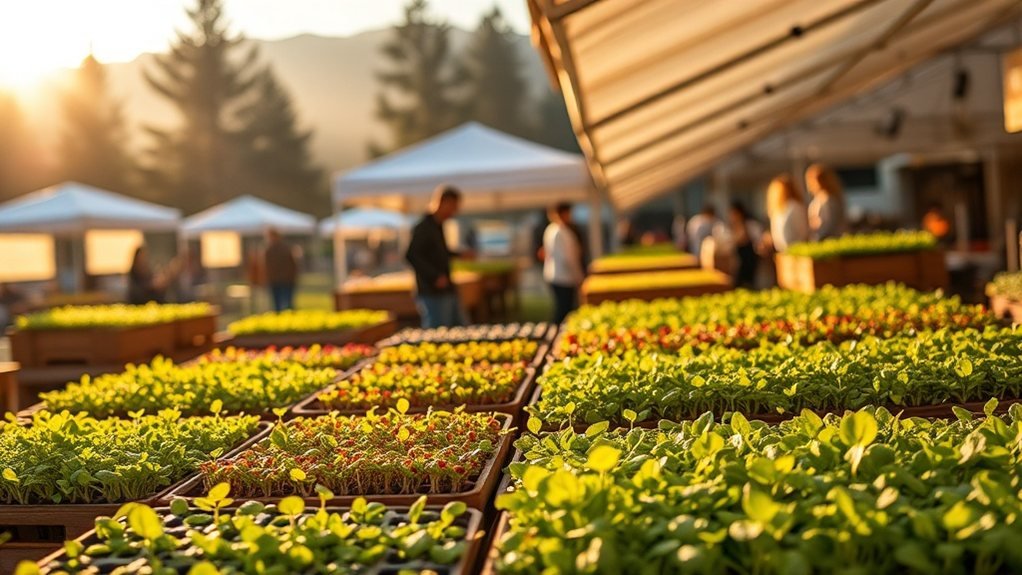
    Portland’s Saturday Market, for example, maintains a waitlist system that demands early, strategic positioning. Knowing these structural realities before applying separates growers who secure spots from those who repeatedly miss them.

    Markets Near Portland

    Portland’s metro area gives you more market density than almost anywhere else in Oregon, which means more options but also more competition you’ll need to steer through strategically. As a microgreens grower oregon-based vendors compete within, you’re looking at established portland farmers market locations running weekly across multiple neighborhoods, each with distinct customer demographics and vendor saturation levels.

    Inner southeast Portland markets trend toward younger, ingredient-conscious buyers, while suburban markets in Beaverton or Lake Oswego often have more booth availability and less direct competition from specialty greens vendors. Study each market’s current vendor mix before applying. If another grower already holds a microgreens spot, your application faces a steeper path unless you’re offering something demonstrably different in variety or presentation.

    Markets Near Eugene and Bend

    Moving south to Eugene or east to Bend opens up a fundamentally different market landscape than what Portland offers. The eugene farmers market operates within a university-influenced consumer base, meaning buyers skew younger and prioritize local provenance heavily. The bend farmers market reflects a resort-town demographic, where premium pricing encounters less resistance.

    Market Area Consumer Profile Competitive Density
    Eugene University-adjacent, value-conscious Moderate
    Bend Affluent, tourism-driven Lower
    Portland Urban, high-volume High

    Understanding these distinctions shapes your vendor strategy before you ever submit an application. Eugene rewards differentiation through variety; Bend rewards clear premium positioning. Both markets reward preparation, consistency, and knowing exactly who you’re selling to when you arrive.

    Use the free Market Finder at [markets.microgreensworld.com](https://markets.microgreensworld.com) to locate verified listings across Oregon.

    What to Expect When You Get There

    booth rules fees produce

    Once you secure a vendor spot, you’ll encounter booth fees that typically range from flat daily rates to seasonal contracts, with Oregon’s larger urban markets like Portland Saturday Market operating under more structured, competitive fee arrangements than smaller rural venues.

    Setup expectations vary considerably: most markets require a canopy, signage, and a display table, while high-traffic sites in Eugene or Bend may impose stricter aesthetic standards to maintain visual cohesion across the vendor floor.

    What moves consistently at Oregon markets tends toward specialty varieties like sunflower, pea shoots, and radish, particularly among health-conscious shoppers in metro areas, though you’ll want to observe your specific market’s buyer behavior before committing to a fixed production volume.

    Booth Fees and Setup Basics

    Before you commit to any market in Oregon, you need to understand what booth fees actually look like on the ground, because the range is wider than most new vendors expect. Knowing how to get a farmers market booth starts with budgeting accurately for what each market actually costs you weekly.

    Market Type Typical Weekly Fee
    Small rural market $15 – $30
    Mid-size suburban market $30 – $60
    Large urban market $60 – $120
    Seasonal specialty market $25 – $50
    Year-round covered market $75 – $150

    For farmers markets Oregon microgreens vendors compete in, a standard 10×10 space is the norm. Bring your own tent, weights, and table, because most markets supply nothing beyond the ground beneath your feet.

    What Moves at Oregon Markets

    Selling out at an Oregon market doesn’t happen by accident, and understanding what customers there actually reach for gives you a measurable advantage before you’ve unpacked your first tray.

    Farmers market Oregon vendors who track weekly sales consistently report that sunflower, pea shoots, and radish move fastest, particularly when positioned near prepared food stalls.

    If you sell microgreens at farmers market venues in Portland or Eugene, you’ll notice health-conscious buyers scrutinizing variety labels carefully, which means clear signage on flavor profiles directly accelerates purchasing decisions.

    Bend’s markets skew toward outdoor enthusiasts who favor nutrient-dense, portable additions to meals. Pricing relative to perceived freshness matters considerably here, since Oregon shoppers regularly compare your product against grocery store alternatives they encountered that same week.

    Getting Your Application Ready

    well prepared vendor application materials

    Your application is the market manager‘s first substantive impression of your operation, and most vendors underestimate how much a poorly assembled submission can disqualify them before a single conversation occurs.

    Market managers in Oregon typically evaluate vendor applications against a defined set of criteria, including product diversity relative to current vendor mix, proof of food handler certification, and demonstrated production capacity.

    If you’re applying to a Portland Saturday Market or a mid-size Eugene operation, understanding what each manager is actively looking for, versus what they’re trying to avoid adding to an already saturated vendor lineup, determines whether your microgreens earn a spot or sit on a waitlist indefinitely.

    What Market Managers Want to See

    Market managers across Oregon’s 261 USDA-listed markets are evaluating dozens of vendor applications at any given time, and they’re looking for signals that you can operate professionally within their ecosystem. When you’re selling microgreens locally, your application competes against established vendors with documented track records.

    Application Element What It Signals Common Mistake
    ODA food handler license Regulatory compliance Submitting before obtaining it
    Product photos Visual merchandising ability Low-resolution or cluttered shots
    Variety list Harvest planning capability Generic descriptions like “greens”

    Managers evaluating microgreens for sale oregon vendors prioritize producers who demonstrate operational consistency. Your application should reflect someone who understands the market’s customer base, respects setup protocols, and communicates proactively before problems arise.

    Common Mistakes to Avoid

    Getting your application rejected once rarely ends your chances at a market permanently, but it does set you back weeks or months while the manager moves on to other candidates.

    The most consequential error growers make when submitting a farmers market vendor application is applying before their production operation can reliably supply consistent volume. Managers notice when you can’t answer basic yield questions.

    A second critical mistake involves misrepresenting your product category, which creates immediate credibility problems when understanding how to sell microgreens across multiple Oregon markets simultaneously.

    Submit only what you can document, photograph clearly, and deliver repeatedly.

    If your setup isn’t ready, waiting one additional season and applying with a complete, accurate packet will outperform a premature submission every time.

    searchable oregon market database

    Searching for the right market manually, one county website at a time, is the kind of inefficiency that costs growers weeks they don’t have.

    The MGW Market Finder at markets.microgreensworld.com pulls from USDA data to surface Oregon’s approximately 261 markets in a single searchable interface, letting you filter by location without combing through fragmented county directories.

    For anyone building a microgreens business, that compression of research time is operationally significant. You’re not browsing, you’re qualifying venues against your production capacity and delivery range.

    Growers pursuing local microgreens Oregon markets benefit most when they approach the tool with defined criteria already in hand, such as target geography and preferred market size, so each search session produces actionable results rather than raw, unprocessed leads.

    Frequently Asked Questions

    Can I Sell Microgreens at Oregon Markets Without a Business License?

    You can often start without a formal business license, but Oregon’s Cottage Food Law and your county’s environmental health rules will still apply, so check both before you set up your first table.

    How Many Varieties Should I Bring to My First Oregon Market?

    Bring three to five varieties. You want enough to look like a real operation, but not so many that you run out of product or confuse buyers who are still learning what microgreens are.

    Do Oregon Farmers Markets Require Proof of Where You Grow?

    Most Oregon markets will ask for your business address or production location when you apply. Some require a site visit or photos of your grow space before they’ll approve your vendor application.

    What Happens if My Microgreens Don’t Sell at the Market?

    If your microgreens don’t sell, you take them home, you reflect on your pricing and placement, and you show up next week with adjustments. Slow days teach you more than good ones ever will.

    Can I Apply to Multiple Oregon Markets at the Same Time?

    Yes, you can apply to multiple Oregon markets simultaneously. Most applications are independent, so submit to several at once to improve your odds of landing a spot before the season fills up.

    Wrap-up

    You’ve got the information, the market landscape, and a tool that cuts the guesswork out of your search. What’s left is making the decision and acting on it. Start with one or two markets that align with your production volume, review the vendor requirements carefully, and submit a complete application. Oregon’s buying communities are active, the infrastructure exists, and microgreens occupy a defensible niche. Leverage that advantage.

  • Farmers Markets in Washington for Microgreens Vendors

    Farmers Markets in Washington for Microgreens Vendors

    Washington’s approximately 274 USDA-listed farmers markets offer microgreens vendors a broad but competitive distribution network, spanning seasonal windows from April through October in Seattle, Bellingham, and Olympia, with shorter May-through-September windows in Spokane and the Tri-Cities. You’ll find booth fees ranging from $20 at rural venues to over $100 daily at high-traffic Seattle markets. Selecting the right market — evaluating foot traffic, vendor saturation, and application requirements — matters far more than proximity, and what follows covers each factor systematically.

    Key Takeaways

    • Washington has approximately 274 USDA-listed farmers markets, with Seattle, Spokane, and Bellingham offering the highest vendor density and opportunity.
    • Seattle, Bellingham, and Olympia markets run April through October; Spokane and Tri-Cities operate shorter May–September windows.
    • Booth fees range from $20 at rural markets to over $100 daily at high-traffic Seattle venues, affecting profitability calculations.
    • Sunflower and pea shoots sell fastest in urban markets, while Seattle buyers favor specialty crops like amaranth and sorrel.
    • Confirm no existing microgreens vendor, review application fees, and verify market accepts specialty produce before applying.

    Farmers Markets in Washington for Microgreens Vendors

    Washington’s approximately 274 USDA-listed farmers markets represent a substantial commercial infrastructure for microgreens vendors seeking consistent, repeat-customer sales channels.

    The state’s market calendar follows a predictable spring-through-fall arc, concentrating vendor opportunity in the warmer months when foot traffic and discretionary spending on specialty produce peak simultaneously.

    Seattle, Spokane, and Bellingham anchor the market density, giving you geographically distributed entry points depending on your production location and distribution range.

    Why Washington Markets Are Worth Your Attention

    If you’re growing microgreens and weighing where to sell, Washington is a state that rewards the effort of showing up. The USDA database lists approximately 274 markets across Washington, giving you genuine geographic options whether you’re positioned near Seattle, Spokane, or Bellingham.

    A Seattle farmers market draws consumers who actively seek specialty produce, making it a practical entry point for a microgreens farmers market vendor building a consistent customer base. Washington’s spring-through-fall calendar gives you a defined selling window to plan production cycles against real demand.

    The market density here means you’re not locked into one venue if a particular market isn’t the right fit. You have room to find where your product lands best.

    What the Washington Market Season Looks Like

    The Washington market season generally runs from spring through fall, though the precise window varies considerably by region and venue. As a microgreens vendor washington, understanding these regional timing differences shapes your entire production calendar.

    Region Season Window Market Frequency
    Seattle April through October Weekly
    Spokane May through September Weekly
    Bellingham April through October Weekly
    Tri-Cities May through September Bi-weekly
    Olympia April through October Weekly

    When you’re targeting farmers market washington opportunities, Puget Sound markets open earlier and close later than eastern counterparts. This split rewards growers who plan production schedules around both climates simultaneously, essentially giving you two distinct selling environments within one state, each demanding calibrated timing.

    How to Find the Right Market in Washington

    evaluate traffic vendors season

    Finding the right market in Washington starts with evaluating foot traffic, vendor density, and seasonal timing before you submit a single application. Seattle’s concentrated urban markets, particularly those operating in Capitol Hill and the University District, attract consistent buyer volume, while Spokane and Bellingham offer less competitive entry points where a microgreens table can establish visibility more quickly. You need to assess each market’s existing produce vendors, since a market already saturated with greens and specialty crops will compress your opportunity regardless of how strong your product is.

    What to Look for Before You Apply

    Before you submit a single application, it’s worth treating market selection as its own research phase, because the wrong market costs you time, inventory, and momentum.

    As a farmers market vendor in Washington, you’re evaluating foot traffic patterns, customer demographics, and existing vendor composition before committing. A microgreens booth at a farmers market positioned near other produce vendors performs differently than one anchored beside prepared food stalls, where impulse buyers dominate.

    Check whether the market already has a microgreens vendor, because saturated categories get split attention. Confirm the market’s operating season aligns with your production capacity, particularly across Washington’s spring-to-fall window.

    Review application fees, booth size requirements, and sales volume expectations against your current output before you ever fill out the form.

    Markets Near Seattle

    Once you’ve narrowed your evaluation criteria, geography becomes the next filter, and Washington’s density around Seattle makes that metro corridor both competitive and operationally viable for a grower with consistent weekly volume.

    The region hosts multiple established farmers markets washington vendors rely on year-round, including high-traffic options in Capitol Hill, Ballard, and the University District. Each draws a distinct buyer profile, which matters when you’re positioning microgreens for sale washington consumers are already conditioned to spend on.

    Proximity between markets also allows you to stack two stops into a single distribution run, reducing per-unit overhead without sacrificing coverage. Knowing which markets accept specialty produce vendors, and when their application windows open, determines whether you actually get a booth.

    Markets Near Spokane and Bellingham

    Whether you’re based east of the Cascades or anchored in the northwest corner of the state, Spokane and Bellingham represent two structurally different market environments that reward vendors who understand their distinct buyer demographics and seasonal patterns.

    The Spokane farmers market draws a pragmatic, value-oriented customer base, where competitive pricing and volume consistency matter considerably. Bellingham farmers market culture skews toward environmentally conscious buyers who prioritize production transparency, making your growing methods a genuine selling point.

    Spokane’s inland climate compresses your viable selling window, while Bellingham’s proximity to the coast extends shoulder-season opportunities. Understanding these structural differences before you apply prevents misaligned expectations and wasted application fees.

    Employ the free MGW Market Finder at markets.microgreensworld.com to locate verified Washington markets matching your specific regional position.

    What to Expect When You Get There

    costs and product demand

    Once you’ve secured a spot, the operational realities of Washington markets come into focus quickly, and two factors shape your early experience more than any others: what it costs to hold that space and what products actually move.

    Booth fees across Washington’s approximately 274 USDA-listed markets vary considerably, from roughly $20 at smaller rural markets to well over $100 per day at high-traffic Seattle venues, with some markets also charging a percentage of sales or requiring a seasonal commitment upfront. Understanding those cost structures alongside which microgreens varieties Washington shoppers consistently purchase gives you the foundation to assess whether a given market is worth your time before you load the van.

    Booth Fees and Setup Basics

    Before you commit to a market, you need a clear picture of what booth fees actually look like in Washington, because the range is wider than most new vendors expect.

    When you sell microgreens at farmers markets across the state, daily booth fees typically run between $25 and $75, though established Seattle markets can exceed $100 per day. Farmers markets in Washington microgreens vendors frequent often charge percentage-based fees instead, commonly 8 to 12 percent of gross sales, which shifts financial risk onto higher-volume weeks.

    Setup requirements vary considerably: most markets mandate a canopy, a weighted anchor system rated for wind, and a display surface at a consistent height. Confirm these specifications before purchasing equipment, since non-compliant setups result in immediate exclusion from the selling floor.

    What Moves at Washington Markets

    Knowing your booth costs is only part of the equation, because what you actually sell matters just as much as what you pay to be there. Farmers market Washington vendors consistently report that sunflower and pea shoot varieties move fastest, particularly in urban markets where buyers already understand raw greens.

    Selling microgreens locally demands that you study each market’s demographic before committing your grow schedule to a specific variety mix. Seattle buyers, for instance, skew toward specialty crops like amaranth and sorrel, while Spokane markets tend to favor familiar, accessible options.

    Your production calendar should respond to observed demand patterns, not assumptions. Track what sells out, what sits, and adjust your next grow cycle accordingly.

    Getting Your Application Ready

    complete specific vendor application materials

    Your application is the market manager‘s first substantive assessment of you as a vendor, and a poorly constructed submission, regardless of your product’s quality, can disqualify you before you’ve set up a single table.

    Most Washington market managers are evaluating whether you’re compliant with state cottage food or commercial kitchen requirements, whether your product category fills a genuine gap in their vendor roster, and whether you can demonstrate operational reliability through documentation like a business license or liability insurance certificate.

    The most common mistake growers make is submitting incomplete paperwork or generic product descriptions that give the manager no clear picture of what you’re actually bringing to market.

    What Market Managers Want to See

    Market managers in Washington receive a high volume of vendor applications each season, and the growers who move through the process quickly tend to arrive prepared with specific documentation before they even submit the form. As a microgreens grower Washington markets evaluate, you’ll want your business license, proof of production location, and any applicable cottage food or commercial kitchen documentation ready before touching a farmers market vendor application.

    Seattle-area markets, particularly those under the Neighborhood Farmers Market Alliance, scrutinize growing practices closely. Bellingham markets frequently prioritize local sourcing verification. Having your seed sourcing records and a basic production summary on hand signals operational maturity, and managers respond to that credibility. Preparation communicates seriousness before you ever speak with anyone.

    Find your next Washington market at [markets.microgreensworld.com](https://markets.microgreensworld.com).

    Common Mistakes to Avoid

    Arriving prepared with documentation is only half the equation, because even well-organized growers routinely undermine their own applications through avoidable procedural errors.

    Applying to a market without first confirming they accept specialty produce like local microgreens washington vendors offer is a common, costly oversight.

    Many applicants submit incomplete booth setup descriptions, leaving managers uncertain whether the vendor understands how to get a farmers market booth configured to meet site-specific requirements.

    Missing application windows by even one day eliminates your candidacy entirely, since most Washington markets close waitlists without exception.

    Submitting generic product descriptions rather than specifying varieties, harvest windows, and pricing signals inexperience.

    Reviewing each market’s vendor rules document before submitting, not after, separates candidates who advance from those who don’t.

    filter washington farmers markets

    Narrowing down 274 farmers markets across Washington by hand is a task that compounds in difficulty the moment you factor in seasonal schedules, application windows, and geographic clustering.

    The MGW Farmers Market Finder at markets.microgreensworld.com consolidates that USDA data into a searchable format, letting you filter by region before you’ve committed a single hour to cold outreach.

    If you’re still figuring out how to sell microgreens systematically, starting with a filtered search by county puts the highest-density clusters, Seattle, Spokane, Bellingham, into immediate view.

    A well-positioned microgreens market stand begins with selecting the right market, not just the nearest one. Employ the free Market Finder tool at markets.microgreensworld.com to identify your strongest candidate markets across Washington before you apply anywhere.

    Frequently Asked Questions

    Can I Sell at Multiple Washington Farmers Markets Simultaneously?

    You can sell at multiple Washington farmers markets simultaneously, but you’ll need separate applications, market fees, and enough product to cover each location. Staff each booth or find a trusted person to run one while you run another.

    Do Washington Markets Require Liability Insurance for Microgreens Vendors?

    Most Washington farmers markets require liability insurance, typically $1 million per occurrence. You’ll need to name the market as an additional insured. Get your certificate before applying so you’re not scrambling at acceptance.

    How Early Should I Arrive to Set up My Booth?

    Arrive 90 minutes before gates open. You’ll need time to unload, orient your table, arrange product, and troubleshoot anything that’s off before customers walk in. Early setup also signals professionalism to market managers watching new vendors.

    Are There Markets That Run Year-Round in Washington State?

    Yes, a handful of Washington markets run year-round, mostly in Seattle and Spokane. Indoor winter markets keep you selling through the slow months, but you’ll need to confirm each market’s specific schedule at markets.microgreensworld.com.

    What Happens if My Application Gets Rejected by a Market?

    Don’t take it personally. Ask the manager for feedback, fix what you can, and reapply next season. Meanwhile, apply to other markets so you’re not waiting on one decision.

    Wrap-up

    You’ve got the landscape now, so put it to work. Washington’s 274 listed markets give you real selection, but the vendors securing consistent spots aren’t waiting for spring to feel urgent. They’re making calls in late winter, submitting clean applications, and showing up prepared. Start your search at markets.microgreensworld.com, identify your targets early, and move before the available tables disappear.

  • Farmers Markets in Virginia for Microgreens Vendors

    Farmers Markets in Virginia for Microgreens Vendors

    Virginia’s approximately 198 USDA-listed farmers markets form a structured, multi-regional network spanning urban corridors like Arlington and Richmond to university-adjacent venues in Charlottesville, giving you concrete entry points rather than scattered opportunities. Sunflower and pea shoots sell consistently across most venues, while specialty mixes perform stronger in Charlottesville and Northern Virginia markets. Booth fees range from $15–$30 in rural settings to $75-plus in urban corridors, directly affecting your volume requirements. Continue ahead to sharpen your market selection strategy.

    Key Takeaways

    • Virginia has approximately 198 USDA-listed farmers markets, with the highest density concentrated in Richmond, Charlottesville, and Arlington.
    • Richmond, Charlottesville, and Arlington sustain year-round buying patterns, making them favorable regions for consistent microgreens vendor presence.
    • Charlottesville’s university-adjacent customer base is especially responsive to specialty produce, making microgreens viable as a primary product.
    • Arlington markets often have multi-season waitlists, requiring vendors to differentiate through variety rotation and sharp product positioning.
    • Market applications should be tailored to each specific market, highlighting product mix contribution rather than submitting generic, identical descriptions.

    Farmers Markets in Virginia for Microgreens Vendors

    seasonal microgreens market strategy

    Virginia’s approximately 198 USDA-listed farmers markets represent a substantial commercial infrastructure for microgreens vendors seeking consistent retail outlets, with notable market density concentrated in Richmond, Charlottesville, and Arlington.

    You’re working within a primary spring-through-fall operating calendar, which means your production planning, variety selection, and customer relationships all need to align with that seasonal window.

    Understanding both the geographic distribution of these markets and the rhythm of their operating schedules gives you a measurable advantage when you’re deciding where to apply for a vendor spot first.

    Why Virginia Markets Are Worth Your Attention

    The density of agricultural commerce in Virginia creates a distribution environment that most microgreens growers underestimate until they’re actually operating inside it. With approximately 198 farmers markets virginia vendors can access through the USDA database, the state supports a genuinely competitive microgreens farmers market ecosystem rather than isolated pockets of consumer activity.

    Richmond, Charlottesville, and Arlington each sustain year-round buying patterns that reward consistent vendor presence. Virginia’s proximity to Washington D.C. also pulls affluent consumer traffic into Northern Virginia markets specifically, where health-conscious purchasing behavior is documented and measurable.

    You’re not entering a fragmented rural landscape here. You’re entering a structured, multi-regional market network where your production schedule, your canopy placement, and your pricing discipline will determine outcomes far more than location luck ever will.

    What the Virginia Market Season Looks Like

    Most Virginia farmers markets operate on a spring-through-fall calendar, with the bulk of market activity concentrated between April and November, though this structure varies considerably depending on the region you’re targeting.

    Northern Virginia markets, particularly those near Arlington, tend to extend their seasons due to milder shoulder conditions and consistent customer density.

    Richmond’s urban markets follow a tighter schedule, while Charlottesville’s scene offers reliable mid-season windows that suit microgreens production cycles well.

    As a microgreens vendor in Virginia, you’ll want to map your grow schedule backward from your target opening date.

    Farmers markets in Virginia for microgreens operate within predictable rhythms once you understand the regional patterns, and that knowledge lets you plan inventory, succession plantings, and application timelines with considerably more precision.

    How to Find the Right Market in Virginia

    urban virginia farmers market locations

    Before you apply to any Virginia farmers market, you’ll want to evaluate several practical variables that directly affect whether microgreens can move consistently at that location. Markets near Richmond, particularly those operating in high-traffic urban corridors, tend to draw a health-conscious demographic that’s already familiar with specialty produce, which reduces the educational burden on you as a vendor. Charlottesville and Arlington present likewise strong conditions, though each market carries its own competitive density, seasonal schedule, and management requirements that you’ll need to assess before committing application fees and table time.

    What to Look for Before You Apply

    Finding the right market before you apply is less about proximity and more about fit, because a market two hours away with consistent foot traffic and a customer base that already buys specialty produce will outperform a neighborhood market where vendors struggle to move anything beyond conventional vegetables.

    Before you submit a farmers market vendor application, audit the market itself. Visit on a peak day, observe whether specialty greens and living products are already selling, and note how the microgreens booth farmers market setup compares to competing vendors. Check the vendor mix for saturation. Review the market’s demographic profile against your price point.

    A thorough pre-application assessment separates strategic placement from wasted fees, and it’s the difference between building a real customer base and spinning your wheels.

    Markets Near Richmond

    Richmond’s farmers market landscape is denser than many growers assume, with the metro area and surrounding counties hosting a range of markets that vary significantly in foot traffic, vendor composition, and customer willingness to pay for specialty produce.

    The South of the James Market, for example, draws a demographic that actively seeks microgreens for sale Virginia vendors regularly report strong repeat buyers there.

    Competing at a richmond farmers market means knowing which locations already have saturated produce sections and which have genuine gaps. Chesterfield and Hanover County markets adjacent to the city often have lower vendor fees with comparable buyer quality.

    You’ll want to cross-reference application windows carefully, since many Richmond-area markets open vendor spots only once annually.

    Markets Near Charlottesville and Arlington

    Charlottesville and Arlington represent two structurally distinct market environments, and understanding that distinction before you apply saves you from misallocating your early vendor seasons.

    The Charlottesville farmers market draws a university-adjacent customer base that responds well to specialty produce, making microgreens a viable primary product rather than a supplemental offering.

    Arlington operates within a dense suburban corridor where farmers market virginia vendors compete against significant product saturation, requiring sharper differentiation through variety rotation and consistent quality.

    Charlottesville markets typically maintain more accessible application cycles, while Arlington markets often carry waitlists that extend across multiple seasons.

    Assess each market’s vendor composition before submitting your application.

    Utilize the free Market Finder at markets.microgreensworld.com to identify current openings across both regions and prioritize markets where microgreens representation remains thin.

    What to Expect When You Get There

    market specific fees and demand

    Once you’ve secured a spot, the operational realities of a Virginia farmers market will shape your setup decisions more than any planning guide can.

    Booth fees vary considerably across the state, with smaller community markets in the Shenandoah Valley often charging $15–$30 per day, while established urban markets in Richmond or Arlington can run $40–$75 or more per session, a cost differential that directly affects your volume requirements before you’ve sold a single tray.

    What moves consistently at Virginia markets tends to skew toward familiar, fast-recognition varieties like sunflower and pea shoots, though Charlottesville and Northern Virginia markets, with their higher concentrations of culinary-conscious shoppers, have shown stronger uptake for specialty mixes that independent vendors with niche product lines can exploit early in the season.

    Booth Fees and Setup Basics

    Booth fees at Virginia farmers markets vary more than most new vendors expect, ranging from flat daily rates around $25 to $50 at smaller community markets, to seasonal contracts exceeding $500 at high-traffic venues in the Richmond metro or Arlington corridor.

    When you’re figuring out how to get a farmers market booth, understanding this fee structure determines your margin before you sell a single tray.

    Most markets require a six-foot table, canopy, and weights, with setup windows typically opening sixty to ninety minutes before gates open.

    As a farmers market vendor in Virginia, you’ll encounter both daily-pay and pre-pay seasonal models, each carrying distinct cash flow implications.

    Confirm the specific requirements during your application process, because infrastructure expectations differ meaningfully between urban and rural market settings.

    What Moves at Virginia Markets

    Virginia markets will sort your product line out fast, because shoppers in Richmond’s Saturday morning circuits buy differently than the weekday crowd at a Charlottesville co-op market or the year-round Arlington farmers market, where commuter-adjacent foot traffic drives demand toward convenience-sized packaging and familiar varieties.

    Sunflower and pea shoots consistently perform across most Virginia venues, because shoppers recognize them and understand preparation without coaching.

    When you sell microgreens at farmers market locations embedded in urban commuter corridors, smaller clamshells move faster than bulk trays.

    Richmond’s weekend markets tend to favor variety depth, where adventurous buyers will reach for amaranth or shiso.

    Matching your product mix to the specific market’s demographic profile, rather than defaulting to a single lineup everywhere, determines how efficiently you turn inventory each week.

    Getting Your Application Ready

    tailored complete microgreens application

    Your application is the market manager‘s first and often only basis for evaluating whether you belong in their vendor lineup, so precision and completeness matter more than most growers initially assume.

    Many applicants submit vague product descriptions, omit required certifications, or fail to demonstrate that their microgreens align with the market’s existing vendor mix, which signals to managers that the applicant hasn’t researched the market thoroughly.

    Before you fill out a single field, pull up the market’s current vendor roster, identify any gaps your microgreens could fill, and tailor your application language to reflect that awareness directly.

    What Market Managers Want to See

    Market managers in Virginia aren’t just filling vendor slots, they’re building a thoughtfully assembled ecosystem of products that serves their specific customer base, and understanding that distinction changes how you approach your application. As a microgreens grower Virginia applicants compete alongside established vendors, so your materials must demonstrate production consistency and market readiness.

    What They Evaluate Why It Matters
    Product variety Prevents overlap with existing vendors
    Food safety documentation Legal and liability compliance
    Production volume Confirms reliable weekly supply
    Display presentation photos Signals professionalism
    Local sourcing evidence Aligns with market identity

    When selling microgreens locally, frame your application around what you contribute to that specific market’s product mix, not simply what you grow.

    Common Mistakes to Avoid

    Submitting a generic application is the most consistent way to disqualify yourself before a market manager ever considers your product. When you apply to multiple Virginia markets using identical language, managers recognize it immediately, and it signals that you haven’t studied their specific vendor community. Your microgreens market stand competes against established growers who’ve customized their materials to reflect each market’s demonstrated priorities.

    Another critical error involves misrepresenting your production scale. If you’re still learning how to sell microgreens and haven’t confirmed consistent weekly yields, don’t overstate your volume capacity. Market managers verify these claims through your first season, and credibility lost early is difficult to recover. Apply honestly, with documentation that accurately reflects your current operation rather than your projected potential.

    virginia microgreens market finder

    Searching Virginia’s 198 farmers markets one by one is an inefficient approach that most experienced vendors abandoned early in the process. The MGW Market Finder at markets.microgreensworld.com consolidates that USDA data into a searchable format, allowing you to filter by location and identify viable opportunities for your local microgreens Virginia operation without manually auditing each listing.

    If you’re building a microgreens business around Richmond or Charlottesville, that filtering capability compresses weeks of research into a single session. You enter your geography, review what’s available, and begin prioritizing markets based on proximity and seasonal timing.

    The tool doesn’t replace your judgment, but it removes the friction that causes most vendors to stall before they ever submit an application. Start your search at markets.microgreensworld.com.

    Frequently Asked Questions

    Can I Sell Microgreens at Multiple Virginia Farmers Markets Simultaneously?

    You can vend at multiple Virginia farmers markets simultaneously, but you’ll need enough product, staff, and logistics to cover each location. Most successful multi-market growers start with one market first.

    Do Virginia Farmers Markets Require Vendors to Grow Products In-State?

    Most Virginia farmers markets do require in-state production, but policies vary by market. You’ll need to contact each market manager directly to confirm their specific sourcing rules before applying.

    How Do Virginia Cottage Food Laws Affect Microgreens Sales Specifically?

    Virginia’s cottage food laws don’t really apply to your microgreens. You’re selling a fresh agricultural product, not a processed food, so you’re operating outside cottage food territory entirely.

    What Liability Insurance Do Virginia Market Managers Typically Require From Vendors?

    Most Virginia market managers require you to carry $1 million per occurrence in general liability insurance, with the market listed as an additional insured on your certificate.

    Are There Virginia Farmers Markets That Run Indoors During Winter Months?

    Yes, some Virginia markets run indoors through winter, particularly in Richmond, Charlottesville, and Arlington. Check each market’s specific schedule directly, since indoor winter operations vary widely by venue availability and organizer resources.

    Wrap-up

    Virginia’s farmers market landscape offers microgreens vendors a legitimate, scalable sales channel, provided you approach it methodically. You’ve got roughly 198 markets to evaluate, a defined application process to steer through, and a short seasonal window that rewards early action. Don’t treat market selection as secondary to production. Employ the MGW Market Finder to prioritize your outreach, get your documentation in order, and secure your spot before the season fills.